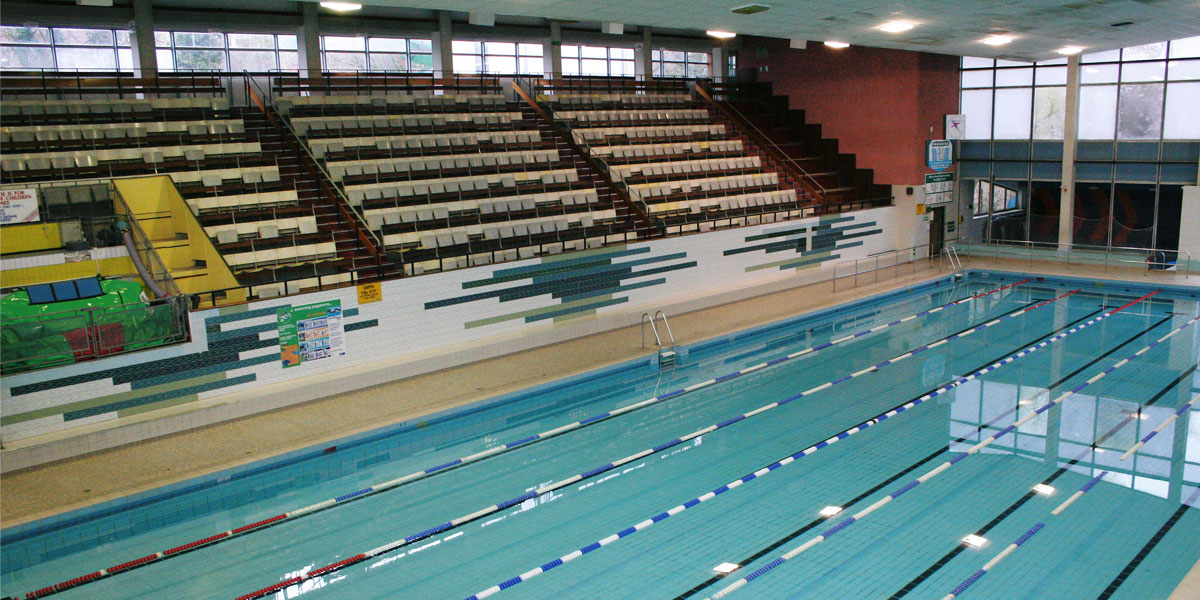
Local artist and writer Laura Adkins reflects on her memories of Tudor Grange Swimming Bath and shares some pictures she took in March 2007.
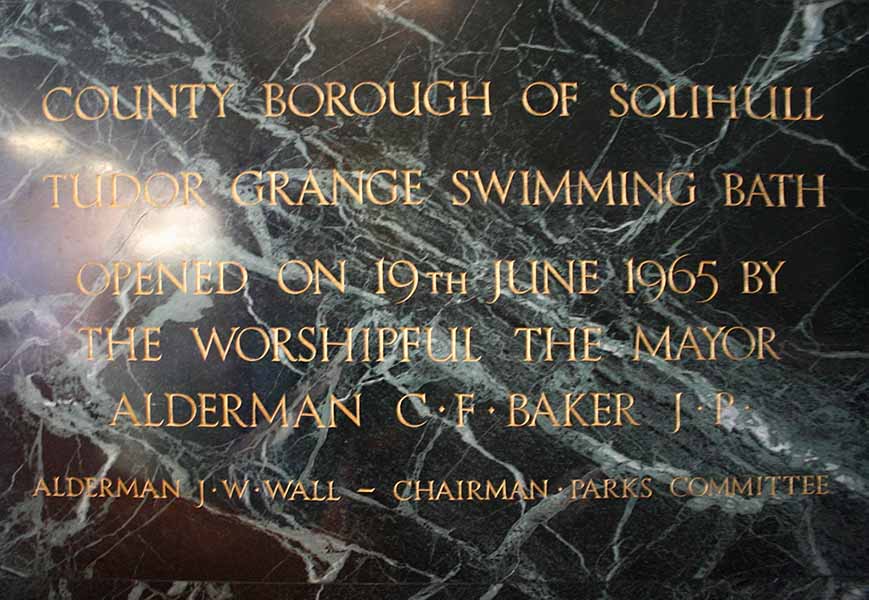
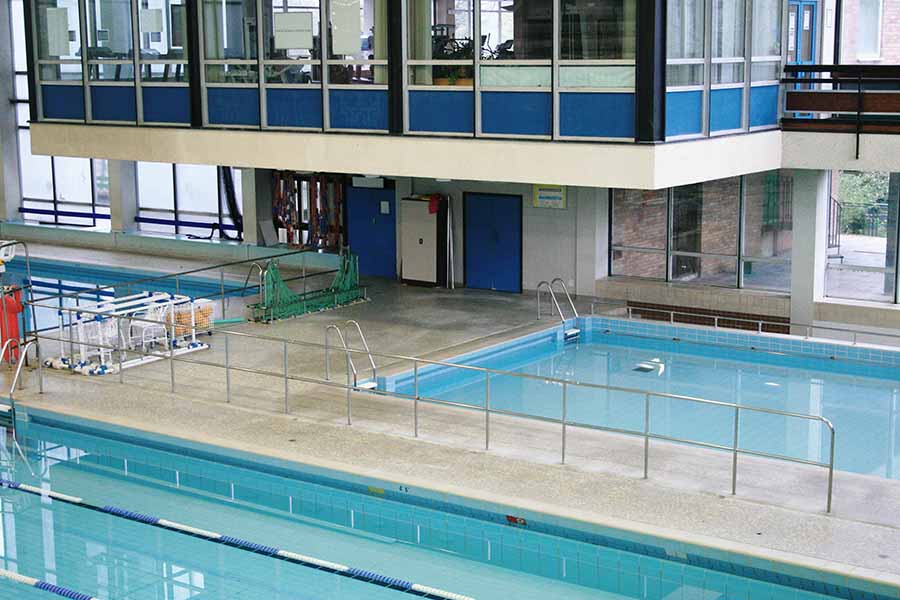
Tudor Grange Swimming Bath was officially opened on 19 June 1965 by ‘The Worshipful The Mayor, Alderman C.F. Baker J.P.’, the year after Solihull became a County Borough. The split-level building featured an L-shaped 33.3-metre-long competition pool with a six-foot-deep end leading into a diving pool that was 12 feet 6 inches deep and had three boards — the highest being the five-metre board. There was also a separate ‘little pool’ for small children and those learning to swim.
In 2007, the year before it was demolished, I asked for permission to photograph the building when it was closed to the public. I took 58 photos, mainly of the pool hall, documenting the building at the end of its life. As an artist living in Solihull, I was experimenting with photography at the time, and the images were intended to form a large photo-composite collage. I never did use them for that purpose, but I’ve donated them to Heritage & Local Studies at The Core in Solihull.
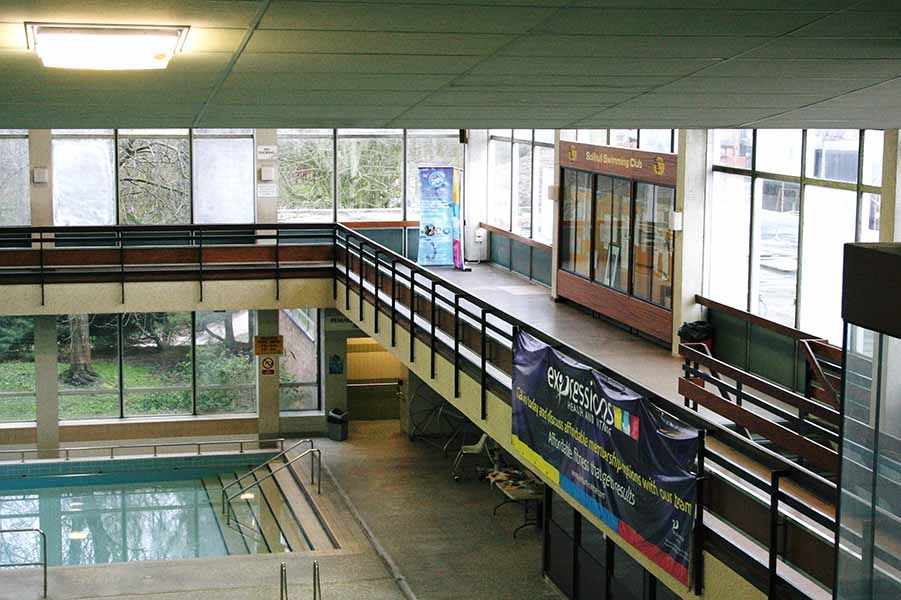
Seeing the building and pool that had always been so busy now completely empty was a strange experience. Details such as the architecture, the colours and the quality of the light all became more noticeable. The visit also gave me the opportunity to say goodbye to a building that had brought me many happy memories.
A Civic Landmark
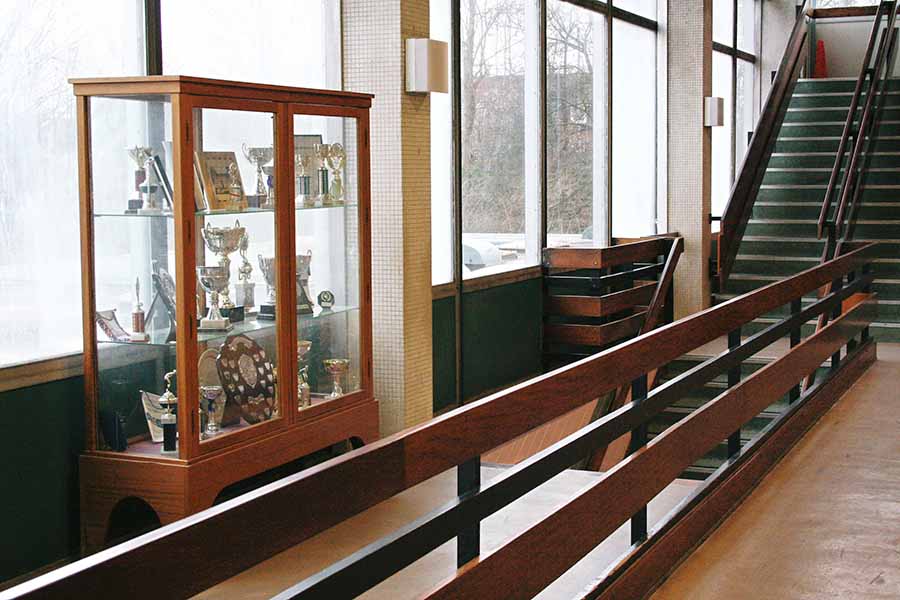
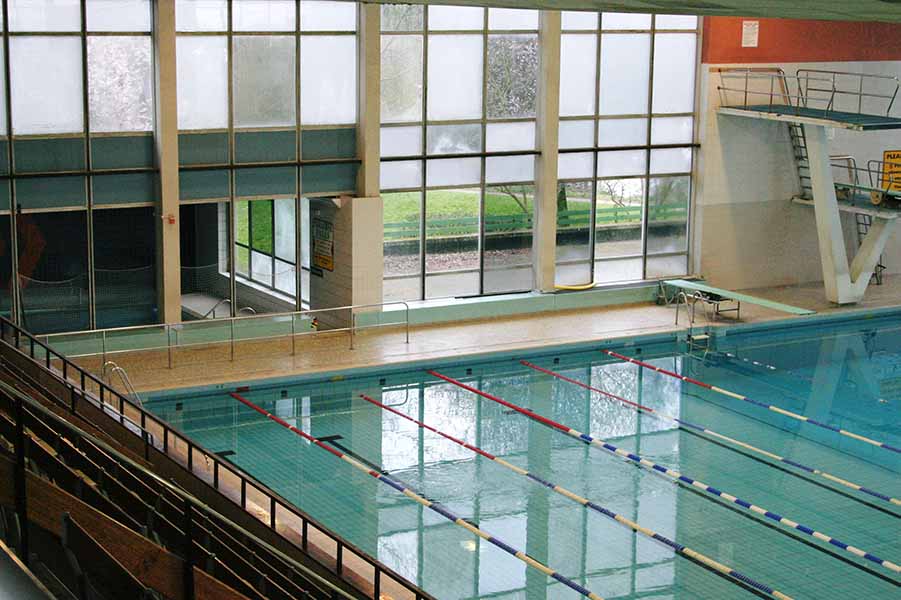
Tudor Grange Swimming Bath was designed and built on the edge of Tudor Grange Park to meet a post-war population boom and provide an alternative to the unheated Solihull Lido in Malvern Park. It was also built to support the growing Solihull Swimming Club, which had formed in March 1963 and within a year of its formation had over 300 members. It came to serve as a hub for local, school, and competitive swimming events including water polo, as well as attracting swimmers for miles around. The architecture was unmistakably modern and state-of-the-art for the time. Floor-to-ceiling windows flooded the swimming pool hall with light. Timber railings softened the clean lines of tile and concrete.
Growing up just outside Solihull in the 1970s, my two siblings and I were often taken shopping in Solihull, where I have now lived for over 30 years. Coming in via Blossomfield Road, we always passed Tudor Grange Swimming Bath, and our mum used to take us there.
The Smell of Chlorine
Many will remember that as you arrived in the foyer you were greeted by the humid warmth, the smell of chlorine, and the distant sound of whistles from the pool as the lifeguards kept order. My mum couldn’t swim (she never did learn), and I expect she sat in the foyer of the swimming pool, where she could see us through the glass, or watched from the stepped grandstand of seats, or from the glass-fronted cafe that overhung the pool. I don’t know where she went, because as a child, once I was inside the pool hall all I cared about was having fun.
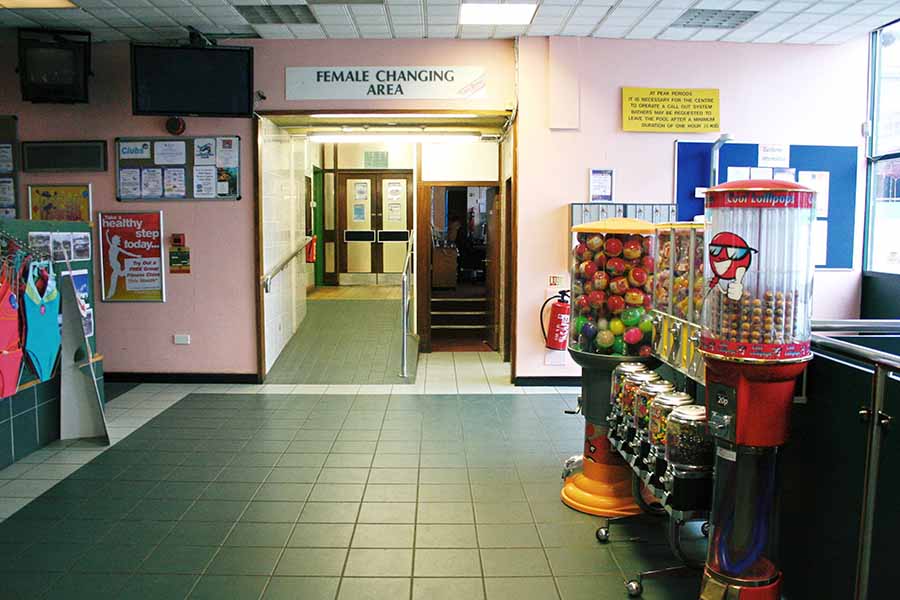
Male and female changing rooms were situated on either side of the foyer. Inside, wooden benches ran along the tiled walls. Before changing in the cubicles you would collect a grey ‘basket’ (plastic box) to put your clothes into, with your towel usually on top. The basket was then handed in at a counter in exchange for a wristband. A coloured wristband system was used for busy times; it denoted what time you arrived. On busy days people could be asked to leave after a certain time, to keep the numbers in check.
After going through the shower area, swimmers walked through a small room with a shallow disinfectant foot bath (meant to prevent verrucas, with questionable success) before entering the light and echoing expanse of the pool hall itself.
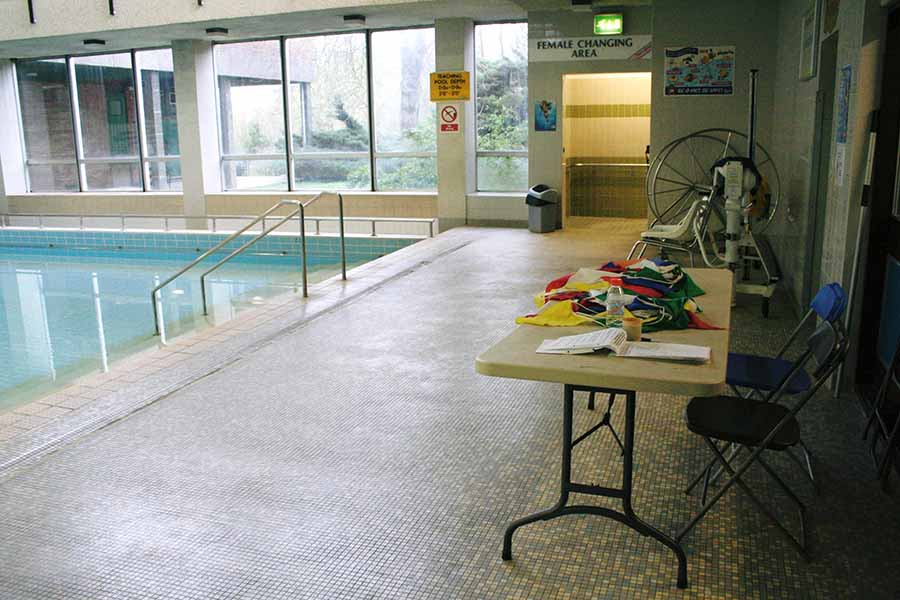
The blue brightness of the pool was set against expanses of dark-stained timber: wood panelling, benches, and gallery spaces that gave the building warmth despite its scale — swimming baths of this era often felt like secular cathedrals. Some people will remember the doors being open to the outside terrace in the summer. The pool itself felt vast — luminous blue against white tile — a place of both excitement and, at times, apprehension.
Learning to Swim
I learned to swim at Tudor Grange Swimming Bath, travelling by coach with my junior school. These lessons took place during the summer term and lasted for about 30 minutes. I remember many girls wearing brightly coloured rubber swimming caps. Visiting for lessons with the school was a very different experience to going with my siblings and just messing about. The swimming baskets were grabbed hurriedly, teachers shouted from outside cubicles for us to hurry up so that we’d all be ready on time for the lesson. We’d then line up beside the pool. It was altogether a more serious affair.
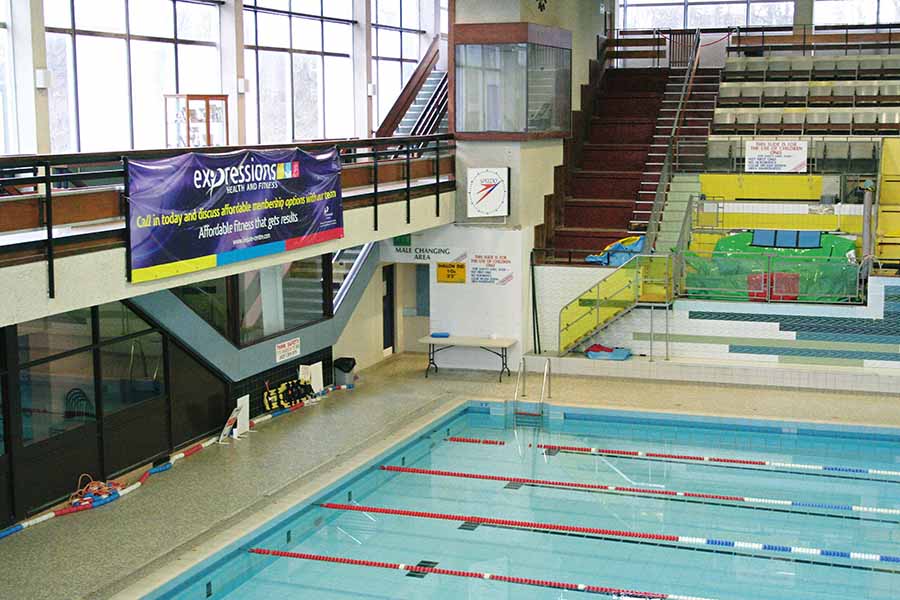
My husband attended a school within the borough and received swimming certificates accompanied by a sophisticated system of badges that were sewn onto the swimming costume. He recalls that it quickly became uncool to wear the ‘length’ badge because it had an ‘L’ on it, which was perceived as ‘learner’.
I was never a strong swimmer and only just about managed my length in the school tests. The length test had to be done in the big pool, which meant going out of my depth — something I usually tried to avoid at all costs. Before I’d finished the length I started sinking, but continued to swim underwater, determined to get to the end. The instructor mercifully (and very skilfully) pulled me back up using a pole — like ‘hook-a-duck’ — so that I could officially finish my length.
For what, to me, felt like a heroic achievement, I got a little yellow square to sew onto my costume. Maybe I got a certificate too. Many went on to greater things, including such tests as life-saving and retrieving a rubber brick from the bottom of the pool while wearing pyjamas.
Diving Boards and Buttered Toast
On Saturdays the pool went back to being a busy free-for-all. The diving platform — a strong triangular form rising against a grid of glass — had the presence of public sculpture, a stage on which generations tested their courage. Memories of Tudor Grange Swimming Bath were shared on Facebook in response to a Solihull Updates post in 2025, and many mentioned the enjoyment of the diving boards. Diving off the top board was a major achievement.
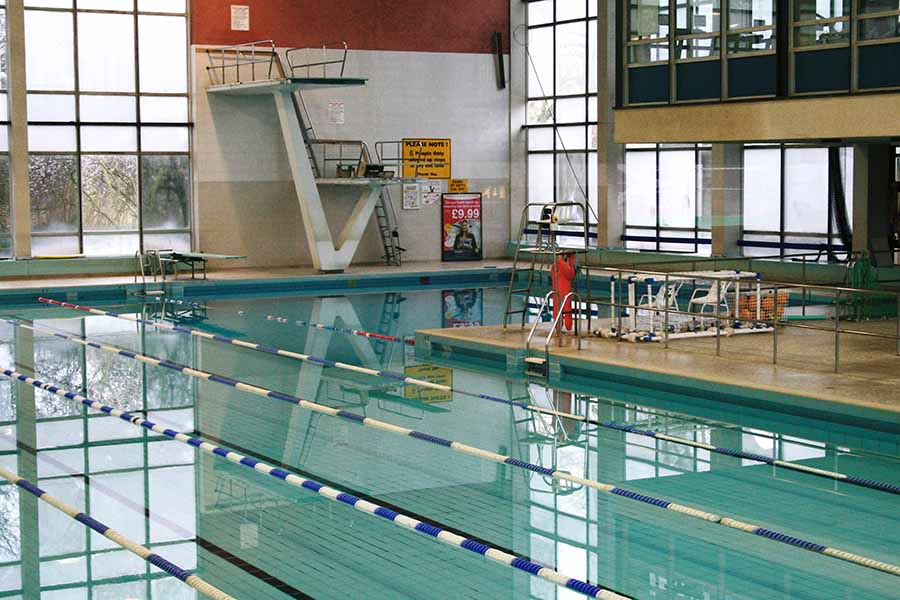
Many also remembered fondly the cafe overhanging the pool, from which you had a good view of the diving board. Some divers aimed at splashing the cafe windows. The food in the cafe was always welcome after a tiring swimming session and would help to warm you up. The menu included beans on toast, hot chocolate, hot Bovril, buttered toast (my personal favourite), chocolate bars and even chips and sausage rolls from a vending machine that you heated in a microwave. You could sit and watch the pools below as you ate.
Pool Rules
After I had left school, I used to go to Tudor Grange Swimming Bath with a friend who had just learned to drive, and we’d do synchronised swimming in a team of two. You could muck about in the pool — it wasn’t divided into lanes except for the school galas, although there were lanes marked on the tiled floor of the pool. It was a great place for both the serious sportsperson and the casual swimmer.
Outside school lessons, the potential for chaos meant that there was the classic swimming pool rules poster: a specific set of guidelines with humorous illustrations that were seen in public swimming baths in the UK and elsewhere during the 1970s and 1980s. As I recall, the rules stated there should be no running, pushing, acrobatics or gymnastics, shouting, ducking, petting, bombing, swimming in the diving area or smoking. Public places were often full of people smoking at that time — even the GP surgeries — so this wasn’t a daft addition.
They could have included ‘No pretending to have drowned’ because that was an activity of mine; floating lifeless face-down on the surface for as long as I could hold my breath; not that I ever fooled the lifeguards.
Later on in the life of Tudor Grange Swimming Bath, the giant indoor flumes (water slides) were put in. These tube flumes snaked out of the building and looped back in, with an exit pool separate to the main pool. The one time I had a go, I shot out of it like a bullet out of a gun, my swimming costume nearly turned inside.
Circle of Life
Three decades after I had learned to swim in the little pool of Tudor Grange Swimming Bath, I watched my daughter do the same, her instructor giving me a thumbs-up from the little pool as she set off for the first time without support. That was a ‘circle of life’ moment. Years later, she was confidently plunging into the deep end off the diving boards.
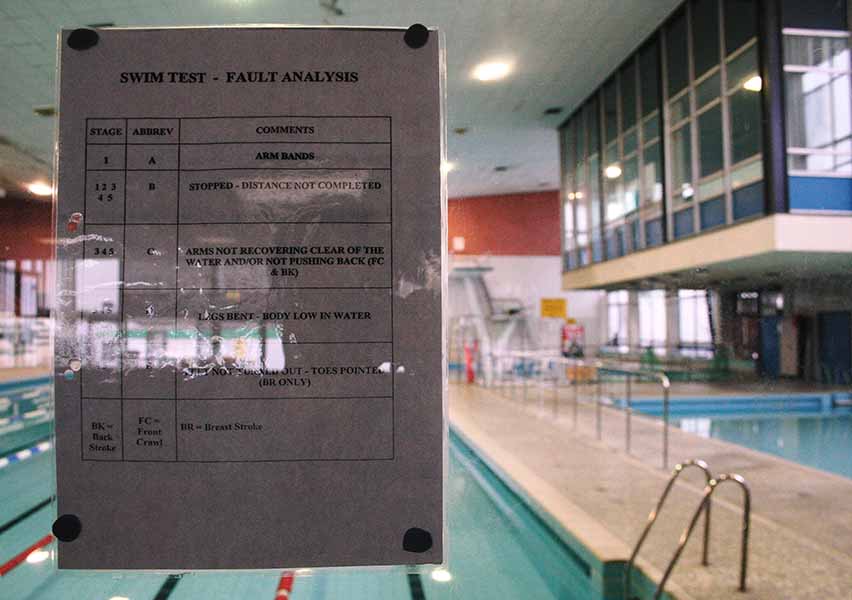
Over the course of four decades, Tudor Grange Swimming Bath witnessed thousands of children becoming swimmers, their first widths and nervous lengths, bronze, silver and gold awards, fetching bricks from the bottom of the pool in pyjamas, school galas and weekend swims. Its foyer, with its desks, payphone, and noticeboards marked the threshold to watery freedom and sporting achievement.
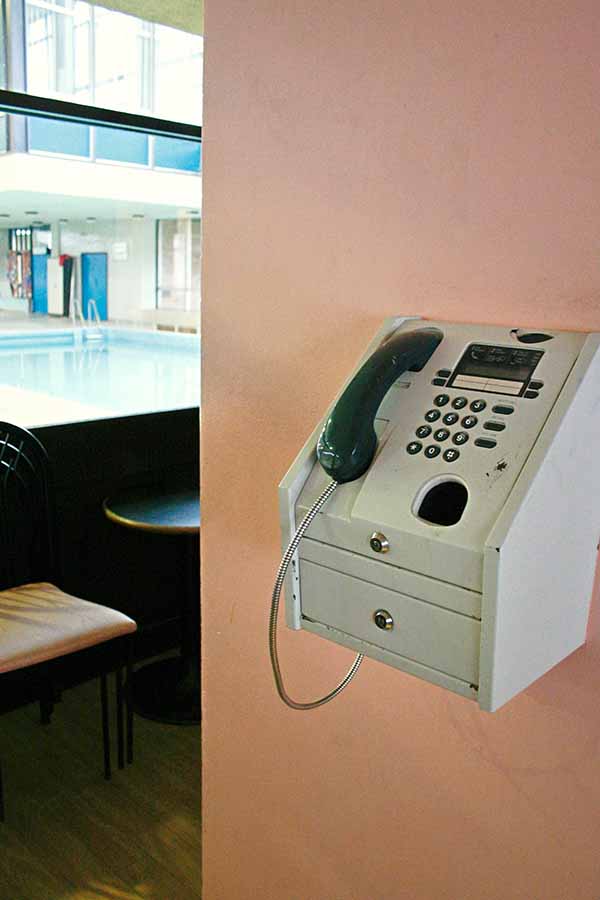
By the time I photographed Tudor Grange Swimming Bath in 2007, a year before its demolition, it carried layers of its history: the marble plaque and heavy timber bannisters it opened with, the late-80s/90s salmon-pink paintwork, the swimming lanes now dividing the water into disciplined tracks, the TV screens and capsule toy vending machines in the foyer, the corporate leisure branding that had replaced municipal signage.
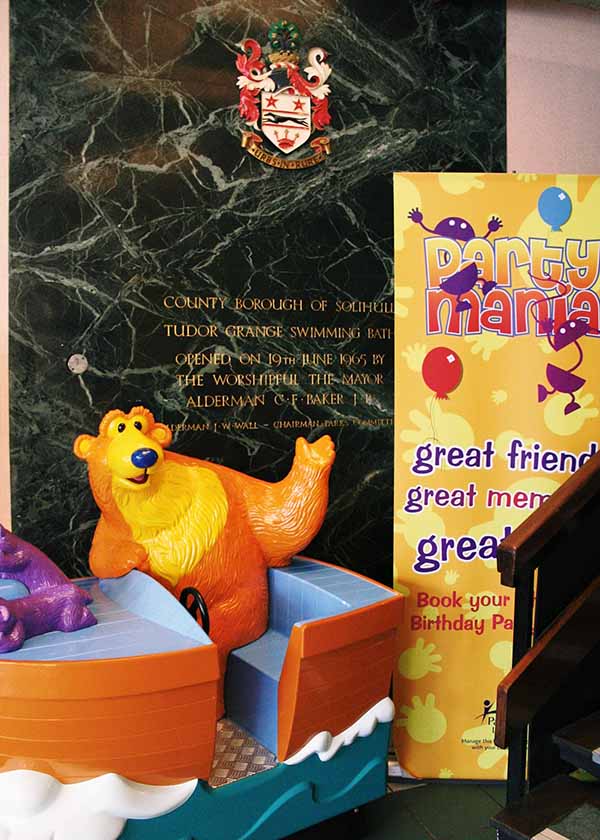
Looking back at the photographs I took in 2007, I realise that I hadn’t just recorded a building before it disappeared. I had preserved, in a small way, the setting for thousands of shared memories, including my own. Tudor Grange Swimming Bath was where generations of Solihull children learned to swim, found confidence in deep water, conquered the diving boards, and carried home damp towels and happy memories. The building has gone, but for many of us it remains vividly alive in our memories.
Some references I used when writing this blog:
Brief History of the Club, Solihull Swimming Club website
Queenborough, Marcus. Fascinating pictures showing how Solihull used to look,
Birmingham Live, Sept 2021
Solihull Update’s post on Facebook, 2025:
Solihull Memories post on Facebook, 2025:
© Laura Adkins, 2026.
 Solihull Life
Leave a comment