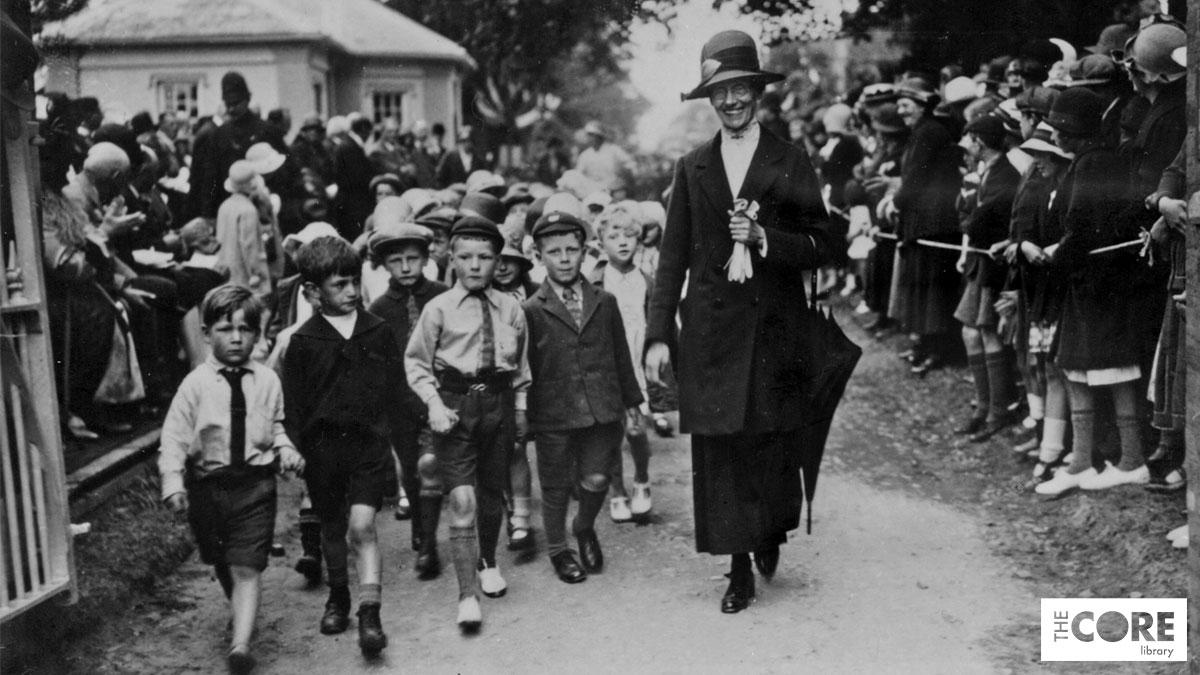
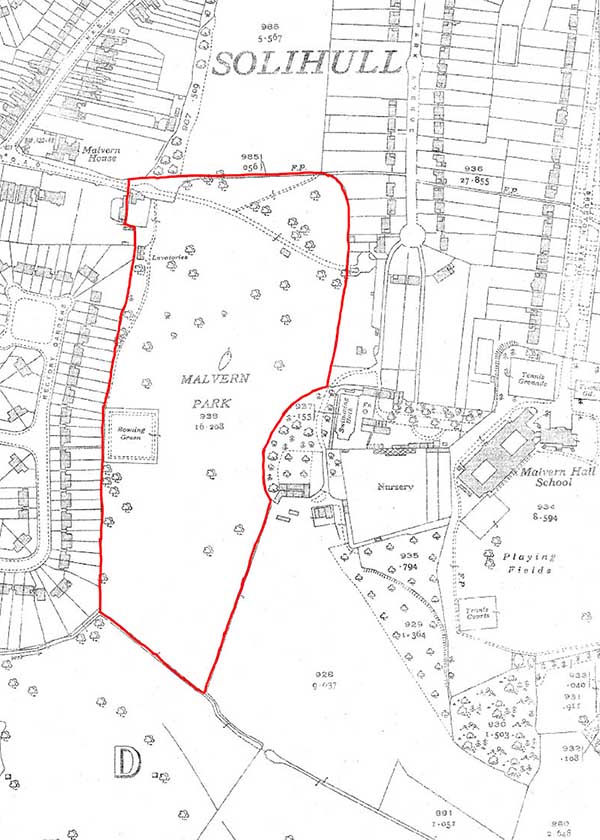
Solihull’s first public recreation ground, Malvern Park, was officially opened on 10th July 1926 by Mrs Maurice Davis of Berry Hall. The name is derived from Simon de Malverne who is known to have owned the site in 1332.
Malvern Park was previously the parkland of Malvern Hall estate, which was owned by the Greswold(e) family and their heirs and successors from 1680-1896.
Deer Park 1819-1833
Between 1819-1833, Malvern Hall estate was home to a herd of deer that was purchased by Henry Greswolde Lewis following the sale of Aston Hall, Birmingham.
Aston Hall was sold in April 1818 and then advertised to let in October 1818, complete with a stock of 200 deer. In January 1819, the herd of deer, now numbered at 150, was advertised for sale “in suitable lots” as part of the “disparking of Aston Park.” It’s presumed that this was when the herd was purchased by Henry Greswolde Lewis.
After Henry Greswolde Lewis’s death in 1829, the herd of deer at Malvern Hall – numbering between 150-200 “of mostly the black and fallow kinds” – was advertised for sale by Samuel Upton, the Keeper at Malvern Hall. The advertisement in Aris’s Birmingham Gazette, 15th April 1833, indicated that the animals would be delivered to their new homes in September/October 1833.
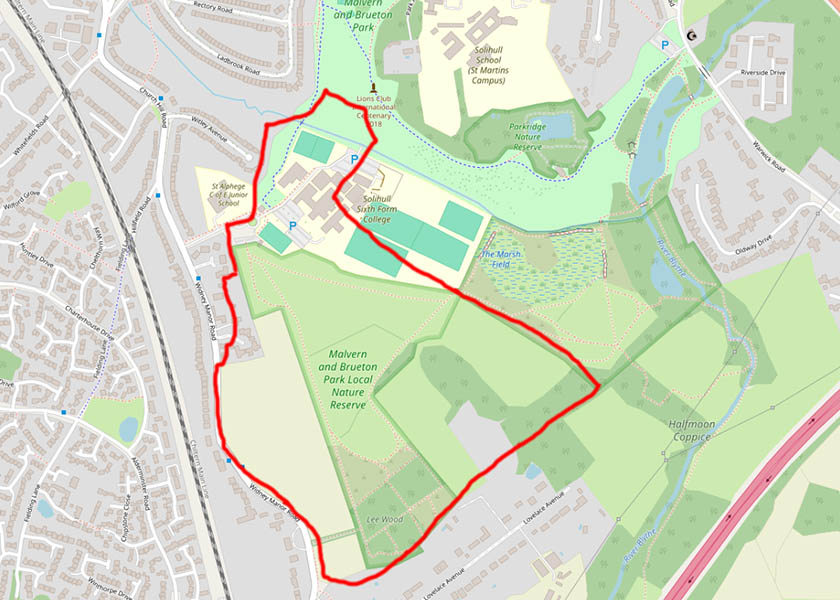
At the time of the Tithe Map of Solihull, one of the fields (plot 563) was described as “The Deer Park” (now Lea Wood and much of the Local Nature Reserve, as well as part of the site of Solihull Sixth Form College).
The Deer Park was described in the tithe apportionment as pasture, extending to 99 acres, 3 roods and 30 perches and was in the occupation of William Croft, a farmer who was living at Witley Farm (also known as Whiteley Farm or Malvern Park Farm) in Widney Manor Road. A private road, Deer Park Way, off Widney Manor Road, references the history of this area of the park.
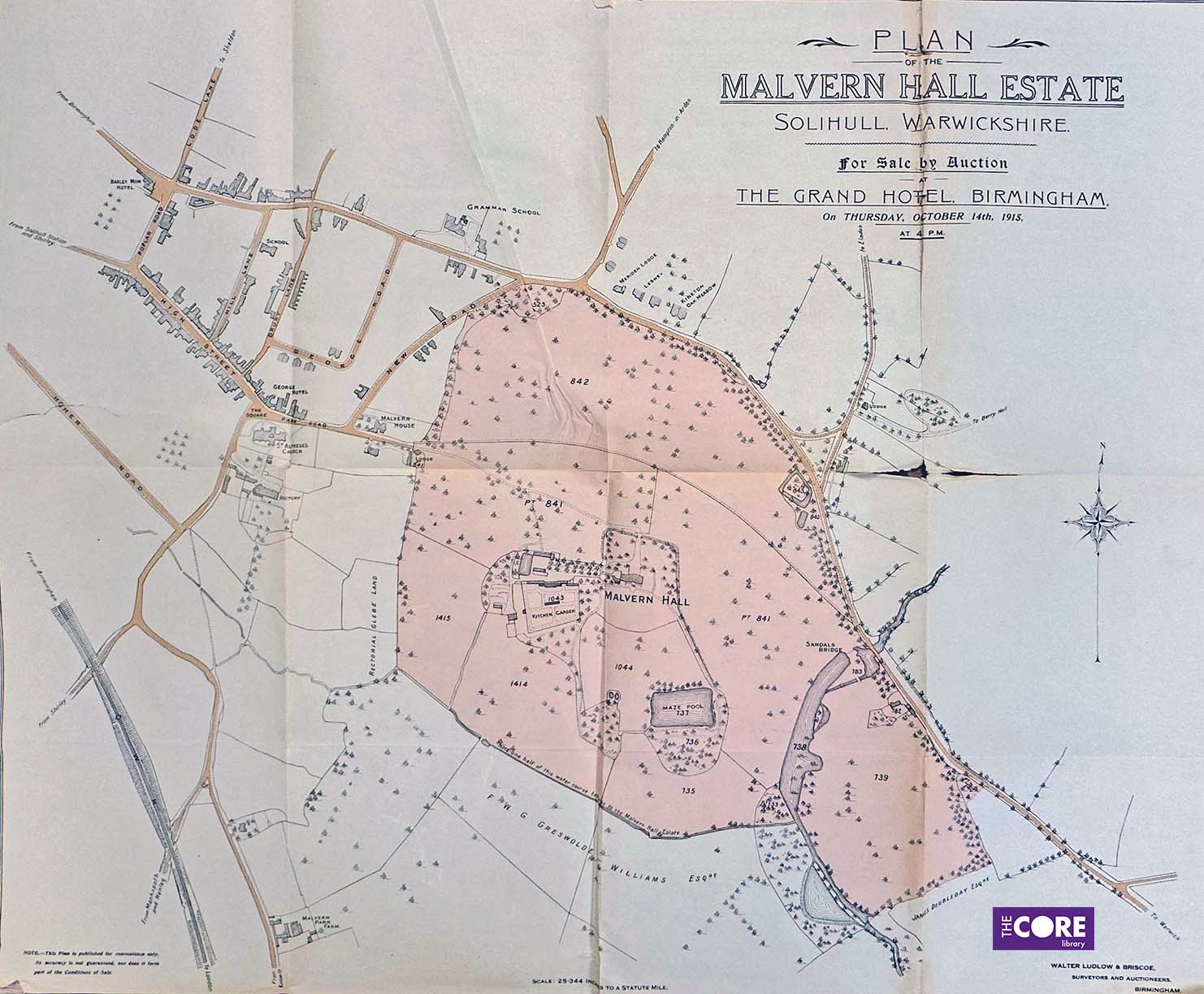
According to the plan accompanying the sale catalogue of the Malvern Hall estate in 1915, ownership of the deer park, as well as other parts of the estate, was retained by the Greswolde-Williams family when Malvern Hall was sold to David and William Troman in 1896.
See our earlier blog post for more information on the ownership of the Malvern Hall estate.
Redevelopment
The Malvern Hall estate was purchased in September 1923 by Horace Joyner Brueton (1882-1950) who developed part of the estate with “good class” detached and semi-detached “labour-saving” residences.
The development site – including Park Avenue, Brueton Avenue and Blythe Way – became known as the “Brueton Estate.” There were also newspaper advertisements in 1927 that described it as “Malvern Park Garden City, Warwick Road.”
Planning applications were submitted for sewers in May 1925, followed by eight houses in Brueton Avenue in August 1925, and roads in March 1926.
In October 1924, local newspapers reported that Malvern Park was in danger of being developed for building purposes. Councillor W. T. Horton, Chairman of the Recreation Grounds Committee, and other local councillors and ratepayers decided to try to secure the parkland for the use of the community.
Horace Brueton had offered the whole of the 147½ acres of the estate, including Malvern Hall, the lodge, and two or three cottages, for the sum of £20,000, or a 3d rate over 80 years.
Alternatively, he offered the front land for £12,500 or 75 acres, including the hall, for £10,000.
He also gave the option of 100 acres as a gift, provided that the Council made the public path through the park (presumably the footpath from Park Road to Sandals Bridge) into a road.
A ratepayers’ meeting decided to support the Council in any action it decided to take in order to secure open spaces for the Solihull Rural District.
Although there was opposition to the proposal on financial grounds, Solihull Rural District Council voted by a large majority to accept the recommendation of the Open Spaces and Recreation Grounds Committee to hold a referendum of ratepayers on the question.
The plebiscite was held in November 1924, with electors being asked to vote on two proposals:
- the purchase of the whole estate, which would add around 3d on the rates, or
- the purchase of about 35 acres fronting Warwick Road for an additional 2d on the rates.
Each of the 5,050 electors in the parish of Solihull (covering the wards of Olton, Shirley and Solihull) received a stamped reply postcard for their vote on the proposals.
3,346 cards (66.3 per cent) were returned and the results were:
- 2,461 (73.6%) against both proposals
- 595 (17.8%) in favour of negotiations for the whole estate
- 69 (2%) in favour of purchasing 35 acres
Following the vote, Horace Brueton said that he would be willing to part with around 16 acres adjoining the Park Road entrance, provided that it would be used for an open space and recreation ground.
At a special meeting of Solihull Rural District Council on 18th August 1925, the Chairman, Mr Joseph Garnett Seymour Browett JP (1885-1927), used his casting vote to agree to the proposal that the Council should seek approval from the Ministry of Health to raise a loan for the purchase of approximately 16 acres of the Malvern Park estate. The cost was one shilling per square yard. The resolution also included the purchase of the lodge and garden for £350.
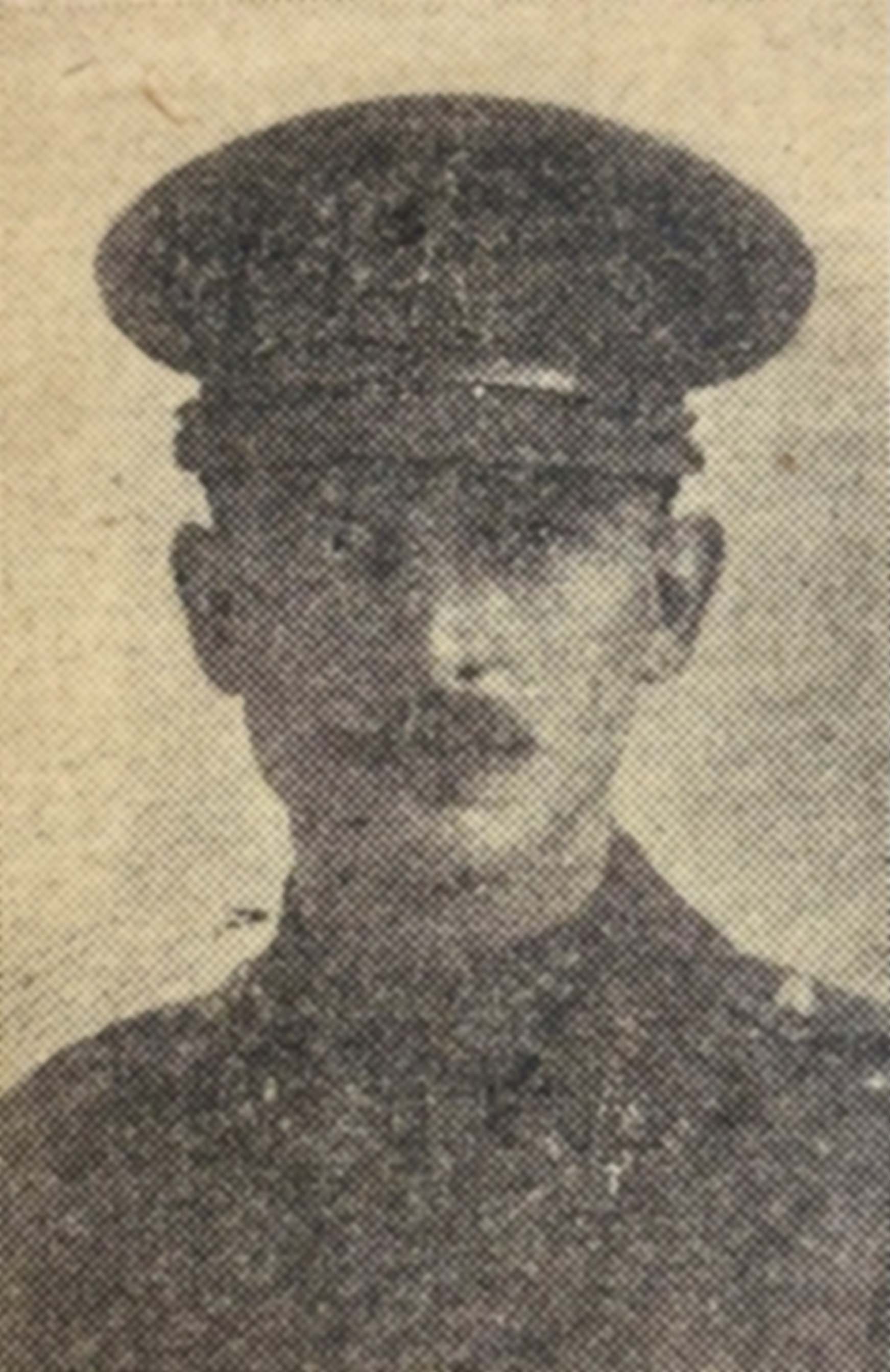
Mr Browett was the manager of a printing and advertising firm and he lived in Streetsbrook Road with his wife and two daughters. He died unexpectedly on 3rd June 1927, aged 41, after contracting pneumonia. Born in Solihull and educated at King Edward’s School, Five Ways, Birmingham, he had served as a Second Lieutenant with the Royal Warwickshire Regiment during the First World War, serving in France with the 2/5th and 2/6th Battalions.
A keen sportsman, he was President of the National Hockey Association, and was a member of the Olton Cricket Club and Olton Golf Club. He was also a prominent Freemason, belonging to the Forest of Arden Lodge. He was elected to Solihull Council in 1920, focusing on the provision of council housing and modern sanitation, whilst being mindful of the need to keep the rates as low as possible. He was still the Chairman of Solihull Rural District Council at the time of his death, having first been elected Chairman in 1925.
In a separate transaction, Warwickshire’s Education Committee decided on 19th January 1926 to recommend the purchase of Malvern Hall itself and 11 acres of land to the County Council, at a cost of £5,750. Warwickshire County Council purchased the site for the development of a girls’ secondary school.
Opening ceremony
Solihull Rural District Council purchased the land from Horace Brueton at a total cost of £4,404 on 6th July 1926 – just four days before the official opening to the public!
Malvern Park recreation ground was officially opened on the afternoon of Saturday 10th July 1926 by Mrs Ada Anne Davis (1863-1938), who was the mother-in-law of Mr J. G. S. Browett, Chairman of Solihull Rural District Council.
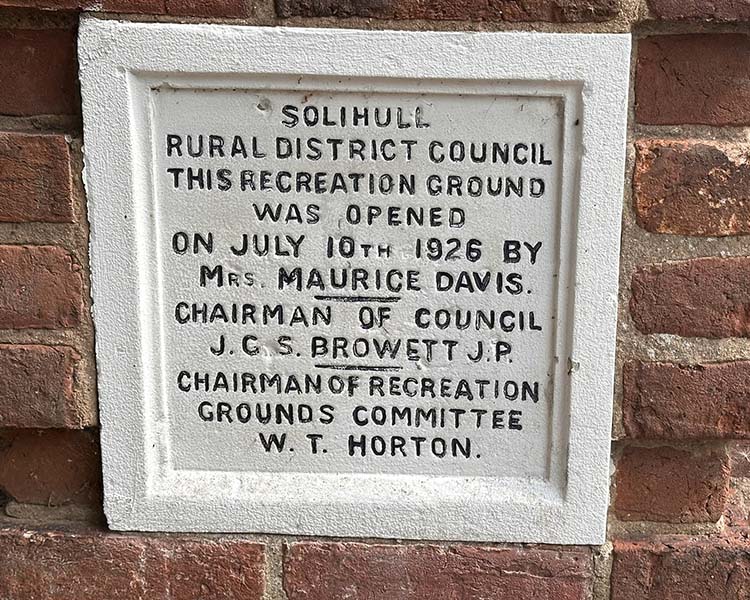
Mrs Davis (née Heaton) lived at (New) Berry Hall, where she had moved with her first husband, William Albert Upton (1860-1908) in 1907. She was a local benefactress and frequently offered the grounds of the hall for various charitable and fundraising activities.
Mr Browett presided at the opening ceremony, paying tribute to Mr Horton’s zeal and ability, acknowledging his role in ensuring that the land was secured for Solihull.
A large number of local residents turned out to witness Mrs Davis opening the gates to Malvern Park with a suitably inscribed golden key, presented to her by the Council. Children from the village schools then marched into the park where they sang the National Anthem, Jerusalem and Land of Hope and Glory.
The picture at the top of this article shows headteacher of the elementary school, Miss Sarah Bragg (1869-1933), walking into the newly-opened park with pupils including Ted Morris, Jim Goodall, Charlie Grant, P. Cockayne and Claude Coton.
Schoolchildren from Olton, Shirley and Solihull were also entertained to tea by Mrs & Mrs Brueton, owners of Malvern Hall. The event was described in the Birmingham Daily Gazette 12th July 1926 as “essentially a children’s function.”
Events and festivities
Malvern Park was often the focus for civic and community events in the Solihull district. Even before becoming a municipal park, the owners of Malvern Hall would often offer the grounds for public events, such as the Warwickshire Agricultural Show in 1901.
Annual shows by Solihull Horticultural Society were held in the late 19th century, with a review of the 1894 event noting that it was held principally to encourage an interest in gardening amongst those who lived in cottages in the district. Entry was open to cottagers in Solihull, Shirley, Forshaw, Elmdon, Olton, Catherine de Barnes, and Lugtrout Lane.
In 1932, Malvern Park was the venue for a number of Carnival events, including an ox roast, the crowning of the Carnival Queen (Miss Mary Grace Bragg), and a miniature fair.
In 1954, it was announced that because of previous damage by vehicles, traffic (including the Carnival procession, but not the Carnival Queen’s carriage) would be banned from Malvern Park.
For the Silver Jubilee of King George V in 1935, Solihull schoolchildren were treated to a party and entertainments in Malvern Park, including free trips on roundabouts in the park, and a special cinema matinee.
Solihull Town Band was given permission to play in Malvern Park on Sunday evenings 8-9.30pm, commencing Sunday 5th July 1936. The Council agreed to provide seating for about 20 members of the band, provided that sufficient storage for the chairs could be made available by the park keeper, and that any damage was made good by the band.
In August 1936 the band requested that the performances be changed to Sunday afternoons instead.
The second Solihull Police Victory Garden Show was held in Malvern Park on two days in 1943, consisting of two large marquees with fruit, flower and vegetable exhibits. There was also a rabbit show and an exhibition of pelts. There were sports for children, boxing (arranged by Jack Hood), a tug-of-war, swimming, a military parade and a gymkhana. Some 12,000 people paid for admission to the Saturday event.
In 1945, the ending of the Second World War fighting in Europe was marked with a drumhead service in Malvern Park on 13th May, with a muster of more than 1,400 personnel.
In 1954, it was reported that “Solihull’s only outdoor holiday attraction” – the Cricket & Tennis Club and Home Guard Association’s 9th annual fete and flower show in Malvern Park – included a children’s fancy dress parade, side-shows, dog obedience tests and a cycle polo match. The flower show attracted 400 entries.
1954 also saw visitors to the annual Solihull Scouts’ rally at Malvern Park shown how to light a fire with two elm sticks. There was also a demonstration of mountain rescue, with scaffolding playing the part of the “mountain.”
In 1961, it was reported that the annual summer show and fete organised jointly by Solihull Horticultural Society and Solihull Rugby Club attracted 8,000 visitors to Malvern Park in one day.
Anti-social behaviour
Following reports of insolence from children towards park keepers, Solihull Council resolved in July 1936 that all park keepers would be enrolled as Special Constables to enable them to take action if similar incidents occurred.
In September 1938 the Council authorised the purchase of hand-bells and whistles for use by park keepers.
Anti-social behaviour and vandalism has been an ongoing concern over the decades. In the 1950s, the following issues made the local newspapers:
- In 1956 it was reported that the Horse and His Master Equestrian statue had twice been daubed with paint in the space of three weeks;
- Following the installation of the ornamental gates at the New Road entrance in 1956, it was reported that children were using the low walls flanking the gates as a skittle alley – placing bottles along the top and then throwing stones at the bottles to knock them off the walls;
- Litter was strewn on the newly-laid lawns inside the gates and dog owners were accused of allowing their pets to scratch at the turf that had not yet been bedded down.
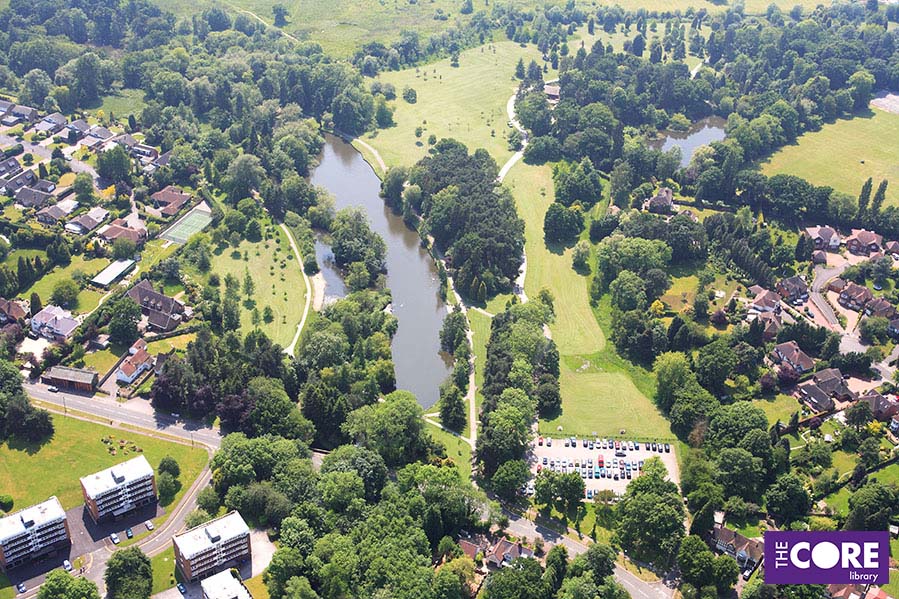
Malvern and Brueton Parks
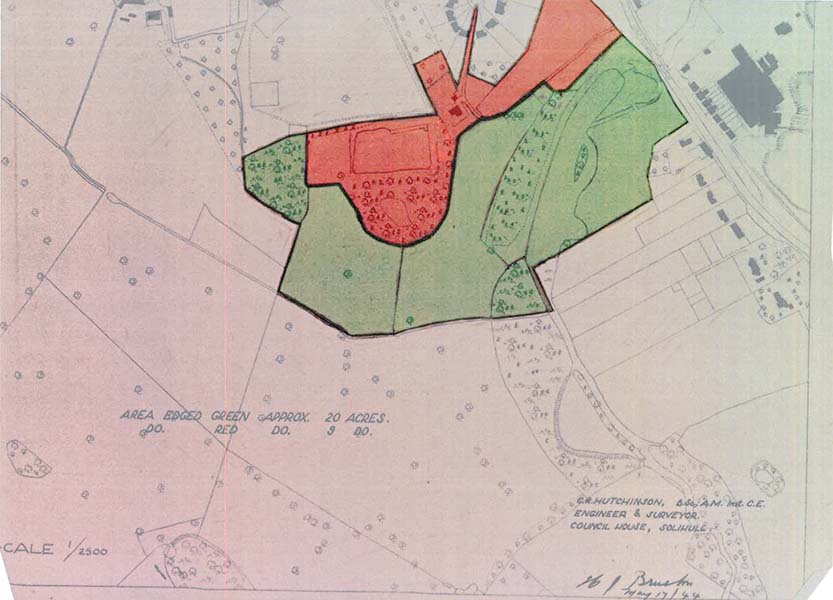
In 1944, Horace Brueton gave 29 acres of the Malvern Park estate to Solihull Council. Of this, 20 acres (coloured green on the plan below) were “for the purpose of a public park, and open space or recreation ground for the pleasure, benefit or recreation of the inhabitants of Solihull and district” in perpetuity.
A condition of the gift was that nine of the 29 acres (coloured red on the plan below) would be reserved for Mr Brueton and his wife until their respective deaths. Six months after the last of them to die, the Council would then be able to use the land and buildings within its legal powers “in connection with the public needs of the District of Solihull.”
The Birmingham Mail 20th January 1944 noted that the gift was “the most munificent ever offered to the district” and included gardens, fields and woodland, with the River Blythe running through it.
Brueton Park was officially opened by Mr Hubert Willink, Minister of Health, on Saturday 15th April 1944, although the conveyance of the land to the Council didn’t actually take place until 15th May 1944.
The two parks were separated by a small acreage of land, believed to have been called Malvern Meadow in the mid-19th century, which the Council expressed the intention of purchasing. In January 1950, it was noted that the Council was in negotiations to purchase the land to link the parks. The Council’s Parks, Allotments and Cemeteries Committee reported at its meeting on 6th February 1950 that the conveyance of the land forming the connection between Malvern and Brueton Parks had been completed.
It was said to be hoped that the “link land” would be brought into use by the end of summer 1950. However, the Parks, Allotments and Cemeteries Committee was told at its meeting on 6th March 1950 that the Ministry of Health was not prepared to issue a licence in connection with the provision of a footpath between the parks.
By September 1952, it was reported that the parks had been linked.
In 1963, additional parcels of land were acquired from owners of properties in Warwick Road/Oldway Drive, enabling the extension of Brueton Park along the Warwick Road side of the stream running from the lake. Improvement works were carried out, including the enlargement of the lake and the construction of a footpath around the lake, which was also continued as a link between Malvern and Brueton Parks.
Festival of Britain 1951
Solihull Home Guard Association was given permission to use Malvern Park for a fete marking the Festival of Britain. The Association, together with the Solihull Cricket and Tennis Club, was authorised to use about 3.5 acres of the park on Bank Holiday Monday, 6th August 1951, including the erection of three marquees and two or three smaller tents.
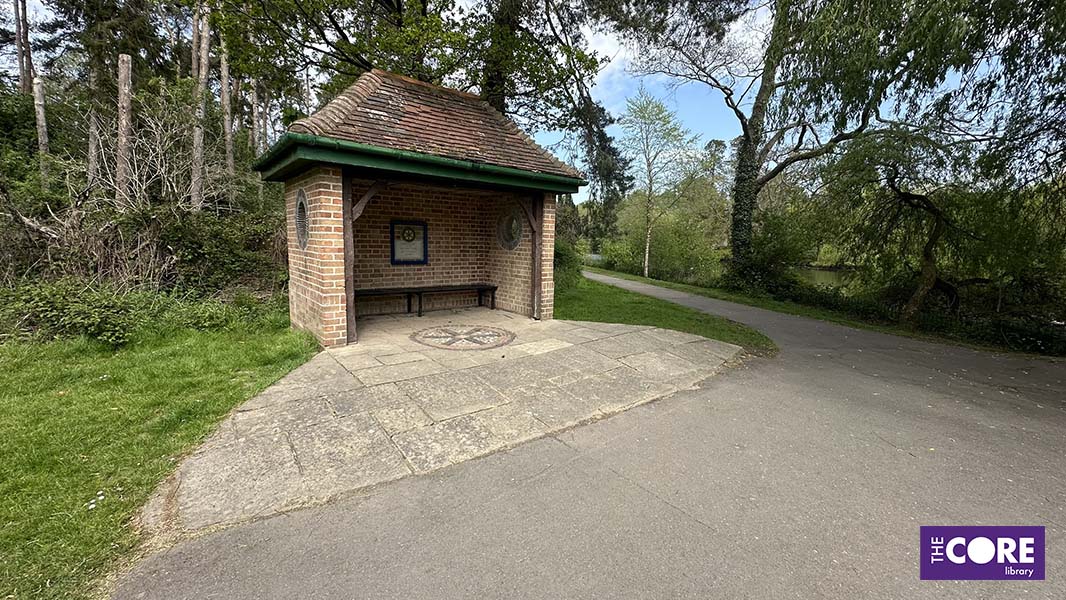
Solihull Rotary Club (formed in July 1946) gave the gift of an arbour for elderly people as part of the celebrations marking the Festival of Britain, 1951.
The building was designed by local architect, Philip Skelcher, a member of Solihull Rotary Club, and is situated next to the lake in Brueton Park. Other club members donated building materials. The foundation stone was laid on 13th June 1951 by Mr Denis Clews, President of Solihull Rotary Club.
Malvern Park extension and ornamental gates
Following the acquisition in 1950 of the link land between Malvern and Brueton Parks, Solihull Council turned its attention to a piece of land between Malvern Park and New Road that was owned by Warwickshire County Council and was part of the Solihull High School for Girls at Malvern Hall.
It was suggested that some sort of exchange of land could occur, with Solihull taking over approximately six acres adjacent to New Road and, in return, Warwickshire would receive five acres of the newly-acquired link land between Malvern and Brueton Parks to enable the extension of the school playing fields. As part of the arrangement, The Spinney in Brueton Park was also offered to the school.
In June 1950, Mr Callaghan, Headmaster or Cedarhurst School, asked for permission to use part of the extension as a cricket pitch for the school on Tuesday and Friday afternoons. However, the Parks Committee said that the final details of the purchase had not been completed, so they were not in a position to give permission for the use.
At a meeting of the Parks, Allotments and Cemeteries Committee on 6th December 1954, the Town Clerk reported that the exchange of land at Malvern Park with the County Council had been effected and that the land on the south side of New Road to be used as an extension to Malvern Park was now vested in the Corporation.
At the same meeting, Councillor Wright submitted a plan showing the proposed gates and requesting a decision from the committee as to whether the entrance should be constructed of brick or stone. The committee resolved that the construction should be of brick.
Councillor (later Alderman) William Edward [“Billy”] Wright (1900-1975) was Mayor of the Municipal Borough of Solihull 1957/58 and was a councillor for Solihull Urban District (1935-1938) and Solihull Municipal and County Borough (1953–1973).
Councillor Wright made a personal gift to Solihull of entrance gates to the New Road extension to Malvern Park. His intention was that the gates should commemorate the elevation in 1954 of Solihull from urban district to municipal borough.
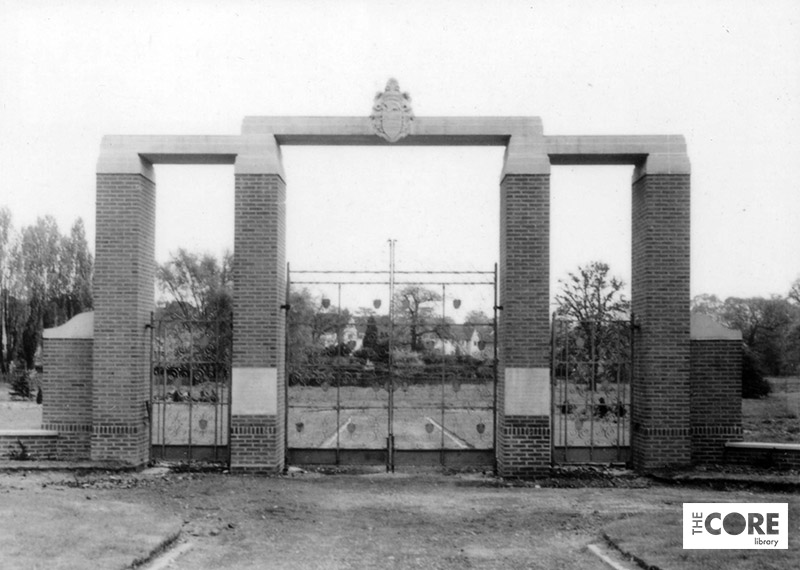
The gates were designed by C. David Dunstan (1935-2012) who was working for the architectural practice of Philip Skelcher F.R.I.B.A. (1908-2002) – the same architect who had designed the lakeside arbour presented by Solihull Rotary Club in 1951.
The new entrance was designed to align with the equestrian statue given by Captain Oliver Bird in 1953. See our earlier blog post for information on the Horse and His Master statue.
The Parks, Allotments and Cemeteries Committee approved the design with a lintel over the top of the gates, whilst the General Purposes (Development) sub-Committee expressed a view that the scheme would be improved if the lintel were omitted and the design and height of the gates were similar to those at the entrance to Solihull School. The Parks, Allotments and Cemeteries Committee reaffirmed its satisfaction with the original design including the lintel, describing it as “most appropriate” and with ample clearance room underneath for any normal vehicle. In exceptional cases, it was said that access to the park could be gained through the existing entrance in Park Road.
The foundation stone of the brick piers for the gates was laid on 23rd May 1955 by Mrs Douglas Cooper, wife of the first Mayor of Solihull. Councillor Wright also spread the mortar and tapped in the stone that would support the second column of the entrance gates.
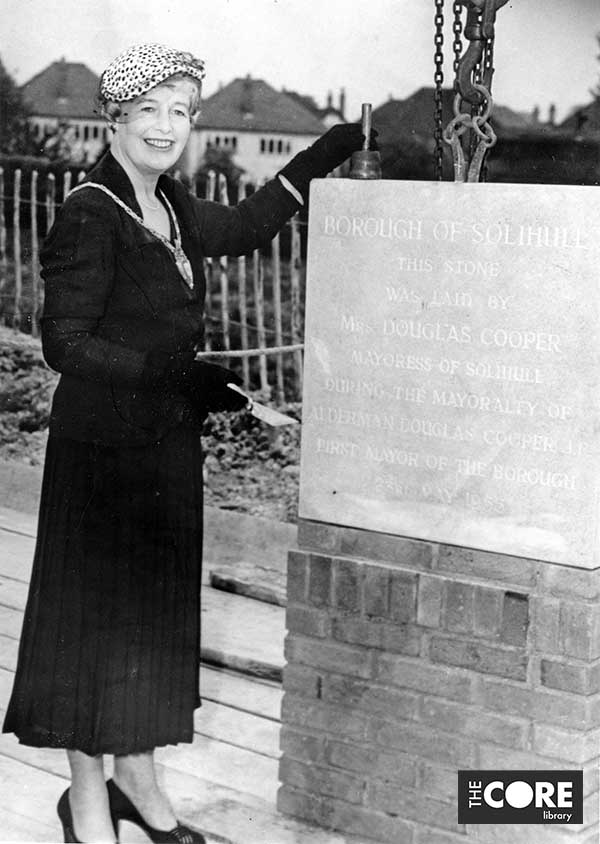
A dedicatory prayer was offered by Rev. Harry Hartley, Rector of Solihull. The installation of the wrought iron gates was completed in May 1956. The brick piers are capped by a stone lintel, the central feature of which is the armorial bearings of the municipal Borough, carved in stone.
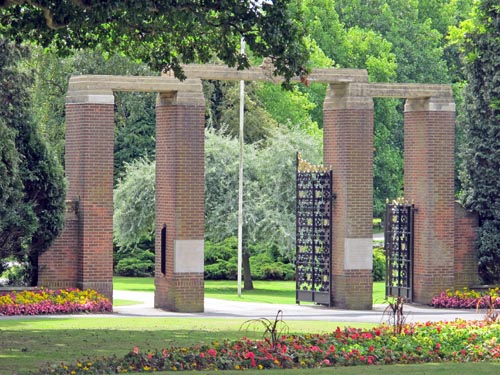
On Saturday 7th November 1953, six trees were planted by the Chairman of Solihull Council (Councillor Robert Douglas Cooper) to commemorate the Coronation of Queen Elizabeth II. The trees were presented by Solihull Horticultural Society.
On 18th July 1956, work began on constructing a new approach road linking the new entrance gates to the extension of Malvern Park with the older portion of the park. The road was a gift to the borough by Captain Oliver Bird.
A sensory garden for the blind was planned as part of the general layout, as was a memorial garden to the war dead.
The sensory garden, incorporated into the Malvern Park Extension, was opened on 5th June 1957 and was presented by Solihull Rotary Club to mark the golden jubilee of the movement. Mr W. K. Winfield, President of Solihull Rotary Club, formally handed over the garden to Solihull Council, remarking that it was one of the club’s most important projects.
The garden was triangular in shape and surrounded by rustic work with a “tapping kerb” to help partially-sighted people find their way around. At the entrance was a plaque with “Garden for the Blind” set in braille.
Councillor Wright appealed for local residents to offer to plant trees along the new road. A local building contractor, Mr Harry Ford, offered to plant 100 flowering cherry trees along the new road.
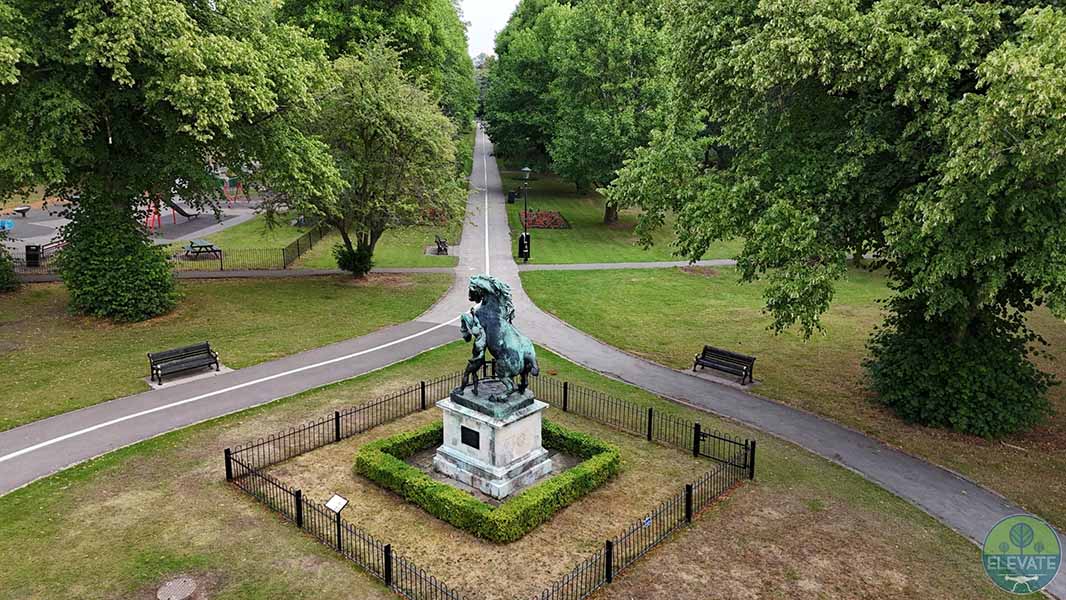
The avenue of tulip trees leading to the statue from the New Road entrance was presented by Solihull Rotary Club in 1977 to commemorate the Silver Jubilee of H. M. Queen Elizabeth II.
Model of St Alphege Church
A stone and slate model of St Alphege Church was in Malvern Park 1959-1967. Measuring 6ft by 4ft 9in, it was apparently made by a Mr Jackson who lived in Elmdon Heath and worked in the fish and chip shop in Damson Lane. He put the model in front of the shop and people would leave money in the collection box. The money raised was then given to the Red Cross.
In December 1958, Solihull Parks Committee recommended that the Council agree to pay £35 to re-erect the model in Malvern Park, with a special railed enclosure. The model appears to have been installed in 1959 but was removed in 1967 owing to vandalism.
We don’t seem to have a photograph of the model in the archives at Solihull Library, but a photograph was published in several newspapers in 1961, including in the Nottingham Evening News, 7 September 1961, page 3. This is available on the British Newspaper Archive website (https://www.britishnewspaperarchive.co.uk/ ), to which all Solihull libraries subscribe.
Arboretum
In 1962, approval was given for the provision of an arboretum. In 1968 it was reported that two senior officers from the Forestry Commission visited and indicated that the site was most suitable for the proposed use. The Borough Surveyor had discussed with the Forestry Commission’s officers an outline scheme for an arboretum covering almost 15 acres and comprising 300 trees of different species.
In preparation for the planting of the trees, approval was given in July 1968 for drainage works to take place during the winter of 1968/9 at a cost of approximately £500. It was understood that further works would be required at an estimated cost of £2,000.
An arboretum was founded by the Mayor of Solihull, Councillor J. C. Ledbetter, who planted the first tree, a 14ft tall Purple Beech, in December 1968. The idea was that at the request of persons, families or organisations, trees would be provided and recorded in return for a donation covering the cost.
The tree planted by the Mayor was intended to be the first of 250 trees in the arboretum, which stretched from the Rose Garden in Malvern Park to the pedestrian bridge over the River Blythe in Brueton Park. In December 1969 it was reported that 10 saplings forming part of the proposed arboretum had been damaged by vandals.
Two nine-year-old boys presented a petition to Solihull Council in 1969 as the trees threatened to encroach on their football pitch. The Council agreed to let them play on an alternative site in the park.
Floral Carpet Bed
In July 1955 it was noted that more than 10,000 plants had gone into the flower-bed design of Solihull’s Coat of Arms.
In 1959, it was said that the plants for the designs came from Solihull Council’s nurseries, with the designs being a joint decision by the Parks Department and the Surveyor’s Department.
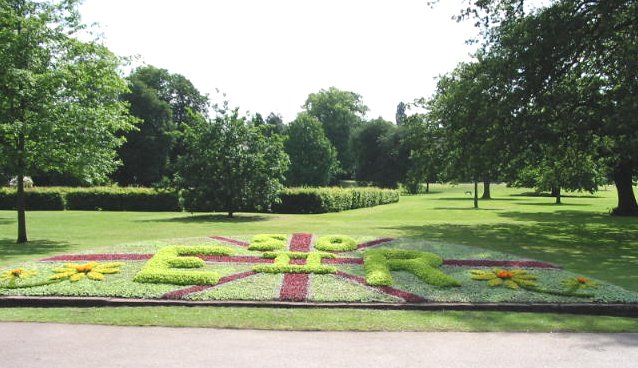
Opposite the floral carpet bed, there were a few hives of the Warwickshire Bee Keepers’ Association, although burglars broke into the bee keepers’ shed in 1997 and stole protective equipment.
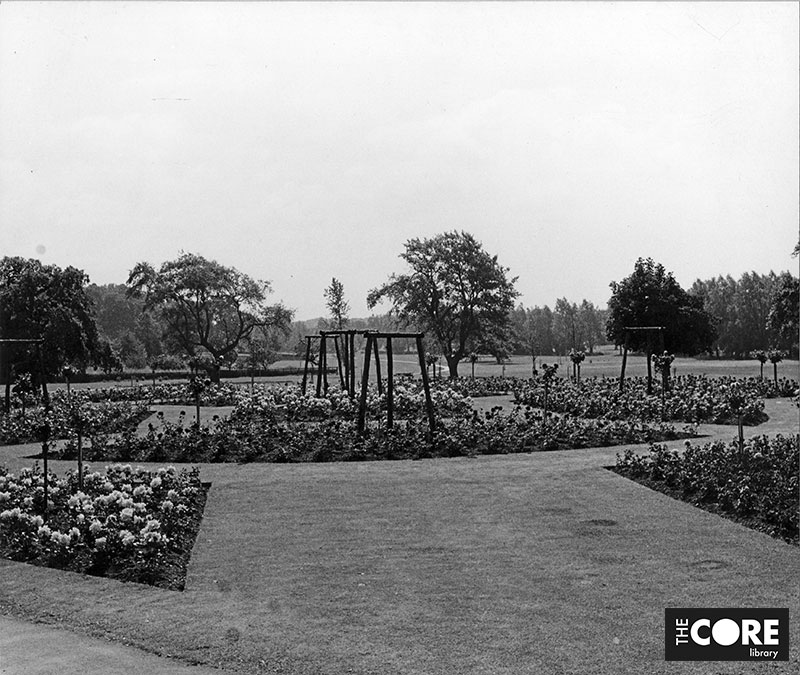
In 1968, Watkins Roses of Hampton-in-Arden gave 1,600 rose bushes to Solihull Council to establish a rose garden in Malvern Park on the site of the Borough’s former Municipal Bowling Green. Use of the bowling green was reported to have been discontinued many years previously.
A request in February 1968 by the Chief Superintendent of Police on behalf of the Police Social Committee to lease the bowling green was rejected by the Parks Committee on the advice of the Town Clerk based on private use of the land not being permitted. The Clerk pointed out that a covenant in the conveyance of the land to the Council stipulated that the land must be used only for the purpose of public recreation and pleasure.
Commemorations and memorials
In November 1935, the Chairman of Solihull Urban District Council, Mr R. J. Turner, planted an oak tree in memory of the late Mr J. E. Poulter of High Street, Solihull who died earlier in the year, aged 91. The tree was given by Mr J. W. Robertson Scott, editor and proprietor of The Countryman, who was an old friend of the deceased. He described Mr Poulter as almost a model of the private citizen on whom the progress of the community relied.
In 1957, Solihull branch of the British Legion presented a sundial for erection in the Garden of Remembrance in Malvern Park.
In December 1998, members of Solihull’s Pensioners Convention braved torrential rain to carry out a bulb planting ceremony at Malvern Park’s workers’ memorial tree and plaque. The group planted 550 crocuses in honour of the 700 workers killed in Britain in the previous year.
In 2012, St Alphege ward councillors, Kate Wild, Joe Tildesley and Stuart Davis, planted a tree in Malvern Park to celebrate the Queen’s Diamond Jubilee. The tree, an Acer campestre variety known as the Queen Elizabeth, was paid for by the three councillors themselves.
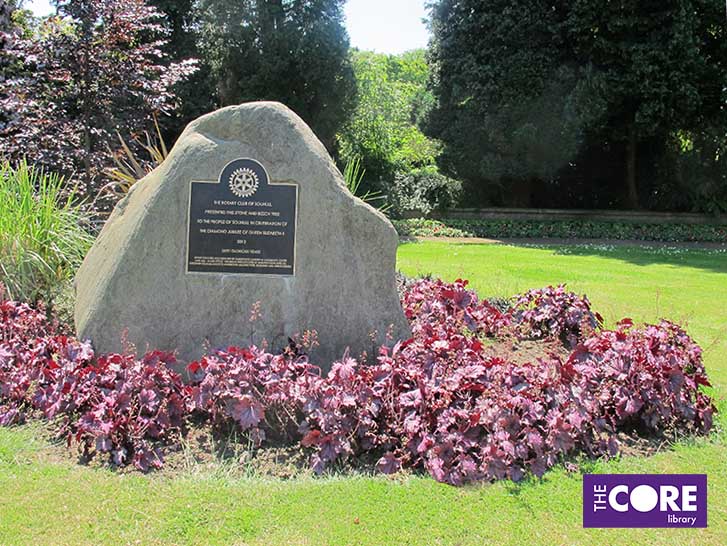
A Jubilee Stone and beech tree were unveiled outside Malvern Park on 29th November 2012, to commemorate the Diamond Jubilee of Queen Elizabeth II. The four-and-a-half-ton granite was brought from North Wales, and is similar to the Jubilee Stone carved in 1887 for Queen Victoria’s Golden Jubilee.
The stone and beech tree were presented by Solihull Rotary Club, with the stone donated and installed by Earlswood Garden and Landscape Centre and Mid-Wales Stone. The beech tree was donated by Earlswood Plants Ltd. The design was by Solihull Council Landscape Architecture, Ecology and Urban Design.
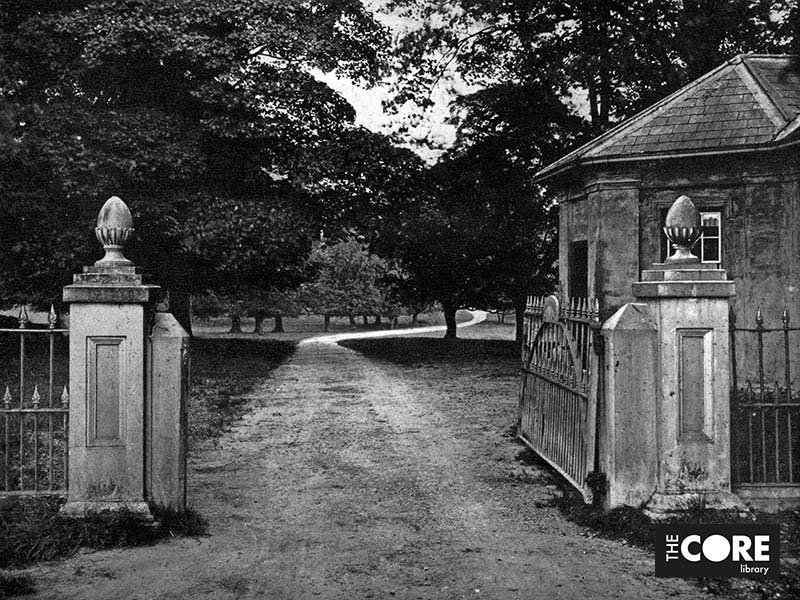
Malvern Park Lodge
Included in the 1926 sale to Solihull Council was Malvern Park Lodge, 22 Park Road. The lodge, also known as Keepers Cottage, is Grade II listed and dates from the early/mid-19th century.
Situated on the western carriage drive to Malvern Hall, the small cruciform building had a yard and water pump. A single storey extension was built between 1912-1936.
It was used as a park keeper’s lodge and Mr H. Evans was appointed to the role of caretaker in 1932, with a salary of £2 per week and free accommodation at Malvern Park Lodge.
A change of use to offices was approved in 1990. By 1999, it was home to the Solihull branch of the Alzheimer’s Society.
In 2016, planning permission was given for a change of use from B1 business to C3 residential, returning the building to the purpose for which it was originally designed. The lodge was sold by Solihull Council in 2017.
Local Nature Reserve
The parkland has always been a haven for wildlife. In 1889, for example, it was reported that a nightingale had take up residence “in the groves of Malvern Park, Solihull,” singing to a considerable audience (Birmingham Mail, 31st May 1889).
In 1971, it was announced that some 35 acres of land belonging to Malvern Park Farm had been bought by Solihull Council for the construction of Solihull Sixth Form College and St Alphege C of E Primary School. Malvern Park Farm was originally the Home Farm of the Malvern Hall estate. The Lea family had moved to the 200-acre Malvern Park Farm in 1930, where Jack Ernest Lea (1907-1961) was a dairy farmer.
An application for outline planning permission to develop land at Malvern Park Farm was refused in 1956 and in 1964 although permission was given in October 1971 and periodically renewed.
In 1973, the owner of Malvern Park Farm and Manor Park Farm, Jack Lea’s older sister, Miss Doris Jean Elizabeth Lea (1902-1992), applied for outline planning permission for housing on a further 80 acres of Green Belt Land on the site. Solihull’s Planning Committee refused planning permission in September 1973. Miss Lea put the the farm and an acre of land up for sale in 1984.
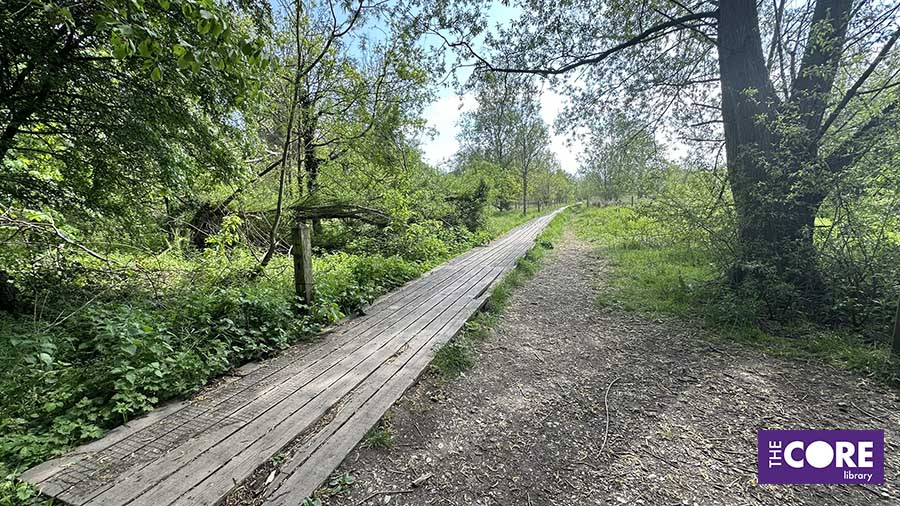
An interpretation board in Brueton Park indicates that, in 1974, Solihull Council bought the area south of the brook and, in 2002, the area was designated as a Local Nature Reserve (LNR). The LNR includes the River Blythe Site of Special Scientific Interest (SSSI), designated by English Nature in 1989 as defined as “a fine example of lowland river on clay.”
The wood within the SSI is important for oak, ash and alder trees, with a hazel and blackthorn understory. Woodland flowers change with the seasons – including bluebells, yellow archangel and wild garlic in spring, to red campion and meadowsweet in the summer.
The area also includes the Marsh Field Site of Importance for Nature Conservation (SINC) which hides a pond surrounded by a wildflower meadow and scrub next to the wood.
Lea Wood was once the Council’s Tree Nursery, which closed in the 1990s. Solihull Tree Wardens took over the site management in 2002.
Brueton Park Zoo
In 1988, the Department of the Environment gave approval to Solihull Council to operate an “animal corner” in Brueton Park. A mini-zoo, sometimes referred to as a children’s zoo, was opened on a 5-acre site in the park, which included the former boating pool at Malvern Hall. The area had been part of the land given to the Council in 1944 but reserved by Horace Brueton for the use of himself and his wife during their lifetimes. Mrs Brueton died, aged 91, in 1982.
The animal sanctuary housed a variety of species, including flamingos, pheasants, peacocks, canaries, lovebirds, pelicans and small animals such as guinea pigs and rabbits.
In 1997, it was announced that the zoo was to close as Solihull Council said that it could no longer afford the £25,000 annual running cost. A 600-signature petition caused a temporary stay of execution, and the zoo was given funding for 1997/8 to enable other financing options to be considered.
A proposed rescue package by the Chestnut Centre in Derbyshire, which would have seen the centre become home to otters and owls, collapsed in December 1998 after the Chestnut Centre cited other commitments as the reason for its decision to withdraw from the scheme.
However, in June 1999, it was announced that the Warwickshire Wildlife Trust was willing to take over the site and convert it into an environmental centre. The trust signed a lease with Solihull Council in 2000 and set about raising the £300,000 required to build the centre an transform the site. In October 2002, the Parkridge Centre, including a tearoom and shop, was officially opened by wildlife expert, Professor David Bellamy.
In June 2003, it was announced that visitor numbers had been lower than expected and the centre would have to close on weekdays from September so that it could save money to fund planned enhancements such as a children’s play area, wildlife garden and green theatre. However, a business partner was found to run the café, meaning that the centre was able to reopen on weekdays from October 2003.
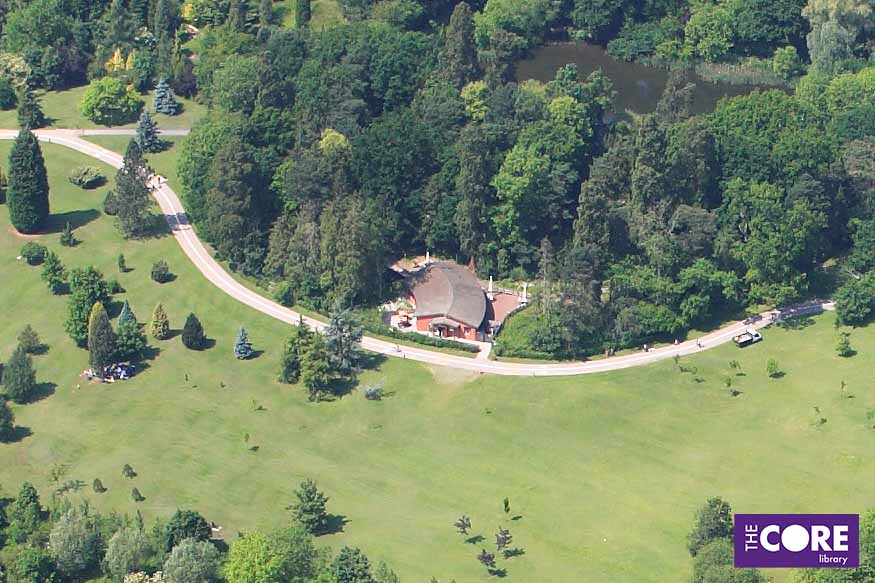
For 23 years, Warwickshire Wildlife Trust ran the Parkridge Centre in Brueton Park, offering visitors refreshments in its café as well as educational opportunities in its 5.5 acre nature reserve.
The centre offered hands-on, curriculum-aligned outdoor learning sessions for schools and groups of all ages, including pond-dipping, mini-beast hunting, and den-building. There were ongoing programs such as the Wildlife Watch After School Club and a Nature Club for home-schooled children, along with seasonal activities during half-term breaks.
It looks as if the final events took place in December 2025. In February 2026, Warwickshire Wildlife Trust announced that, owing to rising costs, they had decided to close the Parkridge Centre permanently and to hand the site back to Solihull Council.
Ice house
Adjacent to the enclosed lake near the Parkridge Centre, the tree-lined pit or “dell” is thought to have originated from the removal of clay sub-soil for brick-making purposes. A brickworks in more recent times once stood on the opposite side of Warwick Road to the park. The brickworks was demolished about 1967.
Situated within the north bank of the dell are the remains of the old Ice House. This barrel-shaped 17ft-deep brick chamber was once packed with ice and insulated with straw. It was surrounded by a mound of earth and the planting of broad-leaved trees around it provided further insulation and shade.
A drainage channel disposed of any surplus ice melt water. Ice would then be used in summer for the preparation of ice cream and iced water, a luxury only the great houses could afford between 1750-1900. Fish and game were also stored.
As a result of damage, the Council resolved in January 1957 that the top of the 300-year-old ice house should be covered. The structure is Grade II listed.
Sports
In 1933, Solihull Council agreed to permit bowls in Malvern Park on Sunday afternoons 2-5pm.
In 1935, Solihull Council’s Surveyor was instructed to prepare an estimate for the provision of two hard tennis courts and a pavilion suitable for joint use in connection with bowls and tennis.
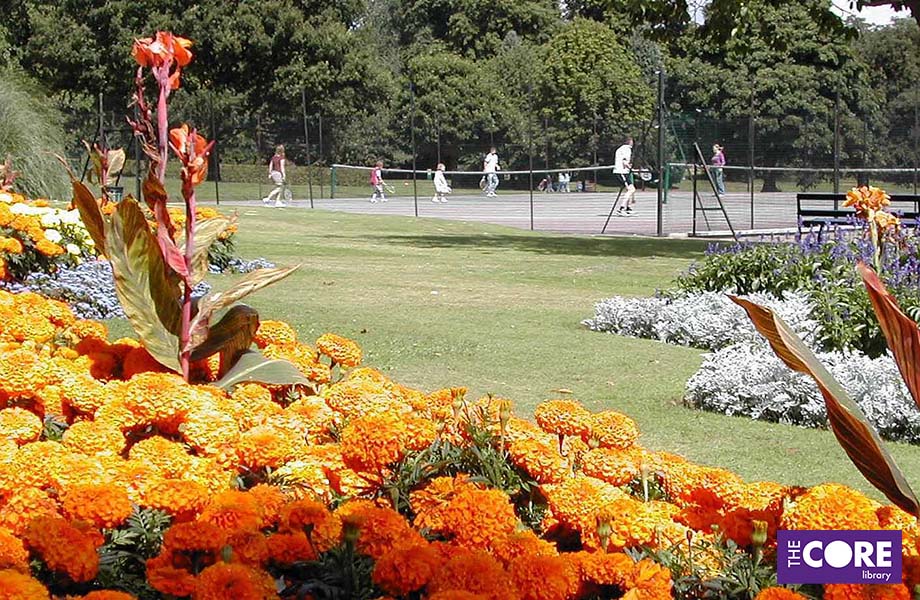
Tennis courts in Malvern Park are available to use free of charge – just book a slot via the Solihull Parks Tennis website.
Green Flag awards were issued to Malvern and Brueton Parks in 2004.
Love Solihull parks
If you’d like to find out more about how you can get involved in helping to care for Solihull’s parks and open spaces, look at the work of Love Solihull – an environmental initiative co-ordinated by Solihull Council that supports members of the local community in making a real difference.
If you have any information about the history of Malvern or Brueton Parks, please let us know.
Tracey
Library Specialist: Heritage & Local Studies
The Core Library, Solihull
© Solihull Council, 2026.
You are welcome to link to this article, but if you wish to reproduce more than a short extract, please email: heritage@solihull.gov.uk
Further reading
Malvern Hall and the Greswold, Lewis and Wigley families
Byelaws relating to parks and open spaces in Solihull
Solihull Council and Arden Tree League – leaflet on the features of Malvern and Brueton Park [1981]
MAGIC (Multi-Agency Geographic Information for the Countryside) – Government digital mapping including Local Nature Reserves


Leave a Reply