
During the Solihull Remembers project to commemorate each of the Borough’s First World War casualties on the centenary of their death, library staff worked with researchers from across the Borough, including a team from St Margaret’s Church, Olton. The names of the 52 men on the war memorial in the church were researched. It was found that there were at least 30 other casualties with a local connection whose names were not included on the memorial.
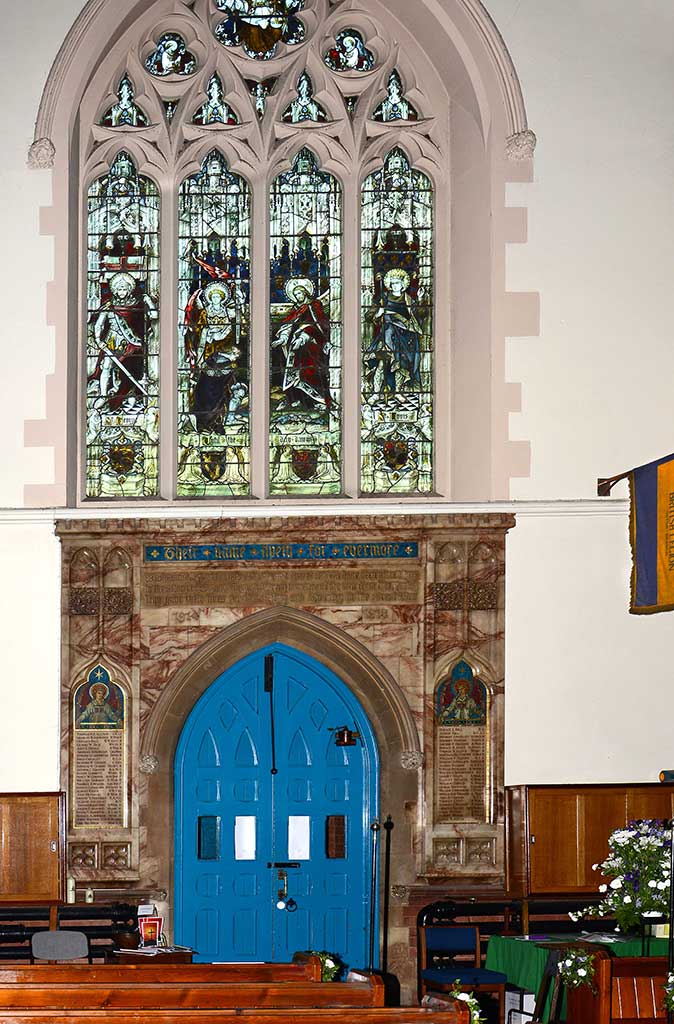
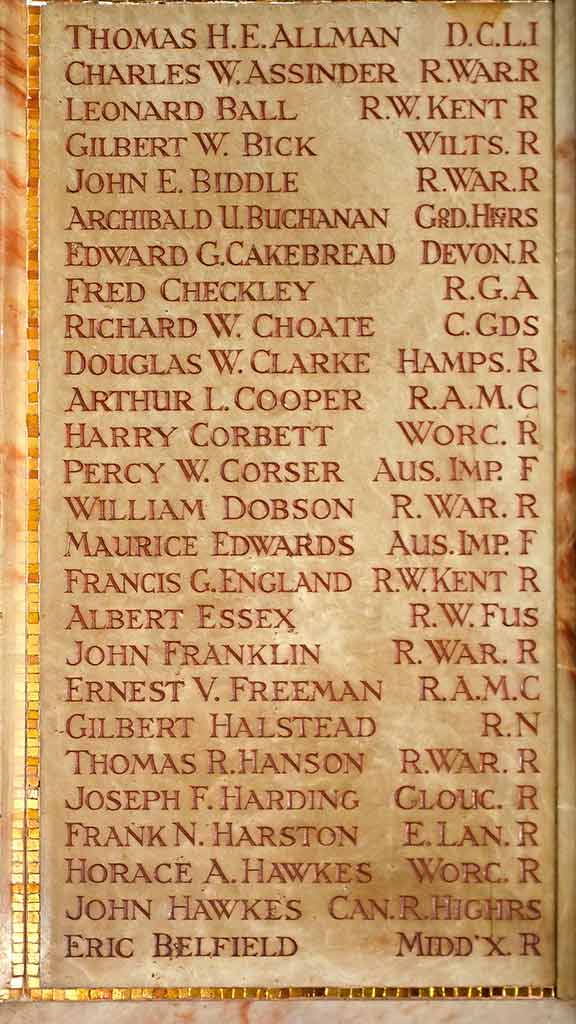
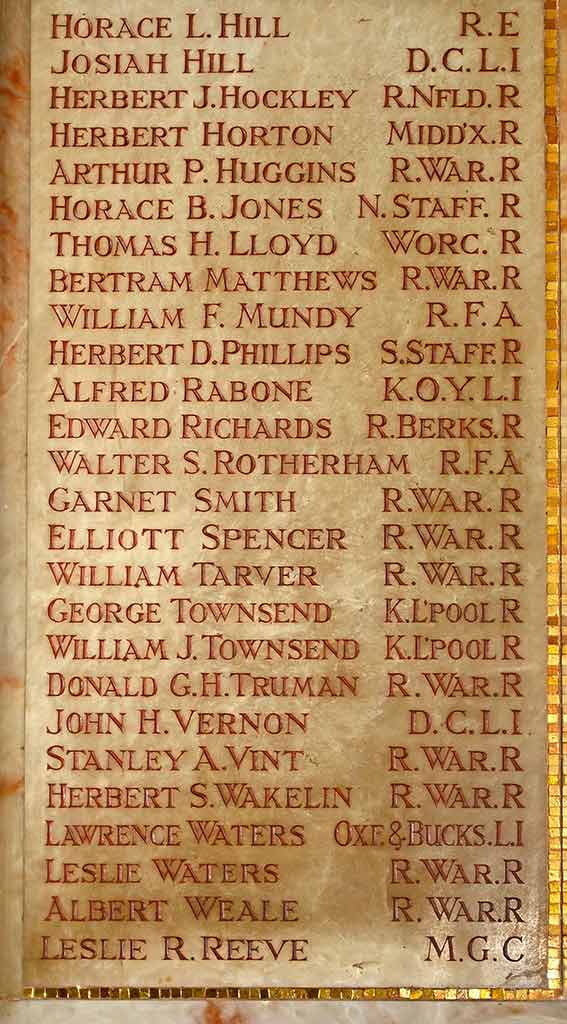
The War Memorial at St Margaret’s Church, Olton, pictured above in photos taken in 2014 by Andrew Hulme (1955-2019), was dedicated on 14th December 1920, with the Lord Bishop of Birmingham making the following dedication:
In the Name of the Father, and of the Son, and of the Holy Ghost, we dedicate this Window and these Tablets to the Glory of God, in Memory of the Men from this Parish who fell in the Great War.
May their example inspire us to courage in the greater war against all evil and unrighteousness; May their memory ever burn brightly in those who here or elsewhere remember their deeds, and, encouraged by their example and strengthened by their fellowship, may we look forward to reunion with them in the inheritance of the saints in light.
May the Lord of His mercy grant to us, with all the faithful departed, rest and peace. AMEN.
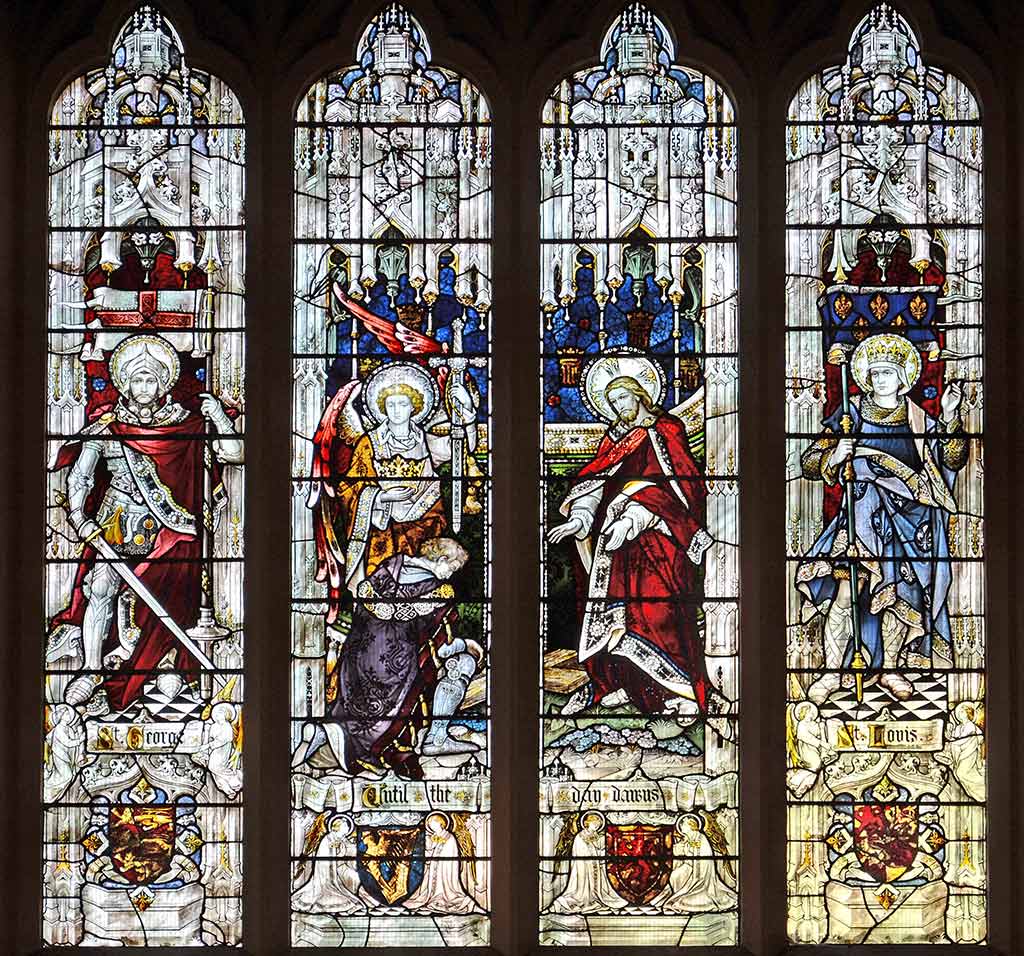
The stained glass window was designed and executed by the well-known Birmingham firm, John Hardman & Co. The description of the window in the programme for the service of dedication is:
The main subject of the window, taking up the two centre lights, is the warrior laying his cross (or his sword) at the feet of Christ, and receiving in return from His hands the Crown of Victory. On the one side of this is St George, patron of England, and on the other St Louis of France, the leader of the Crusade in 1249, the object of which has been attained by the help of many of those whose memory is being commemorated. Beneath the main figures are the arms of the United Kingdom – England, Ireland, Wales and Scotland. In the top opening of all is Christ as King of the World and giver of Victory.
Olton Garden of Remembrance
On 31st October 1948, Canon R. B. Parslew, Rural Dean of Solihull and Vicar of Olton, dedicated a Garden of Remembrance outside the Olton Branch of the Royal British Legion. He was assisted by Rev. G. H. Medhurst, Olton congregational minister.
The Chairman of the Olton Branch of the Royal British Legion, Col. Philip Docker, who was a co-founder of the branch in 1946, and one of the first members of the British Legion when it was founded in 1921, laid a wreath at the granite memorial stone. He was the organiser of Olton’s Poppy Day and also planted the first remembrance cross at the new Garden of Remembrance. He had served with the 8th Battalion Royal Warwickshire Regiment during the First World War, and one of his sons, Second Lieutenant Philip Malcolm Docker, was killed in the Second World War. Colonel Docker’s wife, Doris (née Whitehill) had been a nurse at Olton V. A. D. Hospital before their marriage in 1915.
Colonel Docker also started the Olton Field of Remembrance, the first one to be built outside Westminster since the Second World War, according to the Evening Despatch, 5th November 1954. The floodlit field was on Warwick Road, Olton, near the roundabout, and was made up each year by members of the Olton branch of the British Legion.
In 2021, Solihull Council gave planning permission for the stone memorial from the Garden of Remembrance behind the British Legion’s Crown Club, 2 Mason’s Way, Olton to be relocated to a more prominent site. The photograph below shows it in November 2021 on its new site at the junction of Warwick Road and Old Warwick Road.
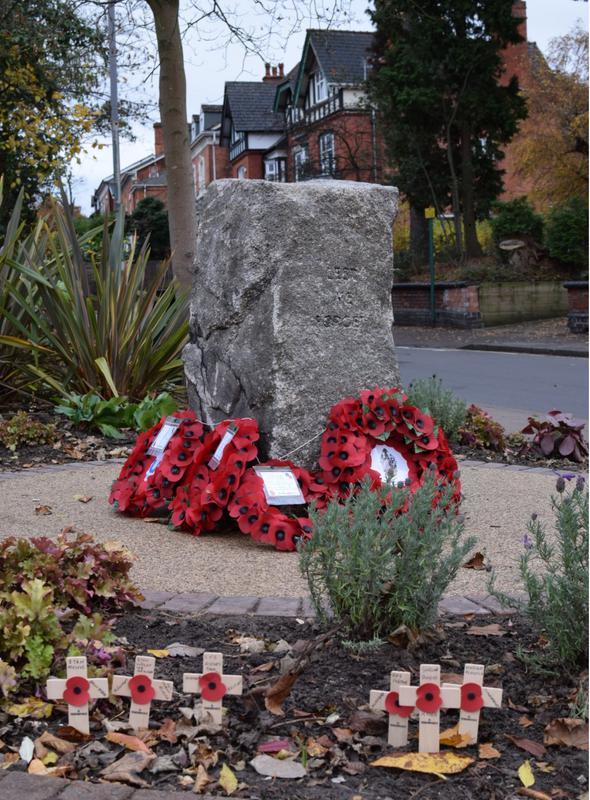
Names of the Fallen from Olton
Below are the names of all of the First World War casualties we know of who had a connection with Olton e.g. they were born, lived, studied, worked, died or were buried there. Clicking on the link from the name will take you to the blog post commemorating the individual on the centenary of their death.
Those commemorated on Olton War Memorial
Other casualties with an Olton connection
These individuals are not commemorated on the war memorial at St Margaret’s church, often because the family had moved away from Olton prior to the war.
War casualties buried at Olton Friary
There are 20 Commonwealth War Graves at Olton Franciscan Cemetery, including five from the First World War.
Former Sapper, Daniel Ferns, is also buried there but, having died of TB ten months after his discharge from the Army, he is not considered an official war casualty by the Commonwealth War Graves Commission so doesn’t have a military pattern gravestone.
The following are buried at Olton Friary:
If you have any further information about any of those mentioned, or if you know of any others who are missing from this list, please let us know.
Tracey
Library Specialist: Heritage & Local Studies
The Core Library, Solihull
email: heritage@solihull.gov.uk


Leave a comment