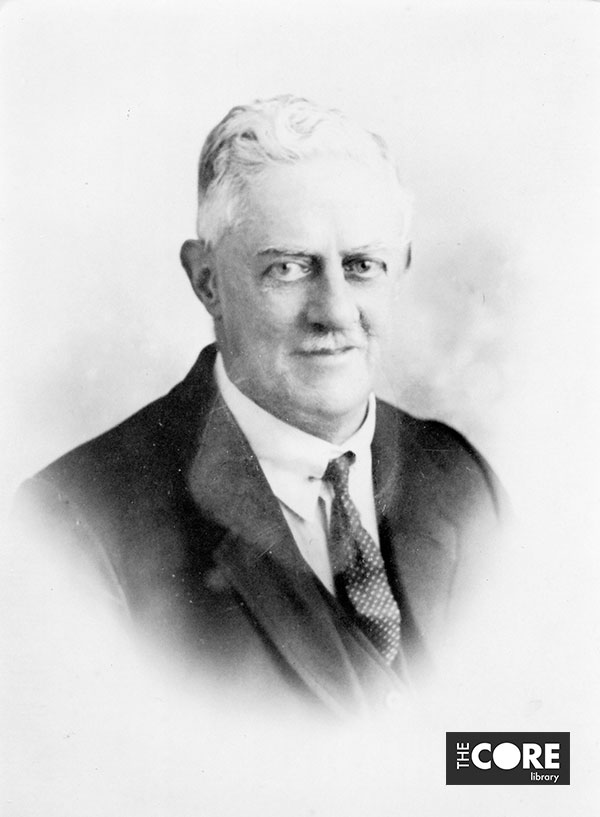
On 4th January 1896, Geoffrey Arthur Martineau (1861-1934) and Jessie Clementina Madeley (1864-1947) were married at St Alphege Church, Solihull. The groom was a 34-year-old widower, listed as a manufacturer, whilst the bride was a 31-year old spinster, and the daughter of the late Charles Madeley JP (1829-1895), gentleman.
Solihull Parish Magazine remarked that bride and groom were members of two of Solihull’s oldest families. The couple set up home at Touchwood Hall in Drury Lane, Solihull and remained there for almost 40 years.
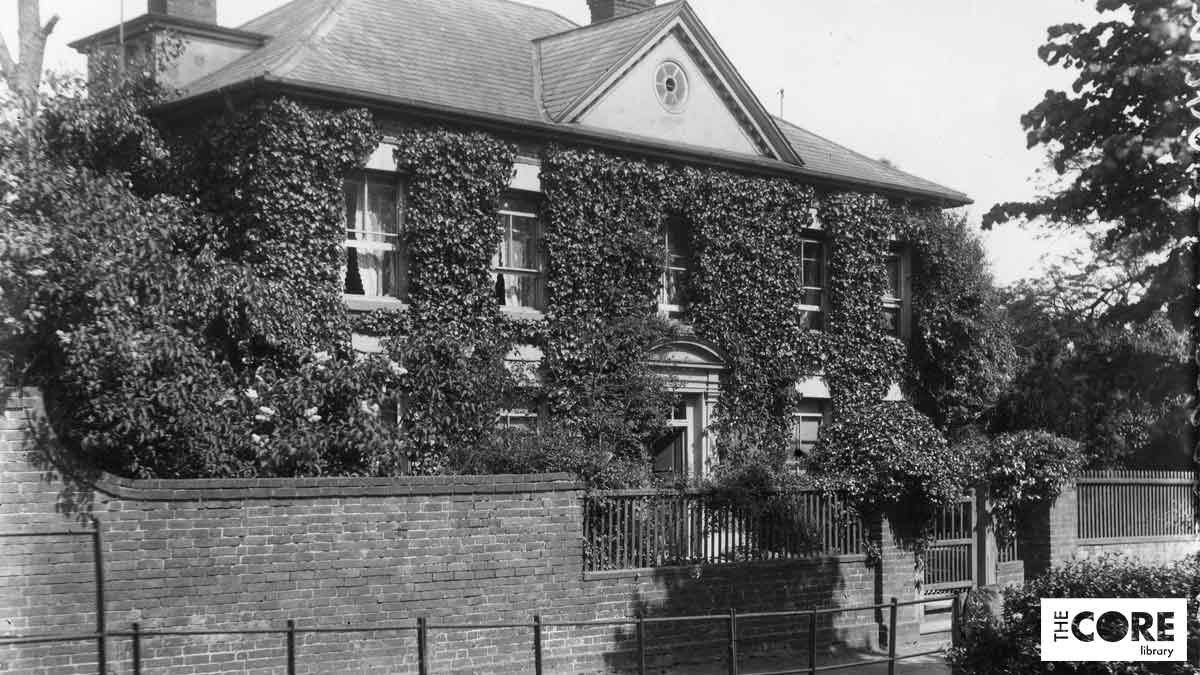
Touchwood Hall
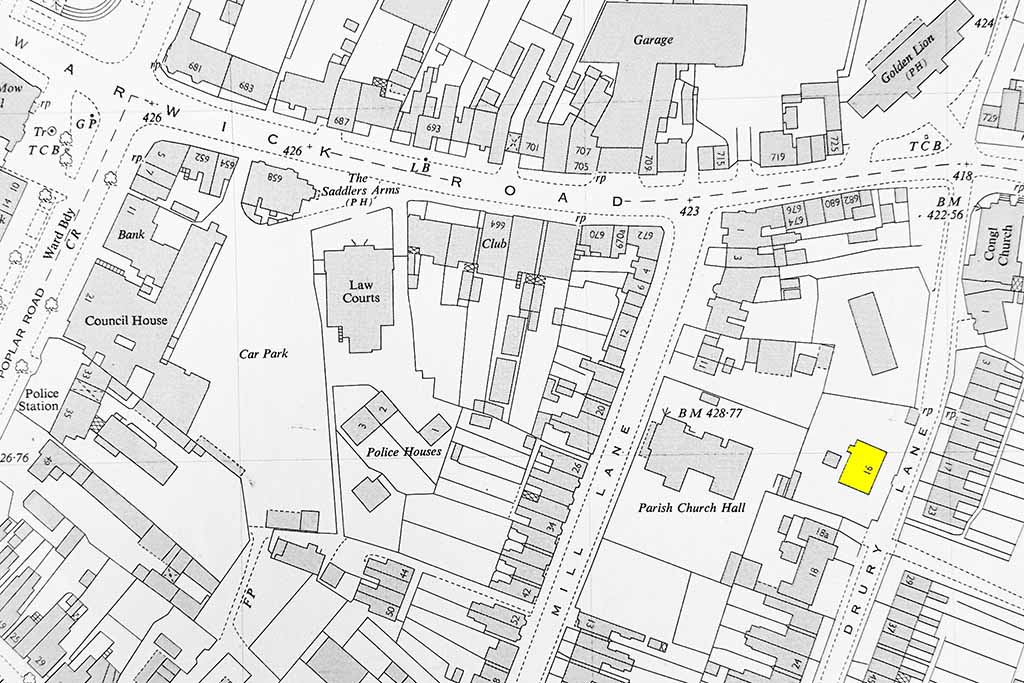
Touchwood Hall was situated in Dog Lane (later renamed Drury Lane) on the edge of a large common called Teinters Green, where clothmakers once dried their cloth on tenterhooks.
The house was built in the early 18th century on the site of a much earlier moated building and the site included a 17th-century garden wall and an 18th-century gazebo.
When the moat was filled in, the owner was apparently required to pay compensation to residents of cottages at nearby Teinters Green, as filling in the moat had cut off their water supply!
Remnants of the moat survived in what was called the Horse Pool, which gave its name to a meadow or pasture – Horse Pool Close or Horse Pool Croft – on part of which the tanyard in Warwick Road was founded in the late 18th century.

By 1961, a newspaper reported that the only portion of Teinters Green still surviving was a vacant piece of land at the junction of Drury Lane and Warwick Road, which was overlooked by quaint cottages until they were demolished a few years prior to the newspaper report.
Touchwood Hall was still a farmhouse for much of the 19th century with Drury Lane actually running through the farmyard. Local historian Charles Lines (1913-2000) commented that his father remembered the time when all road users were forced to open and close the farmyard gates as they travelled along Drury Lane!

Touchwood Hall had a gazebo that was also listed. An article in the Warwick County News, 4th February 1950 noted “Gazebo (dog Latin, ‘I survey’) a summerhouse of a kind which was a favourite in 18th century England, built where there was a wide vista to sit and enjoy.”
Holbech(e) family
Touchwood Hall was built by Thomas Holbeche (1632-1712), the great-great grandson of Richard Holbeche who had settled at Bentley Heath by 1511. Thomas Holbeche was buried at St Alphege church, Solihull on 31st May 1712.
We haven’t been able to find evidence that Thomas Holbeche left a Will but it’s presumed that his estate at Solihull was inherited by his son, John Holbeche (died 1753) based on the Will that was written by John Holbeche in 1749, four years before his death.
John Holbeche married Elizabeth Day on 5th January 1710 (N.S.) at St Martin-in-the-Fields, London.
Writing his Will in 1749, aged in his mid-/late-70s, John Holbeche described himself as “ancient but of sound and perfect mind and memory.” He was buried at St Alphege Church on 27th May 1753.
John left all of his “messuages, cottages and tenements, closes, lands, meadows, pastures and premises, and all other my freehold, copyhold and leasehold estates of what kind or nature soever that I have in Solyhull [sic], Bentley Heath, London or elsewhere in the Kingdom of England” to William Walmsley of Whitehall in the County of Middlesex Esquire and William Holbeche of Coleshill in the County of Warwick gentleman. The men were given legacies of 10 guineas and three guineas respectively in consideration of their duties as Trustees.
The two men were to permit John’s “loving son, Day Holbeche,” to take all of the rents and profits for his own use during his lifetime. In addition, Day Holbeche had the right to cut down and take away all the timber on the estates. The same inheritance was to pass to the eldest son of Day Holbeche and to his sons. If the eldest son had no sons, then the remainder of Day Holbeche’s sons would inherit in turn.
If Day Holbeche had no surviving sons at all, then the inheritance would pass to Day’s kinsman, William Holbeche the younger, of Coleshill, and then to his sons.
If William had no sons, it would be shared equally between Day Holbeche’s daughters. If Day Holbeche had no daughters, then the inheritance would be shared equally by the daughters of William Holbeche the younger. If there were no daughters, then it would be equally divided between the daughters of another of Day’s kinsmen, Thomas Holbeche or his lawful heirs if there were no daughters.
John Holbeche’s Will also made it clear that Day Holbeche was at liberty to “sell and dispose of the same one house with a Garden Yard Stable and Backside thereunto belonging situate in Dogg Lane in the Parish of Solyhull aforesaid and late in the tenure of Reverend William Wight.” This seems as if it must be Touchwood Hall, and suggests that it was rented out by the 1740s.
The same right of Day Holbeche to sell houses also applied to two other properties owned by John Holbeche – one in Solihull and one in Little Scotland Yard, London.
Mashiter/Short families
Day Holbeche (1710-1764) seems to have been the last male Holbech(e) to own Touchwood Hall. It does not appear that he married or had children. He took up his entitlement under his father’s Will to dispose of Touchwood Hall himself in his own Will.
His Will left his “messuage and house or tenement with a garden, yarde, stable and backside with all appurtenances thereto belonging situate and being in Dog Lane” to his kinswoman Jane, daughter of Rev. Richard Mashiter of Solihull by Mary, his wife, who was the daughter of Anthony Holbech of Bentley Heath, Solihull.
It is interesting that Day Holbeche opted to leave Touchwood Hall to Jane Mashiter (1746-1831) – his first cousin once removed – rather than to one of her brothers (Rev. Edward Holbeche Mashiter (1743-1778) and Richard Mashiter (1744-1788)). She was also listed as the beneficiary of other items from the estate.
Rev. Edward Mashiter succeeded his father, Rev. Richard Mashiter, as schoolmaster at Solihull Grammar School, so perhaps Day Holbeche was trying to provide for his young cousin. Jane was 19 years old and unmarried at this time so, as a minor under the age of 21, her legacies would be held in trust by Richard Busby, a carpenter from Knowle, who was the sole executor of Day Holbeche’s estate. Jane Mashiter married surgeon, John Short (1739-1831), in 1767.
Until property laws were reformed in the late 19th century, the property of a woman was surrendered to her husband upon marriage. If Jane did inherit Touchwood Hall from Day Holbeche, the house would have become the property of her husband, John Short, when they married.
By his Will, John Short left his two houses in Solihull to his wife, Jane for her lifetime. He gave no details as to their locations, other than saying that he occupied one and his son, Richard Short, occupied the other. The two properties were to go to Richard Short on Jane’s death.
It’s not known whether one of these properties was Touchwood Hall, or whether the building had already been sold by Jane Mashiter or by John Short, assuming that Day Holbeche had not otherwise disposed of it between writing the Will and his death.
Madeley family
We haven’t been able to trace the ownership of Touchwood Hall after the death of Day Holbeche but by the early 19th century, Touchwood Hall was home to John Madeley (1779-1832). By 1808, he owned the tanyard on Warwick Road (now the site of offices at 751 Warwick Road).
John was initially in partnership with his brother, Charles Madeley (1767-1845), but the partnership of J. & C. Madeley was dissolved by mutual consent on 1st January 1817 and John carried on the business on his own.
In 1813, John Madeley married Martha Harborne (1786-1865) and the couple went on to have 10 children. Martha’s family had lived in Solihull since at least the 1770s.
John appointed in his will, dated 20th September 1832, his wife Martha Madeley, Rev. Archer Clive, Richard Harborne of Small Heath and James Thompson as executors of his will and guardians of his children during their minorities. He directed that his Trustees should carry on his trade as far as they were able and thought advisable.
John Madeley died 26th November 1832 without revoking his will, leaving his wife, Martha Madeley, and 10 children aged between one and 18:
- Mary Anne (1814-1847), who married Joseph Edwards in 1843
- Ellen (1815-1893)
- Jane (1817-1848), who married John Lowe in 1841
- John (c.1819-1880), the eldest son and heir
- Elizabeth (1820-1902), who married Tertius Thomas Burman in 1852
- Harriet Martha (1822-1899), who married John Lowe, the widower of her late sister, in 1849 (although it was not until the enactment of the Deceased Wife’s Sister’s Marriage Act 1907 that such a marriage was lawfully permitted in England)
- George Thomas (1824-1884)
- Richard (1826-1893)
- Charles (1829-1895)
- Caroline Emily (1831-1895)
John Madeley’s will was proved on 24th July 1833 at Lichfield and Coventry.
In his Will, John Madeley gave Touchwood Hall in which he resided, and also the Tan Yard in which he carried out his trade, together with the Bark Barn, Bark Mill, Kiln, Tan Vats, Driping Shed, Beam House, and all his other messuages, lands etc. situated in Solihull or elsewhere to the use of Archer Clive, Richard Harborne and James Thompson.
His wife was to live in the said dwelling house and be paid any rents, issues, profits and income from his real and personal estate, and the annual profits from his said business during her life, as long as she continued as a widow, one annuity or yearly sum of £50 (reducible to £25 in the event of her second marriage) for the support, maintenance and education of all the children until such time as the eldest son attained 21.
As soon as the eldest son reached the age of 21, John Madeley stipulated by his Will that Touchwood Hall with all associated, lands etc. including the goodwill of the business, be sold and disposed of.
Stocks and securities were to be invested to bring in enough to pay the annuity to his wife, and pay and divide all the monies between all the children. Equal shares were to be paid and transferred to each of them as being sons should reach 21 years of age, or being daughters, should be 21 or married with the assent of their mother.
The 1841 census shows John Madeley (jun.) living with several of his siblings in Drury Lane, presumably at Touchwood Hall, and working as a tanner. His mother, Martha Madeley, bought Touchwood Hall from the Trustees of her late husband’s estate in 1844 according to deeds held at the Core Library.
The deeds describe Touchwood Hall as having a coach house, stable and garden, situated in Dog Lane, Solihull. They say that the hall was previously in the tenure of Day Holbech, afterwards of Richard Chattock, Letitia Warden, widow, and [first name not mentioned] Johnson, since of Thomas Heath and Joseph Capner. There is no mention of it being owned/occupied by the Mashiter or Short families and the deeds would appear to suggest that ownership of the property passed from Day Holbech to local solicitor, Richard Chattock.
The Madeley family owned the tanyard in Warwick Road, which was founded in the late 18th century and closed in 1867, although the “Tanyard Cottages” on the site were inhabited until 1962.
In 1856 an agreement was made between Martha Madeley of Solihull, widow and her daughter, Caroline Emily Madeley of Solihull, spinster. As security for a debt of £700, Martha Madeley granted to Caroline Madeley the property known as Touchwood Hall, Dog Lane [Drury Lane], Solihull. This included coach house, stable and garden as well as the Tan Yard and Horse Pool Croft.
The agreement was subject to a lease made by Martha Madeley on 22nd November 1856, devising the same to her son, Charles Madeley for 21 years at a rent of £70 per annum. All property would revert to Martha Madeley on 26th May 1857, provided that Martha Madeley paid Caroline Madeley the sum of £700, with four per cent per annum interest. In case of default, Caroline Madeley then had the right to sell all or part of the premises.
It seems that the property did revert to Martha Madeley, as her Will bequeaths her residence and her tan yard to her children. Her son, Charles Madeley, had the option of first refusal in terms of buying the house and the business from her executors.
Caroline Emily Madeley died on 26th March 1895, leaving an estate valued at £1,936. The Birmingham Daily Gazette 28th September 1895 included a notice from the executors of the late Miss C. Madeley of the sale of the contents of Touchwood Hall on 30th September 1895.
Martineau family
Geoffrey Arthur Martineau was born in Edgbaston in 1861. His father, Francis Edgar Martineau (1828-1893) – known as Edgar – was born in Lambeth and was a hinge manufacturer.
Edgar Martineau was descended from Gaston Martineau, a French surgeon and Huguenot refugee who settled in Norwich in 1686. One branch of the family moved to Birmingham in the early 19th century and, from this branch, Edgar Martineau moved to Solihull with his wife and children in 1863, setting up home in Lode Lane.
Geoffrey Martineau was born in Edgbaston in 1861 and married Blanche Mary Neal (1864-1888) at the bride’s home parish of St Ann’s Church, Moseley on 1st June 1887. The couple had a daughter Evelyn Mary Martineau (1888-1964) born on 9th September 1888, just 10 days before the death of her 24-year-old mother on 19th September 1888.
Geoffrey later remarried, marrying Jessie Clementina Madeley at St Alphege Church on 4th January 1896. After their marriage, the couple lived at Jessie’s family home, Touchwood Hall, until Geoffrey’s death at Solihull Nursing Home on 30th December 1934.
Geoffrey and Jessie had two sons – Clement Martineau (1897-1918) and Gaston Madeley Martineau (1900-1956).
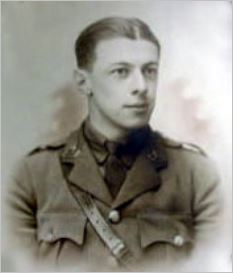
Clement attended Solihull School, where he won prizes for exam merit and Nature Study in 1912. He was leading cadet in 1913, and became Cadet Colour Sergeant of the Solihull School Contingent Officers Training Corps. He left school to take up a commission in the Army and was gazetted Second Lieutenant (on probation) with the Royal Warwickshire Regiment in July 1914. By the end of the year he had been promoted Lieutenant and he was posted to France on 18th July 1915. He died of wounds as a prisoner of war.
Gaston Madeley Martineau married and moved to “Thickthorn,” Buttons Farm Road, Penn, Wolverhampton. He succeeded his father as Managing Director of the family firm, Matchett and Martineau, in 1927. Gaston Martineau died in Wednesbury in 1956, aged 55, as a result of a car accident. He is buried at Packwood Church.
In 1891, Geoffrey Martineau founded the Guild of Amateur Ringers in Solihull and helped to revive interest in bellringing. As a result of his efforts, the bells at St Alphege Church were rehung in 1894 and then recast in 1932. Geoffrey Martineau served as Ringing Master for 43 years until his death in 1934.
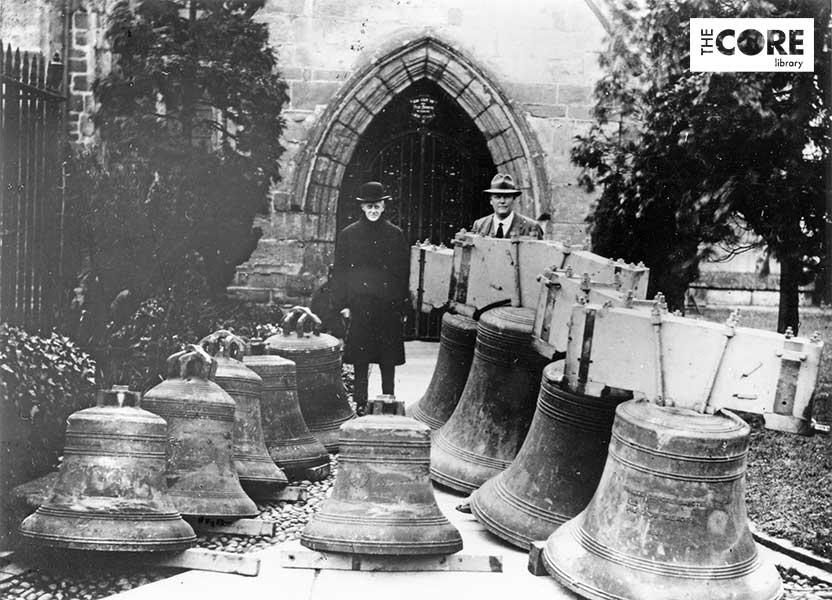
Although Geoffrey and Jessie Martineau lived at Touchwood Hall from their marriage in 1896, it wasn’t until 26th May 1910 that Jessie purchased the hall from Charles Madeley of Rowington, and Woollaston John Burman, solicitor. She purchased the hall for the sum of £650.
The indenture is endorsed with a memorandum noting that by a Conveyance dated the 13th July 1938 between Jessie Clementina Martineau and Warwickshire County Council, a piece of land containing an area of 115 square yards or thereabouts (forming part of the premises described in the 1910 indenture) was conveyed unto the Warwickshire County Council.
1939-60s
In April 1939, Touchwood Hall was advertised as being for sale by auction on 2nd May 1939. The freehold property was described as being of brick with a slate roof and having on the ground floor the following rooms:
- Hall
- Drawing Room
- Dining Room
- Study
- Pantry
- Kitchen
- Cellar
An old oak staircase gave access to the first floor, which contained five bedrooms and a bathroom with a w.c. The second floor comprised four large attics and a workroom.
Outside buildings included a wash house, w.c., coal house, outbuildings and a garden. The frontage to Drury Lane was about 39 yards.
At the time the 1939 National Register was taken in September 1939, no. 16 Drury Lane was listed as unoccupied.
The house was reportedly used by the Home Guard during the Second World War.
By 1950, Touchwood Hall was occupied by William Augustus Blackmore (1889-1969) a master tailor. The hall was described in the press as having the nickname “Heartbreak House” as a result of the death of Clement Martineau in the First World War.
A teacher at Malvern Hall rented one of the attic bedrooms from Mr & Mrs Blackmore soon after the war, and wrote to the Solihull News, 13 March 1992, saying that it was impossible not to sense the atmosphere of earlier centuries. The writer of the letter also remembered how, when Mrs Blackmore moved to Norton Green Lane, her grandson, aged around five years old, missed her so much that he left Touchwood on his own and walked all the way to see her!
By 1954, the occupant of Touchwood Hall was Brian Cottingham, a research chemist.
On 16 Aug 1961, a passer-by saw smoke coming from what was described as the derelict Touchwood Hall. The fire brigade attended and found a small fire in a first floor room. They quickly brought the fire under control.
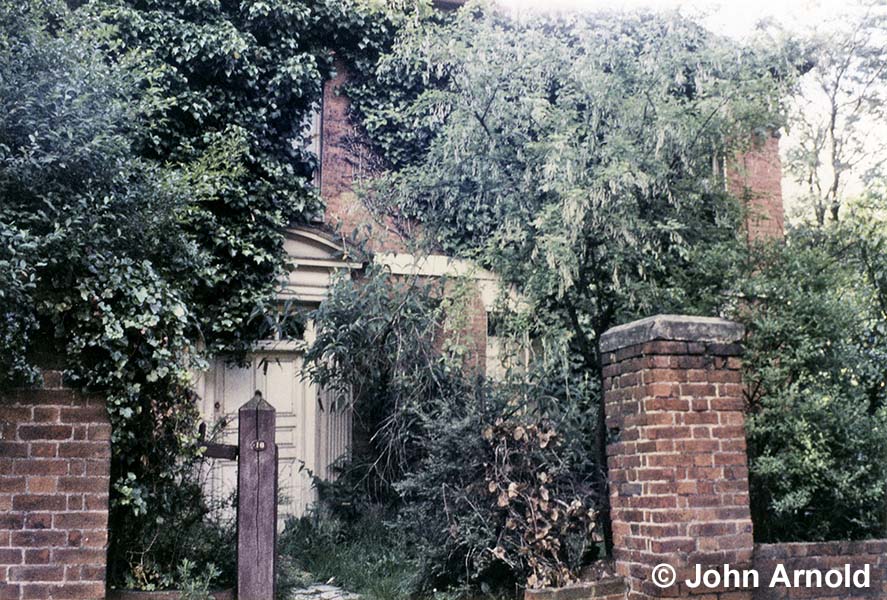
The land on which the hall stood was included in the council’s central redevelopment scheme. This arose from the Solihull Town Map, which became active on 8th June 1956.
The Town Map provided broadly for the future of the Borough, with one of the intentions being that more shopping and business premises should be created in the town centre.
Plans for the comprehensive redevelopment of most of the area between High Street and Warwick Road went on display on 13th February 1960. At the same time, the Council was preparing a Compulsory Purchase Order for 11 acres of land and trying to secure approval for the scheme from the Ministry of Housing and Local Government.
The development scheme involved the demolition of properties in Mill Lane and Drury Lane to make way for what became Mell Square. A public inquiry was necessary before the plans could be effected, and this took place over three days 4th-6th October 1960 before being adjourned until 8th November 1960.
Demolition
In May 1961, Solihull’s General Purposes Committee was informed that Solihull Civic Society had requested that the Council take action to prevent further damage to Touchwood Hall. The Borough Surveyor informed the Committee that he had made special reference during his evidence to the Public Inquiry to Touchwood Hall being added to the list of buildings of historic or special architectural interest prepared by the Ministry. He said that he had explained that “in his opinion, its condition was such that it was not necessary to interfere with the re-development of the Central Area in order to retain it.” (General Purposes (Development) sub-Committee minutes, 29th May 1961).
The Borough Surveyor told the Committee that he was not cross-examined on this point and nor was there any reference made to the building in any other evidence to the Public Inquiry. However, a local architect had subsequently been asked by the Georgian Group to examine the building and make a report. This led to the Georgian Group making representations to the Ministry of Housing and Local Government in the hope that the building could be incorporated into the development.
However, both the Town Clerk and the Borough Surveyor stated that any group that wished to make representations to the Ministry should have attended the Public Inquiry so that their evidence could have been questioned in the same way as evidence given by any other interested party.
The Borough Surveyor also reported that the estimated cost of boarding up windows and doors to try to prevent any further damage to Touchwood Hall would be in excess of £100.
It was therefore resolved at the General Purposes (Development) sub-Committee on 29th May 1961:
That the Town Clerk be requested to notify the Local Planning Authority, in accordance with Section 30 of the Town and Country Planning Act, 1947, that it is the intention of the Borough Council to demolish Touchwood Hall.
Solihull’s General Purposes Committee was told on 25th September 1961 that Warwickshire Plans sub-Committee would not oppose the borough council’s proposal to demolish Touchwood Hall, Drury Lane.
The Manor House Trust was given permission in January 1962 to remove certain fittings from Touchwood Hall:
- a shell-headed open china corner cupboard, a complete overmantel and shutters, all from the Drawing Room (north)
- a full-length corner cupboard, a door to the cellar and an arch, all from the Hall
- a door from the Dining Room (south)
- Dutch tiles from the grates in the Front Bedroom (north) and Front Bedroom (south)
- a door and several other connecting doors and door locks from the Dairy
- doors from the Attic, plus a little round window from the pediment
Although listed, Touchwood Hall, 16 Drury Lane, Solihull was demolished in 1963 to make way for the Central Area redevelopment that led to Mell Square. It was approximately where nos. 33-43 Drury Lane are now and was described in the Birmingham Daily Post 2nd January 1963 as looking like a “latter-day Wuthering Heights.”

The name of Touchwood lives on in Solihull’s shopping centre and in Touchwood Hall Close. “Touchwood Brick” (C:14 M:81 Y:94 and K:15) was also one of the colours in the Solihull Colour Palette developed by artist Stacey Barnfield in 2025 and funded by the Government’s UK Shared Prosperity Fund (UKSPF) and Touchwood.
As part of the Town Centre Masterplan, Mell Square will be redeveloped under the name “Holbeche Place” – referencing the history of the first occupants of Touchwood Hall. Find out more about the plans at: https://www.mellsquaresolihull.co.uk/
If you have any further information about Touchwood Hall and the families who lived there, please let us know.
Tracey
Library Specialist: Heritage & Local Studies
© Solihull Council, 2026
You are welcome to link to this article, but if you wish to reproduce more than a short extract, please email: heritage@solihull.gov.uk
Further Reading
A history of the Holbeche family of Warwickshire and the Holbech family of Farnborough by Laurence Ince
 Solihull Life
Leave a comment