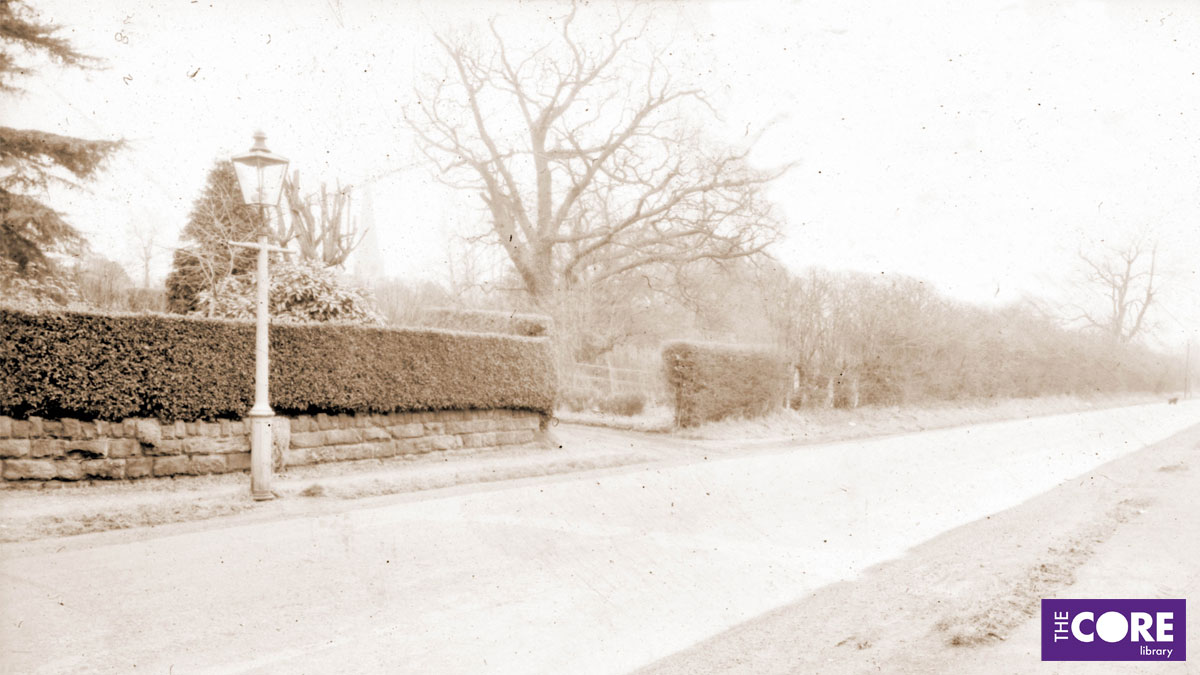
In the 19th and early 20th centuries, Homer Road was a very quiet area, unlike today with its supermarkets, offices and civic buildings. As recently as 1958, despite its proximity to the town centre, the road was described as having a “rural outlook” (Birmingham Daily Post, 11th September 1958). The above picture, from the early 20th century, is believed to show the current site of The Core, looking towards Church Hill Road.
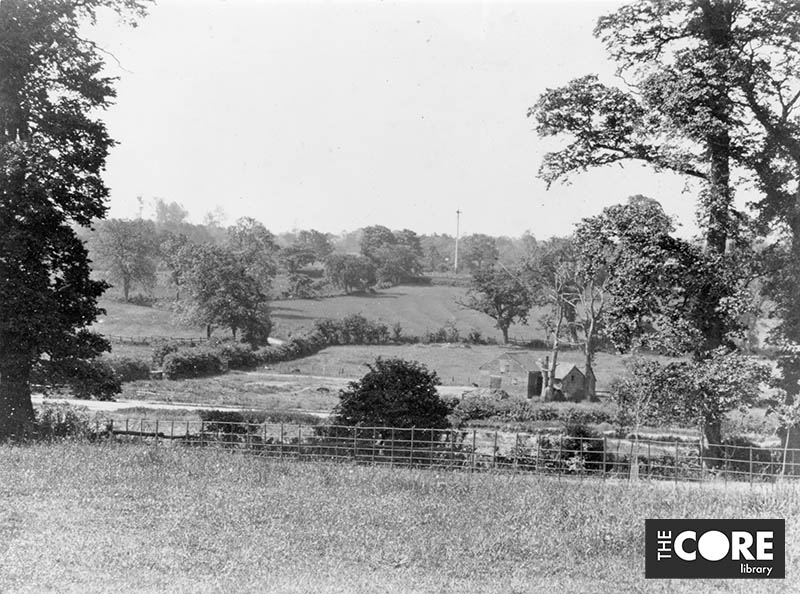
Meadows and pasture
Homer Road does not appear on the Solihull Tithe Map of 1840, and seems to have been built between 1871-1881. In 1840, according to the tithe map, local solicitor Thomas Chattock (1774-1844) owned the south side of Station Road, as well as all of the land that would go on to be Homer Road and Herbert Road.
George Homer (1787-1867) was born in Newington, Surrey but, at the time of the Tithe Map in 1840, was renting property in Solihull. He lived in Station Road and his brother, Arthur Aston Homer (1790-1865), lived nearby in the High Street. Both men were unmarried. They also had two unmarried sisters – Sarah (1783-1835) of Solihull and Mary (c.1794-1847) who lived at Henley-in-Arden. All four were the children of Richard Homer (1755-1837) and his wife, Sarah (c.1756-1830), both of whom died in Solihull. It’s presumed that this family gave their name to the road.
Information from John Loynton, archivist at Solihull School, is that George Homer was a Solihull Grammar School Feoffee, 1831-64 and was Parish Bailiff in 1837 and 1846. He left £500 to build Bentley Heath School when he died in 1867.
George’s father, Richard Homer, lived in High Street, Solihull, and the property – described as a genteel house with stable and large garden well-stocked with fruit trees, pleasantly situated in the centre of the High Street – was advertised to let by Thomas Harborne, senior, in June 1837.
The tithe map shows the Homer Road site as various fields with names such as Little Meadow, Woods Close, Parlour Close, Hovel Close, Near Solihull Meadow, Chapel Field, and Humphries Ground. Some of the fields were rented out but many were listed as being in the occupation of Thomas Chattock (1774-1844), the owner. Much of the land was pasture for grazing animals.
Residential growth
The 1881 census shows only four households in Homer Road. None of the houses is named but the occupiers were John Kennedy (believed to live at “Ellerslie”), Arthur Horrocks (at “Oakdale”), Edward Rowlands, and William John Seal.
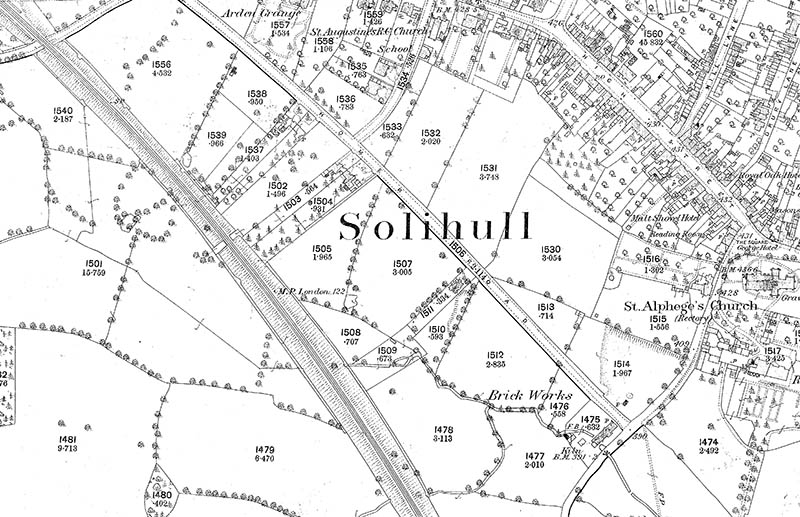
The 1886 Ordnance Survey map shows just two pairs of houses on the south-west side of the road, close to the junction with Herbert Road. These seem to be nos. 42 and 44 (believed to be Ashleigh and Struan Lodge respectively), Oakdale (no. 52) and Eversleigh (no 54).
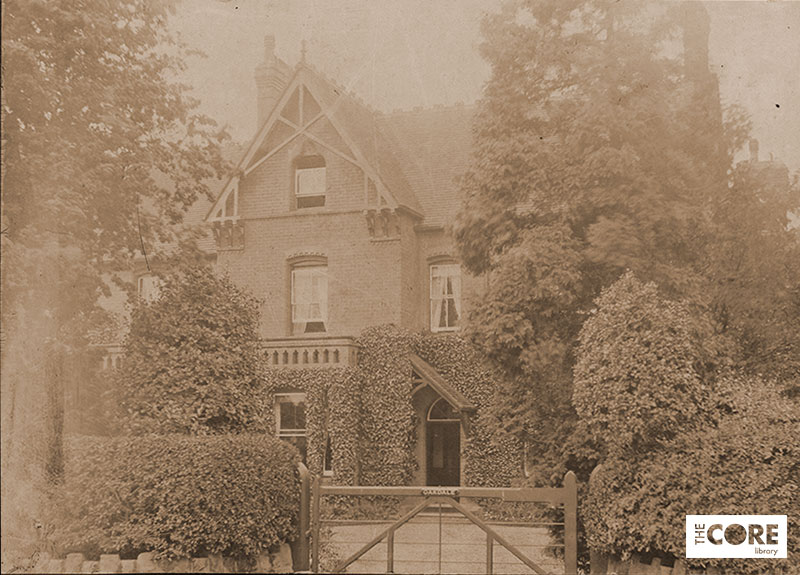
These two pairs of houses were separated by a strip of land – named as “grass road” on the 1954 Ordnance Survey map – immediately opposite Herbert Road, between nos. 52 and 46 Homer Road. We’re told that this was called the “foredraft” by locals, and that the section under the railway was used for housing horses and carts.
A fordrough or foredrove is a rough unmade passageway or farm track, so this is the likely derivation of the name. This path still exists and provides a pedestrian/cycle route between Tudor Grange Park and Homer Road.
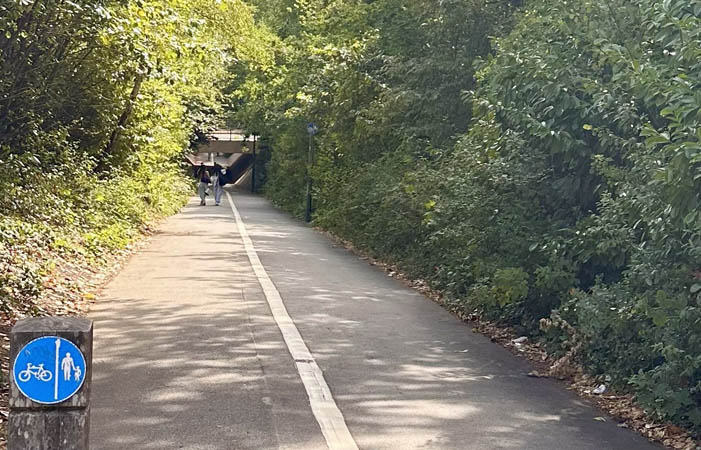
The area was still very rural and only a short distance from Solihull railway station, which had opened in 1852. The 1886 map shows a brick works at the junction with Church Hill Road, but we don’t seem to have any information about this. It may be linked with Solihull Brick Works, established in Warwick Road (now the site of Riverside Drive).
By 1891 there were five occupied houses in Homer Road listed on the census:
- Brooklands (occupied by Charles Showell (brassfounder) and family))
- Ellerslie (occupied by Mrs Elizabeth Ellen Kennedy)
- Oakdale (occupied by Arthur Horrocks (Masonic jeweller) and family))
- Belmont (occupied by Charles Thomas Wade (iron merchant) and family)
- Ashleigh (occupied by William Perks (goldsmith) and his wife.
All of the households, apart from that of Charles Showell, had one or two live-in servants.
By 1901, there were seven houses listed on the census.
At the time of the 1911 census, there were eight houses, including Wivelcoombe (no. 58) and Ravenswood (no. 56). By the time the National Register was taken in 1939, there were 24 residences listed in Homer Road, although only 20 of them were occupied.
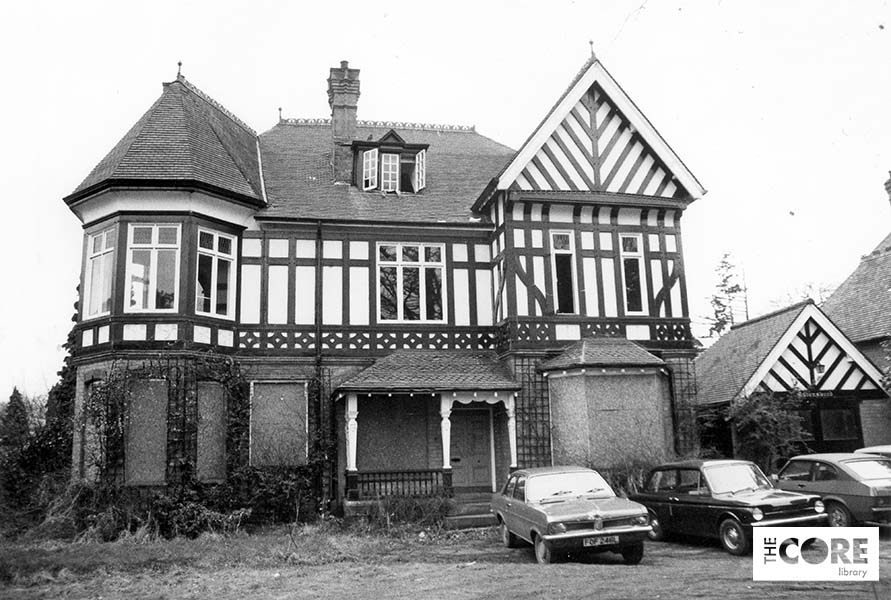
In the early 20th century, people began to see the benefits of living in the then rural village of Solihull and using the nearby station to commute by train into Birmingham. More houses started to spring up along Homer Road – mostly at the Station Road end. The houses were individually designed by different architects, so each property was unique.
Brian Hall, reminiscing about Solihull in the 1930s-50s as part of Solihull Local History Circle’s interviews with local residents said “Homer Road was a bit countryfied and a wealthy road like Lady Byron Lane for business people.” (ref: NC/Solihull-Historical-Reminiscences/LHC/4)
Many of those who had houses built on Homer Road were people such as jewellers, solicitors and accountants who had businesses in Solihull or Birmingham. Several of the houses before the Second World War employed maids and domestic servants.
The First World War slowed down the building of more houses, but in the 1920s building work began again in earnest.
List of houses
To begin with, the houses all had names rather than numbers. When the numbering was introduced around the 1930s it seems as if some numbers were omitted to allow for potential future dwellings that were apparently never built, making the numbering seem rather eccentric.
Prior to the 1980s redevelopment, the odd-numbered properties were on the High Street side of Homer Road, whilst the even numbers were on the Monkspath side of the the road.
These are the pre-1980s properties we are aware of:
| House no. | House name | Notes |
| 1 | Ingolhead, later Corner Oak | Situated at the junction with Station Road, this Victorian property was known as Ingolhead before being renamed Corner Oak. An advertisement in 1939 for the sale of Ingolhead, a four-bedroomed property describes it as “occupying an elevated prominent corner position, within two minutes of station and High Street.” It had grounds of approximately one acre and included “good frontages to Homer Road and Station Road.” The 1929/30 electoral register lists it as “Ingolhead, Station Road,” at which time it was occupied by Mrs Kate Susanna Stones. She was the widow of Rev George Boys-Stones of Garstang. Mrs Boys-Stones died at Ingolhead in 1933 and, by April 1935, the house was occupied by solicitor, Norman Haynes Duffell (1902-1987) and his wife, Marjorie (1906-1976). Ingolhead was advertised for sale in August 1939. It was purchased by Saint Martin’s School in 1942 but seems to have been vacated around the time the school moved to Station Road in 1945. Owned by the Denby family c.1946-1963, it was then purchased by Solihull Council and used 1965-69 as a home for unmarried mothers and then a children’s home until 1980. It was sold to developers and demolished c.1986. A new office block opened on the site in 1988. |
| 19 | Nos. 19-27 were built in the 1930s on the gardens of Arden Grange, Station Road, which was the former home of the Zair family. George Zair was a Governor of Solihull School 1892-1907 and Chairman of Governors in 1893. No. 19 Homer Road was occupied by F. Wheelock, according to the Solihull trade directory 1961. It was occupied by the Corfield family at the time the 1962 electoral was compiled in October 1961. it was acquired by Solihull Council in 1966 in connection with Stage 2 of the link road. | |
| 21 | The Shieling | Built in 1935, according to sale advertisement in 1960. By 1939 it was occupied by John Allan Goode, who was still there in 1961. Planning application (PL/2018/02953/PNDEM) was submitted in 2018 for demolition of no. 21 as part of the “Homer Road triangle site [Westgate].” |
| 23 | Clovelly | According to a former resident of Homer Road, no. 23 was named Clovelly because the owners – the Wilcox family – used to go to Clovelly on holiday. E. Gordon Wilcox was President of the Old Silhillians Association in 1948 when it changed its name from Solihull Old Boys Club. The Wilcox Family are great benefactors of Solihull School, The Wilcox Clovelly Trust has sponsored several new amenities, the most recent was the provision of another all-weather pitch, opened by Simon Wilcox in 2015. Harold Victor Leigh Heaven, a chartered accountant, was living at no. 23 Homer Road in 1939 and died there in June 1941. In 1961 the property was still occupied by his son, Kenneth Victor Rhodes Heaven (1918-1992). Planning application (PL/2018/02953/PNDEM) was submitted in 2018 for the demolition of no. 23 as part of the “Homer Road triangle site [Westgate].” |
| 25 | Edenhall | In 1939, the house was occupied by Eric and Sylvia Lambert. It was occupied by W. Moseley in 1961. Planning application (PL/2018/02953/PNDEM) was submitted in 2018 for the demolition of no. 25 as part of the “Homer Road triangle site [Westgate].” |
| 27 | Holly Trees | By 1939, no. 27 was occupied by Norman and Phyllis Gray. In 1961, it was home to Geoffrey Stubbings, a builder. Geoffrey and his sons and nephew were all Old Silhillians. Planning application (PL/2018/02953/PNDEM) was submitted in 2018 for demolition of no. 27 as part of the “Homer Road triangle site [Westgate].” |
| 29 | Lichfield / Litchfield | Planning application 1990/1927 was approved September 1990, changing the use of the building to offices. Waitrose supermarket is now no. 29, Homer Road. |
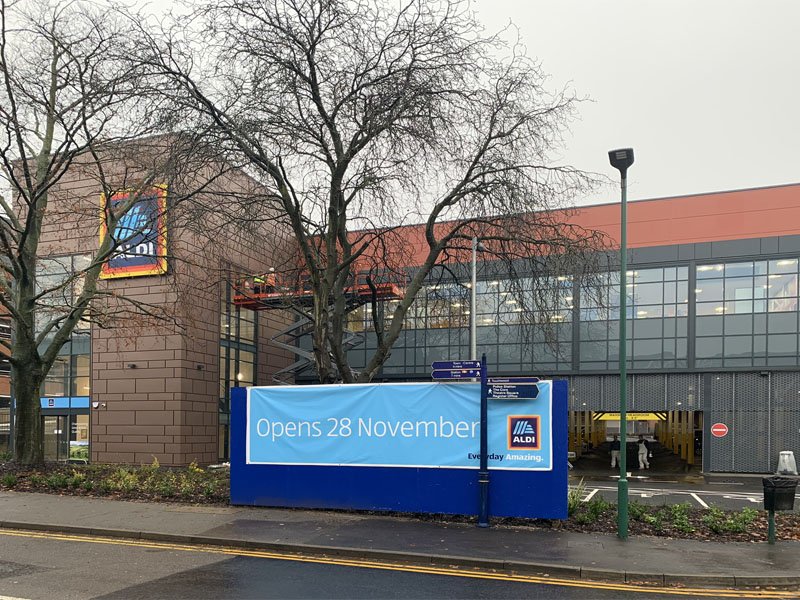
| 83 | Homer Close | Plan SOL/PS/1/2/A/114 was submitted in 1897 at which time the owner was J. E. Taylor. The architect was T. A. Turner. In 1961 Homer Close was ocupied by J. E. F. Morgan-Jones. By 1967, it was home to Mrs Evelyn Furniss Taylor, widow of William Allin Taylor. She died there on 19th December 1967 and an auction of the household furniture was held in 1969, with the house itself – “a magnificent detached gentleman’s prestige residence of charm and character” – being sold immediately afterwards. Applications in 1969 and 1970 to develop the site as offices were refused, as were applications in 1970 to develop flats and a hotel on the site. In November 1970, Solihull Council said that it had received particulars of the property, which was due to be sold by public auction on 21st November 1970. The freehold property was described as being set in grounds of about 1,500 square yards and was situated between the Police Station and Herbert Road. The Town Clerk was authorised to bid on the property up to the District Valuer’s maximum valuation of £15,000 and secured the property for that sum. In December 1970, the Council agreed to offer a quarterly tenancy of the property to Mr Kibble, of the St Firman’s Hotel, provided that the property was used for private residential purposes and occupation by his own family only and not for business use. No alterations were to be made to the building. In 1972, the property was still occupied by John and Phyllis Kibble. It was announced that the Family Practitioner Committee for Solihull would be moving from Leamington Spa to Homer Close on 21st October 1974. Solihull Magistrates’ Courts opened on the site in 1981 and demolition began in December 2018. Aldi opened at no. 83, Homer Road on 28th November 2019. |
| 85 | The Paddock | In 1961, no. 85 was occupied by G. K. Evans. Solihull Council was keen to negotiate with owners of properties whose gardens backed onto a proposed car park extension in Homer Road, but the Council’s General Purposes (Development) sub-Committe was told in May 1961 that the owner of The Paddock was most reluctant to sell the land needed. The modern, two-bedroomed, red-brick, detached bungalow was sold at auction in December 1971 for £19,500. |
| 99 | Englefield | Built c.1911.Plan SOL/PS/1/2/1595. Owner: Alfred Walker. Architect: G. Repton Faulkner. At the time of the 1921 census, Englefield was occupied by the family of Frank Wrighton (1878-1961), a Birmingham-born manufacturing jeweller. In January 1961, Mrs M. Wrighton was refused permission by the Lands Tribunal to modify restrictive covenants so that three-storey flats could be built at Englefield. Objections were reportedly received from owners of all properties in Homer Road and Herbert Road. In January 1961, the Council decided to acquire the property by means of Compulsory Purchase as it was thought that this would overcome certain difficulties which might arise as a result of restrictive covenants. However, in March 1961, after the Lands Tribunal refused to vary the covenant but took the view that there was no one to enforce the covenants, which was confirmed by additional legal advice, the Town Clerk considered that it would be safe to proceed with the purchase of the property by agreement. The owner of no. 99 asked if she could remain in the property as the Council’s tenant whilst she sought alternative accommodation. Permission was given for this up to the end of October 1962. In October 1962, Solihull Council’s General Purposes Committee was told that the Town Clerk had agreed to purchase no. 99 Homer Road for the sum of £26,000. By 1967 it housed the office of the Director of Education. |
| 101 | Rock Bank / Rockbank | Built c.1907. Plan SOL/PS/1/2/1095 Owner: Mrs A. M. Cartwright. Architect: Gateley and Parsons. Builder: Baker and Warr. The ground rent of Rockbank was advertised for sale in 1944 by the Trustees of the late T. P. Chattock. It was advertised for sale in 1955 as an “imposing detached freehold residence,” with five bedrooms and a garage at the side for two cars. Henry Dobson died there in 1957, aged 83. In 1961 Rock Bank was occupied by E. F. C. Dobson and it was reported in May 1961 that the owner would not agree to sell to the Council a strip of land at the rear of the property that was needed for the Council’s car park extension. In October 1962, Solihull Council’s General Purposes Committee was told that the Town Clerk had agreed to purchase no. 101 Homer Road for the sum of £10, 500. It had become the Housing Office by 1964. |
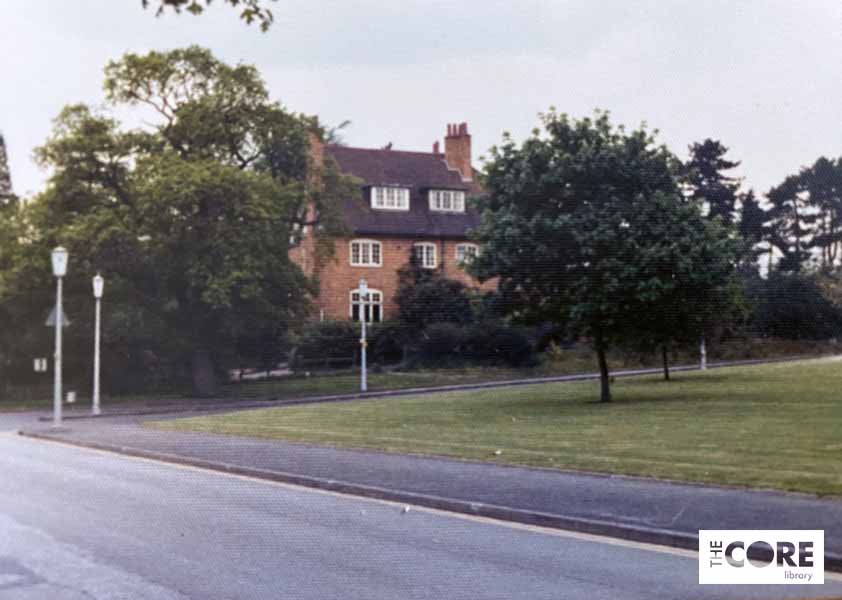
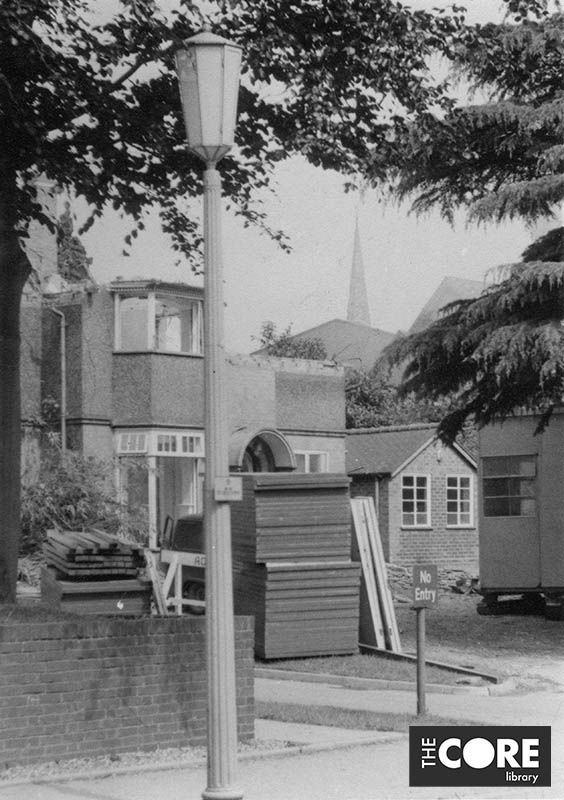
| 109 | One Oak | Built sometime between 1886-1902, One Oak was situated where The Core is today. The same oak tree featured in photos from the 1960s is still standing on the corner. By the time of the 1921 census One Oak was home to the family of Frank E. Allport, manufacturing tailor, born Birmingham. The ground rent of One Oak was advertised for sale in 1944 by the Trustees of the late T. P. Chattock. It was advertised for sale in 1947 and was described as “occupying an unrivalled position in a popular residential thoroughfare.” The “commodious and comfortable accommodation” included a square hall, fitted cloakroom, three pleasant reception rooms, self-contained domestic offices, three capital bedrooms, dressing room, two good bathrooms and two secondary bedrooms, a post office telephone, a range of outbuildings, two garages and a most attractive well-stocked garden. By 1957, it was occupied by Dr Arthur Beauchamp OBE. In 1961, when Solihull Council was trying to obtain strips of land from householders whose gardens backed onto the area it had earmarked for a car park extension. Dr Beauchamp offered to sell not only the land required, but the whole property. Part of the agreement would be that the Council should take over immediately the land required for the car park, but allow the owner to remain in the house at a nominal rent until he found other accommodation, it being understood that such occupation would not extend for more than two years at the most. In January 1962, the Council agreed to Dr Beauchamp’s request to erect chestnut pale fencing along the exposed boundary between Dr Beauchamp’s property and the car park, as Dr Beauchamp had said that the car park made his property more vulnerable to trespassers. Dr Beauchamp died on 27th October 1962, aged 61, two days before the General Purposes Committee was told that terms had been agreed for the Council to purchase no. 109 Homer Road for £15,000. In 1963, it was reported that a temporary central clinic, re-sited from Drury Lane to a site in the garden at the rear of 109 Homer Road, would be ready for occupation from 11th November 1963. No. 109 was in use as a housing office in 1967 and then, by 1968, was home to the Family Planning Association. This had moved to Grove Road Clinic by 1973 and became part of the new Solihull Area Health Authority on 1st April 1974. Solihull Council for Social Service also leased part of One Oak from Solihull Council by 1969. The building was also used by the probation service for a while. Work began in 1974 to demolish the Victorian building to make way for Solihull Central Library and Arts Complex, which opened in October 1976. |
| House no. | House name | Notes |
| 2 | Built c.1923 Plan SOL/PS/1/2/2641. Owner: G. T. Iliffe. Architect: Bragg Bros. Builder: Bragg Bros. Gerald Taylor Iliffe was still living at 2 Homer Road at the time of his death in 1967. Demolished c.1989 for Prince’s Gate office development. | |
| 4 | The Chase | Planning approval was given for this property in January 1923, at which time the owner of the site was Solihull Congregational Church. In May 1936 The Chase was occupied by Mr Napier, who was the managing director of of R.R. Napier & Sons Ltd corn and seed merchants, next to the Manor House on Solihull High Street. The business was bought in 1912 from Mr F. W. Hawkesford by Robert Ross Napier when he returned from Rangoon, Burma after 21 years as an engineer. The Chase was demolished c.1989 for Prince’s Gate office development. |
| 6 | This property was designed by architect Sidney Shipway and was built by Waldron and West c.1922, at which time the owner was W. H. Dunn. In 1939, it was home to Harold and Alice Mander. It was home to the Foster family by 1954 (Denis Foster OBE, died 1954). Advertised for sale by auction on 19th July 1972 – a mature freehold detached residence, 5 bedrooms, full central heating, set in two-thirds of an acre. Demolished for Prince’s Gate development c.1989. | |
| 8 | Eslington, later Homer House | Built c.1901 – SOL/PS/1/2/478. Owner: J. Smith Wood. Architect: Frank B. Endall. Builder: C. Bragg. By 1939, Eslington was home to Arnold and Louisa Vaughan. Planning permission for a change of use from a private residence to office accommodation was refused in 1967. An outline planning application to demolish the property and build 18 flats was refused in 1976. Planning permission to turn the property into a guest house was refused in 1978. In 1983, permission was refused for a change of use from a hotel to office accommodation. By 1986, the renamed Homer House was home to solicitors, the Wood Glaister Partnership. In 2015 permission was granted for outline planning permission to demolish Homer House and replace it with a large office building, although this did not proceed. In 2020, outline planning permission was granted for the demolition of Homer House and the redevelopment of the site for two separate buildings housing 72 one- and two-bedroomed apartments. |
| 10 | Leonore, later Alice House | Built c.1903 SOL/PS/1/2/589 Owner: G. Tubbs. Architect: A. Freeman-Smith. Builder: Bragg Brothers. The house was apparently named “Leonore” after Eleanor Bird, who married Cuthbert Hermon Bradley at St Alphege in 1912, after which the couple set up home at 10 Homer Road. 1921 census: Eleanor Mary Bradley, plus nurse and temporary cook. The house was sold in 1922 for £3,500. In 1926, the occupiers were Mr & Mrs S. E. Hill. In the 1930s, Leonore was home to Frederick Barton Crowther, founder of the Birmingham firm of Dobson and Crowther, and also a councillor with Solihull Rural District Council. He died in 1933. In 1955 there was the possibility of using No. 10 Homer Road as a Masonic Hall but this did not happen. Alice House opened in May 1957, as Saint Martin’s School kindergarten for girls and boys aged 3-9. Alice House was transferred to Solihull Council when Saint Martin’s School swapped its buildings in Station Road and Homer Road for Malvern Hall in 1989. Alice House then became home to Solihull Voluntary Services Council. In April 2000, planning approval was given for the construction of an office block and car park on the site, which extended to the rear in Princes Way and became no. 2 Princes Way. From 2002-2008 this was the headquarters of Taylor Woodrow until the company merged with George Wimpey in 2007 and relocated its HQ away from the Midlands. |
| 42 | Ashleigh | At the time of the 1901 and 1911 census returns, the house was occupied by William Edwards Perks, a retired goldsmith, who had been elected to Solihull Rural District Council in 1895, at which time he was also living in Homer Road. Probate records give his address as Ashleigh at the time of his death in 1918. His widow, Annie Marie Perks (née Eames) continued to live at Ashleigh until her death in 1923. |
| 44 | Struan Lodge | 1911 census: Agnes M. Robertson. Seems to have been the home of the Hartill family by 1920. Advertised for sale in 1954 as a superb double-fronted, five-bedroomed property, with a built-in double garage and situated just one minute from the railway station and the village. |
| 46 | Hazelwood | Built c.1899. Plans SOL/PS/1/2/294 and SOL/PS/1/2/306. Architect: William de Lacy Aherne FRIBA (1867-1945). At the time of the 1901 census, Hazelwood was occupied by the family of William F. Carter, barrister and Managing Director of a printing works. From at least 1904 until his death in November 1911, Hazelwood was home to John Bagnall. By June 1912, John Stewart Mellor was living at Hazelwood. This was one of the larger houses in Homer Road and was home to Miss Doris Hamilton Smith around the time of the Second World War, although the family also appear to have lived at The Poplars, Warwick Road from at least 1901-1911 and in the 1930s. Doris was taught art by Miss Edith Holden, whose nature notes were published in 1977 as The Country Diary of an Edwardian Lady. Doris was 23 in 1914 and during the First World War worked as a nurse at the military hospital in Herbert Road. She also served in the Red Cross Voluntary Aid Detachment and, in the Second World War, was an ambulance driver. Some of her papers are held at The Core Library (ref.: D48). During the Second World War, Hazelwood was the residence of Mr & Mrs C. Royston Chambers. Mr Chambers was the Chairman and Managing Director of Gashell and Chambers in Birmingham which specialised in brewery and public house equipment. |
| 52 | Oakdale | One of the first properties built in Homer Road, it was occupied by Arthur Horrocks, Masonic jeweller, at the time of the 1881 and 1891 censuses. By 1898, the house was occupied by William Frederick Haydon (1849-1908), company secretary. By 1911 it was occupied by Walter Villers (1867-1953) an Old Silhillian who worked for 65 years for Kirby, Beard & Co., Birmingham, manufacturers of needles and pins, including the famous Kirbigrip. Walter Villers attended Solihull School when it was at Malvern House. He was spotted as a schoolboy by company chairman, George Beard, a Governor of Solihull School 1879-1888, who noticed that Walter won a school prize three years in a row so employed him as a clerk. Walter rose through the ranks and retired as Chairman of the company in 1948. The ground rent of Oakdale was advertised for sale in 1944 by the Trustees of the late T. P. Chattock. After the death of Walter Villers, Oakdale was sold at auction in June 1953. The site of Oakdale is now occupied by Air Solihull. |
| 54 | Eversleigh | The ground rent of Eversleigh was advertised for sale in 1944 by the Trustees of the late T. P. Chattock. Advertised for sale in 1954. Described as modernised four-bedroomed property having a mellowed brick elevation with bay widows and gable tiled roofs. It also had two brick side-by-side garages. |
| 56 | Ravenswood | 1911 census: Joseph Edwin Taylor Home of Ernest and Gertrude Jessie Swain by 1929/30. By the 1950s, Mr and Mrs Fricke lived there with their son and daughter. In January 1957, their 19-year-old son, David, died of leukaemia, having just completed his first term at Nottingham University after leaving Solihull School. Mr & Mrs Fricke presented a cottage in Snowdonia to Solihull School in memory of their son. ‘The Mountain Cottage’ is still in regular use today for outward bound activities. There seems also to have been a house called Ravenswood in Blossomfield Road. |
| 58 | Wivelcoombe | The five-bedroomed house was built c.1909 for Birmingham brass founder Arthur Bernard Reeves, who lived there until his death in 1939. The house was designed by architect Mr Bewlay of Cossins, Peacock and Bewley and was built by C. J. Grove & Sons. Planning approval to build was given in August 1909 (Plan ref.: SOL/PS/1/2/1341). It was advertised for sale by A. B. Reeves’ estate in 1943. It was also advertised for sale in 1951, when it was described as “one of the most attractive medium-sized residences in this delightful district,” having four bedrooms, two bathrooms, two fine reception rooms, garaging for two cars, and a charming garden. Owner Barry Cooper, a magistrate and Old Silhillian, refused to sell to Solihull Council in the 1980s. He had occupied the house for 21 years. |
| 60 | Chattockfield | Advertised for sale in May 1973, this detached property was described as having been built 11 years previously by an architect for his own occupation. It was originally excluded from the 1980s redevelopment plans for Homer Road as the owner, Mrs Phyllis Carter, refused to move. |
| 72 | The Dingle | A bungalow, built c.1920. Plan SOL/PS/1/2/2136. Owner A. Gateley. Architect: Gateley and Parsons. Builder: William Wilkinson. Surplus furnishings advertised for sale in 1939 by the executrix of A. Gateley. Advertised for sale in 1959 by the direction of Mrs W. G. Deacon. In July 1970, Solihull Council was approached by the owner of no. 72 who said that he was contemplating retiring and moving away from Solihull. He wanted to enquire whether the Council would be interested in taking over the property from the end of September 1971. The Council authorised the Town Clerk to commence negotiations for the purchase of the property, which had a road frontage of 120 feet and a depth of 250 feet, covering an area of approximately 2,810 yards between Homer Road and the railway embankment. In February 1971, the Council agreed to purchase the property before the end of the 1970/71 financial year. As the owner hadn’t found an alternative residence, they granted him a short-term tenancy at a rental of no less than £627 p.a. |
| 74 | Tavy | As a result of the owner moving to Lapworth, Tavy, sometimes listed as Mary Tavy, was sold on 27th July 1939 for the sum of £3,000, plus £67 12s 6d for fixtures and fittings. The centrally-heated property had six bedrooms, three reception rooms, two bathrooms, two W. C.s, two garages and around two acres of grounds, including a pool, tennis court, bowling green, heated greenhouse and gardener’s room. |
| 76 | Le Chalet | Believed to be a bungalow designed in 1923 by architect Archibald Hurley Robinson (1883-1953) and built for his sister-in-law, Mrs Hannah Robinson (1876-1937), widow of pawnbroker, Francis Sydney Robinson (Plan SOL/PS/1/2/2766). By 1939 it was the home of Francis and Edith Scott. Edith Scott died there in 1943. |
| 78 | Brooklands | In 1886, this was occupied by Charles Showell when Thomas Waldron, a gardener attempting to blow up a tree root at the property with gunpowder, suffered severe injuries to his face and eyes as the charge exploded prematurely. The six-bedroomed “detached country residence” with a one-acre garden and a tennis lawn was advertised for sale in 1892. At the time of the 1911 census Brooklands was occupied by James Simkins. It was advertised for sale in 1925. In 1961, Brooklands was occupied by R. H. (“Bob”) Withers, who had a tobacconist’s shop in Solihull High Street. Bob and his brother John both attended Solihull School. |
| 80 | Grey Walls | Built c.1920 Plan SOL/PS/1/2/2237. Owner: W. T. Orton. Architect: W. T. Orton. Builder: Bragg Bros. The house was still occupied by the Orton family in 1939. Occupied by J. G. Bedworth in 1961. The house was sold by J. G. Bedworth to builders, Biddle and Homer, who then sold the property to Solihull Council. Solihull Council entered into negotiations to buy nos. 80, 86 and 88 in connection with a proposed five-acre site (extendable to seven acres) for a regional TV studio (see below “Business District” section). The building served as the Register Office in the 1960s and 70s. J. G. Bedworth owned the fields adjacent to no. 80 but plans to build a no. 82 and 84 never materialised. |
| 86 | The house was built in 1954 by J. G. Bedworth for his daughter, Evelyn, who had married John R. Loynton in 1947 and was living in Yardley. The Loynton family moved into no. 86 in August 1954 and left in 1968. In December 1968, Solihull Council approved the purchase of no. 86 and its 0.28 acres of land so that the site could be redeveloped. Nos. 86 and 88 only ever had numbers, not names. As recently as 1981, temporary planning permission was given for land between 80 and 86 Homer Road to be used for grazing and for a shelter for three ponies. | |
| 88 | Built at the same time as no. 86 by J. G. Bedworth for his daughter, Sheila, and her husband, Robert Gibson. They lived at the house until 1969. Solihull Council’s Estates and Buildings Committee was informed in June 1970 that no. 88 had come onto the market and authorised the Town Clerk to purchase it for the sum of £9,750, as recommended by the District Valuer. The Chairman of the Committee was empowered to make subsequent decisions regarding the letting of the property. |
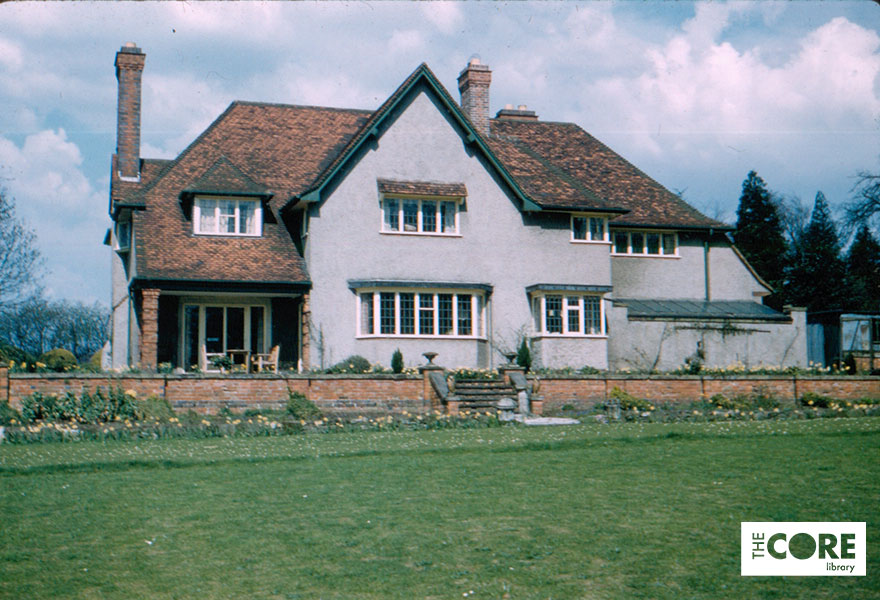
There are other named properties on Homer Road that we have come across, although we haven’t been able to trace their house numbers/exact locations.
| House name | Notes |
| Belmont | Occupied by the family of James Carson, civil engineer at the time of the 1901 census. It was also occupied by Charles Thomas Wade, a Governor of Solihull School 1904-9. |
| Dol Carne | Occupied by the Birch family in 1929. |
| Dunesslyn | Advertised for sale in 1915 and described as a double-fronted property, standing well back from the road and approached by a double carriage drive. There was a 25-yard frontage to Homer Road. It was stated to have been built by the present owner – James Smith Wood – for his own occupation and was Leasehold for 99 years from the 29th September 1901. It was on the south-west side of Homer Road, with the back garden leading down towards the railway. At the time of the 1911 census, it was occupied by James Smith Wood and his unmarried sister, Elizabeth Inman Wood. In 1921, it was occupied by the Chatterley family. |
| Ellerslie | Advertised for sale in 1909 and described as being a five-minute walk from the station. Plan of alterations, 1910 (SOL/PS/1/2/1491). Owner Alois Diedrick Leonardt (1858-1934), steel pen manufacturer, born in Germany. In 1911, he lived at “Brooklyn,” Station Road, Solihull and was retired. Likely to have rented out the property in Homer Road – was also a landlord of other property in Solihull. |
| Elmhurst | Owned by A. F. Bird. Alterations were made in 1912 (Plan SOL/PS/1/2/1608). According to a former resident of Homer Road, Elmhurst was situated on the even-numbered side of the road, not too far from Grey Walls (no. 80). |
| Padua | At the time of the 1921 census Padua was occupied by the family of Dunstan J. Powell, a Birmingham-born artist. |
Notable residents
The Pippet family were designers and artists who lived in Homer Road in the early 1900s, although we don’t know exactly where. Joseph Pippet had a plan for a house in Homer Road approved in 1901 . His sons Elphege, Oswald and Gabriel Pippet, worked for Hardman & Co. and created designs, mainly in glass, for York Oratory, Nottingham Cathedral and Church of the Sacred Heart, Droitwich.
In 1913 the family of the poet Wystan Hugh Auden moved to Homer Road after previously living in Lode Lane. Dr George Auden, Wystan’s father, was appointed School Medical Officer and Lecturer of Public Health at Birmingham University. The family was only in Homer Road for two years and left the property in 1915 due to the outbreak of the First World War, and Wystan being sent to boarding school.
We don’t know exactly where in Homer Road the Auden family lived. Some sources suggest that it was no. 13, but we haven’t been able to identify a property with this number. Houses in Homer Road that were known to have been built by 1913 and that we haven’t been able to rule out as potential homes to the Auden family 1913-15 are nos. 1, 8, 44, 46, 56, 78, 83, 99, 101 and 109.
For further information about W. H. Auden’s connections with Solihull, see our previous article: W. H. Auden and Solihull
Saint Martin’s School
Most of the houses had extensive gardens, as described in a brochure of Saint Martin’s School, which opened with 14 girls on the 30th April 1942 at No 1 Homer Road (Corner Oak).
The first location of Saint Martin’s School in Homer Road was a large sunny place with lots of brick, many spacious rooms and the character of a private residence from the 1930s. There was a beautiful garden, and orchard, a spinney and an abundance of formal flower beds.
Saint Martin’s School brochure
Saint Martin’s also used houses in Station Road for the Girls’ school, sixth form and staff accommodation.
In 1957, No 10 Homer Road, called Leonore, was bought by Alice Tucker, who was the mother of Christine Tucker, one of the founders of Saint Martin’s School, and used as the school’s kindergarten.
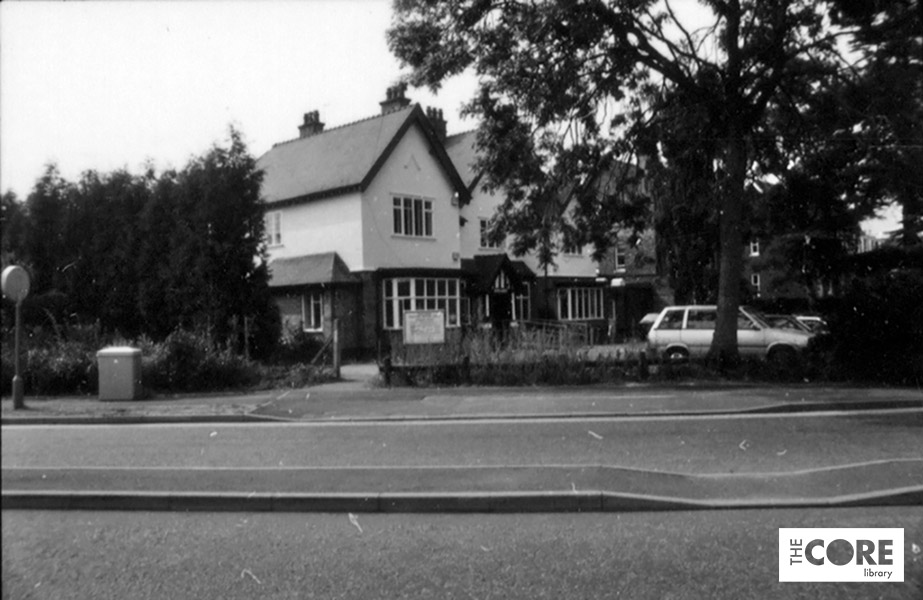
Mrs Tucker was affectionately known by Saint Martin’s pupils as Auntie Alice so no. 10 Homer Road was renamed “Alice House.” This was later to become the local office of Age Concern. For further details of Saint Martin’s School, see our article on Schools at Malvern Hall.
Plans for a tennis pavilion were submitted in 1908 which was used by the pupils of Saint Martin’s School.
Civic buildings
The stretch of Homer Road between Herbert Road and Church Hill Road became home to a number of civic buildings during the 1960s-1980s.
Plans for the erection of civic buildings in Homer Road were originally put forward in 1951 but there were objections, including from Mr F. L. Nock, of Knowle, who owned six acres of land in the road. In 1952, his representative told a public inquiry in Warwick that the road had been developed as a high-class residential area, and submitted a memorial from most of the road’s residents protesting against the erection of civic buildings there.
Warwickshire County Council contended that there was an urgent need in Solihull for a civic hall, central library and office buildings. A compulsory purchase order was made on Mr Nock’s land in May 1951 but this had not been confirmed by the government because of the economic situation at the time. It took another 25 years before the civic buildings had all been completed.
Solihull Council House and Civic Suite (opened 1967 and 1968)
Councillors were asked in 1961 to give approval in principle for the provision of an “under-one-roof” civic office block and council suite, bringing together all Council services that were scattered in former private houses across the town. The expectation was that the building could be completed within five years – “in time for Solihull’s expected promotion to county borough status.”
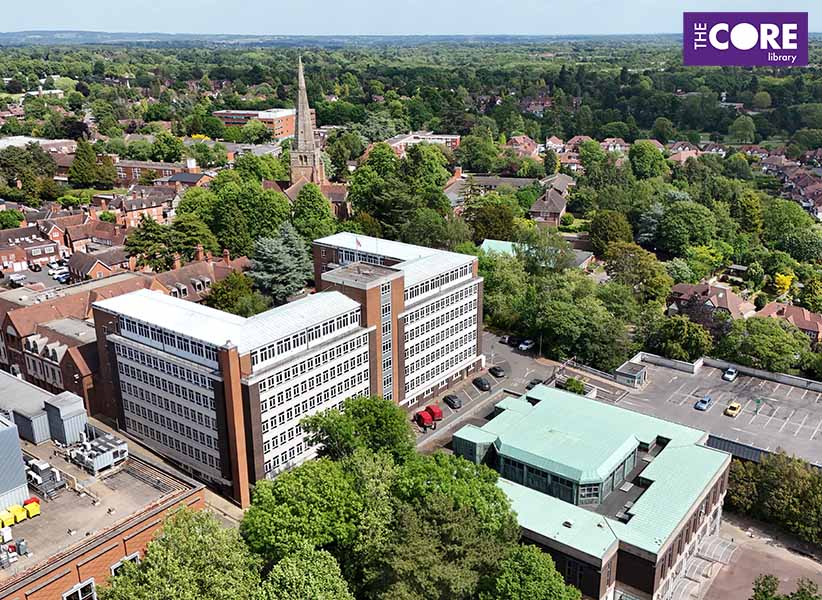
In the event, approval was not given until January 1964, with preliminary site works commencing in April 1964, the same month that Solihull became a County Borough. A foundation stone for the Civic Suite was laid on 14th May 1966.
The first Council departments to open in the Council House were the rates, payment and motor taxation offices, which opened on Monday 11th September 1967, with all other departments due to follow within the next two weeks.
Phase 2 of the development saw the opening of the Civic Suite, mainly comprising the Council Chamber, committee rooms, and Mayor’s and Mayoress’s Parlours. The building was formally handed over to the Mayor on 18th May 1968 and the first ceremonial use was the annual Mayor making ceremony which took place on 20th May 1968. Cllr John Ledbetter took office as Mayor for 1968/9.
The ceremonial entrance in Homer Road came into use in 1969, with H.R.H. Princess Alexandra being the first person to use the entrance as part of her visit to Warwickshire on 6th November 1969.
Solihull Civic Hall (1962-1998)
The site of the Civic Hall (now Touchwood) and Golden Jubilee Gardens is shown on the 1840 tithe map as an arable field called Daisy Leasow. It was owned by Sarah Powell and rented by Robert Compton.
25th May 1962 saw the Civic Hall officially opened by Her Late Majesty, Queen Elizabeth II, almost two years on from the laying of a foundation stone by H.R.H. The Duchess of Kent on 27th October 1960. For further information on the Civic Hall see our earlier article on the Queen’s visit, 1962. The Civic Hall was demolished in 1998 as part of the development of Touchwood, which opened to the public on 5th September 2001.
Solihull Police Station (opened 1970)
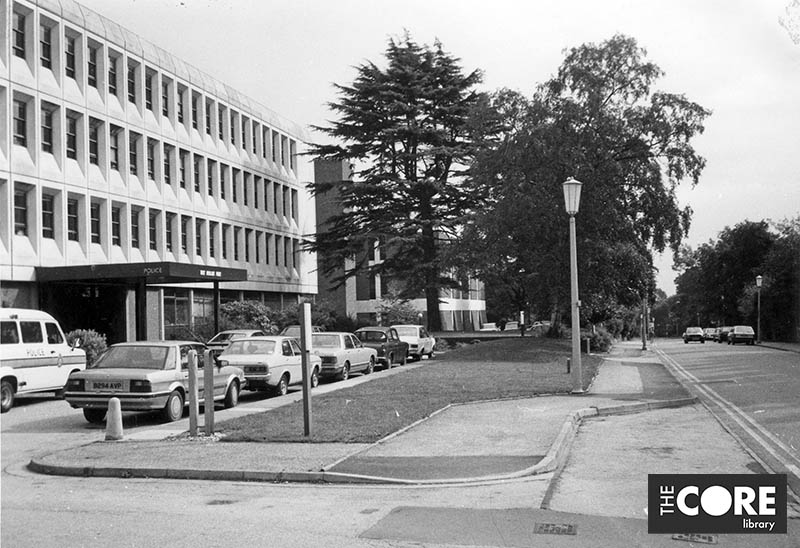
The tithe map of 1840 shows that the site of Solihull Police Station and The Core was owned by Thomas Chattock and rented by George Homer (1787-1867). It was a field known as “Humphries Ground” and was mown and grazed.
The changeover from the old police station in Poplar Road to the new £500,000 building in Homer Road took place on Tuesday 31st March 1970, with the new building being operational from 1st April 1970. The official opening by the Mayor of Solihull, Alderman B. A. Arrowsmith, took place on 26th November 1970.
In 2014 it was announced that the police station would change its opening hours from 24 hours per day to being staffed 8am-10pm.
In 2018, it was proposed that Solihull Police Station would close in late 2020 and the site would be sold. The Covid pandemic delayed matters and the anticipated closure date was delayed, provided that an alternative location for a police front desk could be found. Suggestions included Mell Square and Solihull Council House.
The Solihull Town Centre Masterplan proposed that the Police Station site be combined with the adjacent site of The Core to create the “Homer Road Civic Buildings Development Site” which the Masterplan suggested could be developed as office accommodation and high-density residential accommodation.
On 11th June 2026, Solihull Council announced that it had received a planning application (PL/2026/01091/PPFL) by Opus Land (Odyssey) LLP for the demolition of all existing buildings and the construction of a 8,937 square-metre office building on the site of West Midlands Police Station, 101 Homer Road, Solihull. The five-storey building would include a multi-storey car park providing 273 parking spaces.
The plans are available on https://publicaccess.solihull.gov.uk/online-applications
In July 2026 it was announced that the police station would relocate to The Priory, Church Hill Road.
Solihull Central Library and Arts Complex (opened 1976)
The tithe map of 1840 shows that the site of Solihull Police Station and the Core was owned by Thomas Chattock and rented by George Homer (1787-1867). It was a field known as “Humphries Ground” and was mown and grazed.
Built on the site of One Oak, 109 Homer Road, the building was designed by local architect Stanley Sellers (1933-2013). Construction began in July 1974. The new library opened to the public on Monday 18th October 1976 but only the ground floor of the building was opened.
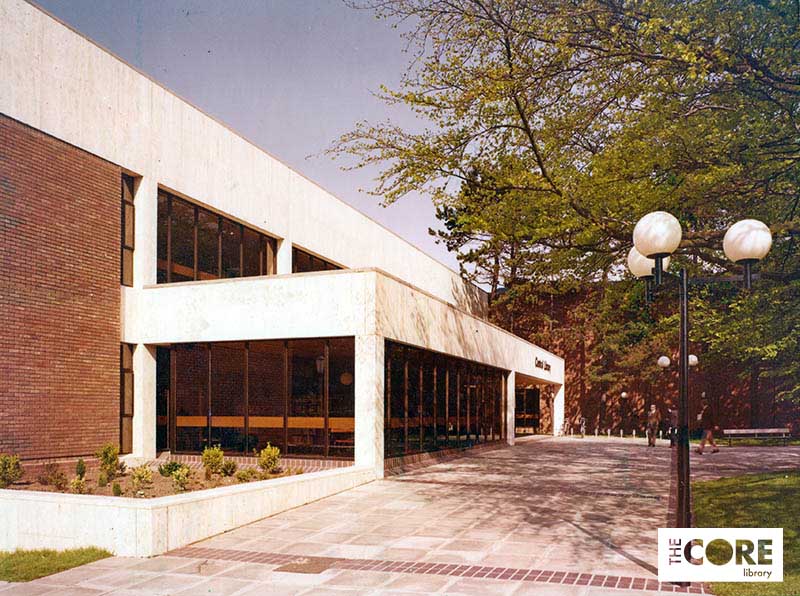
The interior and exterior design of the theatre was heavily influenced by the Maltings Concert Hall near Aldeburgh. Solihull Library Theatre, as it was originally known, opened on Monday 25th April 1977 with daily performances (until 30th April) of Offenbach’s “La Belle Helene” by Solihull Society of Arts Opera Section.
Solihull Central Library and Arts Complex was officially opened by H.R.H. The Duchess of Gloucester on 26th April 1978. The building was awarded a Commendation in the Civic Trust Awards 1979 and was described as “a well-sited building of bold and simple design where the preservation of pine and beech trees gives the entrance a special quality lacking in many public buildings.”
In 2008, as part of celebrations marking 30 years since the building was officially opened, architect Stanley Sellers wrote down some of his reflections on the building’s design.
A major refurbishment was carried out in 2000/1 as part of the development of Touchwood, with a new entrance and a public square – Library Square – outside. The square was renamed Theatre Square in 2014 and Solihull Central Library and Arts Complex was renamed The Core in 2016 when other agencies also relocated to the building.
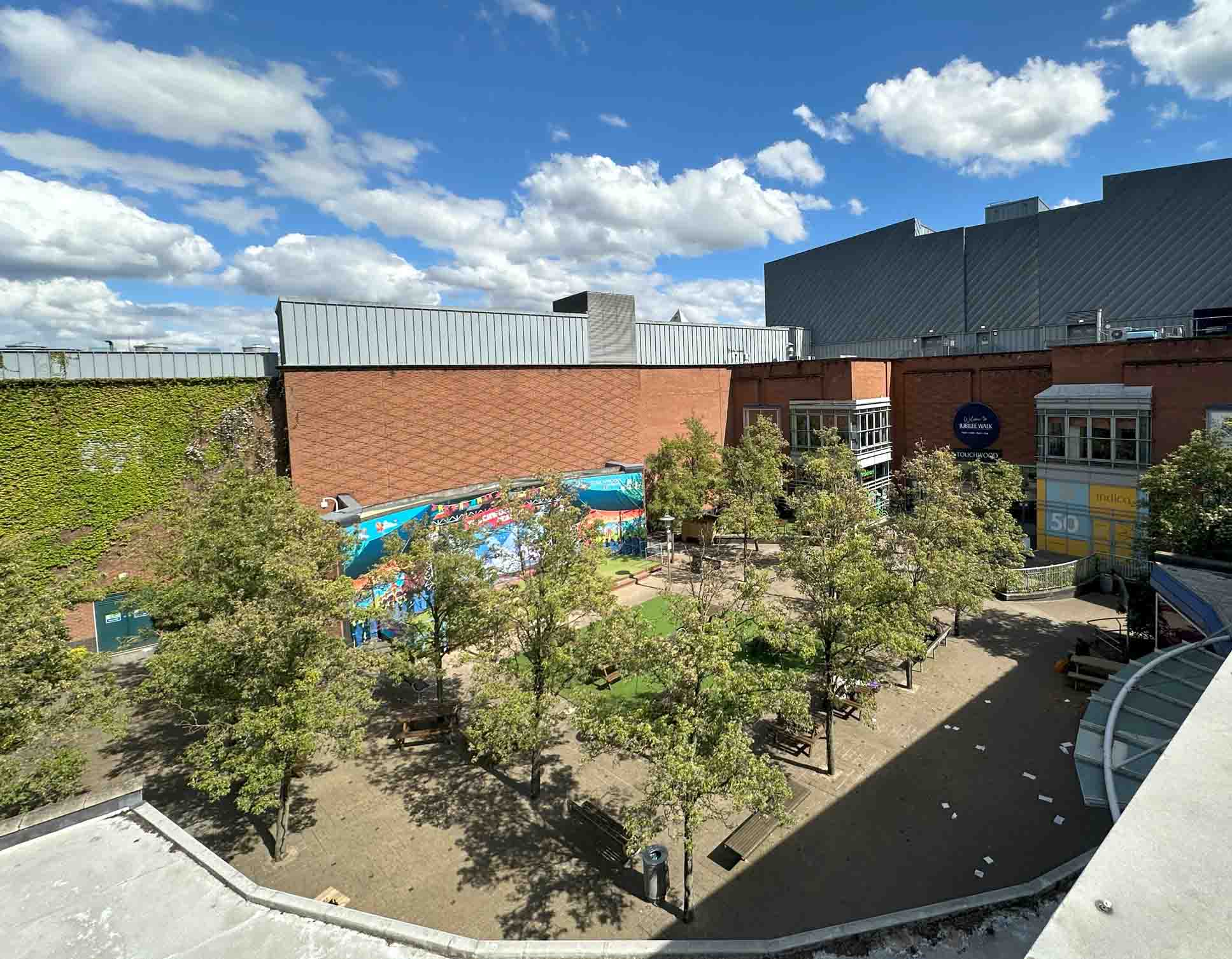
Solihull Town Centre Masterplan proposed combining the site of The Core with that of the adjacent Solihull Police Station to create a mixed-use development. The inclusion of a proposed apartment block is part of the aim to increase residential use of the town centre to help diversify the evening economy.
Solihull Magistrates’ Courts (1981-2018)
The building, on the site of Homer Close, 83 Homer Road, opened for business on 16th March 1981.
Criminal cases were moved to Birmingham in 2013 and it was announced in 2018 that the building had been sold to Aldi. Demolition began in December 2018. For further details, see our earlier article on Solihull Magistrates’ Courts.
Business district
July 1967 saw plans announced to build a Regional Television Studio in Homer Road. Three existing houses (nos. 80, 86 and 88) were to be pulled down and the area re-zoned from a residential area. This site was opposite the previous Civic Hall, just before the roundabout by Church Hill Road, but the development did not take place.
In 1981, plans were revealed for a multi-million-pound development along Homer Road, including a 12-acre site of open ground opposite Solihull Police Station. The development was divided into five separate land packages, excluding properties 56-60 Homer Road (opposite the Magistrates’ Courts) where agreement hadn’t been reached with the owners.
At the time, the leader of Solihull Council, David Wynne Rees, said about the development of Homer Road :
“This is the best and last site in the centre of Solihull, and we intend it to be the crowning glory of the development of Solihull.” He also described it as becoming the “Mayfair of the Midlands.”
The houses along one side were gradually being sold off to make way for this development. As houses came up for sale many were bought by the council for the ongoing development of Homer Road.
In 1980 there was a dispute between the developers and two homeowners. The two houses – nos. 58 and 60 – were still occupied and the residents refused to leave, blocking the redevelopment of Homer Road. Mr Barry Cooper, who had lived at no. 58 for 21 years, said they were happy living on Homer Road and did not want to leave, so for a while the redevelopment was planned around them.
- Area A – 3.2 acres
The corner plot at the junction of Homer Road and Church Hill Road included nos. 86 and 88 Homer Road. It Was advertised as being suitable for a hotel, which would have the benefit of a balancing lake in the grounds. The hotel opened in September 1990 as Brookes Hotel, 61 Homer Road. It became the Moat House Hotel in 1991 and then later the Holiday Inn, which was refurbished and rebranded in 2016 to become Crowne Plaza. - Area B – 2.5 acres
The site of nos. 76 and 78, which had been demolished by the time the land was marketed for redevelopment in the 1980s. Area B also included part of the house and grounds of Grey Walls (no. 80). The new office block became 51 Homer Road and was occupied by the National Home Loans Service until it moved to St Catherine’s Court, Herbert Road, Solihull c.1992. British Gas then took over 51 Homer Road, with the site becoming Transco’s centre for Information Services when British Gas was reorganised in 1994-97. Since 2012 it has been the registered office of Paragon Banking Group, which moved to the site from St Catherine’s Court, Herbert Road. The building was renamed Paragon House. - Area C – 2.1 acres
The site of nos. 72-74 Homer Road, and land to the rear of nos. 56-60. - Area D – 1.3 acres
The site of nos. 52 and 54 Homer Road was redeveloped in the 1980s as 35 Homer Road. It was reconstructed in 2003 to house National Grid. Following the expiry of National Grid’s lease in 2023, the site has been reconfigured and extended as grade A office space Air Solihull - Area E – 2.6 acres
The first of the land packages to sell, this was situated on the site of the former nos. 2-10 Homer Road. It was numbered as 31 Homer Road and was purpose-built in 1985 by financial firm 3i plc for its headquarters office building. It was announced in 1991 that the company would be moving to Trinity Park, near Birmingham Airport, and that the Homer Road site would be leased to British Gas. In 1997, 31 Homer Road was purchased by a German private investor. National Grid vacated the building when their lease expired in 2016. The building is now grade A office space and became home to Serco and CGI in 2018.
St Catherine’s Court
St Catherine’s Court office block was a joint project by Piper Securities Holdings Ltd and Standard Life Pension Funds Ltd. The first phase opened in 1983 and the building was designed by local architect Stanley Sellers (1933-2016), from the Birmingham firm of Inston, Sellers and Hickinbotham.
Stanley Sellers also designed other buildings in Homer Road, including Solihull Central Library & Arts Complex, Solihull Magistrates’ Courts, the National Home Loans Offices at no. 51 Homer Road, and Prince’s Gate offices.
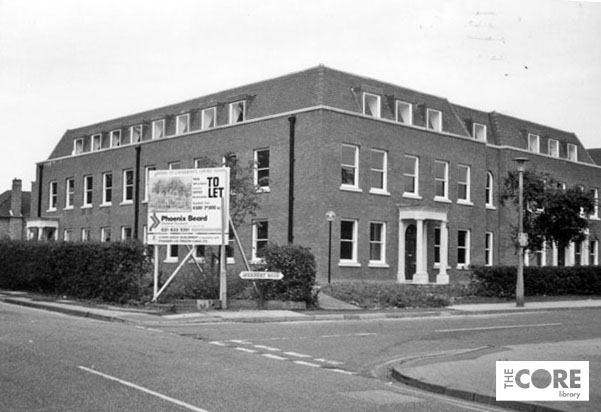
St Catherine’s Court became vacant in 2012 when the last occupiers, Paragon, vacated the site to move further down Homer Road to no 31.
St Catherine’s Court was demolished along with the neighbouring building, 29 Homer Road, in July 2015. A Waitrose supermarket was subsequently built on the site and opened for business at 7:30am on 23rd June 2016.
Sandford House
Built in 1990 on the site of nos. 58-60 Homer Road, this three-storey office block was originally owned by Prudential Holborn Life but was sold to AMP (London Life Fund) in 1991.
In 1998 it was announced that the mechanical, electrical and building services operation of ABB Steward’s Midland Region was to move from its existing premises in Walsall to join its climate systems division under one roof at Sandford House, 41 Homer Road, Solihull.
In 2000, H. M. Government took over the whole building on a single-let lease for use by the Home Office (Immigration and Nationality Department) as an Immigration Reporting Centre covering the West Midlands Region. In 2015, it was reported that each day, some 250-350 individuals reported to the centre. It is also the base for Home Office Immigration Enforcement Teams.
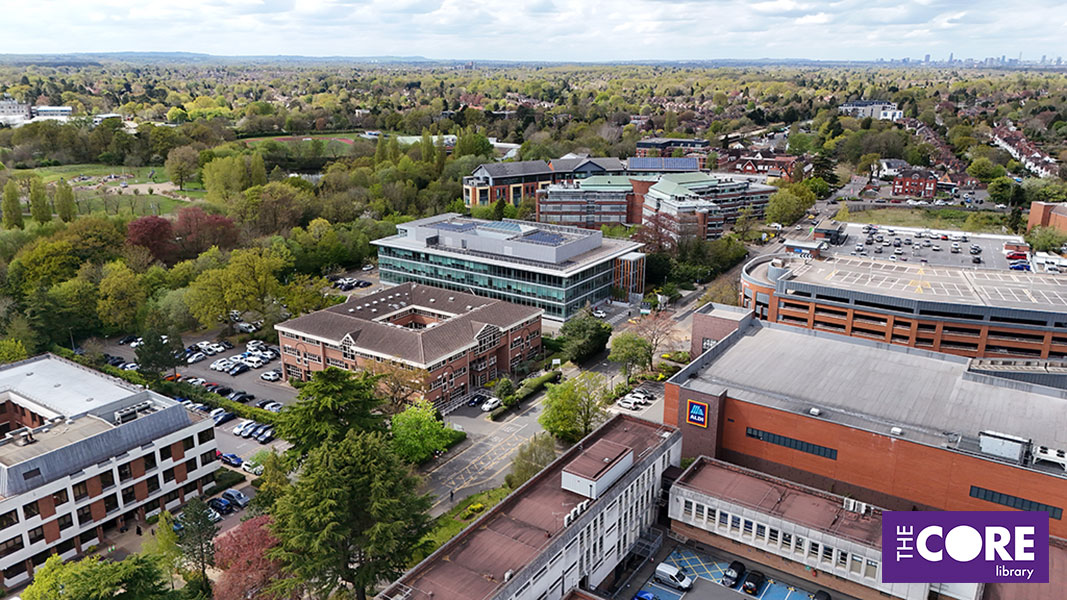
It was reported in 2018 that a planning application had been lodged with Solihull Council for the conversion of Sandford House into 41 one- and two-bedroomed apartments as a result of the existing lease being due to end in 2019. However, an announcement in February 2021 of the sale of the building to a private investor stated that a new 15-year lease of Sandford House to the Government had been agreed with the Secretary of State.
Prince’s Gate, 2-6 Homer Road
The original buildings were designed by local architect, Stanley Sellers (1933-2013) who had also designed several other buildings in Homer Road.
In 2018 it was announced that Birmingham-based Elevate Property Group had acquired the former HM Revenue and Customs office site, Prince’s Gate – consisting of Consort House, Royal House and Regent House – and would be converting the buildings into 100 luxury apartments. Phase I saw the construction of 30 apartments at Consort House and Phase II created 70 apartments in Royal House.
Phase 3 of the development saw the construction of the five-storey Imperial House (above a two-storey car park) begin in May 2022 with the 60 one-, two- and three-bedroomed apartments completed in December 2023. Imperial house was designed by West Midlands architecture practice firm Corstorphine & Wright and built by Kavannagh Construction.
Homer Road Gateway Plan
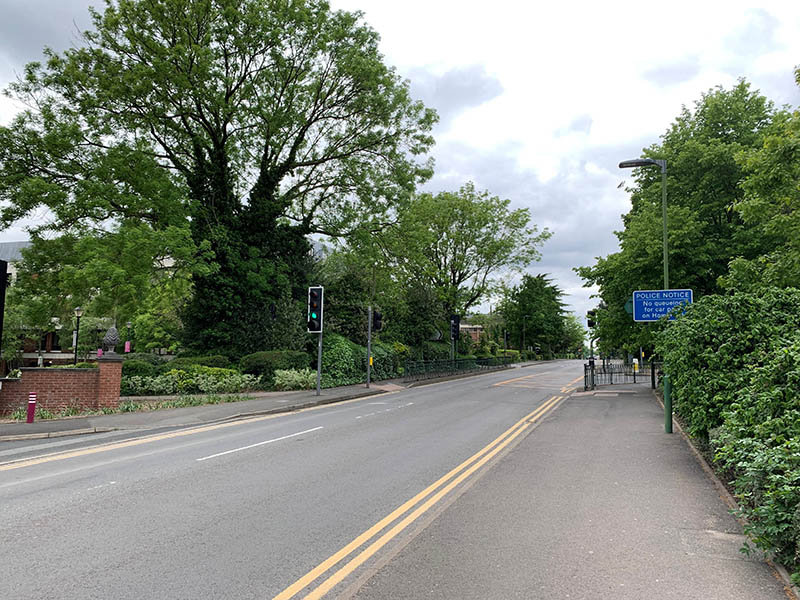
In 2019, an area of land on the corner of Homer Road and Station Road was cleared of buildings to create a development site (Westgate) for a landmark office building as outlined in Solihull Town Centre Masterplan. The demolished properties were nos. 21, 23, 25 and 27 Homer Road, and nos. 49 and 51 Station Road. Most of the detached properties had been in use as offices.
The Solihull Observer, 5th March 2020, reported that Solihull Council’s Planning Committee had given unanimous support to the plan for Westgate to be developed as office space. The article noted that, at 35 metres tall, the new building would be the tallest in Solihull.
Construction was planned to begin in 2020, with companies expected to move into the office block from 2022. However, the development was affected by the Covid pandemic and, as of July 2026, work has not yet begun on redeveloping the site. For further details about Westgate see: https://westgate-solihull.co.uk/
Low carbon energy network
In July 2024, Solihull Council signed a Design Build Operate and Maintain (DBOM) contract with Vital Energi Ltd following a competitive tendering process and a series of site investigations and ecological surveys that took place in March.
The new energy network is designed to generate low carbon heat and power (electricity) from a single energy centre and distribute it directly into town centre buildings via a system of underground pipes and cables. The Energy Centre will be built on land next to Tudor Grange Leisure Centre and will house a range of renewable and low carbon energy solutions including Air Source Heat Pumps (ASHP). Construction of the energy centre and the laying of pipework was estimated as likely to take 16 months.
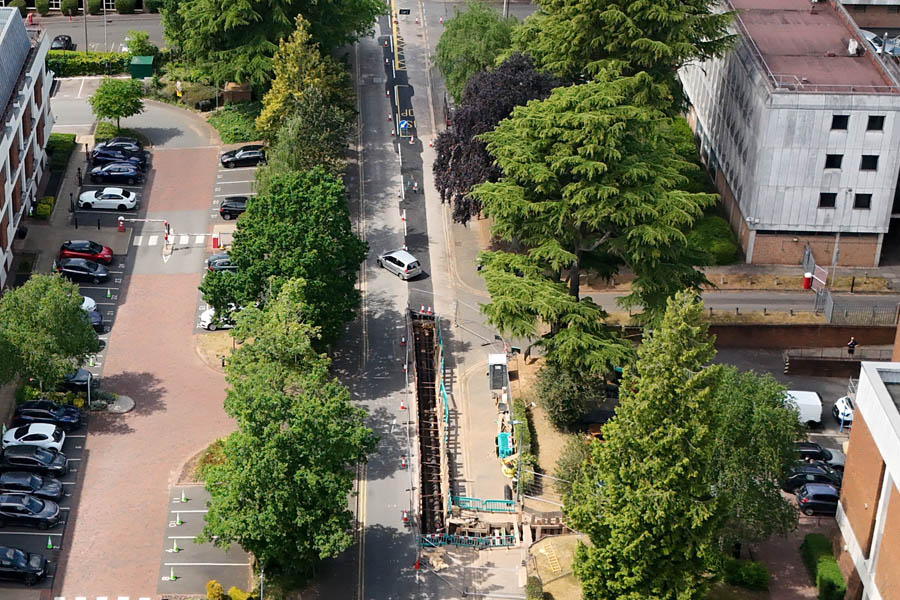
The first phase of the project saw enabling works take place with the laying of pipework from Tudor Grange Park to Homer Road between February-June 2025. The first buildings to be connected will be Tudor Grange Academy, Solihull College, Tudor Grange Leisure Centre, The Core, and Solihull Council House. The site of the proposed Westgate development has also been made connection-ready.
If you have any further information about the history of Homer Road, please let us know.
Karen & Tracey
The Core Library, Solihull
© Solihull Council, 2025.
You are welcome to link to this article, but if you wish to reproduce more than a short extract, please email: heritage@solihull.gov.uk


I do not remember much about Homer road in the late 40s etc, but I remember more about Herbert Road off it to Station road
The Catholic Church on the corner then further along there were some houses including one belonging to my doctor, Mr Page (a retired surgeon). He lived in the house as well as the surgery I think.
A few years ago I was in the old Council offices in Popular road , then a Wetherspoons, when I saw a photo of a Dr Page circa 1900s on the wall My doctor’s father must have been a doctor in Solihull as well
On the opposite side there were the Education Offices for Solihull. My mother used to clean them at night and I often went to help. The first part of that side of the road must have been part of St Martins School. There were several other houses/offices next to the Eduction Offices, but I do not know about them
Yes, there were three generations of the Page family who were doctors in Solihull – Edward Sutton Page (c.1836-1912), Edward Ferdinand Page (1863-1944) (known as Ferdinand) and Erichsen Sutton Page (1897-1967) (known as Eric).
Dr E. Ferdinand Page lived at “Earnshaw,” 5 Herbert Road, from c.1938 until his death, aged 81, in 1944. His son, Eric then took over the house and died there in 1967.