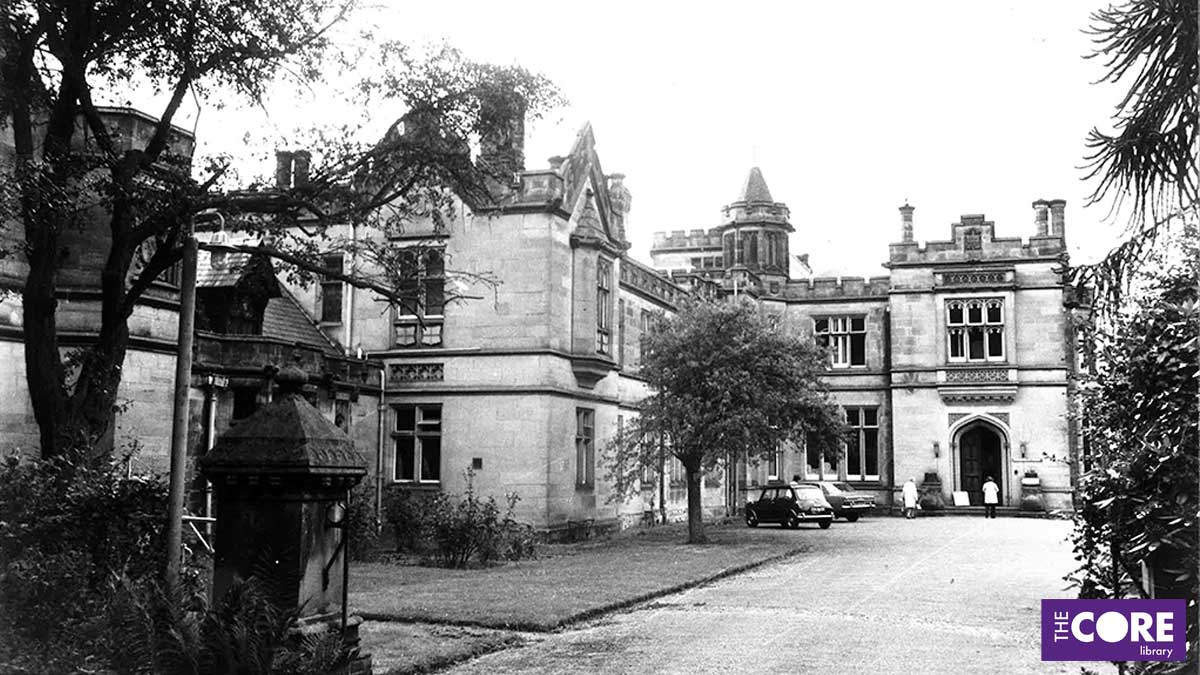
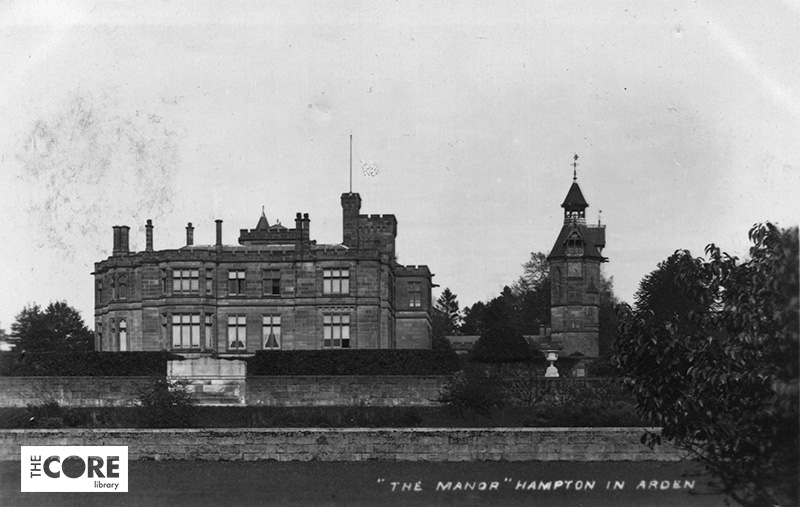
The first recorded mention of Hampton Manor estate appeared in the Domesday Book of 1086, and today the current manor house still stands in the heart of the village of Hampton-in-Arden just along from the Parish church where a church has stood since Saxon times.
The land was purchased by Sir Robert Peel (1788-1850) who was prime minister from 1834-1835 and 1841-1846. It is Sir Robert Peel (2nd Baronet) who is famously credited with setting up the country’s Metropolitan police force. According to the Hampton-in-Arden WI Village History Scrapbook, Sir Robert purchased the land for his son from the Lillingstone family of Elmdon Hall.
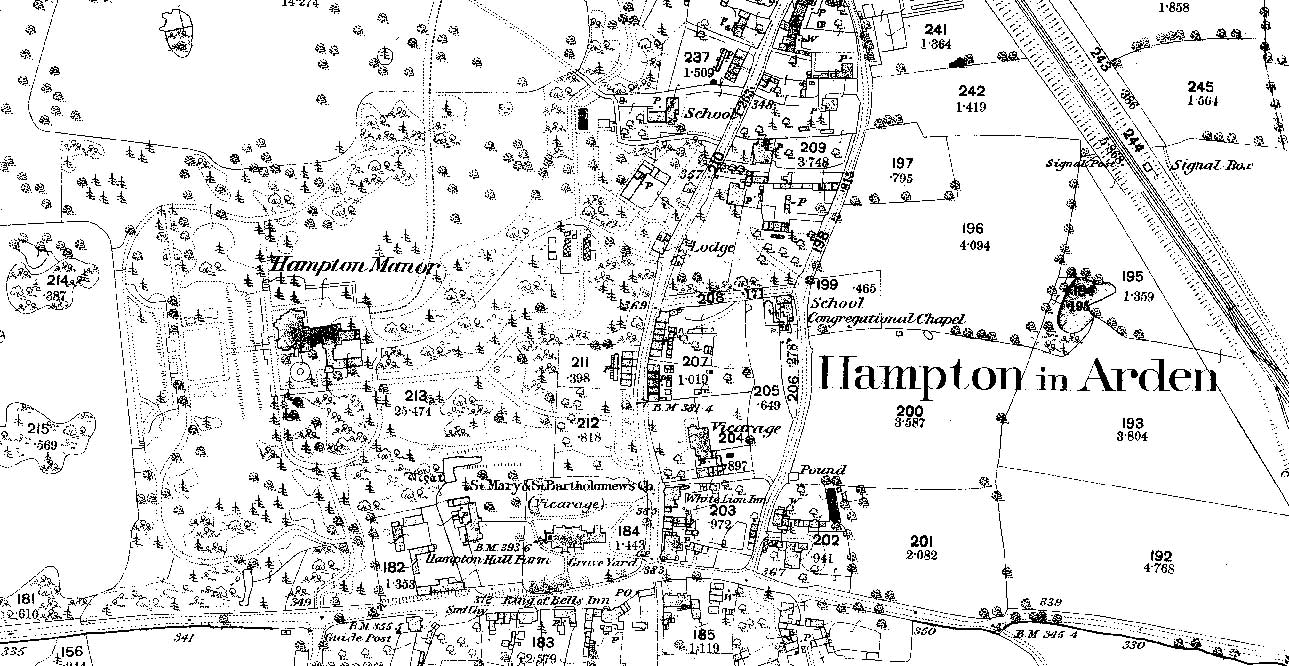
Sir Robert Peel was living at Drayton Manor, Staffordshire when he came across the land at Hampton and decided to acquire it. In 1850, he died after falling from his horse, and he bequeathed Hampton Manor to his second son, Frederick.
At this time the manor was little more than a rundown farmhouse, and in 1852 Frederick began work on building a new Manor house, as a mirror image of the family home at Drayton – Drayton Manor having been inherited by his elder brother Robert.
According to Pevsner’s Guide to Warwickshire (2016) by Chris Pickford and Nikolaus Pevsner, the architect of the new manor house at Hampton was William Giles of Derby. He completed the work in in 1855.
When the house was finished, Frederick Peel apparently insisted that the house be called The Manor. The Old Manor house, dating from the 16th century, then became known as Hampton Hall Farm and subsequently the Moat House.
William Eden Nesfield (1835-1888)
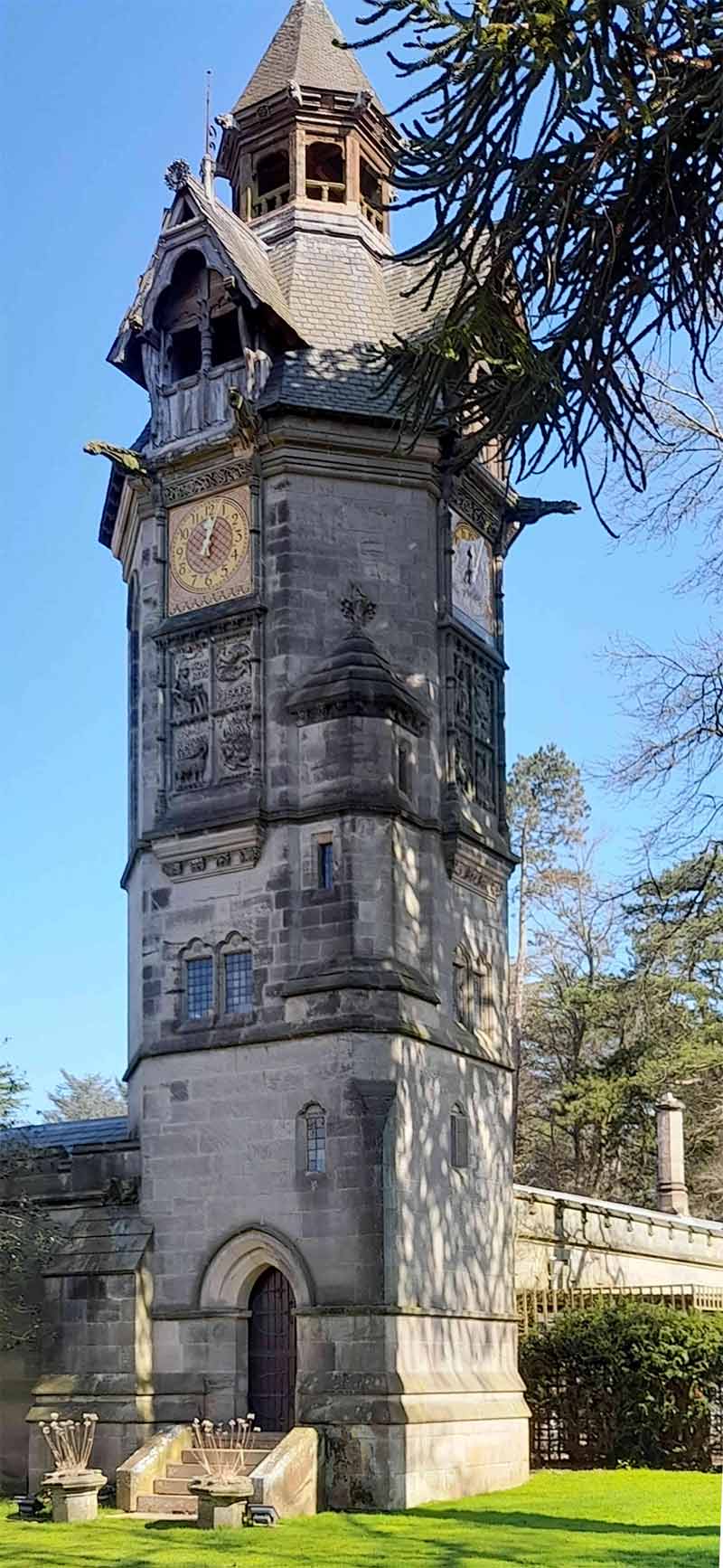
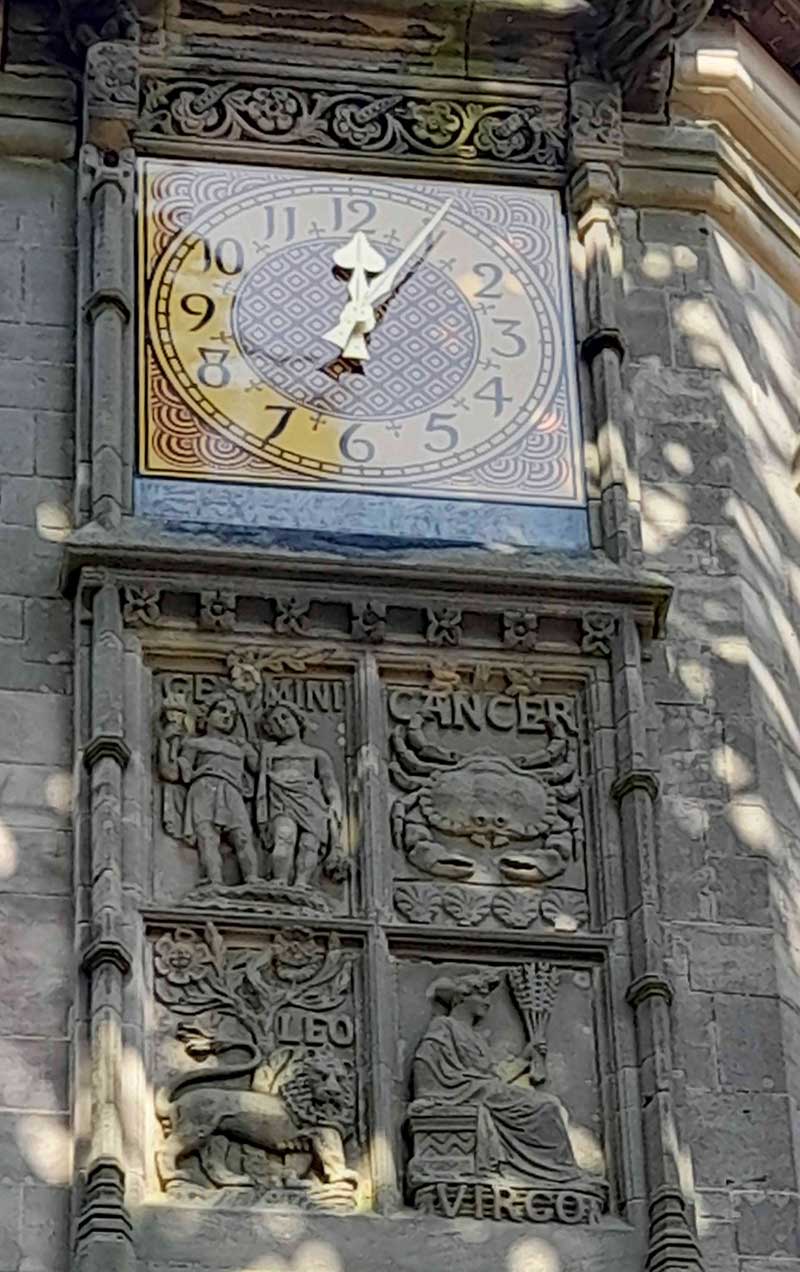
In 1870-73 W. Eden Nesfield added extensions to Hampton Manor, including a new clock tower. The tower has recently been restored by the current owners and stands proudly next to manor house in the manor grounds. The Arts and Crafts style decor was provided by Nesfield’s friend, artist Albert Moore. It was his idea to create the signs of the zodiac around the top of the tower, but we can find no specific reason for this design. The manor and clock tower have both been grade-II listed since 1972.
Nesfield was also responsible during the 1870s for the restoration of the parish church. Around this time Nesfield was also responsible for the design of a number of other village buildings, including some of the shops, lodges and dwellings that can still be seen along the High Street. Some of the cottages show signs of the craft of pargetting which was introduced by Sir Frederick’s wife at the time and involves the decoration and ornamentation of plastered or rendered buildings, rather than leaving the plaster smooth.
Nesfield was born in 1835 in Bath to an affluent Durham family, his father later becoming a landscape garden designer. He was educated at Eton and studied architecture. Around 1860 he went into partnership with his friend Richard Norman Shaw although they worked on separate projects.
They both contributed greatly to new styles of British architecture in Britain at that time. Nesfield favouring Old English and Queen Anne styles, his designs tended to be more extravagant and ornamental than his friends.
Many of Nesfield’s projects included redesigning run down and even derelict buildings such as St Beuno’s Church, Bettws Cedewaing and Maesmawr Hall as well as redesigning the nearby Coombe Abbey in Coventry. An example of Nesfield’s unique design is the Nesfield room in Coombe Abbey which is a wonderful example of his style in the 1860s and 1870s.
He was a quiet and private man but is considered one of the most original architects of the Victorian era.
Nesfield was known to be a heavy smoker and suffered bouts of depression. He retired in 1881 and in 1885 he married divorcee Mary Annetta Backwell (née Gwilt) daughter of the architect John Sebastian Gwilt. However, Nesfield passed away just three years later at his home in Brighton.
Sir Frederick Peel (1823-1906)
Frederick Peel also followed a political career, entering parliament in 1849 unopposed as Liberal MP for Leominster and successfully contesting the seat of Bury in 1852. He lost his seat in 1857 but was re-elected in 1859 although he lost the seat in 1865. His political career ended in 1868 when he unsuccessfully contested the seat of South-East Lancashire. He was created KCMG in 1869, and turned to law and administration.
In 1873, he was appointed a Member of the Railway and Canal Commission, on which he served until his death. It was due to his efforts that certain express trains running between London and Birmingham were scheduled to stop at Hampton-in-Arden. According to the Hampton-in-Arden WI Scrapbook, vol. 1, after Sir Frederick’s death, it was necessary for intending passengers to inform the Station Master the night before if they wished to travel to London on the 07:45 express and wanted the train to stop at Hampton.
Once the manor house was restored the Peels lived in the village and took an active part in village affairs. Sir Frederick became a major benefactor to many village activities including the Church and the Fentham Trust.
Frederick Peel married his first wife Elizabeth Emily Shelley (niece of poet Percy Bysshe Shelley) in 1857 and they occupied Hampton Manor. The couple had no children and Elizabeth died in 1865, aged 30.
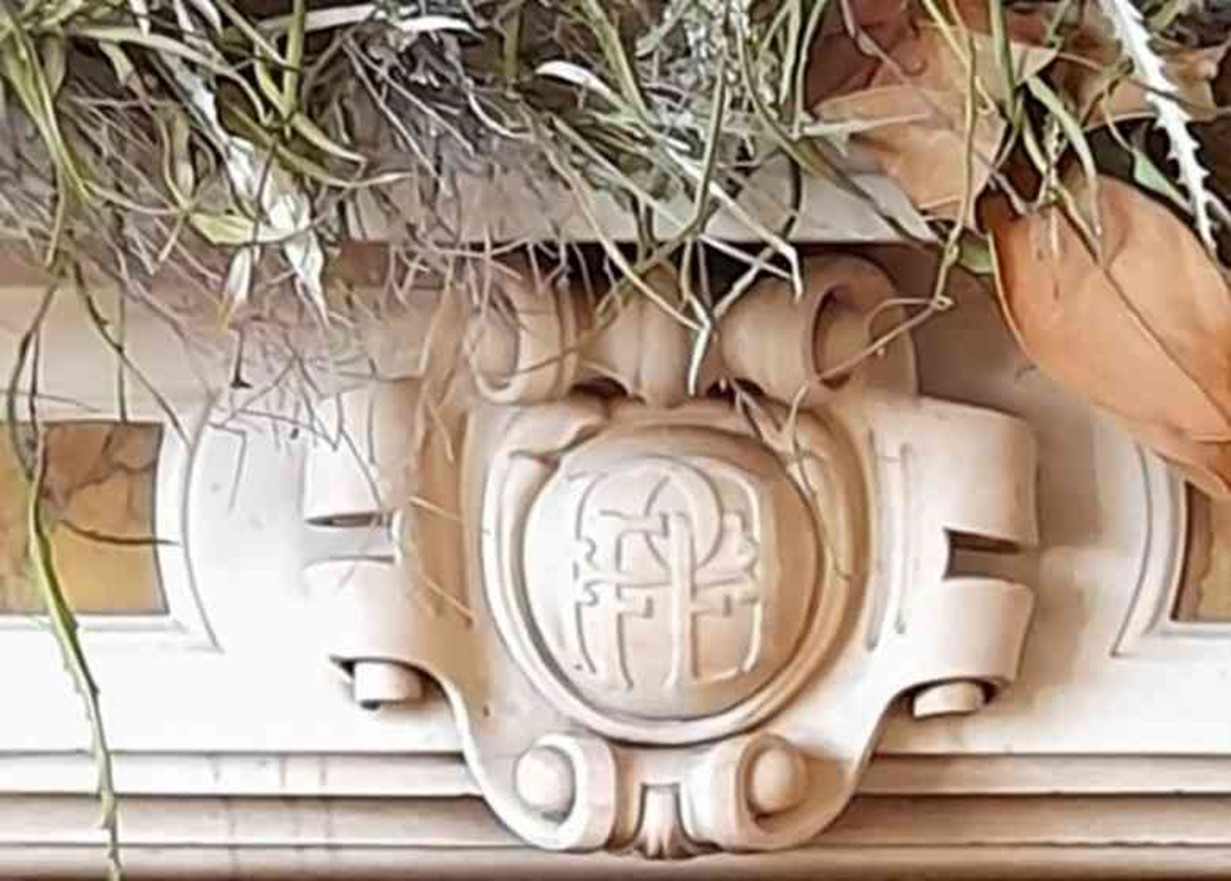
Many reminders of the couple can still be found. Inside the manor house the couple’s initials can be seen carved into the stone fireplace in the drawing room, and the parish church hosts a stained-glass window which pays homage to Elizabeth’s uncle the famous poet Percy Shelley.
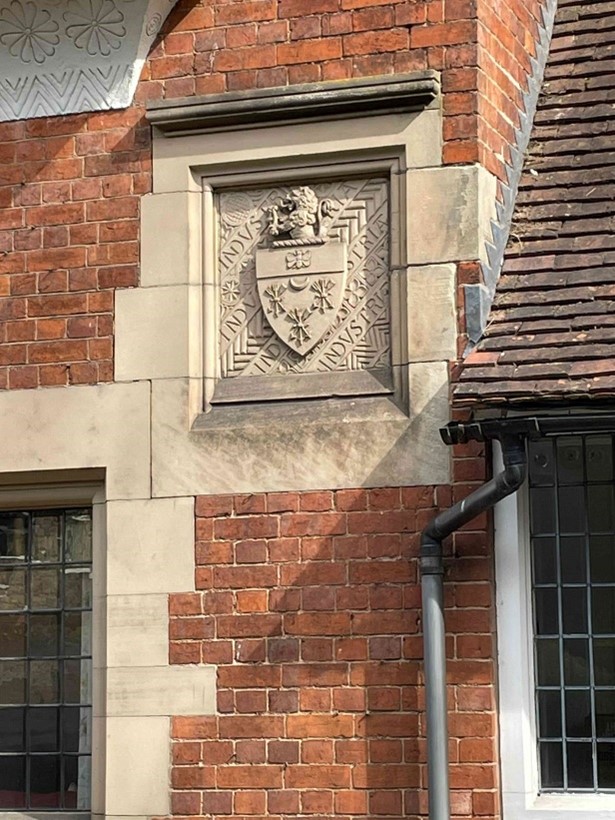
The Peel family coat of arms can also still be seen on and around the Manor building.
In 1879 Sir Frederick married Janet Pleydell-Bouverie (1850-1925), a banker’s daughter. She took a great interest in the gardens and grew many rare trees and shrubs there. Women and girls were apparently employed in June to pick up the dead flowers.
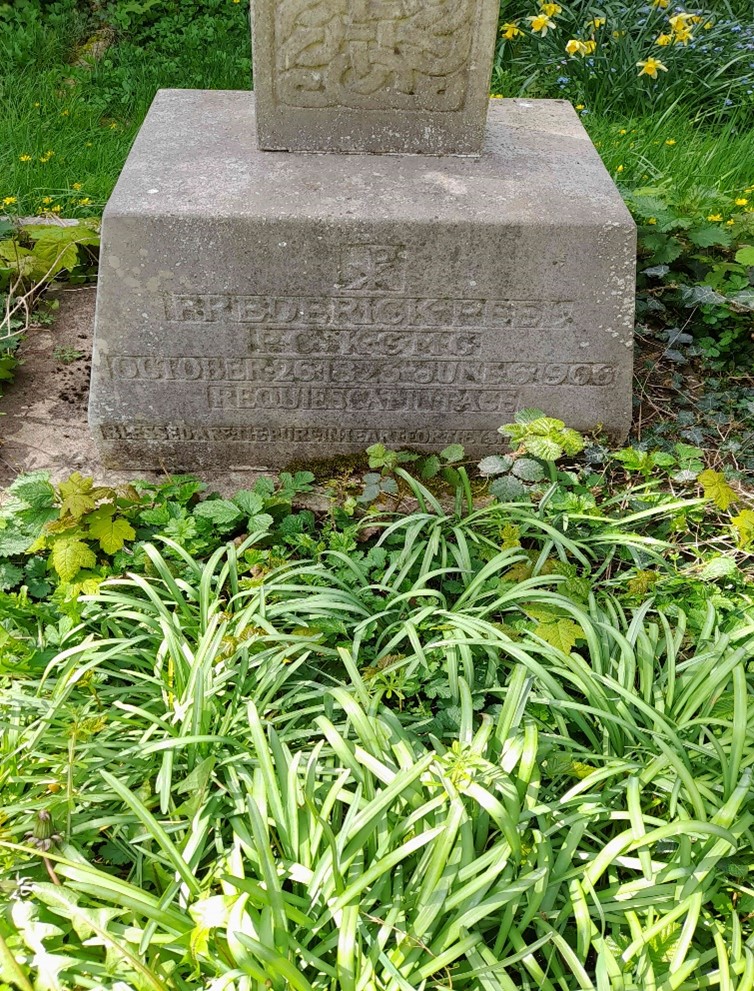
Sir Frederick died in 1906 at his London home, aged 82, but is buried at the local parish church in Hampton in Arden.
Again the couple did not have any children to pass the estate on to and Lady Peel resided at the manor until she moved to Bournemouth in 1918. The Hampton Estate, consisting of upwards of 900 acres, was advertised for sale by auction on 5th June 1919. According to the Coventry Standard, 16th May 1919, Lots included:
- Hampton Manor, surrounded by 75 acres of park land, as well as the Lordship of the Manor
- four excellent farms (Hampton Manor Farm, Walford Hall Farm, Hampton Lane Farm and The Home Farm)
- numerous cottages, business premises, allotments, and building land
- Aspbury’s Coppice (10 acres)
- Barber’s Coppice (23 acres)
- Cottages at Catherine-de-Barnes
- a smallholding at Heath Corner, Bickenhill Lane
The advertisement noted that the auctioneers were instructed to dispose of the Estate as a Whole or in Lots, unless previously disposed of in one Lot by Private Treaty.
A three-day auction of the mansion’s contents was held by the direction of Major the Hon. George Peel on 23rd-25th June 1922.
Upon leaving Hampton, Lady Peel gave a gift of land to the parish as her parting gift to the village for which she and her late husband had a great affection. The extent of the land was one rood and eight perches and originally formed part of Hampton Manor’s kitchen garden. The ground was “carefully and reverently levelled” by Mr George Harcourt, a parishioner and former employee of Lady Peel’s, and it was consecrated on 29th May 1922 by the Rt. Rev. Henry Russell Wakefield, Bishop of Birmingham, as an extension to the churchyard (Coventry Herald, 2nd June 1922).
In 1939, 76-year-old Mrs King, of the Old Post Office, Hampton-in-Arden, told the Coventry Standard of her memories of “the great day of the year” when Sir Frederick and Lady Peel hosted a flower show in the grounds of Hampton Manor and the children were always given a treat. There was a band, a Punch and Judy Show and a conjurer. A hot dinner was served in a big marquee and there was a nice tea later in the day. This was at a time when the village had no amusements except for spelling bees and penny readings (Coventry Standard, 6th May 1939).
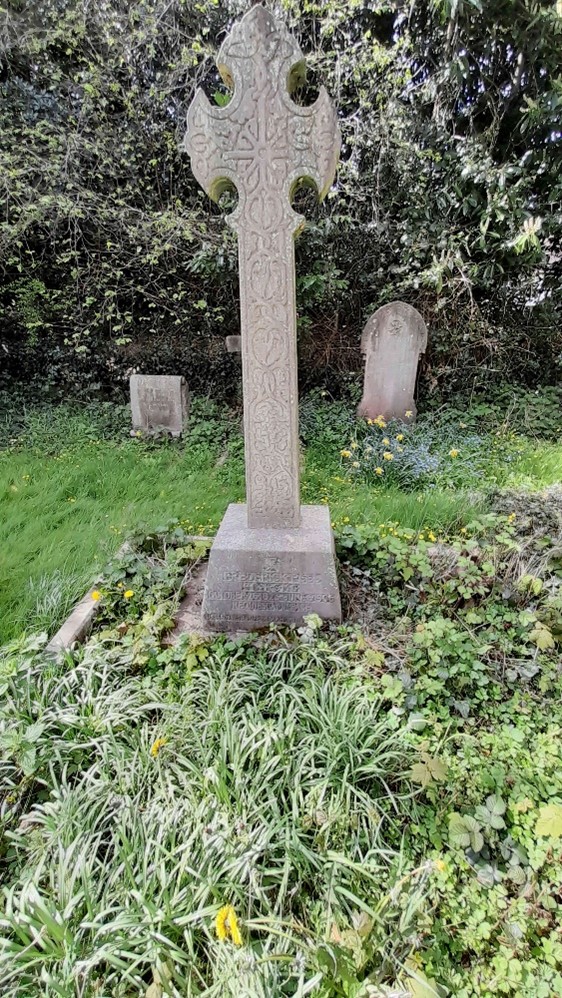
Probate records indicate that Dame Janet Peel died in Bournemouth on 15th March 1925, aged 74. After a Requiem at St Stephen’s Church, Bournemouth on Thursday 19th March, Lady Peel’s body was taken to Hampton, where a funeral was held at 3:15pm, a Requiem having also been sung at Hampton at 8:30am that day. She is buried with her late husband at Hampton-in-Arden (grave pictured below).
In 2008, memories of Hampton Manor were sent into the Solihull News by readers, including one story of Lady Peel who expected young girls to curtsey to her and boys to doff their caps to her if she was out in her carriage. If children failed to do so, she sent her butler to see the children’s parents (Solihull News, 29th August 2008).
James & Grace Eveline Rollason
The purchaser of Hampton Manor in 1919 was James Rollason (1862-1935), a wealthy manufacturer of Pype Hayes Hall, Erdington in Birmingham, and one of the original directors of Tube Investments Ltd. He and his wife moved into Hampton Manor in December 1919 and took a keen interest in village activities. Mr Rollason was Chairman of the Fentham Hall and Institute trustees and a strong supporter of the church.
His last public appearance was some 18 months before his death, when he opened the local Scout Hut, for which he had provided the site and a major contribution towards the cost of erecting the building. He had also helped to provide the Hampton-in-Arden Old Boys’ Club with their clubroom, and each year he threw open the gardens at Hampton Manor in aid of the Queen’s Institute Nursing Association (Coventry Herald, 6th December 1935).
James Rollason died on 2nd December 1935 and was buried at Hampton-in-Arden on 6th December 1935. Around 100 employees of his family firm, Messrs. Abel Rollason & Son Ltd, wire manufacturers, lined the route from Hampton Manor to the parish church. His coffin was borne by members of the outside staff at Hampton Manor – Messrs. Mowl (head gardener), Cox, Turner, Dee, Fox and Hammond (Coventry Herald, 6th December 1935).
In 2008, a former employee of the Rollasons’, 94-year-old Harold Wilcox, reminisced to the Solihull News about his time as a beater at Hampton Manor during the shooting season. He commented that the “great big estate” went on for miles (Solihull News, 8th August 2008).
James Rollason’s executors sold the 578-acre estate by private treaty to the Benacres Estates Company the following year (Birmingham Daily Post, 1st August 1936) although Mrs Rollason (1865-1952) continued to live at Hampton Manor with her daughter, Mildred Howard Rollason (1896-1948). Grace Eveline Rollason (née Howard) died at Hampton Manor, aged 87, on 19th March 1952.
After Mrs Rollason’s death, the “medium-sized, stone-built country mansion”, together with 46 acres of land, was separated from the main estate and sold at auction on 9th June 1952 by the Hampton-in-Arden Manor Estates Company (Birmingham Daily Post, 17th May 1952).
The purchasers were Mr & Mrs A. Jacobs who paid £14,250 (Coleshill Chronicle, 14th June 1952). They moved from their previous home at The Manor, Berkswell, intending to live in the lodge at the gates of Hampton Manor.
Hampton Manor was described as “Charmingly situated in mature grounds on an eminence commanding extensive views, and containing (briefly)”:
- Entrance Courtyard, Vestibule, main and inner Halls with noble oak staircase, five excellent reception rooms, adequate domestic quarters, ten principal bed and dressing rooms, three bathrooms, six secondary bedrooms, and additional bathroom
- Central heating.
- Mains water supply and electricity
- Wine cellarage
- Beautiful stone octagonal clock tower
- Range of garages and stabling with cottage.
- Staff cottage adjacent to house
- Extensive kitchen gardens with glass-houses
- Timber yard
- Gardener’s Lodge
- formal terraced and other gardens
- and beautiful park-like grounds
A three-day sale of the Manor’s contents was held 10th-12th June 1952.
Alfred & Hilda Jacobs
Mr & Mrs A. J. Jacobs, inspired by their son Teddy who had Downs syndrome, presented the building to the Three Roses Society, which was established in 1950 and grew out of a parents’ association associated with the Sunfield Children’s Homes at Clent, near Stourbridge. Mr & Mrs Jacobs were respectively Chairman and Treasurer of the Society.
Hampton Manor became a residential home for young women with learning disabilities, founded on the anthroposophical ideas of Rudolf Steiner (1861-1925). Many of the first residents and staff moved to Hampton Manor from Sunfield, which was a Steiner-inspired children’s home.
Hampton Manor was a private home, with around half of the places funded by the residents’ families and half by the local authority. The fees in 1956 were £300 per annum.
Hilda Jacobs (née Beresford) died on 21st February 1971, aged 75. Alfred Joseph Jacobs, who still took a keen interest in Hampton Manor and lived in a bungalow in the grounds, died in 1976, aged 76. The couple’s daughter, Brenda (1936-2009) and her husband, John, took over the management of Hampton Manor Homes in 1974, although the day-to-day running of the site was in the hands of a resident administrator and house-mother.
Most of the residents moved to Hampton Manor when they were aged between 15-25 and stayed there until they died or until the home was forced to close in 2007 as the building was no longer fit for purpose. In 1994, the Solihull Times reported that the building was home to 29 women, aged 29-67. The 32 residents who were there in 2007 moved into different types of accommodation, including supported living flats, and care homes.
In 2018-2020 Solihull Action through Advocacy undertook a National Lottery Heritage Fund project to discover and record the history of people with learning disabilities, which included the residents of Hampton Manor when it was a residential home. The Hidden Lives Remembered website includes an exhibition of what the researchers found out about Hampton Manor.
Hampton Manor today
In 2008 the property was purchased by the Hill Family and the current owners have lovingly restored not only the manor but also the clock tower and 45 acres of woodland. A proposal to transform Hampton Manor from a residential care home to a hotel and conference centre was enthusiastically approved by councillors at a planning meeting in September 2008 (Solihull News, 26th September 2008).
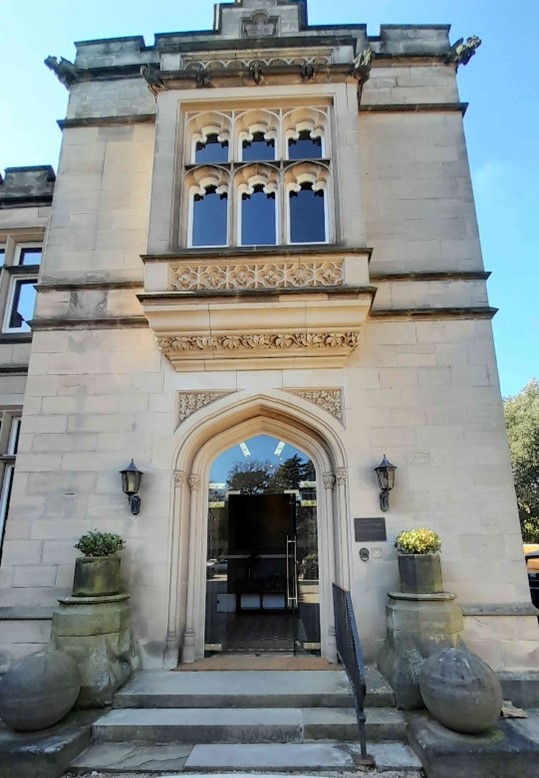
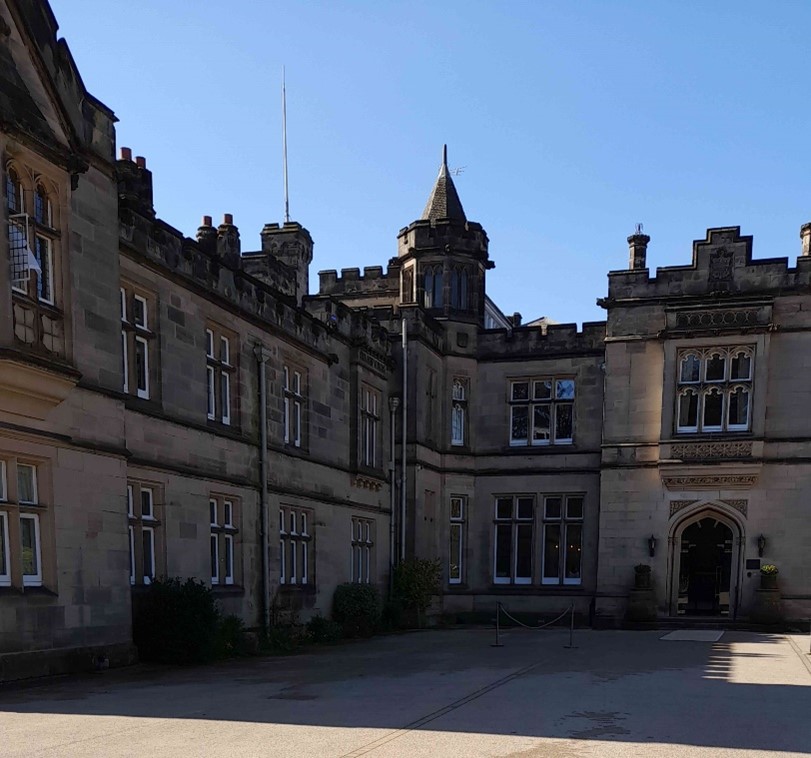
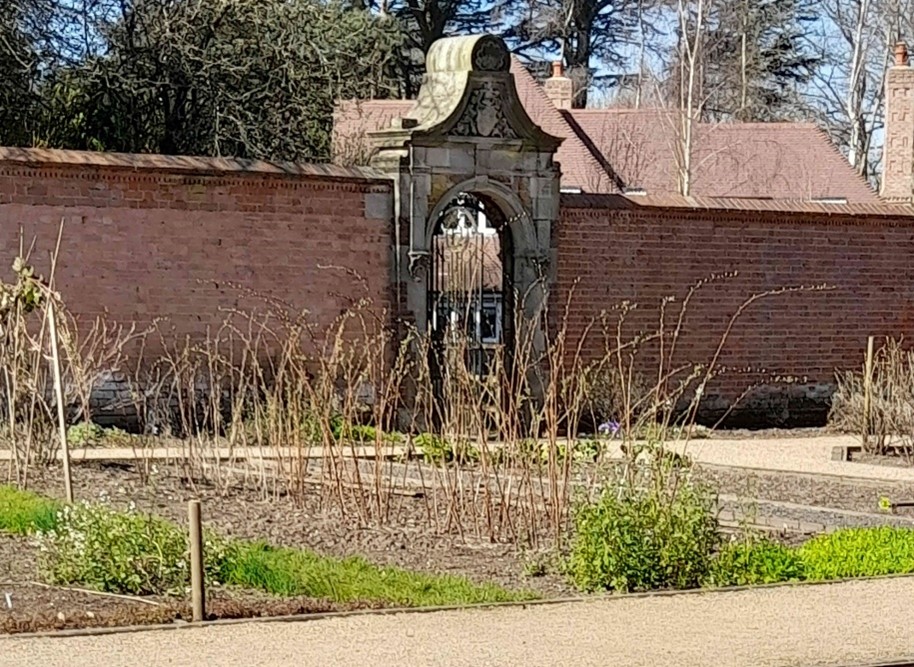
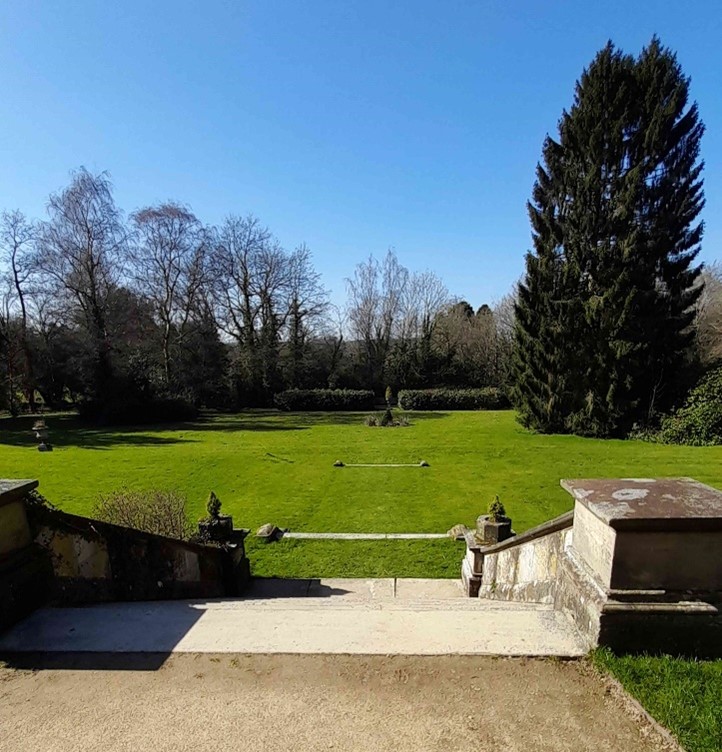

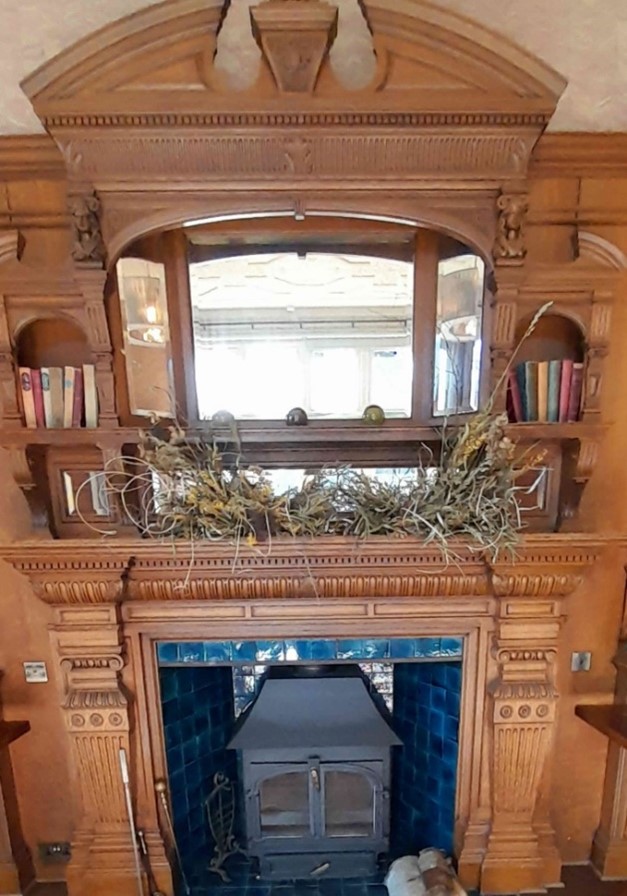
The Manor reopened for business in 2010 as a thriving boutique hotel and wedding venue. In 2016, Peel’s Restaurant at Hampton Manor was awarded a prestigious Michelin star, becoming the sixth Michelin-starred restaurant in the “Greater Birmingham” area. It was announced in November 2022, that Peel’s would close after its final service on New Year’s Eve and be replaced by a more informal all-day restaurant.
In September 2021, The Bakery opened at Hampton Manor, providing all of the hotel’s baked goods, and operating as a shop on weekends.
Also opening in September 2021 was The Smoke, run by Stuart Deeley, winner of Masterchef: The Professionals in 2019. Smoke, which serves wood-fired dishes in a Victorian greenhouse setting, was added to the Michelin Guide Great Britain 2022, just a few months after its opening. It was announced in November 2024 that Smoke would close on 23rd February 2025.
In February 2022, Grace & Savour opened at Hampton Manor, as a restaurant and accommodation block located in the grounds alongside the restored Victorian walled garden, which provides many of the ingredients for the restaurant kitchens. Just over a year after opening, Grace and Savour was presented with a Michelin star at a ceremony on 27th March 2023.
Further reading
- Hampton in Arden: A Village History by Robert Watkin & Mike Bryant
- A guide to Hampton in Arden’s Historic Homes (A Local History Group Publication)
- Hampton in Arden at the Millennium by Mike Bryant, Ray Parker and Harry Smith
- Hampton in Arden: 850 years in the heart of an English Village.
- Hampton Village History Scrapbooks by Hampton-in-Arden Women’s Institute
(copies available for Reference at The Core and Hampton-in-Arden Library) - Hidden Lives Remembered
- Hampton-in-Arden Local History Group website
- Hampton-in-Arden Parish Council website
- Victoria County History, entry on Hampton-in-Arden
- The Dictionary of National Biography has articles on W. E. Nesfield and the Peel family, and is available free of charge to Solihull Library members
- The Peel Society
Julie
Knowle Library
 Solihull Life
As an 80-year-old pensioner, I love to relive the past, I found this article, both informative and entertaining, thank you very much for undertaking the considerable amount of work. It must’ve taken to put together this interesting history.
Thank you so much for your comment – it’s great to hear that you enjoyed reading about the history. The research is a labour of love for us, and we’re delighted that we can share what we have discovered.
My husband and I were kindly gifted a little tour of HM to soak in the history and admire the renovations. We were amazed that such a beautiful place has not been celebrated and visited more by the surrounding public….but maybe that’s the point? We’ll be back for some ‘Grace & Savour’ and a walk around the magnificent grounds sometime soon.