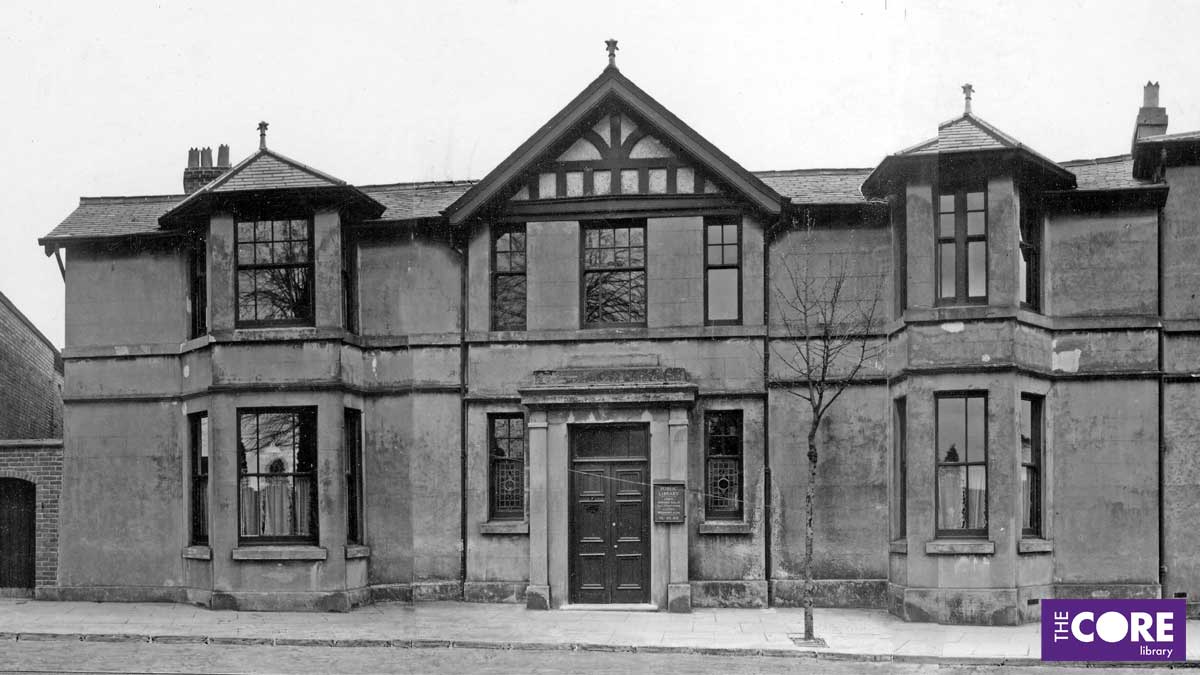
Public libraries in the Solihull Rural/Urban District were the responsibility of Warwickshire County Council until Solihull Council took over this role on 1st April 1947. At that time there were three libraries in the Solihull Urban District – Olton, Shirley and Solihull. Only the library at Shirley was purpose-built.
Warwickshire County Libraries
Although boroughs had been able to provide public library services since the Public Libraries Act 1850, county councils were not permitted to become library authorities until the Public Libraries Act 1919 gave them the power to do so.
On 1st September 1920, Warwickshire County Council resolved to adopt the Public Libraries Acts 1892-1919 for the whole of the administrative county, exclusive of any part of that area which was an existing library area.
The areas in the county that had already taken on for themselves the provision of library services were:
- Warwick
- Leamington Spa
- Rugby
- Stratford-on-Avon
- Nuneaton
- Sutton Coldfield
- Atherstone
Apart from these, and the cities of Birmingham and Coventry which were county boroughs and not part of the county for administrative purposes, all other places in Warwickshire, including Solihull, were covered by the county council’s resolution.
The county library service had three levels of provision:
- branches serving populous areas by means of special buildings and trained staff
- a students’ section lending “serious books” directly by post or in person
- rural centres run by volunteers with small collections of books changed three times per year
Warwickshire was one of the first counties to accept the offer of a grant from the Carnegie United Kingdom Trust – £6,000 in 1916 – to provide a building and an initial stock of books and maintenance for five years.
The understanding was that, if the libraries were successful, they would then be supported from the rates after the grant funding expired. However, by the time work started in 1920, the value of the money had reduced so that it only lasted for two years.
Solihull Branch Library
Using some of its funding from the Carnegie Trust Scheme, Warwickshire County Council established a free lending library at Solihull in 1920. It was one of the rural centres at this time and operated from the parish hall – Church House, 18 Drury Lane, Solihull. It was open only on Thursday evenings.
Outside library hours, the building was used for church functions and Sunday School. In the winter, the caretaker, Mrs Brown, served hot soup to those in need.
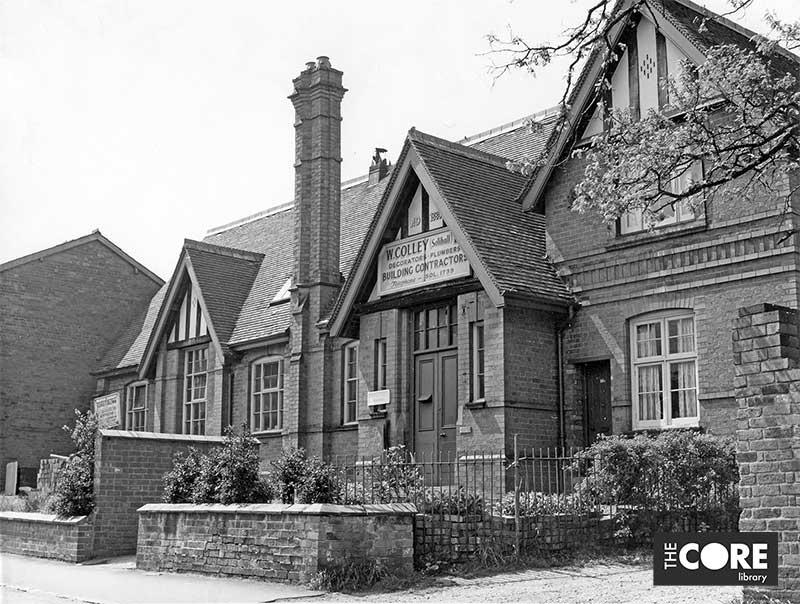
Initially, the books arrived by train and carrier but a lack of supply of books and boxes meant that a new collection could not be supplied until the previous collection had been returned. This meant that villages could often be without books for a lengthy period. The situation was improved in 1921, when Warwickshire Libraries introduced a “motor exchange” van delivery system, using old Army ammunition boxes to transport the books.
Cliff Joiner (1898-1973) became Solihull Parish Clerk in 1930 and one of his duties was to receive library books from Warwickshire, display them on trestle tables in the Church House so that people could make their choice, and then put them away.
Solihull Urban District Council
Solihull became an Urban District on 1st April 1932 as a result of its increasing population making its status as a Rural District inappropriate. The change in status entitled it to provide its own libraries if a rate were levied. The County Council apparently said that if Solihull paid a differential rate of an additional halfpenny, in addition to the 11/16 of a penny they were already paying, the County Council would provide a librarian and books, and that proper accommodation would be found.
In November 1932 Solihull Council resolved to agree to this proposal. However, the decision was overturned at a meeting on 10th January 1933 on the grounds of the expense at a time when it was said that the Council already had huge demands on it, including for sewerage works and road-making.
Solihull Chamber of Trade also recommended that the question of library facilities should be deferred owing to the “general depression, heavy local and imperial taxation, and the future local commitment that would have to be met” (Warwick County News, 14th January 1933). After a long and at times, acrimonious, debate the meeting on 10th January 1933 resulted in 12 votes against imposing a ½d rate for library purposes and just four votes in favour.
In October 1933, Warwickshire County Council asked Solihull to reconsider this decision and so Solihull appointed a sub-committee to consider the matter.
On 6th February 1934, Solihull Council recommended that the County Council be empowered to levy a differential rate not exceeding ½d in the pound to enable branch libraries to be established and a trained librarian appointed.
In 1934, Solihull Council’s Finance & General Purposes Committee recommended the provision of new Council offices, which it was hoped would incorporate library accommodation. However, although the provision of a Council House in the former Public Hall did proceed, a proposal to provide a room there for a library was defeated in November 1934.
By February 1935, opening hours at Church House had been extended to include Tuesday evenings, although with a stock of just 600 books, the librarian noted that Solihull residents preferred to patronise the private circulating libraries in the district which were open daily and from which books could be borrowed for a fee. One newsagent with a private library in his shop commented that “most people can’t be bothered to wait for a certain day.”
In March 1936, it was reported that a house and land on the corner of Warwick Road and Lode Lane, Solihull would be purchased for £2,500 for the provision of an underground public lavatory. The scheme would also do away with a dangerous corner and provide a suitable site for a public library. However, the site was opened as Brueton Gardens in 1938, without any progress on a library building.
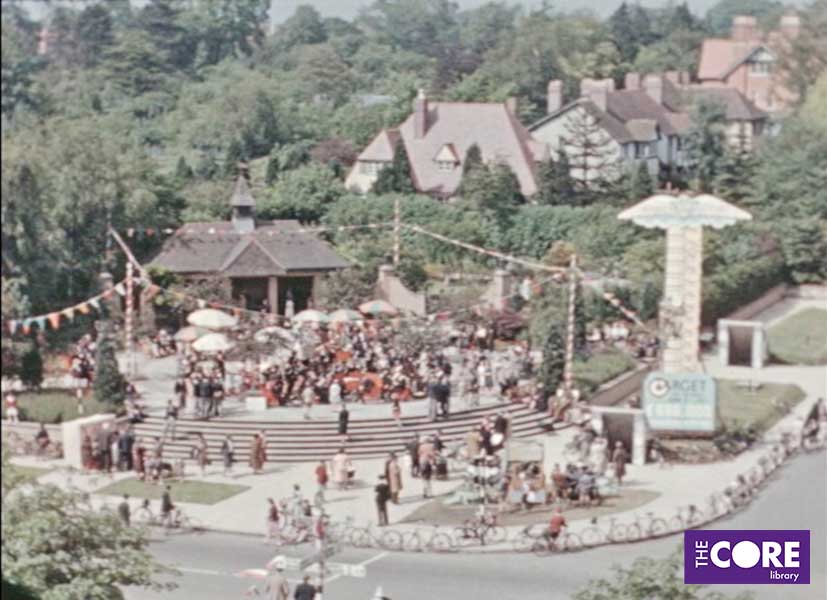
In 1936, when concerns were raised over the future of the Manor House in Solihull High Street, the Birmingham Daily Gazette carried a suggestion that the County Council could buy it and turn it into the public library that it was proposing. However, it was said that the County Council had gone too far in securing an alternative site to be in a position to consider this.
It was announced in the Warwick County News 17th October 1936, that Church House, Drury Lane had been sold, so it’s possible that the sale of the building precipitated the search for new library premises.
In January 1938, it was announced that a site fronting Drury Lane was to be acquired for a new library at a cost of £1,040. By July 1938, it was reported that the site had been acquired and that plans would be drafted.
The Birmingham Mail, 4th January 1939, reported that Warwickshire County Council would build a new library in Solihull at a cost of £10,000. The two-storey building would be built at the junction of Warwick Road and Drury Lane, on the site of some former cottages that had been demolished, and it was expected that the building would be completed in 1940. The upper floor was intended to be used for a reference library. An article in the Warwick County News, 24th September 1938 indicated that once Solihull Library had its own accommodation, library powers would transfer from Warwickshire to Solihull Urban District Council.
By January 1939 Solihull Library was in temporary premises – a leased converted shop at 573 Warwick Road (renumbered to 703 in 1940) – which was “concealed rather than advertised, owing to the very restricted accommodation” (Nuneaton Chronicle, 10th March 1939).
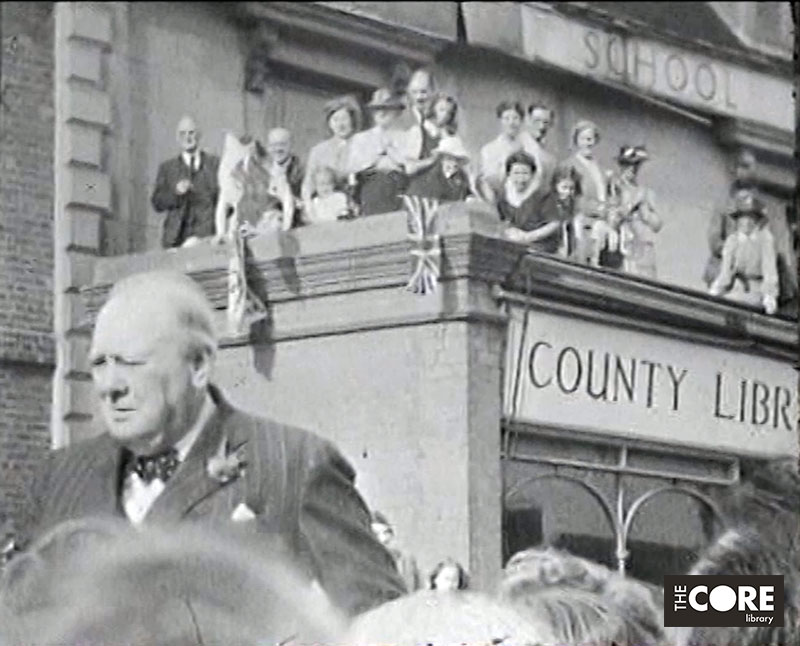
With Solihull’s population approaching 50,000, the existing branch library at Shirley was struggling to cope, and the small library at Solihull was insufficient.
However, the outbreak of the Second World War affected the planned construction and it was announced in June 1940 that plans for the new building were in abeyance. The demand for books was increasing and it was suggested that the Solihull C.E. Boys’ School in Mill Lane, due for imminent closure, could be a suitable alternative. In the event, this building opened in 1942 as a British Restaurant.
By 1944, Solihull Library was open 10.30am-1pm and 2.30pm-6.30pm Monday-Friday. It was closed on Saturday.
In 1944, Solihull Council considered purchasing the Manor House in Solihull High Street, which was due to be advertised for sale by public auction. However, a report by the Council’s surveyor deemed the building unsuitable for use as a library or as a museum, saying that any other use would involve the demolition of the building. Therefore, the Council decided not to bid for the Manor House.
The Warwick Road premises were owned by Mr Eagles, who gave notice to Warwickshire County Council that he wished to terminate the tenancy from 31st March 1947 so that he could have the building for his own business purposes. Mr Eagles did agree a six-month extension with Solihull Council on condition that the rent increased from £100 per year to £150 per year.
By 1966, 703 Warwick Road was home to Solihull Cycle Co. It’s now incorporated into Westbury House 701-705 Warwick Road, Solihull. The Georgian building was previously known as The Hawthornes and part of the premises housed Solihull Post Office 1911-1942.
In October 1947, Solihull Library moved into Park House, Park Road, which was rented from Ansells Brewery. Park House (pictured at the top of this page in 1948 whilst in use as the library) subsequently became part of the George Hotel after the library moved into the Priory in 1951.
Shirley Library
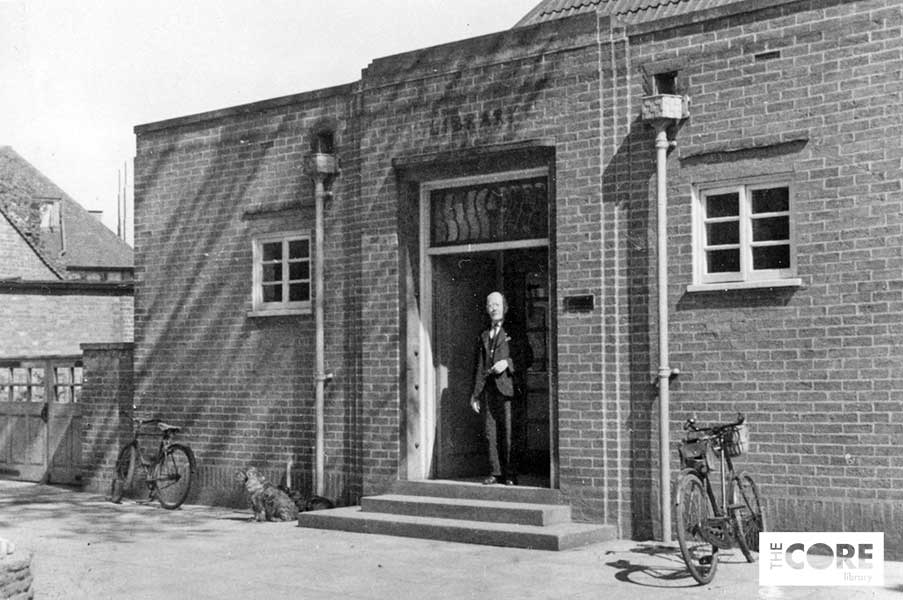
In 1929, a branch of the county library began operating from “temporary premises” – a private house in Church Road, Shirley.
It was announced in October 1935 that plans were to go before Warwickshire County Libraries Committee for the construction of a new branch on land next to the Church House, Shirley. The land would cost £600 and the library a further £2,200. The hope was for the library to open around 12 months later.
A permanent building, opened on 5th July 1937, had a stock of 6,000 volumes and had issues of 2,000 per week within six months. The Warwick and Warwickshire Advertiser, 21st January 1939, said that the library, with two full-time staff, was issuing more books than many town libraries.
By 1944 Shirley library was open daily 11am-6pm but closed on Thursdays. The library was extended in 1990 and remained on this site until a new Shirley Library opened in Parkgate in 2014.
Olton Library
A campaign for a library in Olton began in 1943. Within a year a library service had opened at 183-185 Warwick Road – a pair of converted shops knocked into one. The library occupied the ground floor only, with a very limited staff area behind.
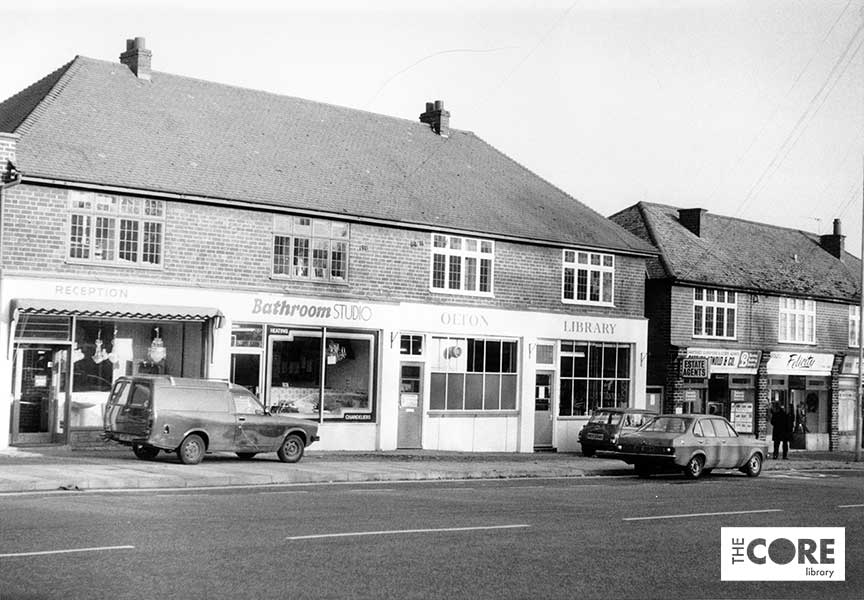
By 1944, it was open on Tuesdays, Thursdays and Fridays 11am-1pm and 2.30pm-6.30pm and on Saturdays 11am-1pm. The library remained in this building until the new Olton Library opened in February 1990 on a site closer to Station Road.
Transfer of library powers from Warwickshire
Section 2 of the Public Libraries Act 1919 enabled a County Council to withdraw from the provision of library services in an Urban District area, if the Urban District Council made an application to the County Council to run its own library service.
According to the Warwick County News 22nd April 1944, Solihull had made such an application to Warwickshire but was refused. The newspaper noted that Rugby, Leamington, Stratford and Warwick all ran their own library services, whilst Solihull – the largest authority in Warwickshire apart from the County Boroughs – was prevented from doing so.
In 1944, it was reported that Solihull Council had passed four resolutions reflecting its dissatisfaction with the county council’s refusal to allow Solihull to have independent powers over library services.
In July 1946, it was announced that plans were being made to separate Solihull from the county library service provided by Warwickshire County Council.
At Solihull Council’s General Purposes Committee meeting on 5th November 1946 a letter was read out from the Ministry of Education enclosing a draft Order rescinding Warwickshire County Council’s 1920 resolution to adopt the Public Library Acts in respect of Solihull. The confirmed Order would come into effect from 1st April 1947.
Mr Herbert Maurice Cashmore (1882-1972), Birmingham’s City Librarian 1928-47, and President of the Library Association in 1946, was invited by Solihull Council to help with the establishment of Solihull’s library service.
He said that following his retirement on 31st January 1947, he would be pleased to assist Solihull Council in taking over the library service from Warwickshire.
Solihull’s first librarian
The Library Association’s salary guide for a librarian for a town the size of Solihull was between £675-£825 per annum. However, as similarly-sized Swindon had recently appointed a librarian on £600 per annum, it was decided that Solihull would advertise for a librarian on APTD Grade VIII, at a starting salary of £625 per annum, rising by annual increments of £25 to a maximum of £700.
Solihull’s first librarian was Miss Jean Helen Paterson (1906-1987) from King’s Heath. She had joined the staff of Birmingham Public Libraries in 1923, working at Sparkhill and Ward End before moving to libraries at Stirchley and Selly Oak.
In 1939 she was transferred to Birmingham Reference Library and, during the Second World War, she was the organiser of the West Midland Library Bureau and was in charge of the comprehensive catalogue on which inter-library loans between Birmingham libraries were based.
She was a Fellow of the Library Association (FLA) by the time her appointment to Solihull Urban District Council was announced in February 1947. The appointment was subject to ratification at the next Council meeting.
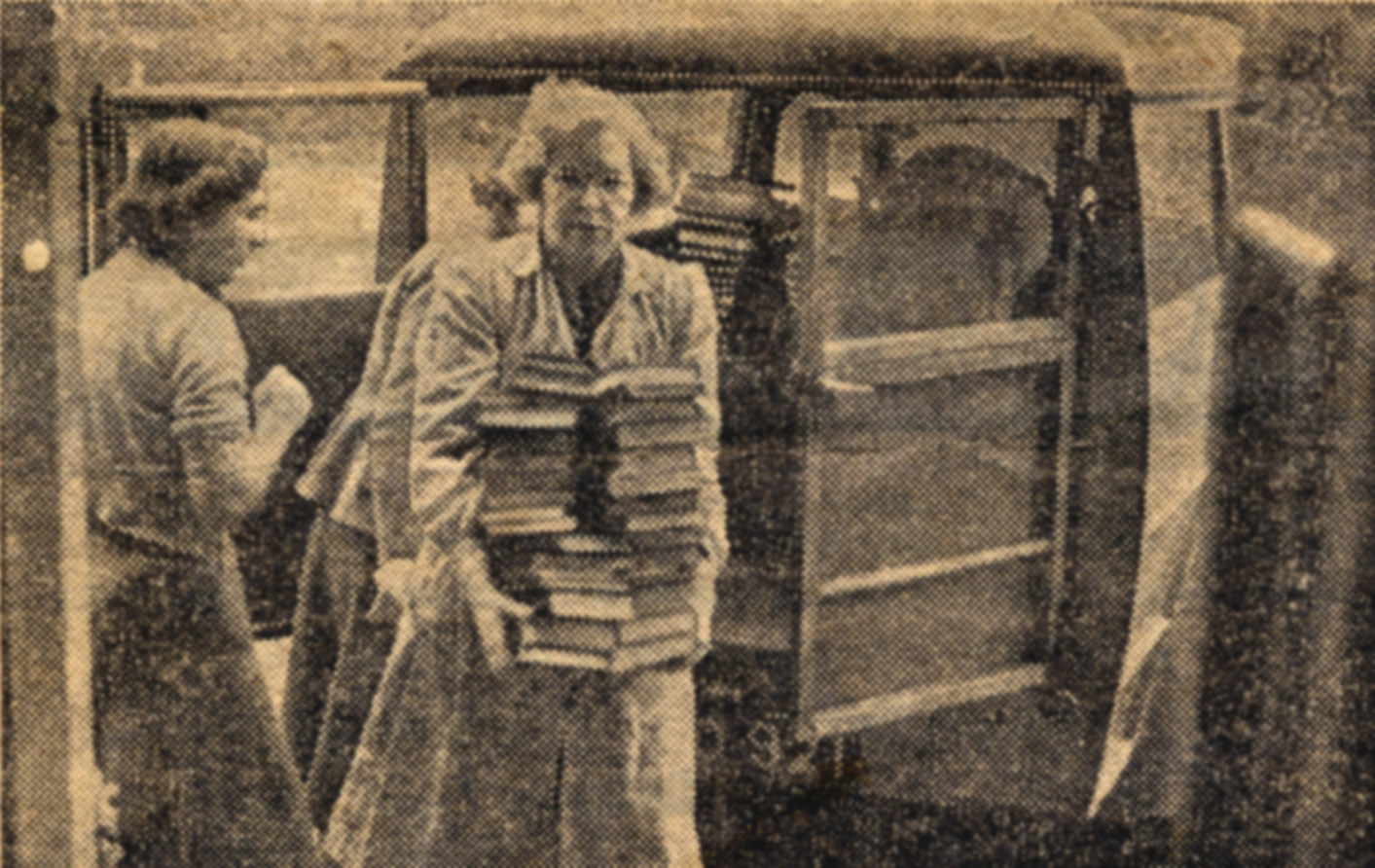
Miss Paterson had six assistants (all without library qualifications). By 1962, the staff numbered 32, including two Fellows of the Library Association and six Associates of the Library Association. Miss Paterson remained with Solihull until her retirement in 1971.
We shall write a separate article about the development of libraries in Solihull from 1947. In the meantime, if you have any further information about the early years of Solihull Libraries, please let us know.
Tracey
Library Specialist: Heritage & Local Studies
The Core Library, Solihull
© Solihull Council, 2026.
You are welcome to link to this article, but if you wish to reproduce more than a short extract, please email: heritage@solihull.gov.uk
 Solihull Life
Leave a comment