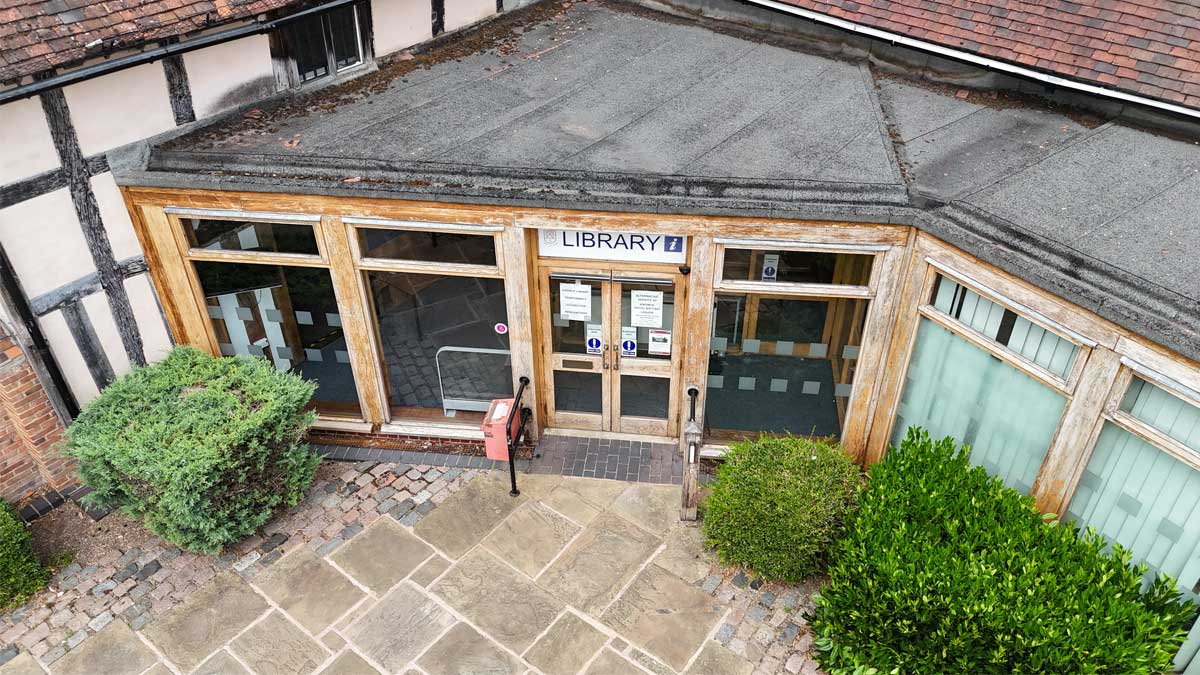
To mark the 50th anniversary on 20th November 2025 of Knowle Library moving into Chester House, we take a look at the history of library services in the village. It wasn’t until 1970 that Knowle had its first public library building, but there was a mobile library service from 1948.
There was also library provision in the village in the form of private circulating libraries, which charged a membership fee and/or a hire charge per book. The books tended to be mostly fiction.
Subscription libraries operated a similar business model, but usually had books on more serious topics.
Subscription and circulating libraries in Knowle
Rev. Canon John Howe (1825-1889) started a small reading room in Knowle c.1860 but noted 26 years later that, although it was initially successful, usage had dwindled and collapsed within a few years (Warwickshire Herald, 16th December 1886).
A reading room was introduced at Knowle Institute, but it had no books when the Institute was opened on 13th December 1886. The presentation of the first book – The Life of Lord Macaulay by Sir George Trevelyan – took place on the opening day.
The Institute had a minimum subscription of 2s per annum and the intention was that members had access to a place where they could “read the daily papers and books of interest and instruction.”
An advertisement in the Birmingham Suburban Times, 26th November 1898, noted that a local branch of the Midland Circulating Library was open at Walter Wilcox’s shop (draper, stationer, newsagent and fancy dealer) at The Priory, Knowle. There was said to be a fresh selection of books each month, including “all the newest and most popular novels by standard authors.” The cost of borrowing was 2d per book, with the loan period being between 4-7 days “according to value.”
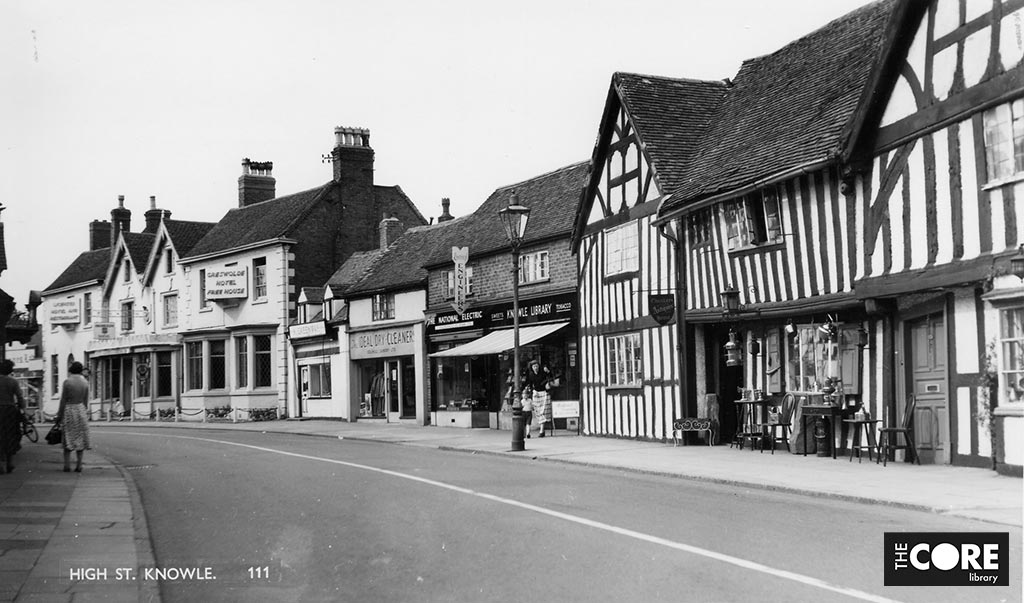
By 1960, it appears that a circulating library was running from 1663a High Street, Knowle, next door to Chester House. Described as “Knowle Library” it seems to have been part of a newsagents and confectioners shop.
Mrs Griffiths, who left Knowle in 1948 and later wrote up her reminiscences of the village, remembers Knowle Library as being popular. This suggests that the circulating library was established by the 1940s.
The Solihull & District Directory 1961 also lists Wells Library, The Square, Knowle in its classified trades listing of [non-public] libraries.
Public Library Service
Public libraries, paid for via the rates, and often called “Free Libraries,” were introduced by the Public Libraries Act 1850. The Act allowed municipal boroughs in England & Wales with populations above 10,000 to establish libraries provided that at least two-thirds of ratepayers voted in favour.
Counties remained outside the scope of public libraries until the Public Libraries Act 1919 allowed county councils to become library authorities. It was the adoption of this Act by Warwickshire County Council in 1920 that allowed library services to begin in the then Solihull Rural District. Initially, this was limited to a library service on one evening per week from the parish hall in Drury Lane, Solihull. Provision gradually increased to include more of the villages in the district.
On 1st April 1947, Solihull Urban District Council took over library services from Warwickshire and established its own service. There were three library buildings at this time – a purpose-built library at Shirley, and temporary libraries housed in converted shops in Olton and Solihull. A mobile library service was introduced in 1948.
Knowle Library
Public library services in Knowle appear to have commenced with the introduction of Solihull’s “Travelling Library Service” in February/March 1948. From March 1949, this mobile library service also began calling at Bentley Heath.
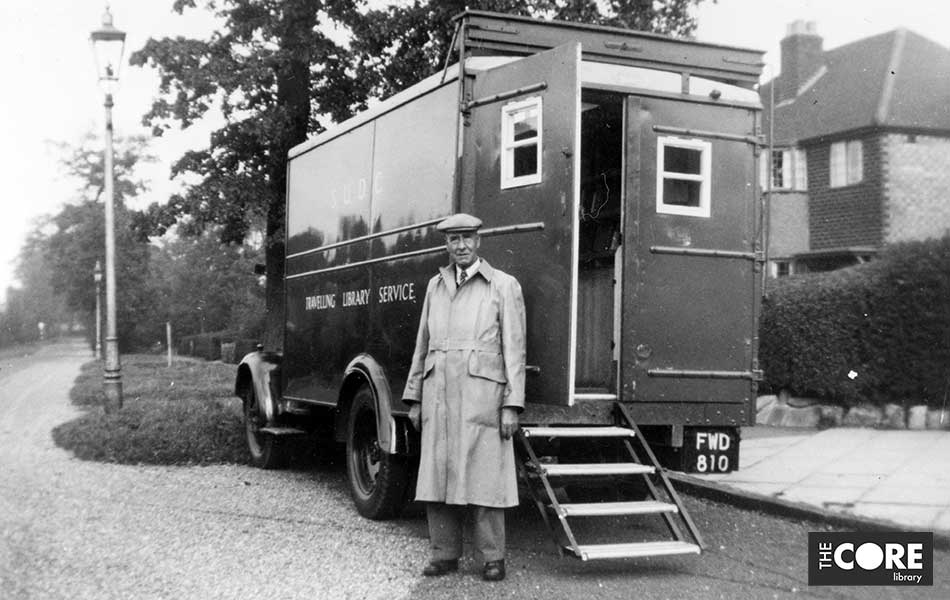
In 1957, Solihull Libraries Committee recommended the provision of a new library at Knowle to replace the travelling library van. There was a suggestion in the Birmingham Daily Post, 15th October 1957, that land purchased by Solihull Council for housing in the centre of the village could be used for a library, if Ministerial permission were forthcoming.
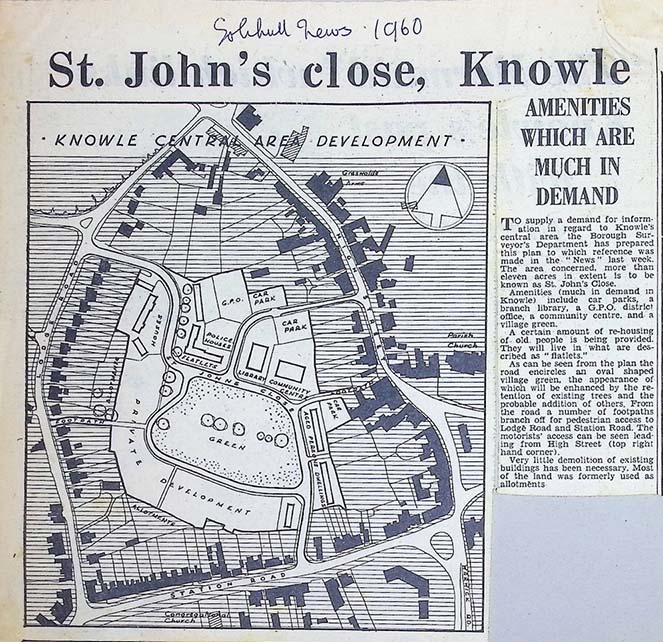
In 1959, it was announced that a new central area was being planned in Knowle by Solihull Council on 11.5 acres of former allotment and waste land lying between Knowle High Street, Lodge Road and Station Road.
The development was described as giving Knowle a number of new amenities, including a village green, a branch library, a GPO district office, a community hall and police houses. The site – to be known as St John’s Close – would include private houses, old people’s homes and council houses. Three new car parks would accommodate 70-80 cars. The original proposal, published in the Solihull News in 1960, shows a library situated in between a block of “flatlets” and a community centre – no mention of a precinct!
In 1962, it was announced that a new branch library, estimated to cost about £26,000, would be provided at Knowle by Solihull Public Libraries. However, it was acknowledged that it would take another three or four years for it to be constructed.
On 1st April 1968, Hammond Organ Studio, run by Dennis Dray and Graham Tyson, was the first shop to open in Knowle’s new precinct.
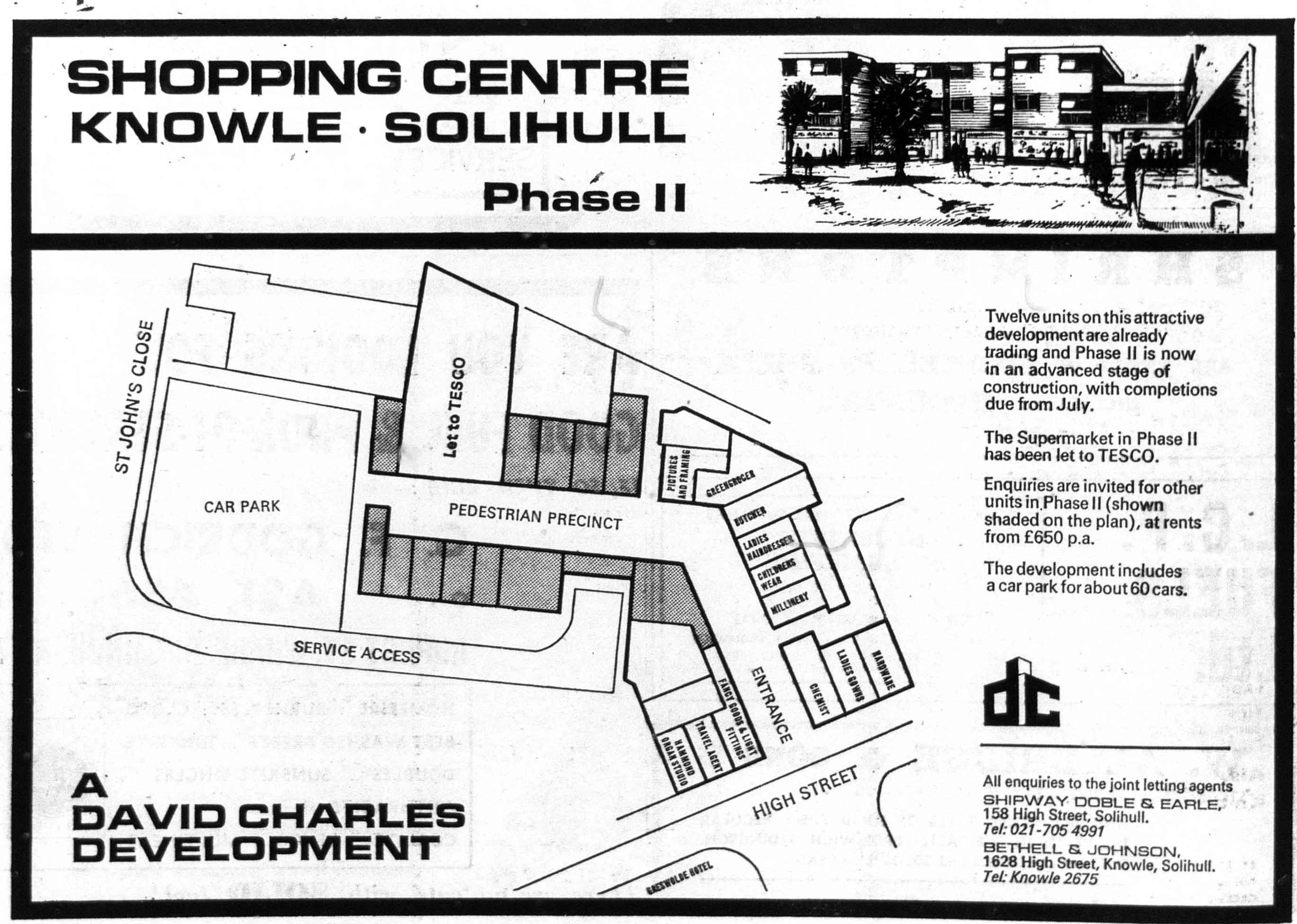
In October 1968, Solihull’s Education (Further Education) sub-Committee approved a recommendation that the Town Clerk be authorised to enter into negotiations with developers David Charles Ltd to agree a possible rental in the new shopping precinct of an end unit adjacent to the public car parks.
By February 1969, 12 units were trading and it was announced that Tesco supermarket would be opening during Phase 2 of the development, and that the car parking spaces would be doubled.
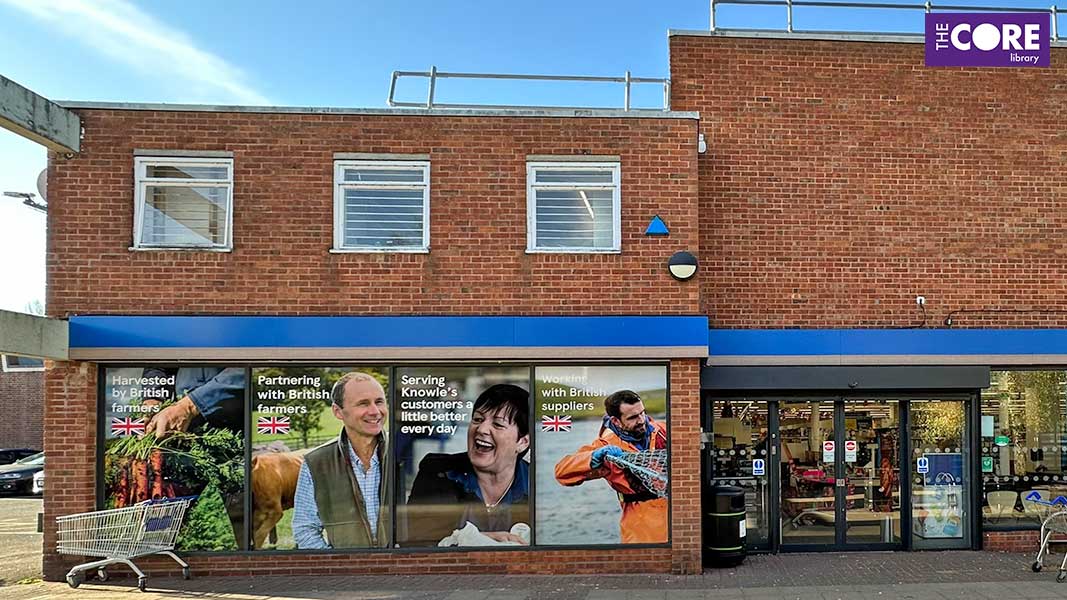
By November 1969, a lease had been agreed on a shop in St John’s Precinct to be used as a library. It opened on 27th July 1970. The Birmingham Area telephone directory 1972 gives the address as St John’s Walk.
The shop in question was next to Tesco – adjacent to the car park – and was subsequently incorporated into Tesco supermarket as the sweets and biscuits section.
Memories of Knowle Library
Local resident, Helen George, has contacted us with her memories of using Knowle Library 1973-75. She says:
I remember sitting on the library floor reading Milly Molly Mandy books. I was a member of the Knowle Children’s Bookworm Club which operated in the precinct library.
I recall that there were a couple of small rooms at the back (probably part of the Tesco storage area today). As a member of the Bookworm Club, you would go into one of the small rooms to be quizzed by the librarian on the book you had just read in order to get your Bookworm certificate.
Even as a five or six year old, I recall thinking that the library was a bit small! Those were the days when the Hampton Spinney, Whiteladies and Pippins estates in Knowle were either completed or under development, with the Copt Heath estate about the rise from the ground. With all these new family-sized homes, the number of village children needing access to library facilities was growing all the time.
We don’t seem to have any photographs of the library while it was in the precinct so, if you have any pictures or information that you could share with us, please email heritage@solihull.gov.uk or contact staff at Knowle Library.
Chester House
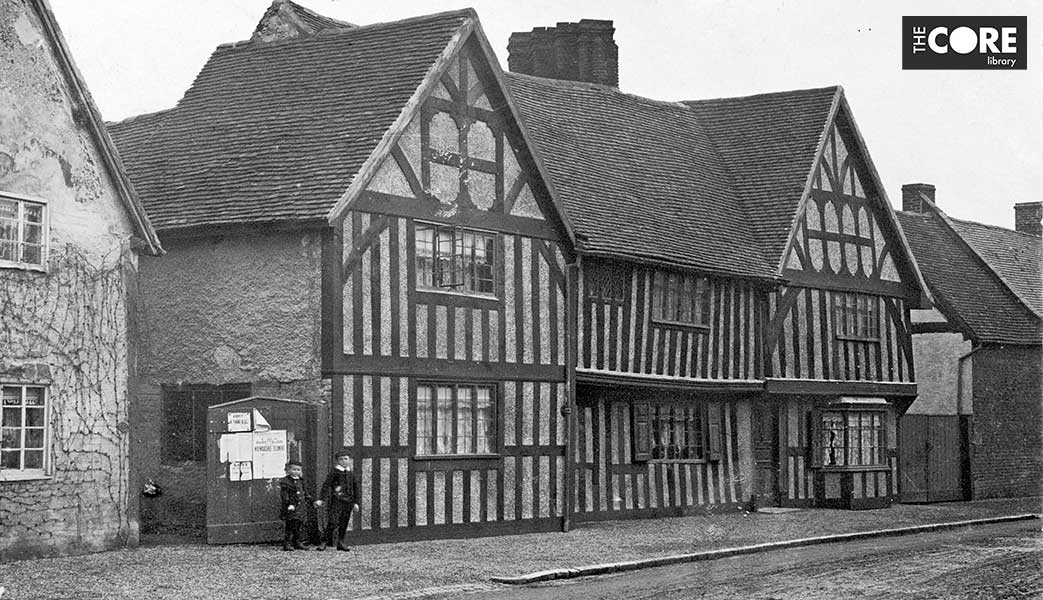
Meanwhile, the shoring up of the Grade-II* listed Chester House in Knowle High Street was completed in August 1969 after it was reported that the roof was in danger of sliding into the road.
Little is known of the building’s history, although it was apparently purchased in 1801 by the Kimbell family who ran a small dairy farm. The 1881 census shows widow Emma Kimbell (1816-1890), farmer, living at Chester House with her son Jonathan Kimbell (1840-1909). Jonathan was an animal castrator and lived at Chester House until his death on 2nd August 1909.
He bequeathed his real estate for the use of his sister, Emma Kimbell, who lived with him, and to his brother, Charles Kimbell, a grocer who lived next door with his wife and children in the shop that later became Band & Meeks. Their youngest sister, Fanny Kimbell, who also lived with her siblings at Chester House, had died in 1908, aged 56. Jonathan Kimbell directed that after the death of the last survivor of his two siblings, the property be sold by his executors.
Chester House remained in the family’s ownership until it was conveyed to Alice Thompson (née Owen) of Golden End Farm on 29th July 1913 by Charles Henry Kimbell and Henry Dodwell (executors of Jonathan Kimbell) and Emma Kimbell (Jonathan’s sister).
Alice Thompson died on 13th January 1914 and Chester House was inherited by her husband, Ernest Henry Thompson following the grant of probate on 28th April 1914 in respect of administering her estate.
On 25th June 1920, Ernest Henry Thompson conveyed Chester House (including the cowhouse, lofts, stable, and or buildings “formerly in the occupation of Charles Deavol Kimbell, then of his widow Emma Kimbell, afterwards of Jonathan Kimbell then of Henry Blundell”) to Albert Arthur Pickering. Mr Pickering was listed as being “of Chester House,” indicating that he occupied the leased the property before purchasing it. Albert Arthur Pickering (1891-1974) was a general carrier and furniture remover before diversifying into antiques in the 1930s.
On 11th December 1959, Chester House was conveyed by Albert Arthur Pickering to his son and daughter-in-law, Peter Geoffrey Pickering and Joyce Ellen Pickering. Peter Geoffrey Pickering had been born in the house in December 1920.
Peter Pickering said that he had reported the poor condition of the building to the Ministry of Public Works and Monuments in 1955 but that they had been unable to help with the £1,300 cost to repair the roof and said it was a matter for the local authority.
Outline planning permission for a residential development at Chester House was refused in 1958. Permission was also sought in March 1965 for the construction of 18 houses and 9 flats but the application was withdrawn before being put before the Planning Committee.
In November 1969, a survey report was submitted to Solihull Council who agreed to provide a grant to support the restoration work on the South Wing and the hall part of the building. The work was scheduled to begin in late December 1970 and be completed by the end of 1971. Solihull’s Deputy Borough Surveyor, Mr F. Brennan, said that building would have to be rebuilt. The estimated cost was more than £12,000.
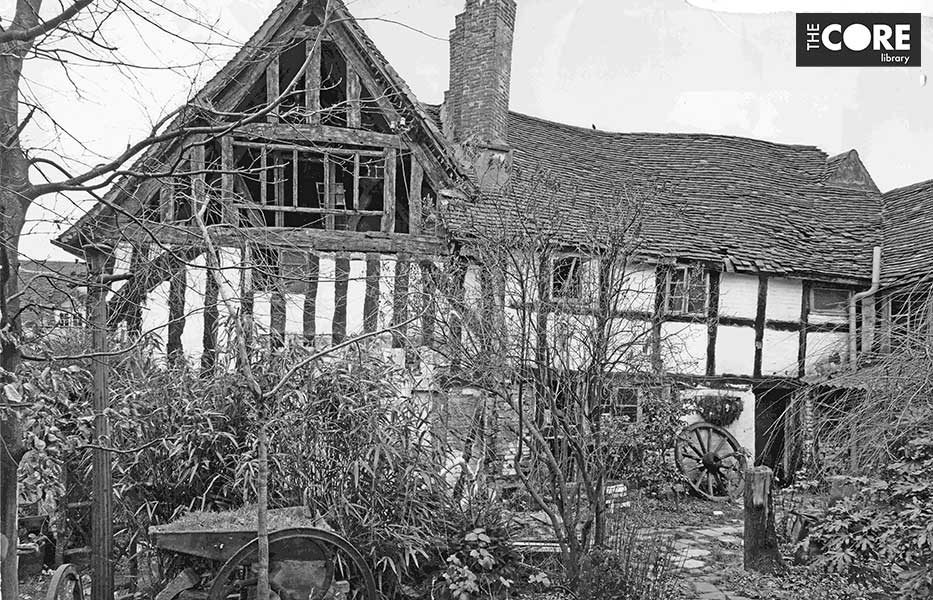
The building was originally two separate houses – a two-storey property dating from c.1400 (South Wing) and a single storey hall house c.1500 (North Wing). All that survives of these original houses are one bay of the former south house and the north range. All but the first bay of the North Wing facing the High Street has been significantly altered.
The South Wing would have originally joined onto the East Wing, and the entrance to both the North and South houses would have been via the open space between the two houses where the hall-part now is.
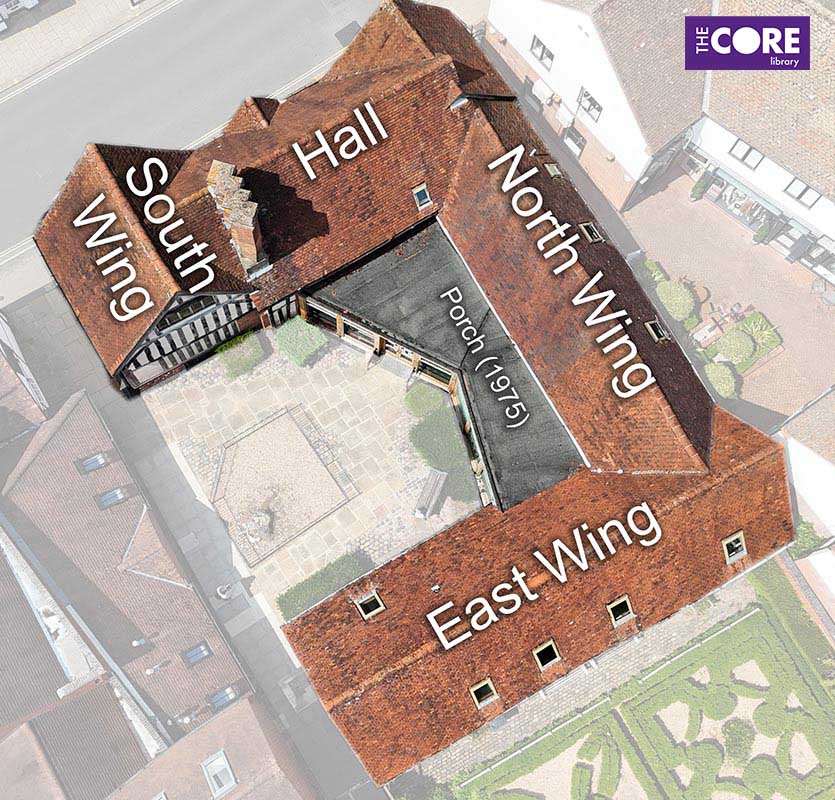
The central hall was built c.1600 after which the building was used as one dwelling. The join with the South Wing and the hall is marked by a difference in the floor level. The huge four-course mediaeval chimney stack was built when the central hall was constructed.
It’s said to be likely that the ground floor of this hall-part formed the ‘house-place’ of the 17th-century household that probably cooked and ate their meals here. The building was sub-divided into three cottages in the 19th century before being re-converted into a single dwelling.
An investigation by Solihull Archaeological Group during 1972 found a tiled floor about five inches below the present floor. Beneath the tiled floor was a layer of soil and building rubble, beneath which was a layer of cobble stones, indicating that the surface was at one time exposed. Fragments from the cobble stone layer were dated to the 17th century.
The archaeological investigation supports the idea of the cobbled floor being an outside passageway between the two houses. Further details of the investigation are in Solihull Archaeological Group’s News Sheet 3 (see below under Further Reading).
The East Wing is believed to date from the 16th century and to have originally been a barn. It survives largely intact, although its original three-bay form was extended by the addition of a fourth bay in the 19th century.
The restoration project was delayed while Solihull Council acquired the building following the unexpected death on 14th November 1971 of its owner, 50-year-old Peter Pickering, for whom the first stages of restoration – the South Wing and hall part, both extending along the High Street – had been designed.
The contract for these two structures began in January 1972 and was extended to include structural repairs of the front bay of the north wing. The work was carried out by Barrie Harper Ltd, Henley-in-Arden under General Foreman, Bill Brown, a timber specialist.
About three-quarters of the original oak beams were preserved, with highly skilled craftsmen tasked with the difficult job of merging old and new at points where the original beams were too weak to support the building. The spaces between the beams were filled with wood warp – a modern substitute for wattle and daub.
Following Solihull Council’s purchase of Chester House from Joyce Ellen Pickering on 14th February 1972, the much larger stage 2 contract for the rest of the north wing and the outbuildings was prepared in 1973 and let in May 1974.
Planning permission for conversion into a library was obtained in September 1973 and work was completed in October 1975.
The architects were renowned timber-framed building experts F. W. B. (“Freddie”) and Mary Charles of Worcester.
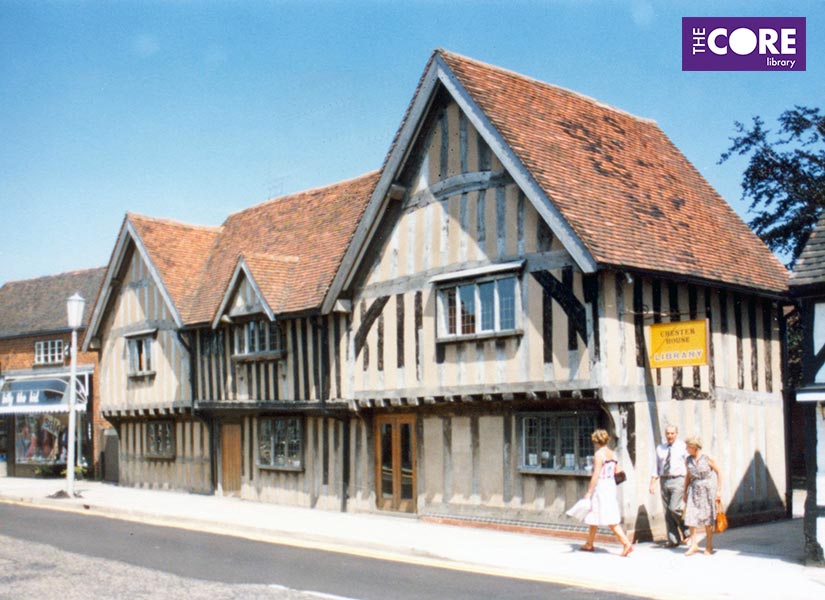
Chester House Library
Knowle Library opened in the Grade II*-listed Chester House on Thursday, 20th November 1975, providing three times as much space as the previous shop in St John’s Way.
The official opening was performed by the Mayor of Solihull, Councillor James Augustine Battersby.
The flat-roofed porch was added to create a new library entrance. The courtyard was refashioned with stone paving slabs and the weeping willow at the entrance determined the kinked front wall of the porch, although the architects noted the tree’s rapid growth and said that “should it grow too large, it must surely be replaced, for the courtyard is the heart of Chester House, as no doubt it was when the hall-part was first built.” (Chester House Library, booklet published by Solihull Public Libraries, 1975)
Local resident, Helen George, has shared with us her memories of the early days of the library in Chester House:
When I was in my second year at Knowle Infants School our teachers did a marvellous job of inspiring our enthusiasm. “You are going to have a new library soon” they would say “and it is going to be in a lovely big Tudor House in the high street!” I remember one hot day – it must have been the summer of 1975 – when a group of us were taken to Chester House to see inside prior to completion of the renovations. I was particularly enchanted by the two big fireplaces in what is now the children’s section. “This is where the Tudor family used to cook their dinner”, I was told.
I went to Chester House on its first day as a library. It was wonderful to see the endless book shelves and comfy seats, and rather strange to hear those odd beeping coming noises from the librarians’ desk as they checked the books in and out – they didn’t have this state-of-the-art technology at the old library in the shopping precinct!
Today Chester House is as attractive as a library as it has always been. Here’s to the next 50 years!
Knowle Library closed from December 2007 until March 2008 for refurbishment, reopening on 27th March 2008. A report requesting listed building consent for the works is available on the Council’s website.
From Monday 30th June 2025, Knowle Library was closed to allow for essential roof repairs to Chester House – an echo of history given that issues with the roof 50 years earlier led to the building being converted into a library!
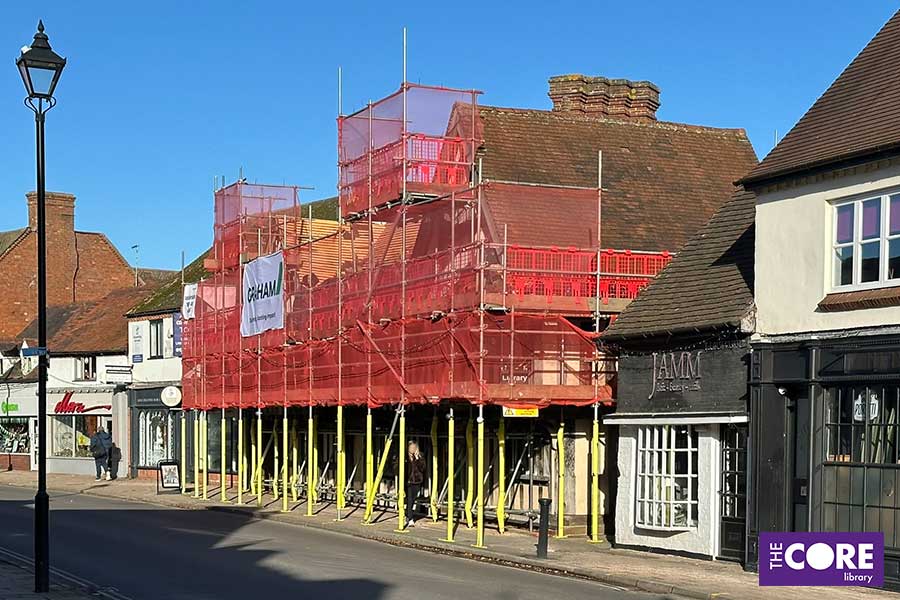
A temporary service was in operation from The Platinum Room at Knowle Royal British Legion on Mondays, Tuesdays and Thursdays from 10.00am to 12.00pm and on Saturdays from 10.00am to 12.30pm during the closure of Chester House. The reduced service did not include computer access or printing. The final library service at the Royal British Legion was 10am-12pm on Monday 23rd February.
Knowle Library re-opened in Chester House on Monday 2nd March 2026.
During the closure of Knowle Library, Warwickshire Libraries also added a temporary mobile library stop on Mondays from 2.00pm to 3.00pm. The mobile stop began operating on Monday 7th July 2025 from the Kixley Lane Shoppers Car Park (rear of the Greswolde Arms Hotel) and operated until Monday 26th January 2026.
Knowle History Centre
Knowle Society opened a local history centre and museum on the first floor of Chester House in the summer of 1988.
In 1989, Solihull Council and Knowle Society entered into a formal agreement that the first floor of Chester House could be used by the Society to display local history material. It was noted that the Society’s collection had grown to such a size that it could no longer be accommodated in a private house.
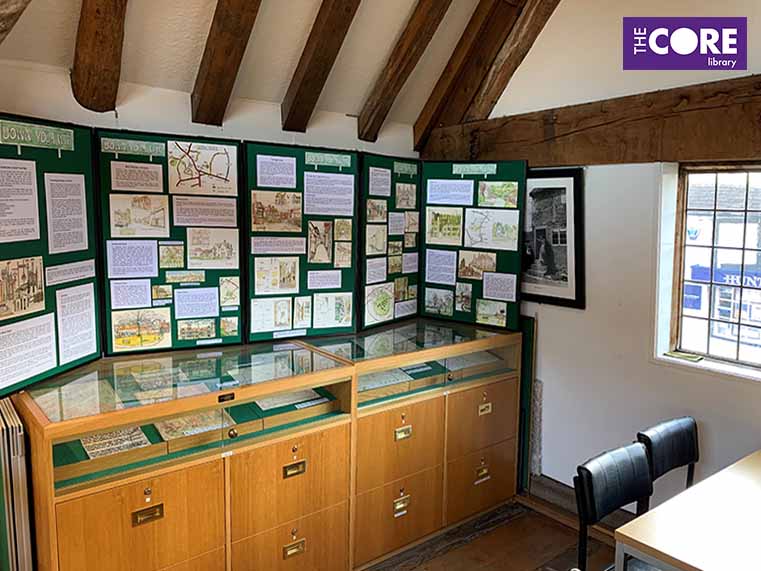
The Society’s local history committee regularly put on displays at the library, and are able to assist with enquiries about the history of Knowle. See the group’s web page at https://www.knowlesociety.org.uk/local-history/
Knowle Knot Garden
In 1989, an opportunity arose to refurbish a car park at the back of Knowle Library and a suggestion was made that a knot garden would be appropriate.
Knot gardens were a popular feature in Tudor times as they were both ornamental and practical and it was felt that a reconstructed Elizabethan knot garden would be contemporary with much of the building.
Planned jointly by Solihull Council’s Landscape Architects Section and the Libraries and Arts department, the garden was officially opened in June 1989.
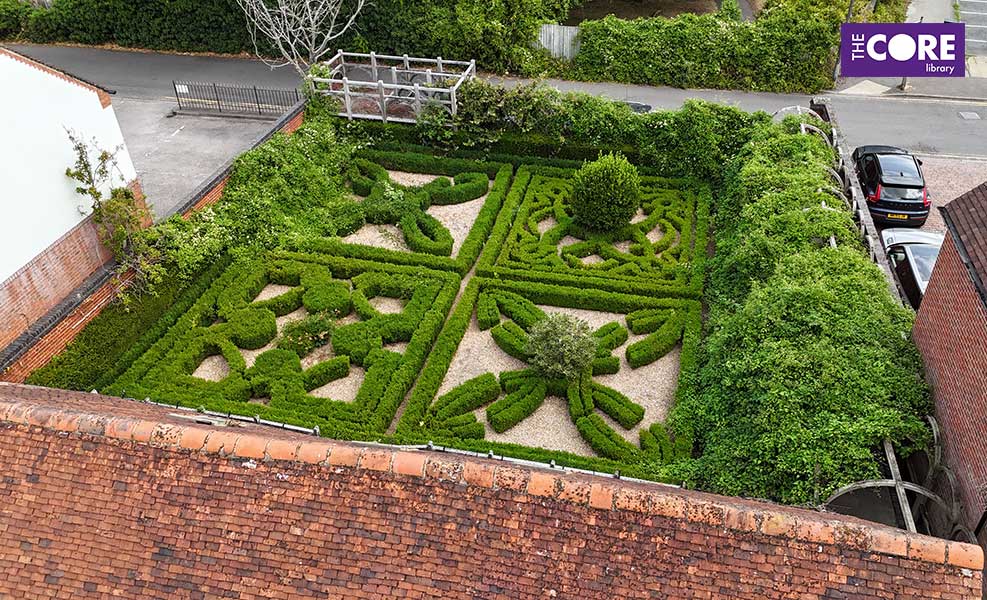
The arbour, or covered walkway, leading from the courtyard by the library entrance to the viewing platform, is based on a design in Thomas Hill’s book The Gardener’s Labyrinth, published in 1577. The tropical hardwood was carefully chosen from a properly managed plantation where replacement trees were planted, and was designed to weather to the colour of the ash or oak that the Elizabethans would have used.
Each of the four knots was an authentic Elizabethan design, executed as far as possible in plants that would have been familiar to a gardener of the time. Among the plants used was box, clematis, clove pink, cotton lavender, feverfew, germander, hyssop, Old English lavender, oregano, paeony, rosemary, sage, thyme, winter savory and wormwood.
The knot garden won a Solihull Council Design Award 1990.
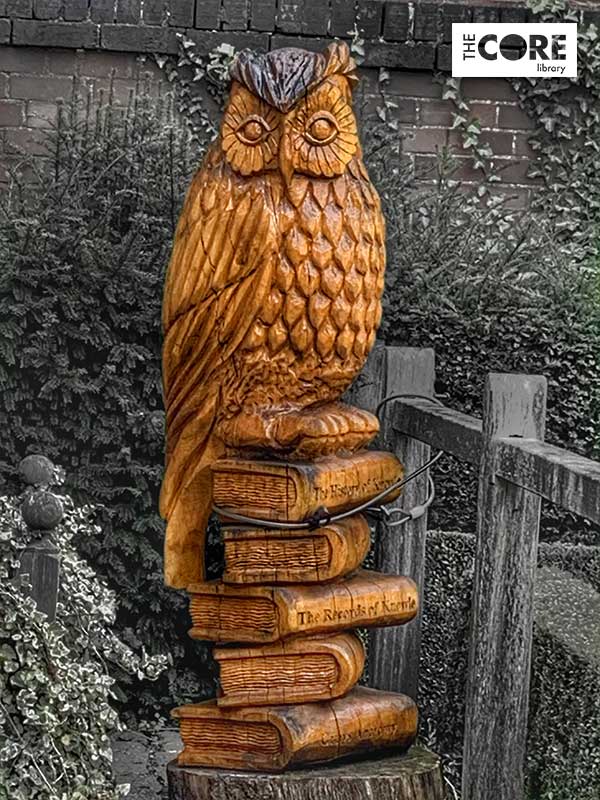
A carving of an owl by Robot Cossey was commissioned by Knowle Society and added to the knot garden. It commemorates Dr Ronald J. Bower (1918-2005), one of the founding fathers of Knowle Society and its first chairman.
The owl, carved from a large oak trunk, is perched on a stack of books of local interest. One of the books is Gray’s Anatomy, in a nod to Dr Bower’s long service as a Knowle GP.
Further Reading
Historic England – Listed building entry
Chester House Library: a building performance study by John Tiernan, 1984 (reference book available by appointment at The Core)
Public Library Buildings 1975-1983 edited by K. C. Harrison, 1987 (reference book available by appointment at The Core)
Chester House Library, booklet by Maureen Vivien Buttery (1940-1977), Local History Librarian. Published by Solihull Libraries, 1975 (reference book available by appointment at The Core)
Knowle Library (Chester House) by Knowle Local History Society
Solihull Archaeological Group, news sheet 3, (reference booklet available by appointment at The Core)
The Charles Archive of architects F.W.B. (“Freddie”) and Mary Charles is held at Worcestershire Archives
If you have any further information about Chester House or library services in Knowle, please let us know.
Tracey
Library Specialist: Heritage & Local Studies
© Solihull Council, 2025.
You are welcome to link to this article, but if you wish to reproduce more than a short extract, please email: heritage@solihull.gov.uk
 Solihull Life
Leave a comment