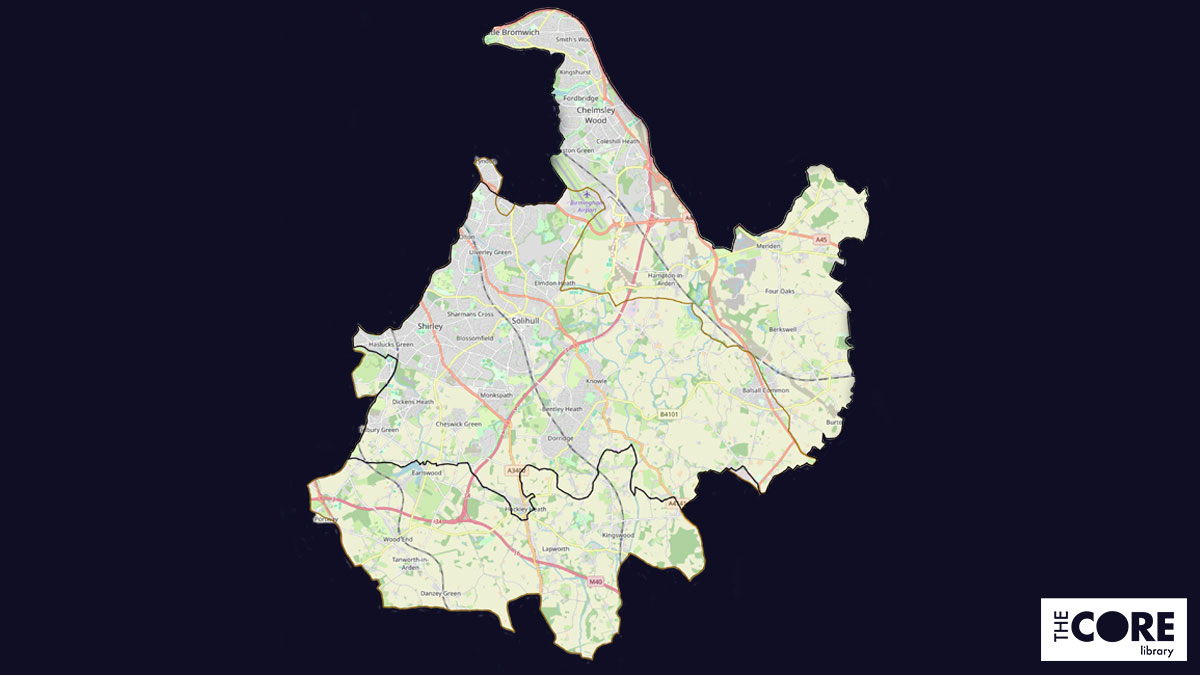
Parish councils came into existence as a result of the Local Government Act 1894, which was also known as the Parish Councils Act. Civil Parishes are the smallest areas of local government administration. The 1894 act allowed for the election of parish councils in rural areas and required the entire area of a parish to be within the same administrative county.
The Act came into force in December 1894 and it deemed that parishes within an existing Rural Sanitary District – such as Solihull – were to become rural parishes. Those within an Urban Sanitary District were deemed urban parishes.
Both types of sanitary district were to be renamed as Urban or Rural Districts so this Act also brought into being Castle Bromwich Rural District Council, Meriden Rural District Council and Solihull Rural District Council.
The Act also abolished Highways Boards and Parish Surveyors although Warwickshire County Council postponed the implementation of this aspect of the legislation until 25th March 1895.
Nominations of candidates for Rural District Councils, Guardians, and Urban District Councils had to be made by 2pm on 5th December 1894. Rural District Councillors and Guardians came into office on 28th December 1894. Urban district councillors and parish councillors where a poll had been required came into office on 31st December 1894.
For parish councils, a meeting of electors was to be held in every parish on the evening of 4th December 1894. Parish councils that were elected without a poll came into office on Thursday 13th December 1894. Where a poll was needed, the parish councils would come into being on 31st December 1894, or on the day of the poll.
Polling for parish councils, rural district councils, guardians and urban district councils took place in Warwickshire on 17th December.
Warwickshire County Council
Parishes with a population above 300, based on the 1891 census, were to have an elected parish council. Parishes with populations below 300 were intended to join with other parishes to reach the threshold and then have a joint parish council.
Under the terms of the Act, county councils were to decide the number of councillors for each parish council, with the limits being a minimum of five and a maximum of 15.
In Warwickshire this was fixed on a sliding scale, according to population. Parishes with a population below 500 would have five parish councillors. As the populations increased, so did the number of councillors:
- 500-1,000 = six councillors
- 1,000-1,500 = seven councillors
- 1,500-2,000 = eight councillors
- 2,000-3,000 = nine councillors
- 3,000-4,000 = 10 councillors
- 4,000-5,000 = 11 councillors
- 5,000-6,000 = 12 councillors
- 6,000-7,000 = 13 councillors
- 7,000-8,000 = 14 councillors
- up to 8,000+ = 15 councillors
Castle Bromwich Rural District Council
Under the 1894 Act, the Aston Poor Law Union – described in the Leamington Spa Courier, 22nd September 1894 as “the most peculiar of any district in the County” would see two of its parishes – Castle Bromwich and Water Orton – removed from Aston and form part of Castle Bromwich Rural District Council. Joining Castle Bromwich and Water Orton in the new Rural District would be the parishes of Curdworth and Wishaw as well as the hamlet of Minworth. Each of the areas would be represented on the new Rural District by one councillor.
Castle Bromwich Rural District ceased to exist from 1st April 1912. The Civil Parish of Castle Bromwich then became part of Meriden Rural District and remained so until the Local Government Act 1972 came into effect on 1st April 1974. Since this date, Castle Bromwich has been part of Solihull Metropolitan Borough.
Castle Bromwich Parish Council
No election was required to elect members of Castle Bromwich Parish Council, as the number of candidates nominated at the parish meeting on 4th December 1894 did not exceed the number of councillors required. This meant that Castle Bromwich Parish Council came into being on 13th December 1894.
The first meeting of Castle Bromwich Parish Council was held in the school on the Chester Road on 22nd December 1894.
In 1932, boundary changes meant that two-thirds of the Castle Bromwich parish became part of Birmingham City Council. The Parish Council was instrumental in the provision of Playing Fields, the Memorial Hall, and the Village Hall (Arden Hall), which was opened in 1965.
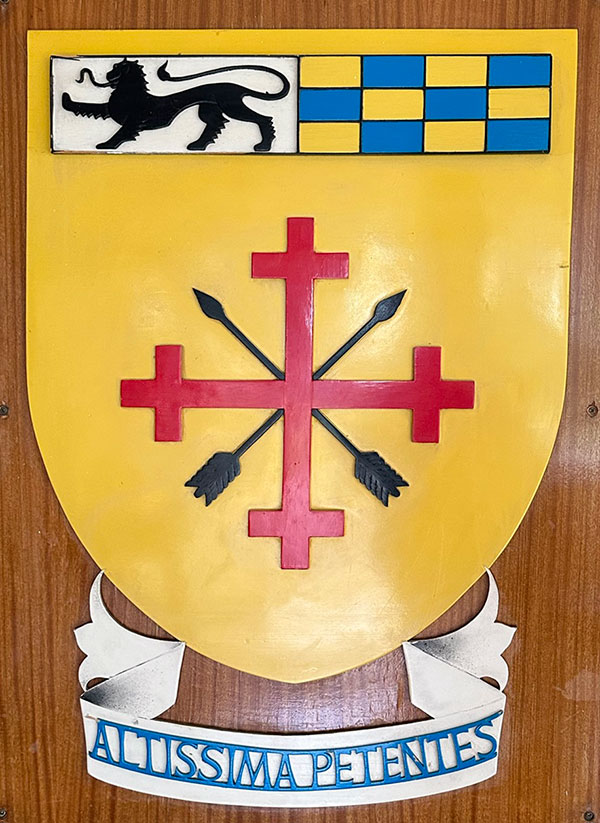
The Chairman’s badge of office was given in 1963 by Alderman Schmiegelow and was designed by Councillor Cotterrell and Miss J. Cotterrell. The motto – Altissima Petentes (seeking for the highest things) – was chosen to illustrate the Council’s principles in the course of its duty. A chain of office was purchased in 1967.
Castle Bromwich Parish Council endorsed the local government reorganisation that took the village into Solihull Metropolitan Borough in 1974, considering it preferable to being absorbed into Birmingham City. It feared that if it became part of Birmingham, the parish council would cease to exist and the village would lose its identity as well as the type and quality of representation to which it had become accustomed. The first full-time Clerk to the Parish Council was appointed in October 1972.
Castle Bromwich Parish Council still exists – see https://castlebromwichpc.gov.uk/
Solihull Rural District Council
Solihull Rural District Council was elected on 15th December 1894 and comprised the parishes of:
- Baddesley Clinton
- Balsall
- Barston
- Bushwood
- Elmdon
- Knowle
- Lapworth
- Nuthurst
- Packwood
- Solihull
- Tanworth
These parishes, together with Yardley, had formed the Solihull Poor Law Union. However, with Yardley being in the county of Worcestershire and the other parishes being in Warwickshire, Yardley could not be included in the new Solihull Rural District.
Instead, Yardley became a Rural District in its own right with eight wards and 15 councillors. It did not have a parish council as the boundary of the parish was the same as the boundary of Yardley Rural District, which did away with the need for a separate parish. In this case, the Rural District also carried out the functions of the parish council.
Balsall, Barston, Knowle, Lapworth, Packwood, Solihull and Tanworth would each have their own parish council.
The smaller settlements of Baddesley Clinton, Bushwood, Elmdon and Nuthurst would only be entitled to parish councils with permission from Warwickshire County Council. Bushwood actually joined the parish of Lapworth.
The first meeting of Solihull Rural District Council took place on 2nd January 1895 in the Board Room of Solihull Workhouse.
There were 18 councillors, comprising one councillor from each of the parishes of Baddesley Clinton, Barston, Bushwood and Lapworth, Elmdon, Nuthurst and Packwood. There were two councillors each from Balsall and Knowle, and three from Tanworth, with five from Solihull (one each from Shirley and Olton wards, and three from Solihull Ward).
Solihull Rural District was abolished when the status of the district was changed to an Urban District with effect from 1st April 1932. The rural parishes of Bushwood and Lapworth, Baddesley Clinton, Barston and Balsall, and part of Tanworth-in-Arden (excluding the parish of Salter Street) were then transferred to other Rural District councils.
Parish Councils in Solihull Rural District
Baddesley Clinton Parish Council
A meeting of parochial electors was held in the Catholic School on 22nd November 1894 for the purpose of choosing a person to represent the parish on the Rural District Council about to be formed at Solihull. Rev. Edward C. Delaney was unanimously elected as the representative.
Baddesley Clinton, with a population below 300, was not entitled to a parish council of its own for a further 60 years, by which time it was no longer administratively part of Solihull, having been removed to Warwick Rural District Council when Solihull became an Urban District in 1932.
Baddesley Clinton Parish Council held its inaugural meeting on Friday 16th February 1962. The meeting was held at Baddesley Clinton R. C. School and, from the five councillors, Mr C. A. Keyes was elected Chairman. The initial focus of the parish council was to secure a playing field for the village.
See https://baddesleyclintonpc.uk/ for details of the current Baddesley Clinton Parish Council.
Balsall Parish Council
A parish meeting was held in Lady Katherine Leveson School on 4th December 1894 to elect parish councillors. Rev. C. R. Shaw-Stewart, Vicar of the Parish of St Mary the Virgin, Temple Balsall, was elected Chairman of the parish meeting.
There were seven nominations for the seven seats:
- Charles Burton Blyth, farmer
- Daniel Gibbs, farmer
- Charles Johnson, grazier
- Samuel Needle, working builder
- Frederick Newbold, agent
- George Poole Warren, grazier
- John Wheeler, builder and carpenter.
A poll was not needed so all those nominated became councillors and the first business meeting of the Parish Council took place on 13th December 1894, the day that Balsall Parish Council came into being.
When Solihull became an Urban District in 1932, the Parish of Balsall was transferred to Meriden Rural District before becoming part of Solihull Metropolitan Borough in 1974.
In 1994, to celebrate the centenary of the parish council, local artist Trevor Boult (1945-2020) designed a crest for Balsall Parish Council which was used on commemorative mugs and subsequently on all letter headings.
See https://www.balsallparishcouncil.gov.uk/ for details of the current Balsall Parish Council.
Barston Parish Council
Barston Parish Council came into being in 1894 and still exists.
See https://www.barstonvillage.org/copy-of-community-links for details of the current Barston Parish Council.
Knowle Parish Council
At Knowle’s meeting of electors on 4th December 1894, chaired by Mr T. M. Colmore, there were the same number of nominations as there were seats, so all councillors were elected without the need for a poll. The Parish Council came into being on 13th December 1894.
Elected were:
- Rev. J. W. Hatton (vicar)
- Four Conservative councillors: G. Blakemore, J.A.B. Shute, R. Ibbotson, W. Chinn (Conservatives)
- Three Liberal councillors: F. T. Machin, H. C. Wilson and C. Sumner (sen.)
Knowle Parish Council was abolished from 1st April 1932 when Solihull became an Urban District. Minutes of Knowle Parish Council 1911-1932 are held at The Core Library and are available by appointment.
Lapworth Parish Council
An election was held on 17th December 1894 for parish councillors for Lapworth and Bushwood. There were eleven nominations for the six seats.
Mr T. Howse, Parish Guardian, was elected to be the representative on Solihull Rural District Council.
Lapworth was part of Solihull until 1932 when it was removed to Warwick Rural District Council when Solihull changed to an Urban District.
See https://lapworthpc.org.uk/ for details of the current Lapworth Parish Council.
Packwood Parish Council
A meeting of electors was held at the National School, Packwood at 7pm on 4th December 1894, with Rev. Ernest Henley Couchman elected as Chairman of the meeting. After 15 minutes, the Chairman received nomination papers for candidates for the appointment as parish councillors. Based on its population, Packwood was to have five councillors.
The names of nine candidates went forward for election by those present. The votes received were:
- Walter Billing (34)
- George Gardiner (34)
- John Gerald Bradshaw (33)
- Daniel Lindon (32)
- Edward Tallis (29)
- Robert Cooper (11)
- Frederick Riley (8)
- George Oakes Arton (7)
- Alfred Hughes (6)
The Chairman declared Messrs Billing, Bradshaw, Gardiner, Lindon and Tallis duly elected, unless a poll were demanded within the following ten minutes. No poll was demanded, so the five councillors were elected and the meeting was then closed.
The first business meeting was held on 13th December 1894, the day that Packwood Parish Council came into existence. Mr Bradshaw was elected Chairman. Members discussed the working of the Act, especially with regards to the financial aspects, and the meeting was then adjourned until 21st January 1895 to give time for the further study of the Act.
There was an election in Packwood for a parish representative on Solihull Rural District Council and Solihull Board of Guardians. The previous Guardian, Mr G. O. Arton, was defeated by Mr Samuel Fullard who won the contest by 49 votes to 6.
Packwood Parish Council was abolished with effect from 1st April 1932, when local government changes saw the parish shared between Lapworth parish and the new Solihull Urban District. Minutes 1894-1932 are held at The Core Library, Solihull and are available to view by appointment.
Solihull Parish Council
Solihull Civil Parish had 13 councillors, based on its population at the time of the 1891 census being 6,150. It was the second largest parish council in Warwickshire, with only Foleshill (pop. 8,664) being larger.
The Parish of Solihull was divided into three wards:
- No. 1, or the Solihull Ward
- No. 2, or the Shirley Ward
- No. 3, or the Olton Ward
Meetings to nominate parish councillors for Solihull were held in Olton, Shirley and Solihull on the evening of Tuesday 4th December 1894. There were three nominations for the two seats for Olton Ward, and eight nominations for the four seats for Shirley Ward. Polls were demanded in each case.
Elections were also held on 4th December 1894 for Solihull Parish members of Solihull Rural District Council, who would also be Guardians of the Poor for Solihull. The 18 councillors/Guardians would resign en bloc every three years.
The first meeting of Solihull Parish Council took place at Solihull Workhouse on the evening of 2nd January 1895. Mr Charles Bragg was elected as Chairman, and Mr H. H. Wright as Vice-chairman. It was decided to meet monthly.
The Civil Parish of Solihull ceased to exist on 1st April 1932 when the status of the district was changed from a Rural District to an Urban District as a result of the Warwickshire Review Order of 1932.
Tanworth-in-Arden Parish Council
Tanworth Parish Council was established in 1894.
Following a Local Inquiry in February 1895, the parish of Tanworth was enlarged on 30th September 1895 by the addition of the hamlet of Aspley with Fordhall, which was previously in the administrative County of Warwick and the Stratford-on-Avon Poor Law Union.
Meriden Rural District Council
Meriden Poor Law Union formed Meriden Rural District Council as a result of all of the parishes in the Poor Law Union being in the same county.
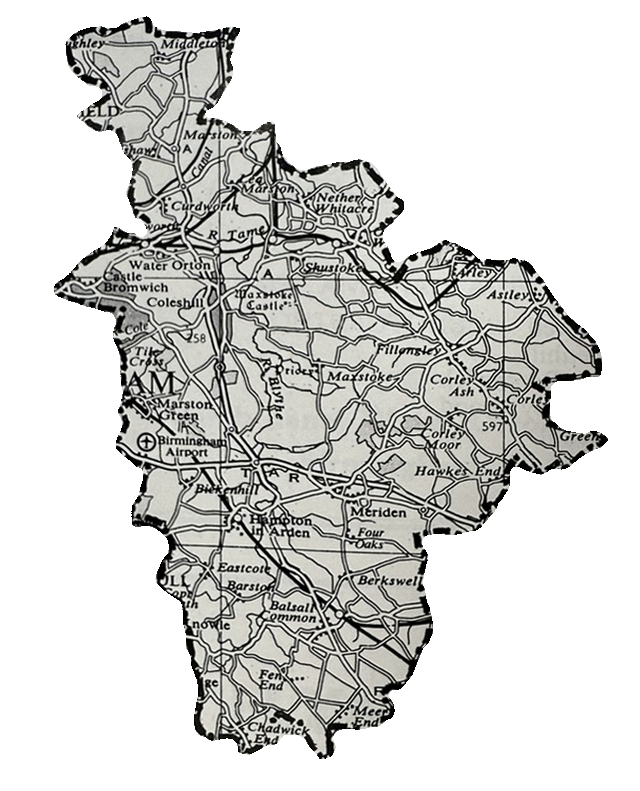
Meriden Rural District Council met for the first time on Tuesday 8th January 1895 in the Board Room of Meriden Workhouse, with Canon Waller first elected as temporary Chairman.
Following the reading of a circular from the Local Government Board, Mr T. R. Vickers of Hollyberry Hall – who had been a previous Chairman of the Board of Guardians – was elected Chairman and Canon Waller was elected Vice-Chairman.
It was resolved that the Rural District Council should meet monthly at 1pm on a Tuesday, following the Board of Guardians meeting.
There were four parishes in which a contest was necessary – Bickenhill, Coleshill (inc. Marston Green), Hampton and Meriden.
Berkswell Parish Council
The Coventry Herald of 7th December 1894 reported that Berkswell had elected its seven parish councillors. The parish council came into existence on 13th December 1894 without a poll being required.
Those chosen were:
- Fred William Elson, baker (73 votes)
- Charles Hitchcocks, timber dealer (67)
- Henry Clark Greenway, farmer (65)
- Thomas Clements, land agent (62)
- Henry Milbourne, grocer (55)
- Charles Ridley, farmer (51)
- John Palmer, farmer (42)
See Berkswell Parish Council’s website for details of the current parish council.
Bickenhill Parish Council
Bickenhill received 10 nominations for its six parish council seats, with a poll being requested.
Six members were elected to Bickenhill Parish Council after polling on Monday 17th December 1894
- James Errington (49 votes)
- Henry Adams (36)
- Insull Burman (35)
- John Wilson (35)
- Arthur Charles Wayne (27)
- Henry Large, Marston Green (27)
Not elected: were J. Mowe (24 votes), J. Smith (23), T. E. Dale (21).
The Declaration for the first parish councillors in Bickenhill was signed on 3rd January 1895.
In 1949, Mrs Leah Martin, a member of Marston Green Women’t Institute, was elected as the first female councillor of Bickenhill Parish Council. She also became the first woman to hold office at Chairman. The second female parish councillor was Miss M. Preece, elected in 1955.
See https://bmgpc.org/ for details of the current Bickenhill and Marston Green Parish Council.
Chelmsley Wood Town Council
Having been developed by Birmingham City Council in the 1960s as an overspill housing estate, Chelmsley had grown large enough to have its own Town Council, which came into being on 1st April 1970.
The parish would have five wards, although two – Alcott and Hall – were initially combined for the first 12 months.
Elections were held on 26th March 1970 for one representative from the parish to sit on Meriden Rural District Council, plus four parish councillors for each ward: Arbor (Area 6); Heath (area 7); Chelmsley (Area 5); and Alcott and Hall (areas 3 and 4).
See https://www.chelmsleywood-tc.gov.uk/ for details of the current town council.
Fordbridge Town Council
Fordbridge Town Council came into being on 1st April 1970, together with Chelmsley Wood. It was intended that the parish would have three wards, but two of the wards – Bennetts Well and Cole – were combined for the first 12 months.
Elections were held on 26th March 1970 for one rural district council seat and five parish councillors for each ward: Bennetts Well and Cole (Areas 1, 8 and 9) and Hatchford (Area 2).
See Solihull Council’s web page for further details of the present Fordbridge Town Council.
Hampton-in-Arden Parish Council
There were 14 nominations for the six seats on Hampton-in-Arden Parish Council so a poll was demanded. An election took place on 17th December 1894, which was the date that the parish council came into existence.
The results were:
- John Middleton Cattell, Patricks Bridge Farm (73 votes)
- Thomas Wild (60)
- James Ismay, Old Farm, Meriden Road (59)
- Charles Poole, cobbler and shoemaker, High Street (56)
- Ellis Gascoigne, odd job man (55)
- Richard Chinn, solicitor, Beech House (54)
- W. Blackwell (53)
- A. G. Sampson (39)
- T. Whale (39)
- C. S. Howitt (37)
- J. Sidwell (30)
- J. Large (4)
Messrs Cattel, Wild, Ismay, Poole, Gascoigne and Chinn were duly elected.
For details of the current Hampton-in-Arden Parish Council, which includes Catherine-de-Barnes, see https://hamptoninardenparish.gov.uk/
Kingshurst Parish Council
Kingshurst Parish Council came into being on 1st April 1956 as a result of the Warwick (Parishes of Coleshill and Kingshurst) Confirmation Order 1955. For the previous five years, affairs at Kingshurst were managed by the non-political Residents’ Association.
There were 16 candidates for the six parish council seats (four Conservatives, 6 Independents (nominated by the local residents’ association), and six socialists). Polling took place on 22nd March 1956.
Three independents, two Labour and one Conservative were successful in the first elections to Kingshurst Parish Council. The successful candidates were:
- Dr H. M. Kent (Ind, 457)
- Mr F. J. Ash (Ind, 413)
- Mr W. F. Schofield (Ind, 386)
- Mr W. A. Bradley (Lab, 369)
- Mr N. Hasluck (Cons, 358)
- Mr D. Harrison (Lab, 334)
Mr W. F. Schofield became the first Chairman.
In January 1972, Kingshurst Parish Council resolved by a one-vote majority to recommend that Kingshurst should go into the new Birmingham Metropolitan District rather than Solihull. However, the Government decided that Kingshurst should move into the new Solihull Metropolitan Borough which came into being on 1st April 1974.
For details of the current Kingshurst Parish Council see http://www.kingshurstparishcouncil.org.uk/
Meriden Parish Council
A parish meeting was held in the large schoolroom on Tuesday 4th December 1894, with around 60 electors and friends present. Mr G. F. Burr was asked to chair the meeting. Eight candidates were nominated for six seats, with the results being:
- Charles Wriothesley Digby, gentleman, of Meriden Hall (40 votes)
- Henry Ravenhall, brickmaker (40)
- James Southwell, labourer (39)
- Abraham Anderton, labourer (32)
- John Kibbler, butcher (30)
- James Glover, grocer (29)
- Edward Warmingham, sub-postmaster (20)
- Henry Green, farmer (16)
The Chairman asked if the meeting would accept the six names with the most votes – Messrs Digby, Ravenhall, Southwell, Anderton, Kibbler and Glover – as representatives on the Parish Council. However, Mr Warmingham demanded a poll and so the Chairman announced that this would be held on 17th December 1894.
The six councillors elected were the same six councillors who achieved the most votes at the initial parish meeting: Ravenhall (99 votes); Digby (84); Glover (83); Southwell (77); Kibbler (76); and Anderton (73). The two unsuccessful candidates were Edward Warmingham, who had demanded the poll and received 64 votes, whilst Henry Green received the lowest number of votes (47).
There was also an election on the same date for Meriden representatives on Solihull Rural District Council, with Rev. A. L. Willett (114 votes) and Mr J. M. Cattell (59 votes) both elected.
Out of 160 eligible electors, the Coventry Herald of 21st December 1894, reported that 146 people voted.
Solihull Metropolitan Borough Council
Solihull Metropolitan Borough came into existence on 1st April 1974 as a result of the Local Government Act 1972. It was created from the merger of Solihull County Borough, with the Parish of Hockley Heath (which had been under Stratford Rural District since 1964) and 10 parishes from Meriden Rural District.
Although the former Solihull County Borough area within the Metropolitan Borough is unparished, Hockley Heath and the former Meriden Rural District parishes do have parish councils.
In addition to those named above, there are the relatively new parish councils:
Cheswick Green Parish Council
Cheswick Green Parish Council was formed on 1st April 2009 following the dissolution of Hockley Heath Parish Council.
Chadwick End Parish Council
Chadwick End was the west ward of Balsall Parish Council before coming into existence as a separate parish on 1st April 2014 following the 2013 Community Governance Review of the Balsall parish boundary.
Dickens Heath Parish Council
Dickens Heath Parish Council was formed on 1st April 2009 following the abolition of Hockley Heath Parish Council. Five elected parish councillors serve on the council, and there is also a parish clerk.
The parish council commissioned the College of Arms to create a coat of arms, which was formally presented to the Chairman of the parish council at the opening of the Parish Rooms in November 2011. The arms bears the motto “in rure floreo” (translated as “in the country we flourish”) and was designed by the College of Arms’ Windsor Herald of Arms in Ordinary.
Hockley Heath Parish Council
Hockley Heath was part of Solihull until 1st April 1964 when it was transferred to Stratford-upon-Avon Rural District for ten years until it returned to the new Solihull Metropolitan Borough, which came into existence on 1st April 1974.
Elections for Hockley Heath Parish Council were first held in March 1964, with seven parish councillors and two rural district representatives to be elected, coming into office on 1st April 1964. Nominations had to be received by the Returning Office of Stratford Rural District Council by 12 noon on 5th March 1964. As there were seven nominations for the two rural district councillors, and 12 nominations for the seven parish councillors, an election was held on 24th March 1964.
The two rural district councillors elected were university lecturer, Alan Jack Westell Rozelaar (1921-2018) and manufacturer’s agent, Thomas Henry Ganderton (1930-2002).
The parish councillors elected were: Sidney James Beckett; Winifred Marjorie Hale; Sydney Morrall; James Keating Hay; Gordon Osborne; Monica Elizabeth Tallett; and Frederick Norman Maskell.
Hockley Heath Parish Council was abolished in 2009 and replaced with four separate parish councils, which each came into existence on 1st April 2009:
- Cheswick Green
- Dickens Heath
- Hockley Heath
- Tidbury Green
Smith’s Wood Parish Council
Smith’s Wood Parish Council came into being on 1st April 1987, following approval from Department of the Environment. Three other proposed parish councils – for Dorridge, Bentley Heath and Knowle/Olton were deemed not necessary.
Tidbury Green Parish Council
Tidbury Green Parish Council was established on 1st April 2009 following the abolition of the previous Hockley Heath Parish Council.
© Solihull Council, 2024.
You are welcome to link to this article, but if you wish to reproduce more than a short extract, please email: heritage@solihull.gov.uk
 Solihull Life
Leave a comment