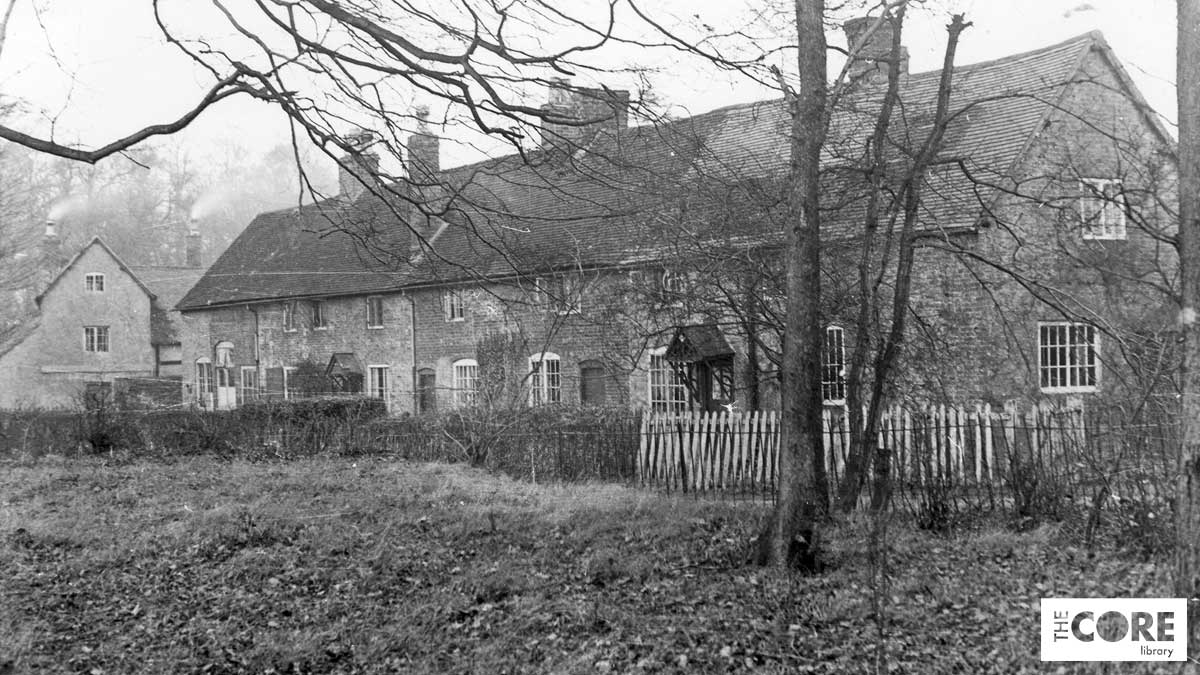
The elementary school in the grounds of Elmdon Park closed for the final time on Christmas Eve, 1943. The entry in the school log book notes the closure for Christmas but it seems that the school never actually reopened. There had been five juniors and 12 infants on the school roll on 10th December 1943, with only 80 per cent of the juniors attending school, and 31.6 per cent of the infants. The following week there were only 10 children registered.
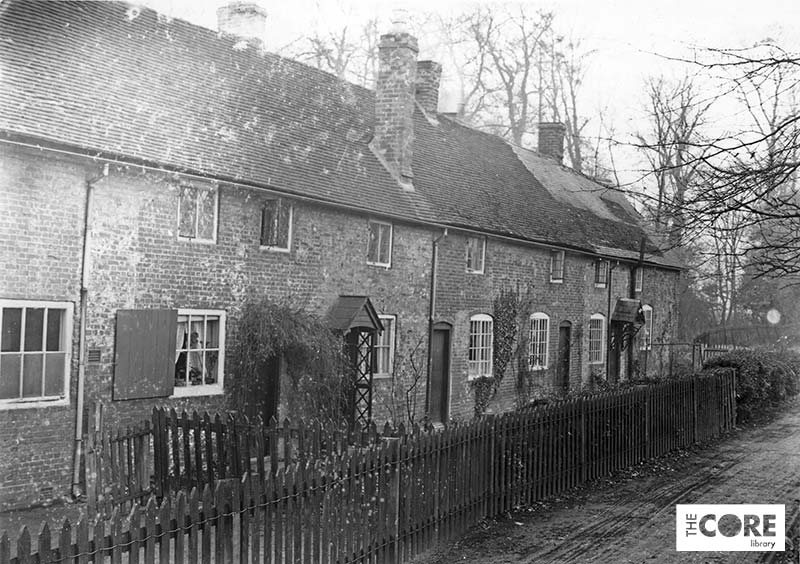
Elmdon Terrace
The school was situated in the northernmost cottage of Elmdon Terrace and seems to have opened around 1818. It was mentioned as the venue for a meeting of the Vestry in 1839. The building housed one large classroom and was single-storey. There was an outdoor toilet and water was supplied from a pump in the yard.
The cottage at the other end of the terrace was home to the family of Joseph Chase, butler at Elmdon Hall. The cottage next to it was usually home to the headteacher of Elmdon School.
On the 1851 census Mrs Ann Warwick, aged 35, was recorded as school mistress. She was living in Elmdon Terrace with her husband, a farm labourer. By 1881 she was widowed, still living in the Terrace and described as a needlewoman.
Miss Mary Newton (1834-1901)
By the time of the 1861 census, the schoolmistress was Miss Mary Newton, aged 27, who had been born in Little Aston, Staffordshire. She was living with her married sister, Elizabeth Brown, in “Elmdon village.” The school accounts show that her salary was £4 10s per quarter in 1864, increasing to £6 10s per quarter by 1871. There were 25 children on the school roll, each paying one penny per week to the school.
It was a requirement of the 1870 Education Act that any voluntary school obtaining government aid must have a certificated head teacher. From 1st May 1871, certificates without examination were granted to teachers on whose schools the inspectors had reported favourably. The school log book (at Warwickshire County Record Office, ref: CR0036) shows that Elmdon School was inspected on 14th May 1872 by Rev. Henry Martyn Capel. Mary Newton duly obtained a certificate as a result of the favourable inspection. The certificate was the lowest 3rd class, meaning that she was not allowed to supervise pupil teachers.
Mary Newton appears on the 1871 and 1881 censuses still living with her sister, Elizabeth, and brother-in-law, William Brown, who was Elmdon Hall Estate’s gardener and bailiff. Curiously, she has no occupation listed, although she must still have been teaching at Elmdon School at the time. The family lived at Elmdon Hall Farm, opposite the church.
The school operated the monitorial system, in which the teacher was assisted by a monitor, drawn from one of the older and more able children. Elizabeth Stokes was named as monitress in a log book entry in January 1875.
In June 1890 the inspector, Rev. H.M. Capel, reported that the school mistress, Miss Newton, was painstaking and conscientious but “hardly so efficient as she has been. She has had charge of this school for nearly thirty years.” In May 1891, Mrs Annie Taylor was appointed to assist Miss Newton. She also had a 3rd class teaching certificate.
The final mention of Miss Newton in the log book is an entry written by Mrs Taylor on 30th October 1891, noting; “The Head Teacher visited the school. Absent on account of ill health.”
By the time of the 1901 census, Mary Newton, aged 67, was living on her own in Elmdon Park Terrace, and was described as “late school teacher.”
Miss Newton died in 1901 and is buried in Elmdon churchyard.
Teachers 1892-1913
It appears that Annie Taylor finished her duties at the school in December 1892, just 19 months after starting. A new teacher – Clara Goodyear -took charge of the school on 14th March 1893 but she resigned on 1st September 1893 after only six and a half months in the role.
Elizabeth Gaskens took over as Head Teacher on 13th November 1893. She resigned in October 1894 and was replaced by Rose A. Cole. By May 1896 the staff consisted of Rose A. Cole as Trained Certificated Mistress and Edith Markham as paid monitress.
Edith Markham was the daughter of John Markham, tenant farmer of Whar Hall Farm, Damson Lane. She was employed as pupil teacher from the age of 14 (c.1895), so she taught in the school supervised by the principal teacher during the day and received instruction herself out of school hours.
Edith was upgraded to assistant teacher in June 1900 but resigned in December 1902 as she was due to be married the following year. She married Edward King on 18th February 1903 and the children of the school were given a half-day holiday in the afternoon so that they could attend the wedding. Edith’s replacement as assistant teacher was Miss A. Chapman who left in December 1904 in order to be married.
Rose Cole resigned in September 1893 and was replaced by Mrs Susan Kirkham. Mrs Kirkham, a certificated school teacher who was born in King’s Lynn, Norfolk and lived in Elmdon Terrace. At the time of the 1901 census, she was living three doors away from retired headmistress, Miss Mary Newton.
By October 1898, there was an assistant teacher – Miss F. Shepherd. By 1906 the two teachers were Mrs Constance Ellen Hardwick (1870-1942), headmistress, who started at the school in September 1905, and Miss Rose S. Flowers, a supplementary teacher. Rose stayed at the school until 1909, by which time she had taken the preliminary teacher’s certificate.
By 1913 the teachers were Mrs Hardwick and Miss Plummer. Miss Plummer was a supplementary teacher. Mrs Hardwick left in September 1913 after 8 years.
Miss Ethel Rose Chase (1884-1965)
On 1st October 1913, Miss Ethel Rose Chase, daughter of Joseph Chase, butler at Elmdon Hall commenced duties as head teacher. She was aged 27 and had attended the school as a child.
She had obtained her qualification as a teacher at Edge Hill Training College, Liverpool and, prior to commencing work at Elmdon, had worked as an Assistant Mistress at Dartmouth Street Girls’ School, Birmingham 1906-1909 and at Sherbourne C.E. Mixed School, Warwick 1901-1913.
She lived with her parents in the end house of Elmdon Terrace rather than in the adjacent cottage which was traditionally the head teacher’s home.
On 31st August 1926, Ethel Rose Chase resigned as headteacher. She had to leave as a result of the implementation in Elmdon of the the Education Act 1918. This meant that after the summer holidays in 1926 all children aged 11-14 had to be educated at a separate secondary school. The loss of these older pupils resulted in a reduction in the government grant, and the Education Authority decided it could no longer afford to pay a certificated teacher at Elmdon.
Miss Chase moved to Ratley, near Banbury, starting as head teacher on 1st September 1926 and remaining at the school until her retirement. The 1931 electoral register shows her living in the School House, Ratley with her widowed mother, Mary Ann Jane Chase (1855-1951). Miss Ethel Rose Chase died in a nursing home in Leamington Spa, on 11th January 1965, aged 80.
Staff 1926-1943
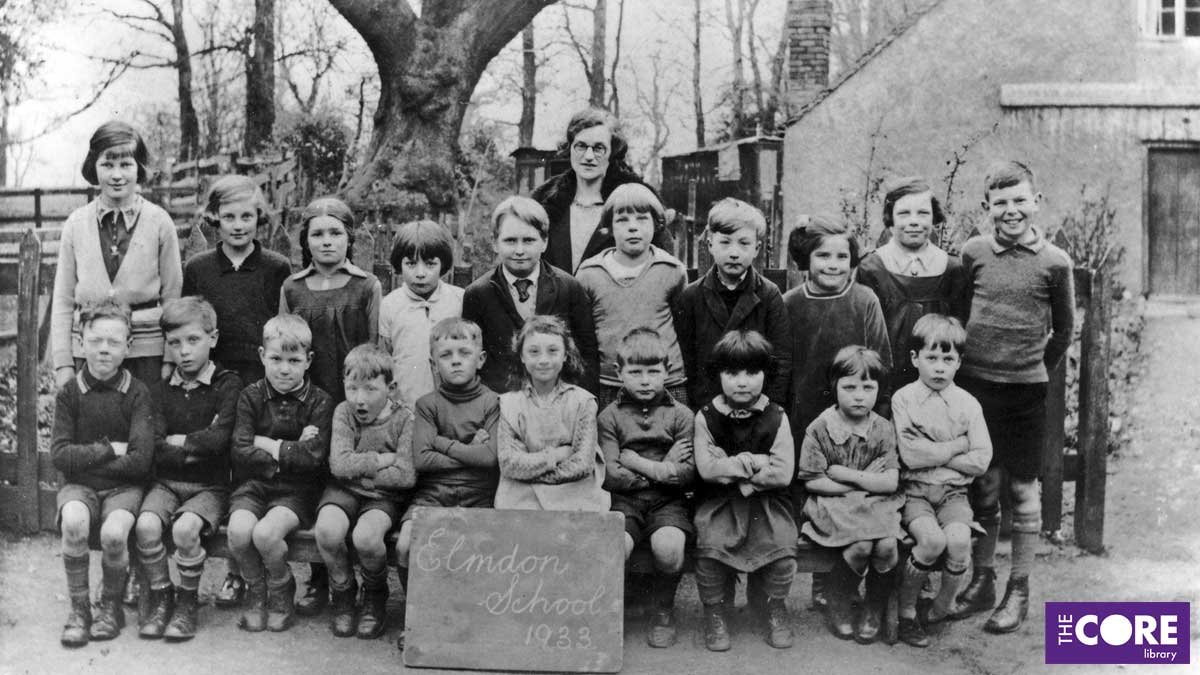
On 1st September 1926 Mrs Marjorie Elsie Buckley (née Dutton) took over as uncertificated head teacher. The school opened as an infant and junior school only following the enforced departure of pupils aged 11-14. Mrs Buckley lived with her husband, Horace, and two daughters (who were pupils at the school) in the Elmdon Terrace cottage next to the Chase family.
Miss Dorothy C. Croxton, uncertified assistant, started at the school on 20th April 1936 and remained until 30th July 1937.
By 1939 the Buckley family had moved to Somerset and Mrs Buckley was listed as the Headmistress of the elementary school in Redhill. Her 16-year-old daughter, Sheila, was a school monitor.
Mrs Amy Belle Greenwell (1897-1974) took over from Mrs Buckley from June-December 1933. She was replaced in turn by Miss Martha Mary Gaze (1878-1965), who remained until 1940. Miss Gaze had emigrated to Canada in 1912 and seems to have worked as a governess in British Colombia before travelling to Seattle in 1916. She returned to England in 1919 and was working as an elementary school teacher in Brigg, Lincolnshire in 1921. From at least 1925, until at least 1931 she was living at the School House, Butlers Marston, Warwickshire. She had moved to 55 Springfield Crescent by 1939.
Miss Gaze was assisted by Miss Catherine Mary Morris, an uncertificated teacher in charge of the infant class. In February 1940, Miss Morris transferred to Chapelfields School. She was replaced by Miss Winifred M. R. Jones, certificated teacher.
Miss Gaze left the school in August 1940 and was replaced by a Temporary Head Teacher, Eleanor Mary Campbell, who was in post until 27th February 1942. She was replaced on 2nd March 1942 by Mrs Eunice Amy Cook (1893-1985).
On 1st April 1942, Miss Roslyn Florence Goodge (1920-2013), daughter of the Rector of Elmdon, Rev. Stanley H. Goodge, commenced duties as Uncertificated Assistant. She lived in Elmdon Rectory, just 100 yards from the school. From October 1940, she had been undertaking observation and teaching practice at Lode Lane North County Junior & Infant School. This had opened in January 1940 and later became Hatchford Brook Junior & Infant School, which merged with Valley Infants in 2014 to become Valley Primary School.
At Elmdon, Miss Goodge mainly looked after the infant class, which had around 30 pupils. Miss Cook, the headmistress, had a similar number of children in the junior class.
On 20th May 1942 Violet Maud Marsh, certificated teacher, took charge of the school owing to illness of the two teachers.
On 25th June 1943 Eunice Amy Cook terminated her duties as permanent head teacher, having been granted leave of absence for the remainder of the month.
School attendance
Clara Goodyear noted in 1893 that “most of the children think they can come in when they like.”
Attendance at the school was always a problem, not least because of its isolated, parkland location. The main entry to the estate was from Damson Lane, although a track from the Coventry Road had also come into use between 1851 and 1861. Most of the children would walk along the rough cart tracks and paths, which wet weather made almost impassable for the younger children.
Domestic service still provided the main employment for young female school leavers. It’s clear that school attendance of the older boys was affected when were called upon to support sporting activities on the estate. For example, the school log book noted on 14th December 1876 that there had been a small attendance on two days as most of the older boys were required by Mr Alston to act as beaters.
In September 1927 it was reported that there were 14 children on the books and almost all were under the age of nine. By April 1928 there were only 10 children on the roll, increasing to 11 by November 1928 and 16 by June 1929.
By November 1937, there were 37 children registered and when the school opened on 29th August 1938 it had 43 on the roll. The log book notes that there had been a rapid increase in the number of pupils owing to housing developments.
In April 1939, there were 63 children on the roll. Admission was refused to one five-year-old as there was no accommodation for more children.
The school suffered bomb damaged on 23rd November 1940 when an explosive bomb fell a few yards away and shattered the windows in the large classroom. Work at the school carried on as normal with children using the infants classroom.
The number of pupils decreased after February 1943. Poor weather resulted in the approaches to the school becoming very difficult and the school log book notes “several parents have decided to withdraw their children as they are unable to obtain Wellingtons.”
Sunday School
On 24th March 1932, Ludlow Briscoe & Hughes, agents for Walter Waters who owned the Elmdon Hall Estate 1931-1944, agreed to let the village school to Canon Harrison Goodenough Hayter on an annual tenancy for an annual rental of £13, payable quarterly upon each of the recognised quarter days. The first payment of £3 5s was to be made on 24th June 1932.
After the sale of the estate to Solihull Council in 1944, the Council let “Elmdon Park Church Day School” to Elmdon Parochial Church Council on 31st January 1947. The school classrooms continued to be used by the church as a Sunday School for almost 20 years.
The cottages in Elmdon Terrace remained occupied until condemned as unfit for human habitation in about 1958. The houses and the adjoining school were demolished around 1965.
If you have any further information about Elmdon Terrace or the school, please let us know.
Tracey
Library Specialist: Heritage & Local Studies
Further Reading:
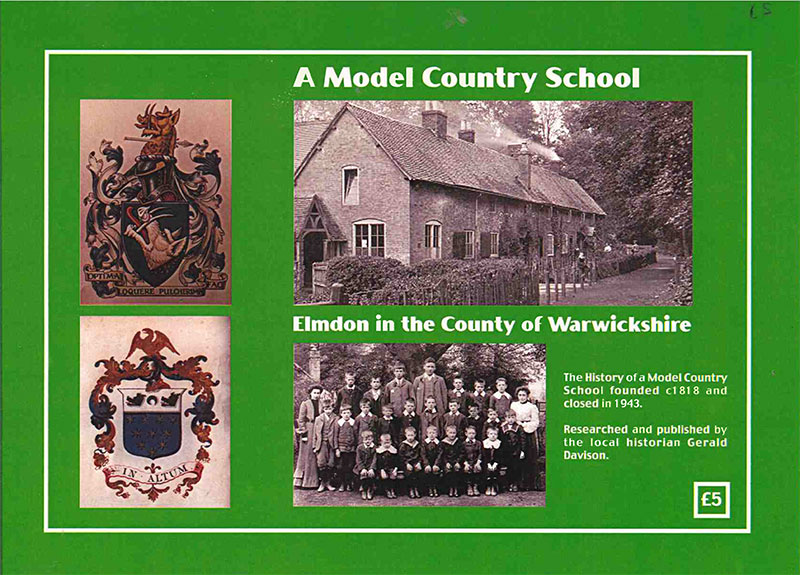
In 2000, local historian, Gerald Davison, produced a history of the School – A Model Country School – based on the records at Warwickshire County Record Office. The book is available for reference at The Core Library – please make an appointment with us if you wish to view it.
© Solihull Council, 2023.
You are welcome to link to this article, but if you wish to reproduce more than a short extract, please email: heritage@solihull.gov.uk
 Solihull Life
Leave a comment