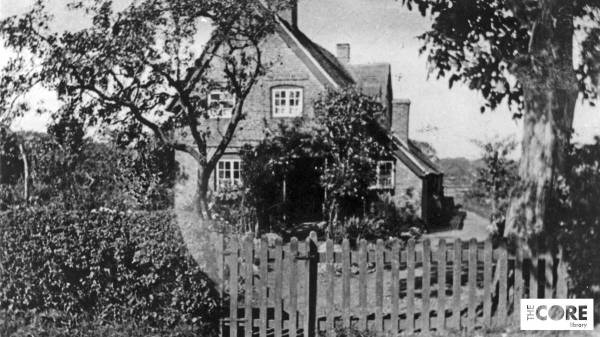
Tracing house history

If you are interested in tracing the history of a house or building, the starting point should be the building itself or a picture of it if it no longer exists, and any anecdotal information/existing research. The crucial information you need in order to search most effectively is the approximate date of construction, as this will help you to identify what records may be available and where they may be.

Continue reading “Tracing house history”

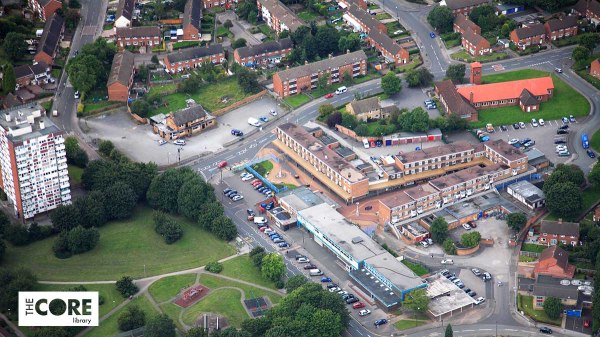
Kingshurst Hall Estate

The housing development at Kingshurst Hall Estate was the first time that Birmingham Corporation had ever built dwellings outside the city boundaries. It was also the first time that the council had a housing scheme that included owner-occupied housing as well as council housing.

It was an “overspill” housing estate, one of many created in the 1950s on the outskirts of large towns and cities to help relieve overcrowding in urban areas. The intention was to move people from decaying inner cities to better conditions in more rural areas.

Continue reading “Kingshurst Hall Estate”

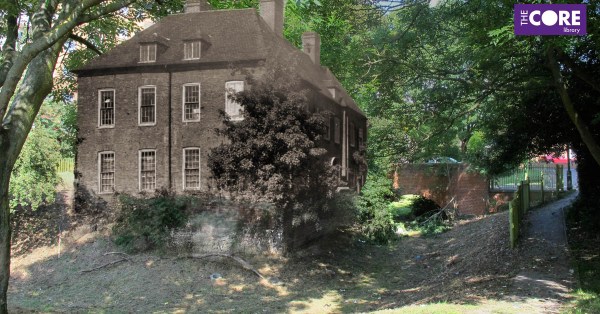
Kingshurst Hall and the Townshends

By the time of its demolition in 1962, the grade II-listed Kingshurst Hall, believed to have been built in the early 18th century, was in a state of disrepair. It was surrounded by tower blocks on the new Kingshurst Hall Estate, which was built by Birmingham City Council as overspill housing.

The Council had compulsorily purchased Kingshurst Hall and its surrounding farmland, together with other land in Kingshurst,  under the Birmingham (Old Chester Road, Tile Cross &c) Compulsory Purchase Order 1939, which was dated 17th February 1939.

Continue reading “Kingshurst Hall and the Townshends”

Old Ordnance Survey maps

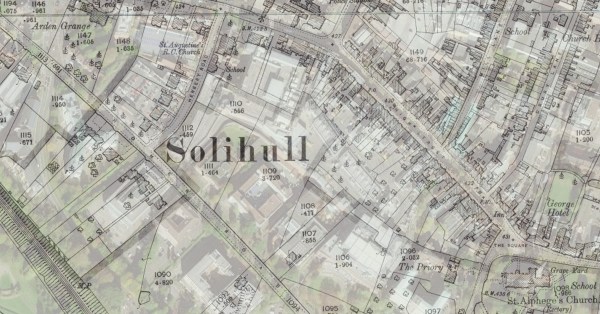
If you’ve ever wondered what was previously on the site of your house, or wanted to find out where your ancestors lived, then historic Ordnance Survey (OS) maps are often a good place to start.

Thanks to the freely available maps of England & Wales on the National Library of Scotland (NLS) website, it’s now possible to see some of the old OS maps overlaid onto a modern satellite image, making it much easier to get your bearings.

Continue reading “Old Ordnance Survey maps”

A 1930s marriage of convenience

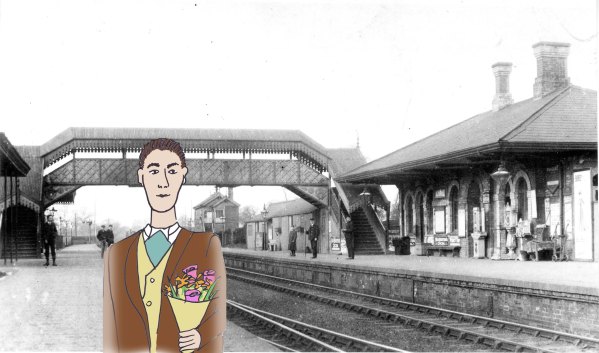
On 20th May 1936, what we would now call a sham marriage, or a marriage of convenience, took place at the office of Solihull’s Superintendent Registrar, which was then situated above shops on the corner of Warwick Road and Poplar Road in Solihull.

The groom was a gay writer living in Dorridge and the bride was a German-Jewish actress. The reason for the marriage was simply to enable the bride to obtain British citizenship. The couple hadn’t met each other before their wedding day and couldn’t actually speak the same language. They remained married for the rest of their lives although they never lived together.

Continue reading “A 1930s marriage of convenience”

Ode for Solihull

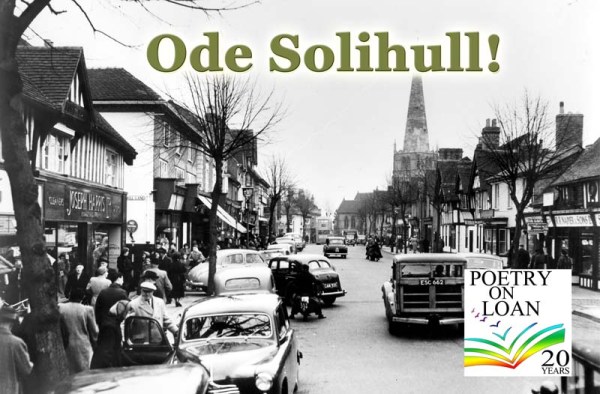
On 21st May 2019, in a Poetry On Loan funded event, poet Giovanni Esposito –  a.k.a. “Spoz” – joined library staff and members of the public on a guided walk around the historic heart of the old Solihull village.

After the walk, the participants returned to the Core for a well-earned break and a chat about Solihull’s history, looking at some of the thousands of old photographs in the library’s Heritage & Local Studies collections. Spoz then wrote a poem incorporating people’s suggestions and his own reflections on the local history of Solihull.

Continue reading “Ode for Solihull”

Coronation Day 1937

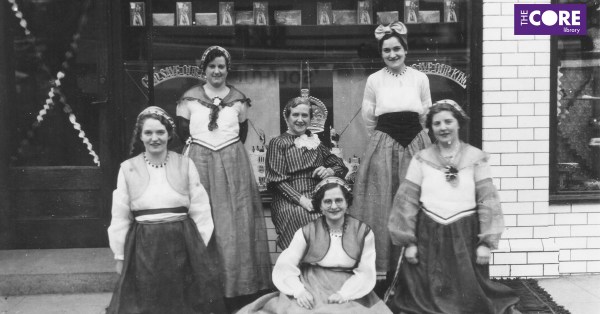
Wednesday 12th May 1937 saw the coronation at Westminster Abbey in London of King George VI and Queen Elizabeth. The date had been chosen for the coronation of King Edward VIII who had become king on the death of his father George V in January 1936. Although Edward VIII’s abdication in December resulted in a new king and queen on the throne, the coronation date of 12th May was retained.

In Solihull, the event was marked by a three-day carnival, which ran into the Whitsuntide weekend, and many of the villages now in the borough held their own celebrations.

Continue reading “Coronation Day 1937”

Blog at WordPress.com.

Up ↑