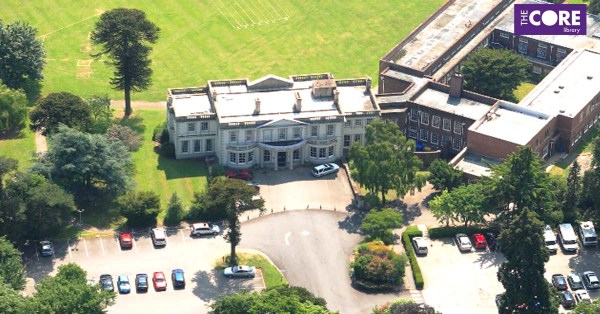
Malvern Hall and the Greswold, Lewis and Wigley families

Malvern Hall was built some 300 years ago on the site of Malvern Farm. The name comes from the de Malverne family who owned an estate on this site in the early 14th century (Welcome to Solihull by Joy Woodall and Mollie Varley, 1984). John Burman, writing in the Birmingham Weekly Post, 12th March 1954, noted that there was little doubt that the name was taken from Simon de Malvern, a “substantial resident” of Solihull in 1332.

Continue reading “Malvern Hall and the Greswold, Lewis and Wigley families”

26th August 1920

On 26th August 1920, 23-year-old farmer’s assistant, George White, died of tuberculosis in Bramcote Sanatorium, near Nuneaton, two years after the death of his younger brother on active service.

Bramcote Hospital had opened in 1907 as a smallpox hospital but, as there had not been a case treated there by 1912, it was converted in 1913 into a sanatorium for the treatment of those with consumption.

Continue reading “26th August 1920”

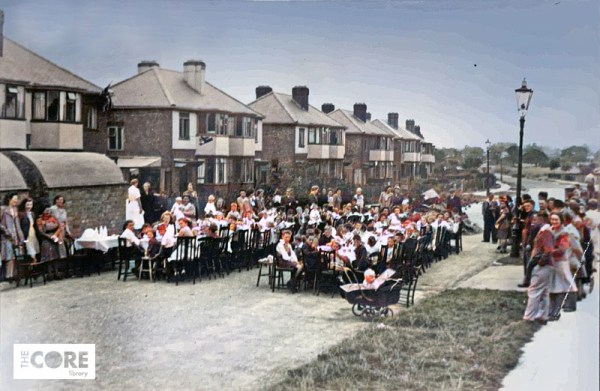
V. J. Day in Solihull, 1945

V. J. Day, 15th August 1945, marked the day when the Second World War effectively came to an end as Japan surrendered and all hostilities ceased.

The Warwick County News, 18th August 1945, summarised local events with the headline “Neighbourly co-operation was the keynote of Solihull’s VJ-Day celebrations” and the observation that the day was marked by a “mood of quiet thanksgiving or in the exuberant relief of pent-up feelings according to age or nature.”

Continue reading “V. J. Day in Solihull, 1945”

Schools at Malvern Hall

On 13th July 1990 the official opening took place of the new Sixth Form block at Saint Martin’s Girls’ School. The Sixth Form occupied the site of the former stables at Malvern Hall, adjacent to the former Solihull Lido in Malvern Park.

Saint Martin’s School had moved to Malvern Hall, Solihull in 1989 and was the third school to occupy the historic site – the previous two being Solihull High School for Girls (1931-1974) and Malvern Hall Comprehensive School (1974-1989).

On 1st September 2020, Saint Martin’s School merged with Solihull School, so Malvern Hall now houses its fourth educational establishment – Solihull Preparatory School. It seems timely to look back at the schools that have occupied this stately home over the last 70 years. 

Continue reading “Schools at Malvern Hall”

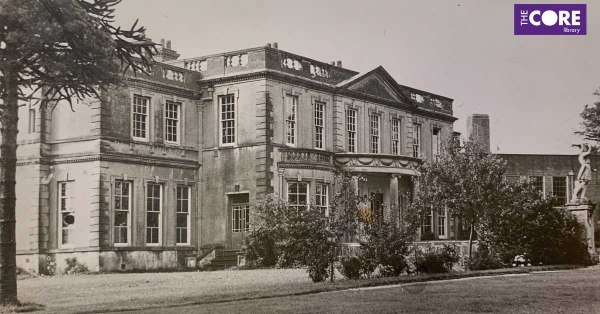
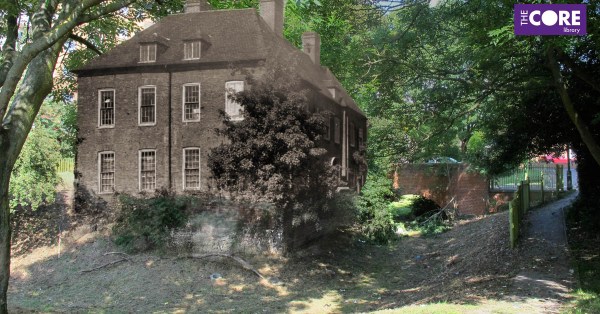
Kingshurst Hall and the Townshends

By the time of its demolition in 1962, the grade II-listed Kingshurst Hall, believed to have been built in the early 18th century, was in a state of disrepair. It was surrounded by tower blocks on the new Kingshurst Hall Estate, which was built by Birmingham City Council as overspill housing.

The Council had compulsorily purchased Kingshurst Hall and its surrounding farmland, together with other land in Kingshurst,  under the Birmingham (Old Chester Road, Tile Cross &c) Compulsory Purchase Order 1939, which was dated 17th February 1939.

Continue reading “Kingshurst Hall and the Townshends”

Old Ordnance Survey maps

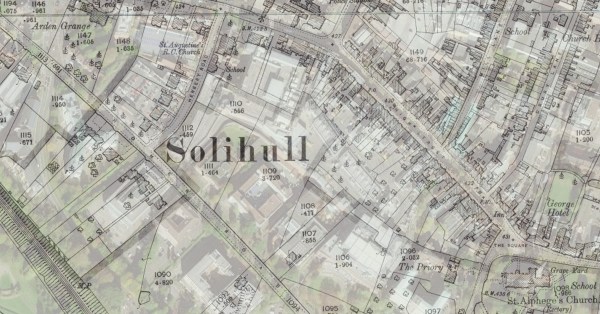
If you’ve ever wondered what was previously on the site of your house, or wanted to find out where your ancestors lived, then historic Ordnance Survey (OS) maps are often a good place to start.

Thanks to the freely available maps of England & Wales on the National Library of Scotland (NLS) website, it’s now possible to see some of the old OS maps overlaid onto a modern satellite image, making it much easier to get your bearings.

Continue reading “Old Ordnance Survey maps”

A 1930s marriage of convenience

On 20th May 1936, what we would now call a sham marriage, or a marriage of convenience, took place at the office of Solihull’s Superintendent Registrar, which was then situated above shops on the corner of Warwick Road and Poplar Road in Solihull.

The groom was a gay writer living in Dorridge and the bride was a German-Jewish actress. The reason for the marriage was simply to enable the bride to obtain British citizenship. The couple hadn’t met each other before their wedding day and couldn’t actually speak the same language. They remained married for the rest of their lives although they never lived together.

Continue reading “A 1930s marriage of convenience”

Ode for Solihull

On 21st May 2019, in a Poetry On Loan funded event, poet Giovanni Esposito –  a.k.a. “Spoz” – joined library staff and members of the public on a guided walk around the historic heart of the old Solihull village.

After the walk, the participants returned to the Core for a well-earned break and a chat about Solihull’s history, looking at some of the thousands of old photographs in the library’s Heritage & Local Studies collections. Spoz then wrote a poem incorporating people’s suggestions and his own reflections on the local history of Solihull.

Continue reading “Ode for Solihull”

Blog at WordPress.com.

Up ↑