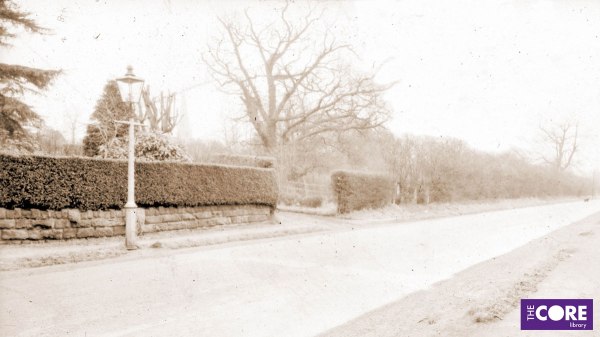
In the 19th and early 20th centuries, Homer Road was a very quiet area, unlike today with its supermarkets, offices and civic buildings. As recently as 1958, despite its proximity to the town centre, the road was described as having a “rural outlook” (Birmingham Daily Post, 11th September 1958). The above picture, from the early 20th century, is believed to show the current site of The Core, looking towards Church Hill Road.
Continue reading “Homer Road, Solihull”7th February 1935
Former Private Abraham Critchlow was the last known Solihull First World War veteran whose death was attributable to his war service. He died on 7th February 1935, aged 51, and was buried at Robin Hood Cemetery following a funeral service at St Alphege Church.
Continue reading “7th February 1935”Isolation hospitals
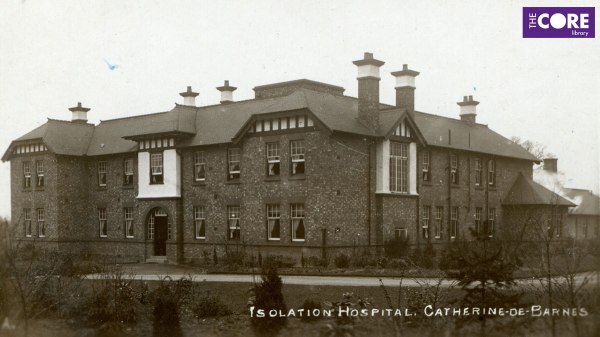
Isolation hospitals were set up to treat people who had infectious diseases such as smallpox, diphtheria, tuberculosis and scarlet fever in an attempt to prevent the diseases from spreading quickly through the population. Solihull is known to have had a “fever shed” and three purpose-built isolation hospitals 1870s-1980s.
Continue reading “Isolation hospitals”Solihull’s Charter Day 1954
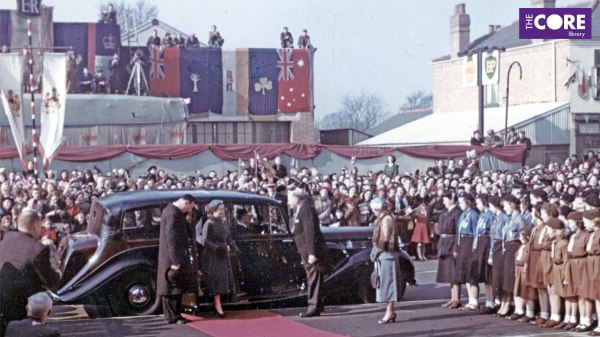
On Solihull’s Charter Day, 11th March 1954, H.R.H. Princess Margaret visited Solihull on behalf of the Queen to present the Urban District with a Royal Charter of Incorporation as a Borough. Although the elevation to a borough was important in Solihull’s journey to become a County Borough, it did not bestow any new powers on Solihull, apart from the new Borough having a Mayor instead of the previous Chairman of Solihull Urban District.
Continue reading “Solihull’s Charter Day 1954”Arthur Stokes (1871-1953), signalman
Arthur Stokes was born in Birmingham on 19th February 1871 and was the second of the six children of parents, Peter, a carter, and Ann (née Humphreys) who had married in Bordesley in 1867. He started work on the railways at the age of 13, and spent 44 years as a signalman at Solihull Station. In 1936, he published his memoir, the proceeds of which went towards the Solihull Methodist Church Building Fund.
Continue reading “Arthur Stokes (1871-1953), signalman”Ramsgate, High Street, Solihull
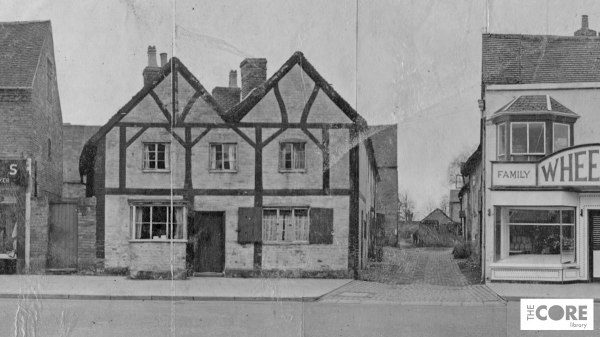
Ramsgate, just off Solihull High Street, was perhaps the closest to back-to-back housing that Solihull had. One of the cottages (no. 20. High Street, pictured above) faced the High Street, whilst 14 other cottages together with wash-houses, water-closets, coal-houses, ash-pits and a communal pump were situated around a courtyard off a party entrance from the High Street.
Continue reading “Ramsgate, High Street, Solihull”Royal Visits: Queen Elizabeth II
Her late Majesty, Queen Elizabeth II, made six official visits to the Solihull Borough during her 70-year reign. There were other visits when she passed through the Borough, e.g. arriving at or leaving from Birmingham Airport, but there were only these six official visits, as far as we are aware.
Continue reading “Royal Visits: Queen Elizabeth II”30th March 1923
Former Gunner Walter Stanley Zair died on 30th March 1923 of pulmonary tuberculosis, caused by his war service.
Stan, as he was known, was born at Lindenhurst, Trafalgar Road, Moseley on 12th February 1881 and was the youngest of the nine children of whip manufacturer, George Zair (1839-1914), and his wife, Fanny (née Blackburn) who had married in Great Barr in 1865. His siblings were:
Continue reading “30th March 1923”Oliver Bird Hall
On Saturday 24th November 1962, Solihull’s new parish hall was officially opened by Sir Martin Lindsay MP and dedicated by the Bishop of Birmingham, Dr J. L. Wilson. The new hall, named the Oliver Bird Hall, was built on land in Church Hill Road.
Continue reading “Oliver Bird Hall”Northmede
Northmede was a Victorian house that stood in grounds between Station Road and Warwick Road, Solihull. Built in the mid-19th century as a private house, the building became Solihull Nursing Home in the early 20th century before being demolished in the late 1950s/early 1960s.
Continue reading “Northmede”