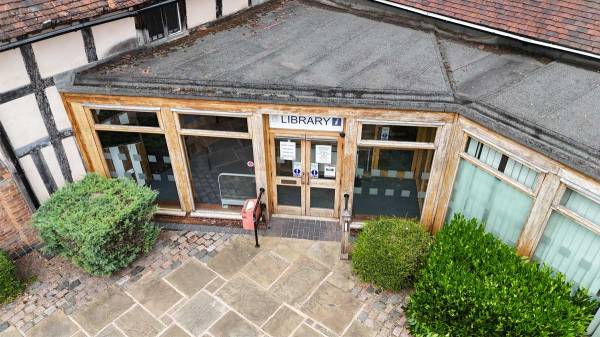
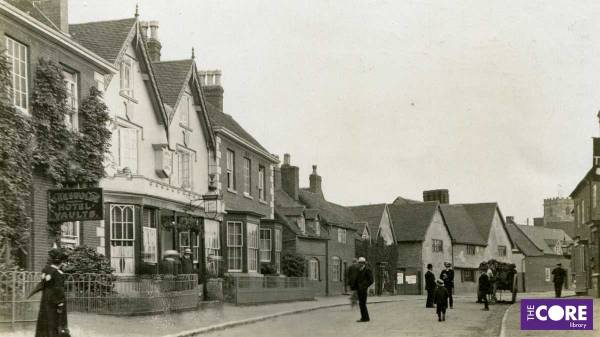
To mark the 50th anniversary on 20th November 2025 of Knowle Library moving into Chester House, we take a look at the history of library services in the village. It wasn’t until 1970 that Knowle had its first public library building, but there was a mobile library service from 1948.
Continue reading “Knowle Library”A Poem for Knowle
For Heritage Open Days, 2023, local historians from Knowle Society, accompanied by poet Jonny Fluffypunk and supported by library staff, led a guided walk around the historic centre of the village. Jonny then created a poem based on the history discussed during the walk and afterwards at Knowle Library.
Continue reading “A Poem for Knowle”Midnight burial at Knowle 1899
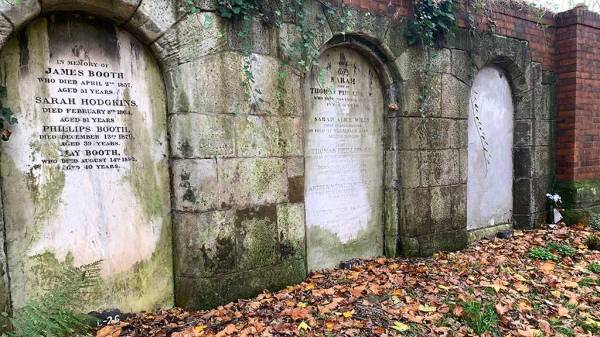
According to various contemporary newspaper reports, at just after midnight on Thursday 19th January 1899, four hearses entered the Warwickshire village of Knowle. Each hearse carried the coffin of a deceased person whose remains had been disinterred (with Home Office permission) from Key Hill Cemetery, Birmingham.
The four people were all related and their remains were interred in a family vault in the churchyard of Knowle Parish Church. By the dim light of a lantern, the Vicar read a portion of the burial service, and the ceremony was witnessed by a police sergeant, overseer and the relatives of the deceased.
Continue reading “Midnight burial at Knowle 1899”Jake Jacob: “nothing was easy”
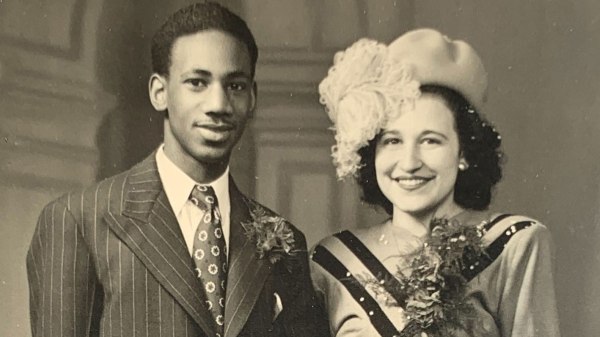
Born in Trinidad in 1925, Prince Albert Jacob left his homeland at the age of 17½ to serve with the Royal Air Force in the Second World War. Returning to Britain after being demobbed, he worked hard and overcame enormous difficulties, including discrimination and racial abuse, to have a successful career with the Post Office and represent Great Britain in athletics. After living in various Midlands towns since 1948, he and his wife settled in Knowle where they have lived for almost 50 years.
Continue reading “Jake Jacob: “nothing was easy””12th February 1921
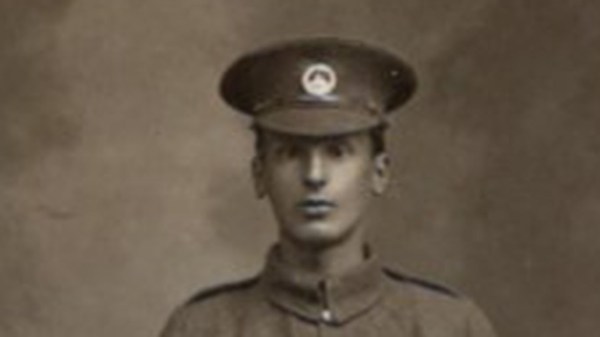
Henry James Fell, a former Private with the 1/8 Battalion, Royal Warwickshire Regiment, died on 12th February 1921 as a result of pneumonia following malaria. Known as Harry, he was born in Knowle in 1892 and was the only child of parents Stephen Henry Fell, a jobbing gardener, and Fanny Rebecca (née Fisher), a charwoman.
Continue reading “12th February 1921”V. J. Day in Solihull, 1945
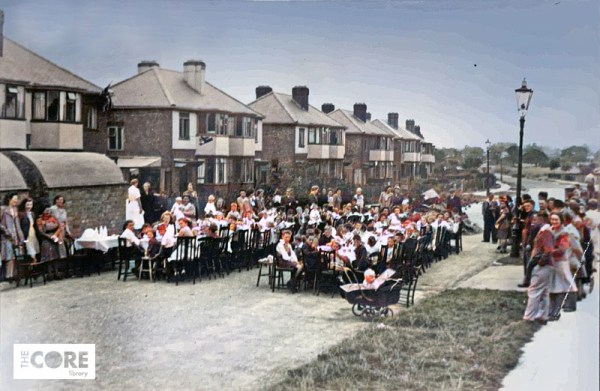
V. J. Day, 15th August 1945, marked the day when the Second World War effectively came to an end as Japan surrendered and all hostilities ceased.
The Warwick County News, 18th August 1945, summarised local events with the headline “Neighbourly co-operation was the keynote of Solihull’s VJ-Day celebrations” and the observation that the day was marked by a “mood of quiet thanksgiving or in the exuberant relief of pent-up feelings according to age or nature.”
29th December 1919
Francis George Harris, formerly a Gunner with the Royal Garrison Artillery, died at Birmingham General Hospital on 29th December 1919. He had been discharged from the Army in March 1919 so does not appear as a war casualty on official records, although he is commemorated locally in the Soldiers’ Chapel, Knowle. He is also listed on the Roll of Honour for Packwood amongst those who served.
7th March 1919
Private Charles Haines, 4th Battalion, South Wales Borderers, died of pneumonia on 7th March 1919 at the University War Hospital, Southampton. His death certificate gives his age as 22, but his grave in Knowle churchyard gives his age as 21.
22nd February 1919
Henry Cecil Johnson, aged 31, died at home in Knowle on 22nd February 1919. He is buried in Knowle churchyard and his gravestone notes that he “died from injuries received in the Great War.” He served as a Private with the 1st/6th Royal Warwickshire Regiment T.F. from September 1914 until transfer to the Labour Corps in December 1917 and then to the Railway Transportation Service, Royal Engineers in June 1918.
13th November 1918
Corporal William Stokes, “A” Signal Depot, Royal Engineers, died of pneumonia on 13th November 1918 at Kempston Military Hospital, near Bedford. He was 41 years old and, prior to the war, was a bricklayer’s labourer.