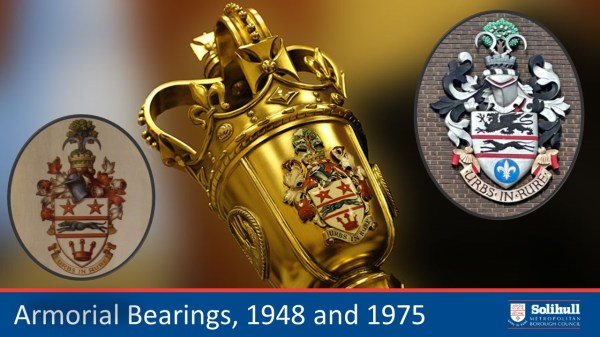
The present Armorial Bearings of the Metropolitan Borough of Solihull were granted on 10th December 1975 from a design created by Miss Brenda C. Hands (1931-2016), who worked in the Council’s Technical Services Department. The new Arms replaced the previous Armorial Bearings granted to the then Solihull Urban District in 1948, which were also used by Solihull Municipal Borough and Solihull County Borough.
Continue reading “Solihull’s Coats of Arms”Comprehensive education in Solihull
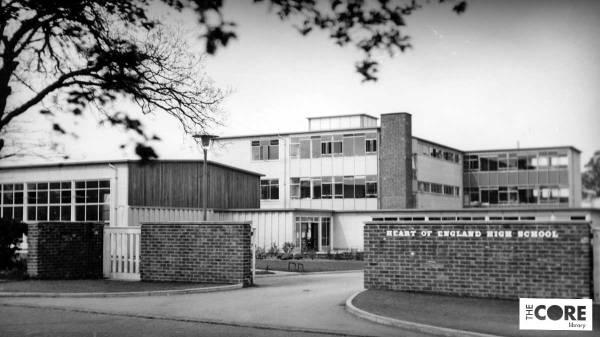
Comprehensive education was introduced in Solihull in September 1974, just over 10 years after Solihull became a County Borough on 1st April 1964 when it took over responsibility for education and schools from Warwickshire County Council.
Continue reading “Comprehensive education in Solihull”Metropolitan Borough of Solihull
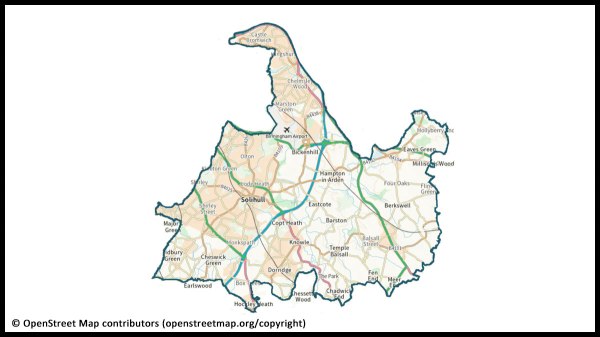
The Metropolitan Borough of Solihull came into existence on 1st April 1974. The new Metropolitan Borough comprised the former County Borough of Solihull, 10 parishes from the former Meriden Rural District and the parish of Hockley Heath from Stratford-upon-Avon Rural District.
Continue reading “Metropolitan Borough of Solihull”Mayer Society
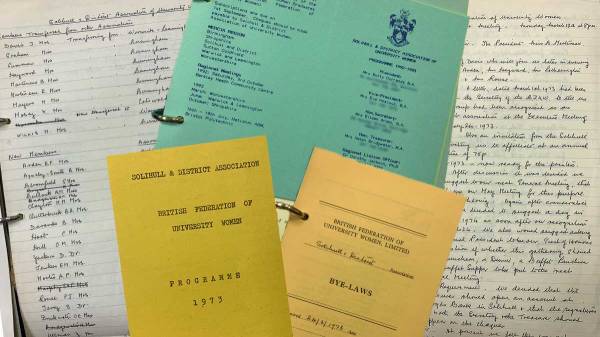
The Mayer Society evolved from the Solihull branch of the British Federation of University Women, which was established in 1973. In 1993, the Solihull association decided to separate from the national group and take the name of the branch’s second president – Marjorie Mayers (1898-1982) – whose widower, James (“Jack”) Bowen Mayers (1901-1990), bequeathed £250 to the group. For the sake of simplicity, the ‘s’ was left off the group’s name. The Mayer Society closed in October 2021.
Continue reading “Mayer Society”The Last Farewell
Ronald A. Webster (1944-1994), a silversmith and amateur songwriter living in Solihull in the early 1970s, wrote the lyrics for what became Roger Whittaker’s biggest-selling single.
Continue reading “The Last Farewell”Cheswick Green: the village of the 70s
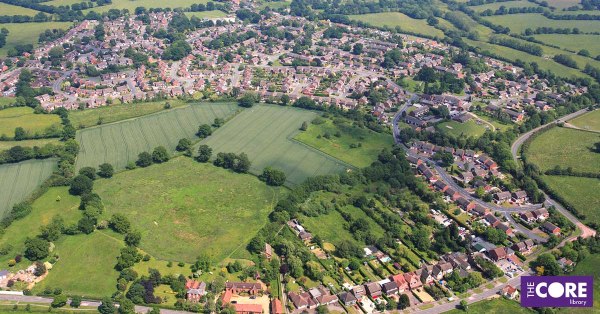
On 13th July 1969, the first new homes in “the Village of the Seventies” at Cheswick Green were offered for sale by the Greaves Organisation, who built some 550 homes in the village as part of its initial development. The developer had purchased land from around 100 individual owners to enable the redevelopment of a site where around 60 per cent of the existing dwellings, mostly erected since the 1920s, had been deemed unfit for habitation.
Continue reading “Cheswick Green: the village of the 70s”Chelmsley Wood Shopping Centre 1971
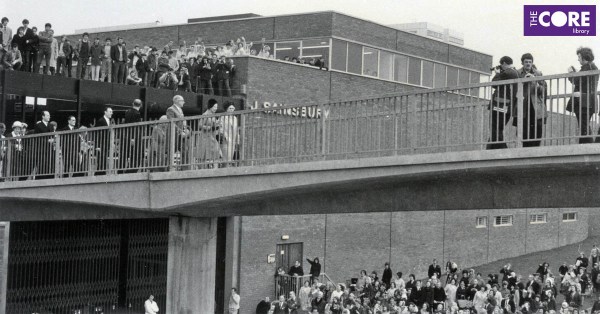
On Wednesday 7th April 1971 Her Majesty The Queen and H.R.H. The Duke of Edinburgh paid a Royal Visit to the new shopping centre at Chelmsley Wood, which was described as having space for around 70 shops, six stores and a number of boutiques.
Most of Chelmsley’s 40,000 population turned out for the Royal visit. Large crowds gathered along Bosworth Drive and the precinct itself to watch as the Queen and the Duke of Edinburgh toured the centre and unveiled a commemorative plaque on the clock tower in Greenwood Square. Building firm Bryants, co-developers of the shopping centre with Samuel Properties, had provided local schools with six gross (864) of flags.
Continue reading “Chelmsley Wood Shopping Centre 1971”Cresta Club, Hobs Moat Road
The Cresta Theatre Club, adjoining the Cresta Ice Rink in Hobs Moat Road, Solihull opened for business at 8pm on Wednesday 16th November 1966, having been granted a six-month licence by Solihull Council on 20th October 1966. The licence allowed for opening from 7pm-11.45pm on weekdays, and 7pm-10.30pm on Sundays. The General Manager was Enrique Campos.
The company – Cresta Theatre Club Ltd – had tried to obtain a licence in April 1966 but the application was rejected following concerns from residents over noise and traffic. There were also claims that existing noise from the ice rink had rendered several nearby homes unsaleable.
Hemlingford
Solihull was the only former Rural District Council to become a Metropolitan Borough Council in its own right under the 1972 Local Government Act, which came into effect on 1st April 1974. A little more than 40 years before, workers were taking up the cobbles in Solihull’s High Street – a graphic illustration of the incredibly rapid growth of the Borough. The population had more than doubled in 7 years, from just over 25,000 in 1932 to 52,610 by 1939.