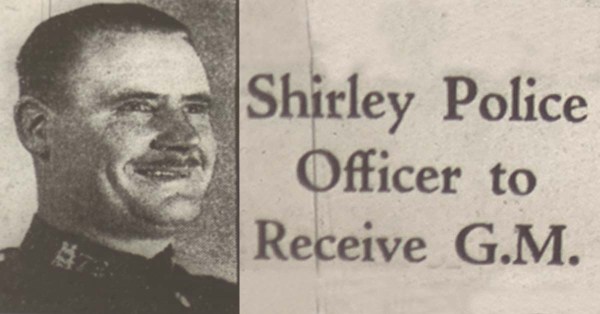
On Tuesday 17th June 1941, Sergeant Harry Brooks, of the Warwickshire Constabulary, based at Shirley Police Station, was presented with the George Medal by His Majesty King George VI at Buckingham Palace. The George Medal was instituted in January 1941 to reward “acts of great bravery” and arose out of the strong desire to reward acts of civilian courage during the Blitz.
Continue reading “Police Sergeant Harry Brooks GM”Catherine-de-Barnes War Memorial
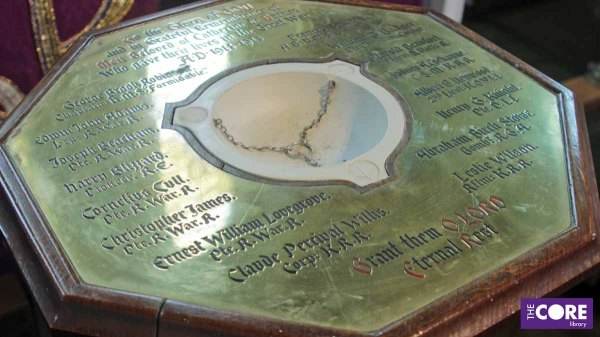
At 5pm on Trinity Sunday, 22nd May 1921, the Bishop of Birmingham dedicated the war memorial at Catherine-de-Barnes mission church, five years after a war memorial fund was begun.
Continue reading “Catherine-de-Barnes War Memorial”German war deaths in Solihull
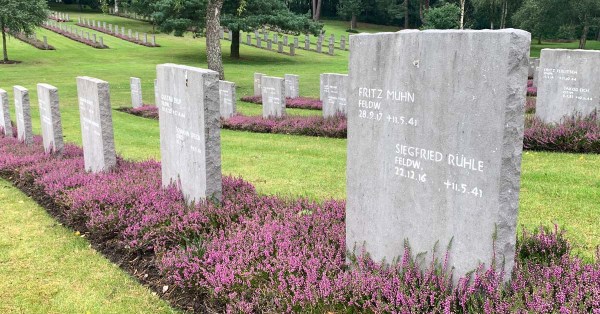
On the night of 10th/11th May 1941, a German Heinkel He111 bomber was brought down by a Lewis gunner at a Searchlight Battery near Fulford Hall Farm in Rumbush Lane.
Continue reading “German war deaths in Solihull”Paul Oppenheimer MBE (1928-2007)
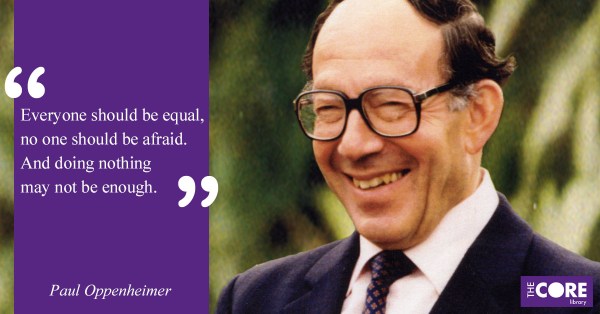
Paul Oppenheimer was born in Berlin on 20th September 1928 and died on 8th March 2007 after living in the Solihull borough for more than 40 years.
His parents were Jewish but not very religious and, in his autobiography, From Belsen to Buckingham Palace, Paul notes that his middle-class family was quite assimilated, as were most German Jews at the time, considering themselves proud Germans.
Continue reading “Paul Oppenheimer MBE (1928-2007)”Evacuees’ School, Herbert Road, Solihull
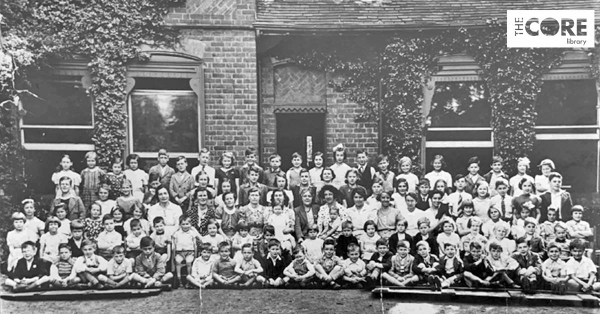
Shortly after the devastating blitz of Coventry on 14th/15th November 1940, Miss Caroline (“Carrie”) Amelia Morgan (1889-1963), Headmistress of Moseley Avenue School, Coventry, together with a small group of teachers, brought a party of 160 children aged 2-14 to Solihull. The children were billeted in foster homes and, a few weeks after their arrival, schooling began to be provided.
V. J. Day in Solihull, 1945
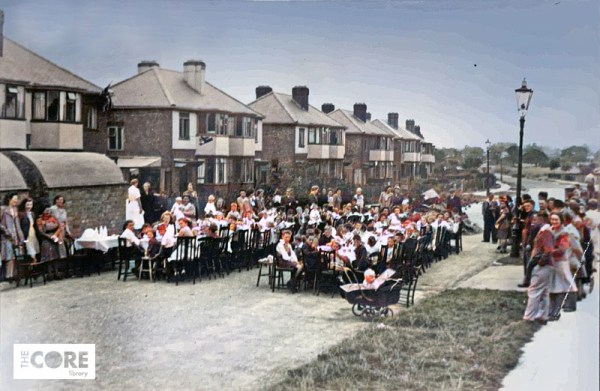
V. J. Day, 15th August 1945, marked the day when the Second World War effectively came to an end as Japan surrendered and all hostilities ceased.
The Warwick County News, 18th August 1945, summarised local events with the headline “Neighbourly co-operation was the keynote of Solihull’s VJ-Day celebrations” and the observation that the day was marked by a “mood of quiet thanksgiving or in the exuberant relief of pent-up feelings according to age or nature.”
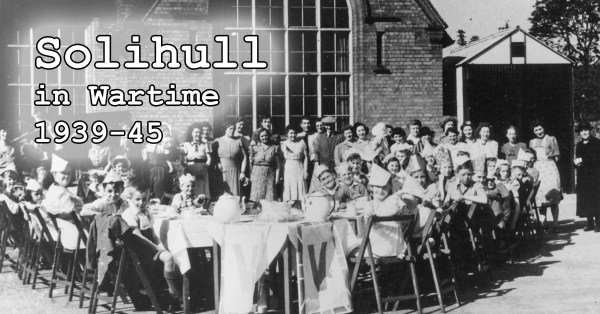
Solihull in Wartime 1939-45 eBook
To mark the 50th anniversary of V. E. Day in 1995, Solihull Libraries collected people’s memories of wartime Solihull and published them in a booklet which was available from the library.
In 2004, to mark the the 65th anniversary of the outbreak of the Second World War, we converted the booklet into an electronic format.
Burleigh in Wartime, and beyond
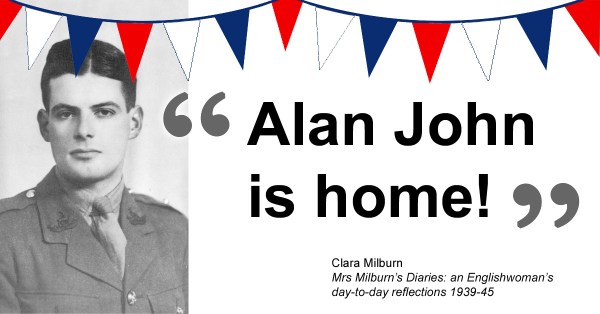
“Burleigh in Wartime” was the title written in February 1940 by Clara Emily Milburn (née Bagnall) on the first page of a soft-backed exercise book. After five months of war she had decided to write a day-to-day account of how she and her small part of the English countryside faced the trials and tribulations of a country at war. Extracts from what turned out to be 15 such exercise books were published in 1979 as Mrs Milburn’s Diaries: an Englishwoman’s day-to-day reflections 1939-45.
Continue reading “Burleigh in Wartime, and beyond”Solihull’s wartime casualties
During the Second World War Solihull Urban District experienced 358 air-raid warnings and 49 raids, with 41 people killed. 78 people were admitted to hospital with their injuries and 198 people with minor injuries were dealt with at First Aid posts.
Continue reading “Solihull’s wartime casualties”Solihull in wartime – colour film
Harold Thomas Lavender (1900-1953) was a Walsall-born businessman, who was Managing Director of Proctor & Lavender brick and builder’s merchants. He was in partnership with Arthur Herbert Proctor until 1st May 1928, after which he continued the business alone, still trading as Proctor and Lavender. He lived in Dorridge and was elected to Warwickshire County Council in 1943 as the representative of Solihull First district.
Continue reading “Solihull in wartime – colour film”