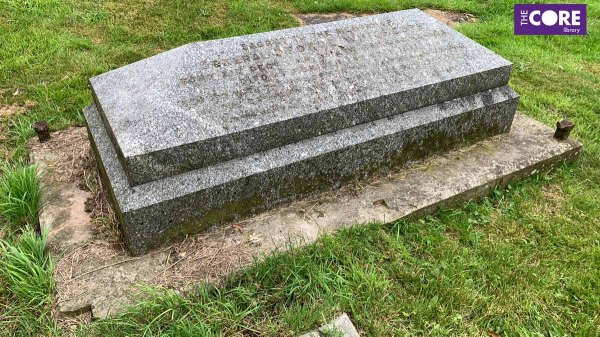
General George Whichcote, one of the last two surviving English officers who had seen active service at the Battle of Waterloo on 18th June 1815, died at his home, Meriden House, Church Lane, Meriden, on 26th August 1891, aged 96.
Continue reading “General George Whichcote (1794-1891)”High Street supermarkets, Solihull
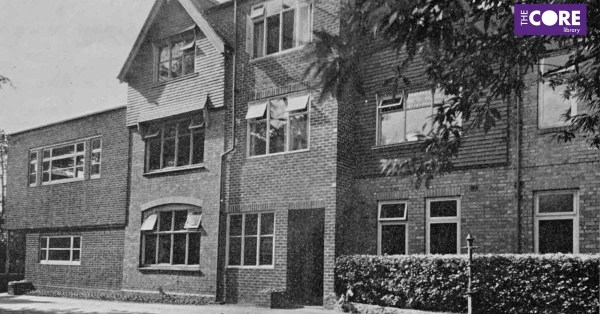
On 25th July 1961, a new Burton’s supermarket opened in High Street, Solihull in the building that is now occupied by the Paramo Lounge and the Works.
Described in the Solihull News, 26th August 1961, as being “the most up-to-date building in Solihull’s old world High Street,” the “colourful” supermarket met with a mixed reaction from shoppers, with letter-writers to the newspaper professing themselves “shocked.” One housewife described the colours of the shop front as “garish” and said that the character of the High Street had now been ruined.
Continue reading “High Street supermarkets, Solihull”Cheswick Green: the village of the 70s
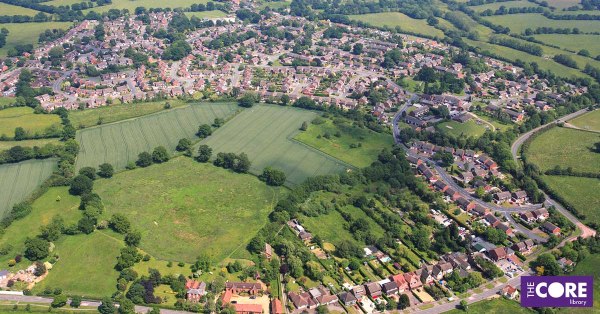
On 13th July 1969, the first new homes in “the Village of the Seventies” at Cheswick Green were offered for sale by the Greaves Organisation, who built some 550 homes in the village as part of its initial development. The developer had purchased land from around 100 individual owners to enable the redevelopment of a site where around 60 per cent of the existing dwellings, mostly erected since the 1920s, had been deemed unfit for habitation.
Continue reading “Cheswick Green: the village of the 70s”Cedarhurst
It looks as if Cedarhurst, Park Road, Solihull was built in the mid-1890s and was demolished around 1973. A building control plan at the Core Library Solihull (ref.: SOL/PS/1/1/647), dated March 1894, depicts one detached villa in Park Road, opposite Malvern House, which appears to be Cedarhurst, although not named as such.
The plan shows that the property was designed by architect John Henry Hawkes and built by Charles Bragg. The owner was Edward Bottomley, a grocer from Deritend, Birmingham.
Solihull War Memorial
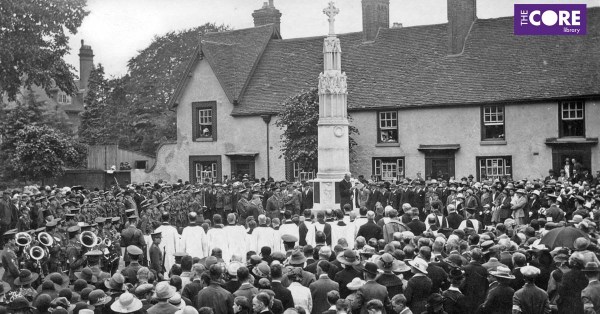
The unveiling and dedication of Solihull War Memorial in The Square, Solihull, took place on the afternoon of Sunday 19th June 1921 in a ceremony arranged by Brigadier-General Walter Robert Ludlow (1857-1941) whose youngest son had been killed at the Battle of Beaumont Hamel in 1916. This was not the first memorial to the fallen that Solihull parish had erected – a Calvary shrine had been unveiled at Easter 1917.
Continue reading “Solihull War Memorial”Police Sergeant Harry Brooks GM
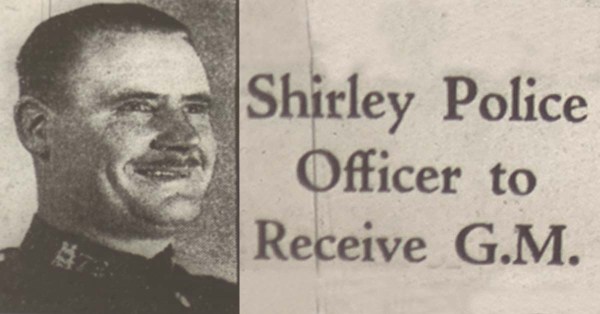
On Tuesday 17th June 1941, Sergeant Harry Brooks, of the Warwickshire Constabulary, based at Shirley Police Station, was presented with the George Medal by His Majesty King George VI at Buckingham Palace. The George Medal was instituted in January 1941 to reward “acts of great bravery” and arose out of the strong desire to reward acts of civilian courage during the Blitz.
Continue reading “Police Sergeant Harry Brooks GM”Solihull Poor Law Union
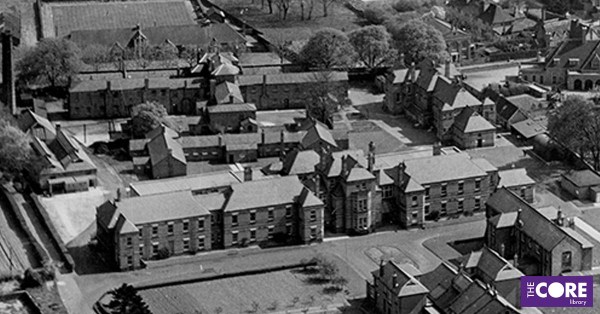
The Poor Law Amendment Act 1834 allowed parishes to join together to form a Poor Law Union, electing a local Board of Guardians to oversee the administration of poor relief and the Union Workhouse.
Continue reading “Solihull Poor Law Union”“Wayfarer”
Walter MacGregor (“Robbie”) Robinson (1877-1956) was a cyclist and writer from Liverpool. He worked for many years as an official for the Liverpool and London and Globe Insurance Company and lived at Lyttleton Road, Edgbaston, Birmingham from at least 1925 until his death in 1956.
Continue reading ““Wayfarer””Catherine-de-Barnes War Memorial
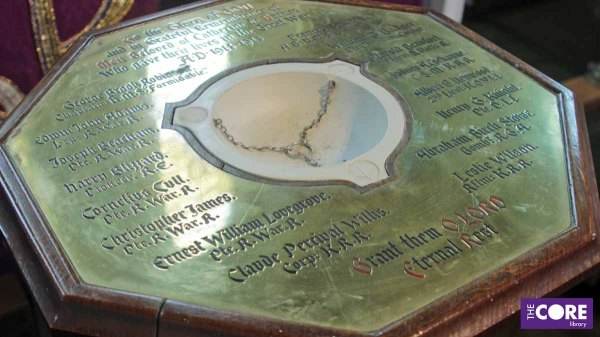
At 5pm on Trinity Sunday, 22nd May 1921, the Bishop of Birmingham dedicated the war memorial at Catherine-de-Barnes mission church, five years after a war memorial fund was begun.
Continue reading “Catherine-de-Barnes War Memorial”National Cyclists’ Memorial, Meriden
The 30-ft tall granite ashlar obelisk was unveiled by the then Lord Chancellor, Lord Birkenhead, on Saturday 21st May 1921 in the presence of between 10,000-20,000 cyclists. In 1963, a plaque was added to commemorate cyclists who died in the Second World War. The memorial was given a Grade II listing by English Heritage in 2001.
Continue reading “National Cyclists’ Memorial, Meriden”