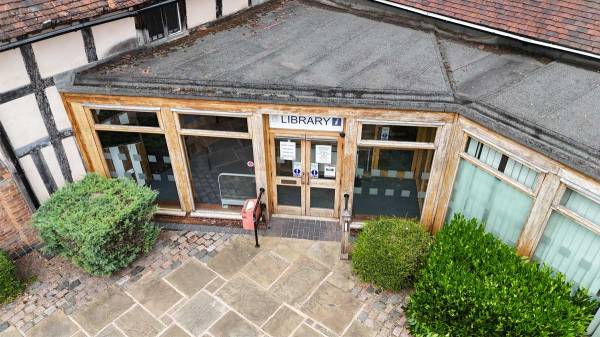
To mark the 50th anniversary on 20th November 2025 of Knowle Library moving into Chester House, we take a look at the history of library services in the village. It wasn’t until 1970 that Knowle had its first public library building, but there was a mobile library service from 1948.
Continue reading “Knowle Library”Inter-war council housing in Solihull
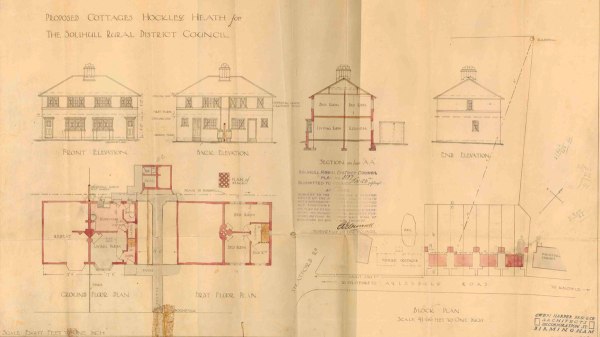
Prior to the late 19th century, housing options were limited to owning property or, as most people did, renting from a private landlord. The Housing of the Working Classes Act 1890 allowed local authorities in London to build council houses, and the first council housing was built in Bethnal Green in 1896. The Housing of the Working Classes Act 1900 extended this to the rest of the country, although it took a further 25 years for the first council houses to be built in Solihull Rural District.
Continue reading “Inter-war council housing in Solihull”Parish Councils
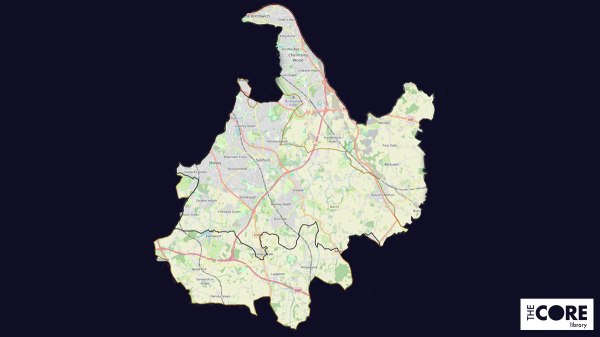
Parish councils came into existence as a result of the Local Government Act 1894, which was also known as the Parish Councils Act. Civil Parishes are the smallest areas of local government administration. The 1894 act allowed for the election of parish councils in rural areas and required the entire area of a parish to be within the same administrative county.
Continue reading “Parish Councils”A Poem for Knowle
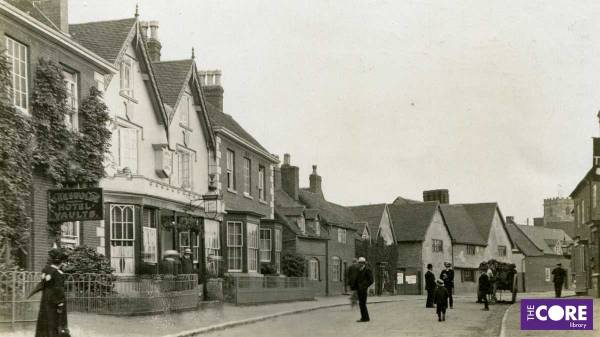
For Heritage Open Days, 2023, local historians from Knowle Society, accompanied by poet Jonny Fluffypunk and supported by library staff, led a guided walk around the historic centre of the village. Jonny then created a poem based on the history discussed during the walk and afterwards at Knowle Library.
Continue reading “A Poem for Knowle”Solihull Volunteer Infantry
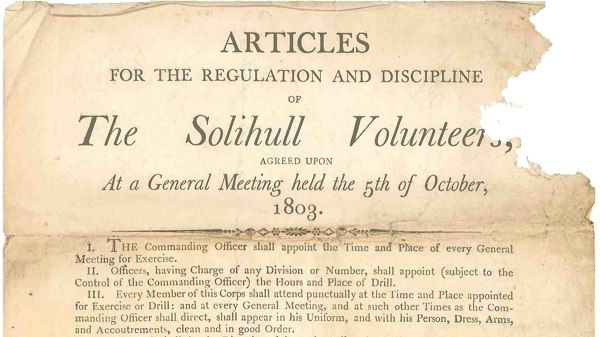
In the face of rising fears of invasion, an association for the defence of Solihull, Knowle and Elmdon was formed in 1797. The association offered to the Lord Lieutenant of Warwickshire a troop of horse at least 50-strong, with volunteers comprising local tradesmen and farmers who agreed to serve only within the bounds of Solihull, Knowle and Elmdon. Unlike the militia, which was raised by public ballot and administered by the War Office, the volunteer forces were self-regulating and would only come under the control of military authorities in the event of an invasion.
Continue reading “Solihull Volunteer Infantry”Midnight burial at Knowle 1899
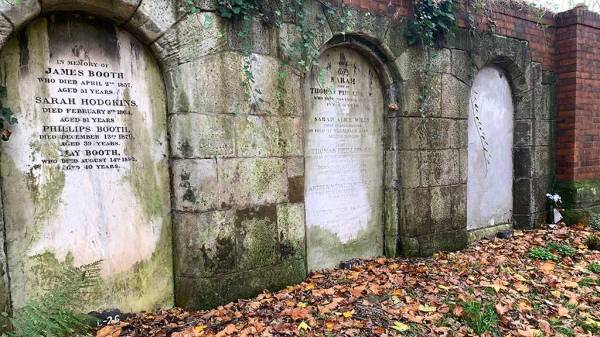
According to various contemporary newspaper reports, at just after midnight on Thursday 19th January 1899, four hearses entered the Warwickshire village of Knowle. Each hearse carried the coffin of a deceased person whose remains had been disinterred (with Home Office permission) from Key Hill Cemetery, Birmingham.
The four people were all related and their remains were interred in a family vault in the churchyard of Knowle Parish Church. By the dim light of a lantern, the Vicar read a portion of the burial service, and the ceremony was witnessed by a police sergeant, overseer and the relatives of the deceased.
Continue reading “Midnight burial at Knowle 1899”Jake Jacob: “nothing was easy”
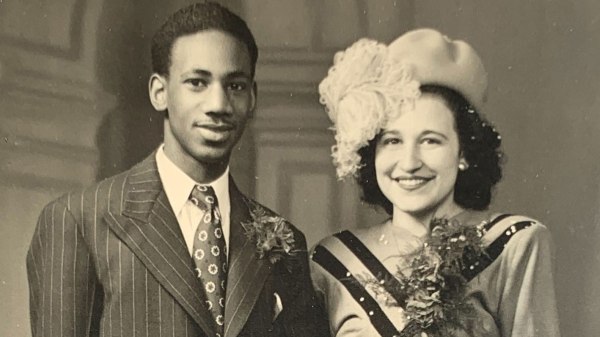
Born in Trinidad in 1925, Prince Albert Jacob left his homeland at the age of 17½ to serve with the Royal Air Force in the Second World War. Returning to Britain after being demobbed, he worked hard and overcame enormous difficulties, including discrimination and racial abuse, to have a successful career with the Post Office and represent Great Britain in athletics. After living in various Midlands towns since 1948, he and his wife settled in Knowle where they have lived for almost 50 years.
Continue reading “Jake Jacob: “nothing was easy””Solihull & The Commonwealth Games
As a number of the Birmingham 2022 events are being held within the Solihull borough, it seemed timely to have a look at people with a connection to Solihull who have competed in the Commonwealth Games since it started in 1930 as the British Empire Games.
Continue reading “Solihull & The Commonwealth Games”Solihull Coronation Festivities 1953
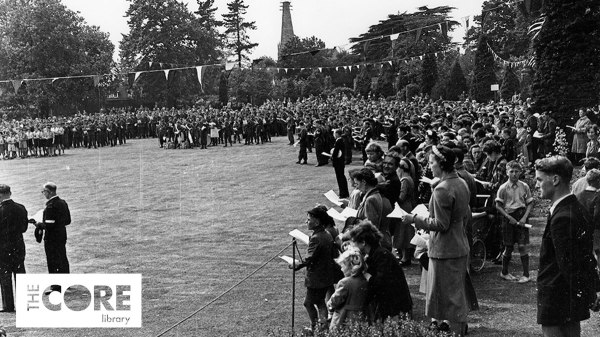
Solihull’s Coronation celebrations were spread over several weeks in 1953, rather than all taking place on Coronation Day itself – Tuesday 2nd June 1953.
Continue reading “Solihull Coronation Festivities 1953”12th February 1921
Henry James Fell, a former Private with the 1/8 Battalion, Royal Warwickshire Regiment, died on 12th February 1921 as a result of pneumonia following malaria. Known as Harry, he was born in Knowle in 1892 and was the only child of parents Stephen Henry Fell, a jobbing gardener, and Fanny Rebecca (née Fisher), a charwoman.
Continue reading “12th February 1921”