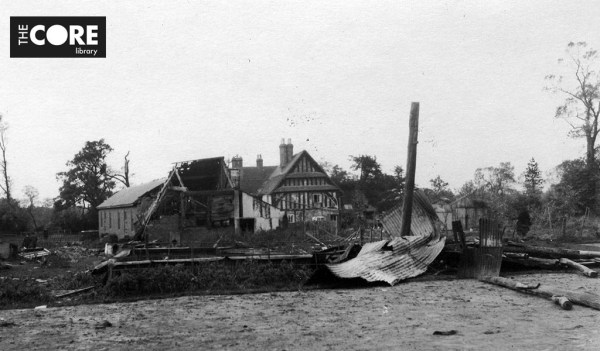
On the evening of 24th October 1923, Solihull was battered by a whirlwind (now believed to have been a tornado) that travelled a path from Sharman’s Cross to Elmdon Heath, and killed a man sheltering in a barn. Lasting only three or four minutes, reports of the whirlwind, also described as a cyclone in some articles, appeared in newspapers across the country.
Continue reading “The “Solihull Whirlwind” 1923″Solihull’s war shrine
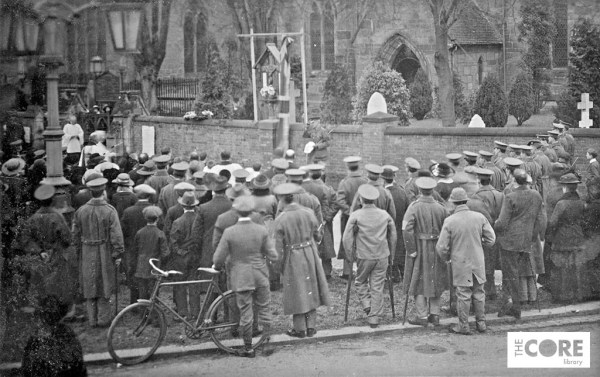
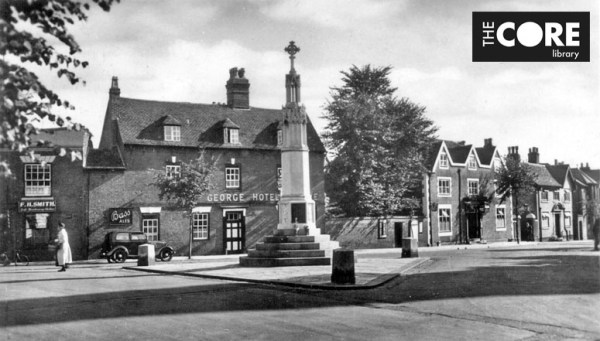
Easter Sunday, 9th April 1917, saw the unveiling in Solihull of a War Shrine to the Fallen of the First World War, pictured above (image courtesy of Gordon Bragg).
The Calvary shrine was the gift of a parishioner and was designed by local artist Elphege Pippet (1868-1942). It was built by Charles Timms of Messrs. Thompson, builders of Knowle, causing the Rector of Solihull to note: “everything connected with it has been done in our village, which is as it should be.”
James Fern Webster – the “wizard of Warwickshire”
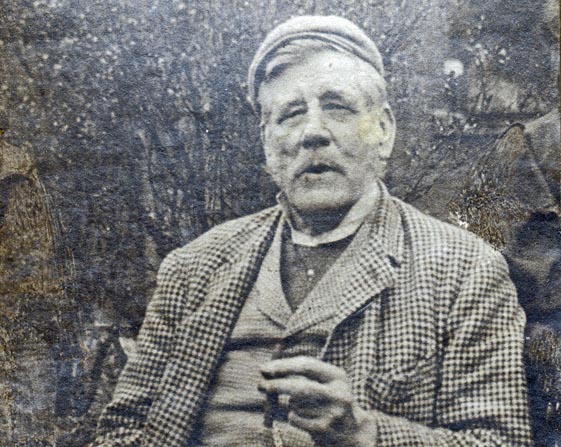
James Fern Webster was an engineer and prolific inventor who lived and worked in the High Street, Solihull Lodge in the 1870s/80s.
He developed a process for making the extraction of aluminium sufficiently cost effective for the metal to be used in the manufacture of everyday objects, patenting a process that enabled him to sell aluminium for £4 per pound instead of the £60 per pound that it had been previously. Prior to this, aluminium was considered a precious metal, and bars of aluminium were exhibited alongside the French Crown Jewels in the Paris Exhibition of 1855.
Continue reading “James Fern Webster – the “wizard of Warwickshire””British Home Children
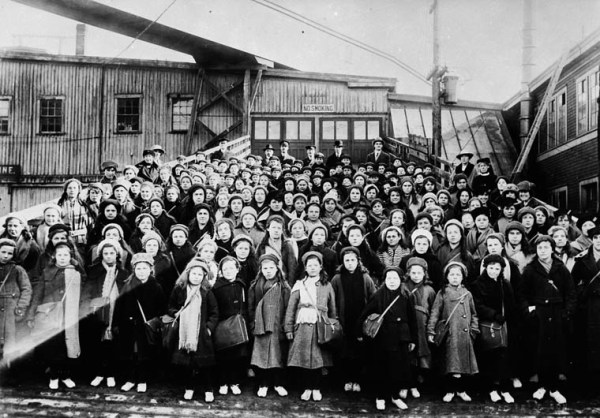
The 28th September is British Home Child Day in Canada. This is a day to remember those children sent to Canada from the children’s homes and charities in the United Kingdom between 1869 and 1948. Over 100,000 were sent to be indentured farm workers or domestics and we know of 17 British Home Children originally from the Solihull district (births in the Solihull registration district also included places such as Yardley and Acocks Green at the time).
Welcome Home Gala Day 1919
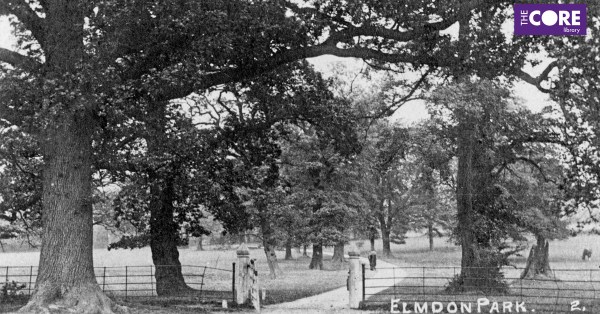
On 21st June 1919 a Welcome Home Gala Day was held at Elmdon Park by cycling clubs from across Birmingham and Coventry. Organised by the Cyclists’ Touring Club, the National Cyclists’ Union and the Midland Cyclists’ Association, the event was to welcome home those with a cycling connection who had served in the war.
“Monty” visits Solihull School
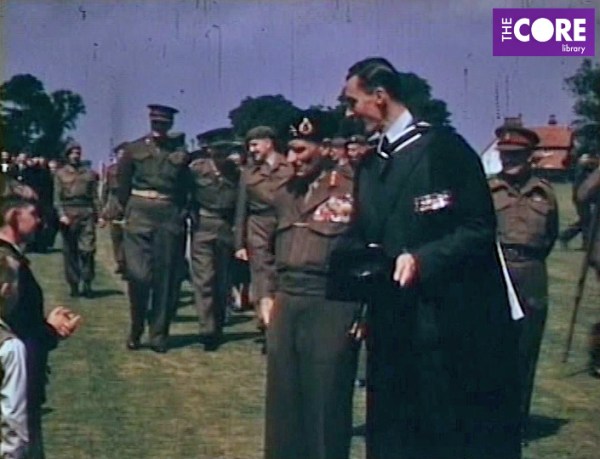
On 10th June 1949, Field Marshal Bernard Law Montgomery (1887-1976), 1st Viscount Montgomery of Alamein, visited Solihull School, inspecting 250 cadets from the school’s Combined Cadet Force (CCF) and having lunch with the Headmaster and 15 senior cadets. “Monty’s” attendance at the school’s annual parade fulfilled a promise made to the school’s Headmaster, Mr Harry Butler Hitchens (1910-1963), ten months’ previously.
Self-build housing in Solihull
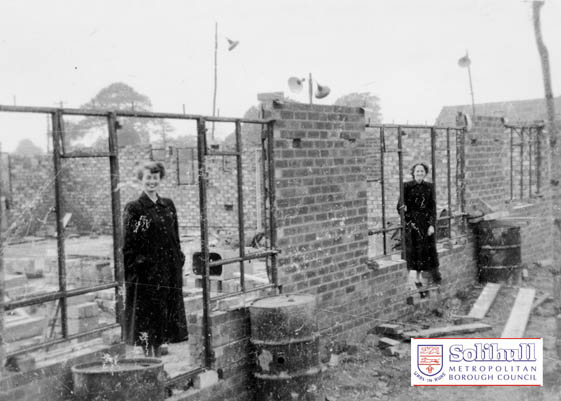
They Made It Happen! exhibition in the Heritage Gallery on the first floor of The Core Library, Solihull from July-September 2018 celebrated the self-build housing associations which were set up by people so desperate for a home of their own to rent that they built their own, and then rented it from the housing association. At the time, they had no expectation of being able to buy the houses although, when regulations were relaxed a few years later, most were subsequently able to buy.
Continue reading “Self-build housing in Solihull”2nd July 1938 – opening of Brueton Gardens
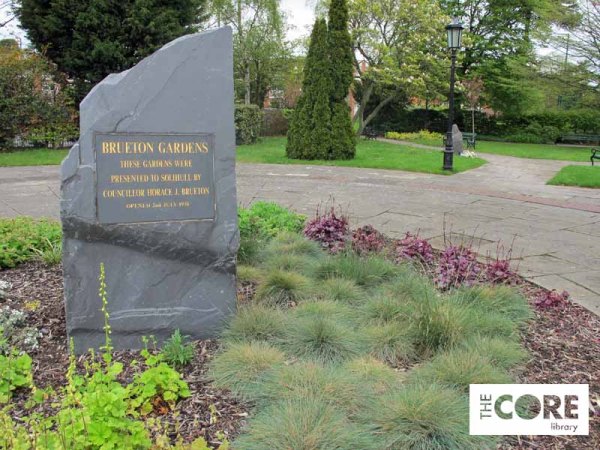
The official opening of Brueton Gardens on the corner of Warwick Road and Lode Lane, Solihull took place at 11am on 2nd July 1938.
The land, opposite Poplar Road, had previously been occupied by a house called The Poplars, which had been home to Doris Hamilton-Smith, an artist and pupil of Edith Holden (the “Edwardian Lady” whose nature diary was posthumously published in 1977).
Continue reading “2nd July 1938 – opening of Brueton Gardens”
28 June 1968 – Solihull’s first Conservation Areas
The first two Conservation Areas in Solihull – the centres of Solihull and Knowle – were declared as such on 28th June 1968, with a declaration appearing in the London Gazette, 2nd July 1968.
Continue reading “28 June 1968 – Solihull’s first Conservation Areas”
1st December 1917
“Old Contemptible,” Sergeant David Jesse Watts MM, 1st Battalion Worcestershire Regiment, died of wounds at the Royal Victoria Hospital, Netley, near Southampton on 1st December 1917, aged 29.
Continue reading “1st December 1917”