One of Solihull’s most notable historians, John Burman, was born in Eccles, Greater Manchester on 19th March 1889 and was the eldest of the four children of parents Edwin Guest Burman (1855-1920) and Gertrude Mary Wood (1866-1950). Edwin had been born in West Bromwich but moved to Lancashire c.1881.
Continue reading “John Burman (1889-1955)”Women’s History Month
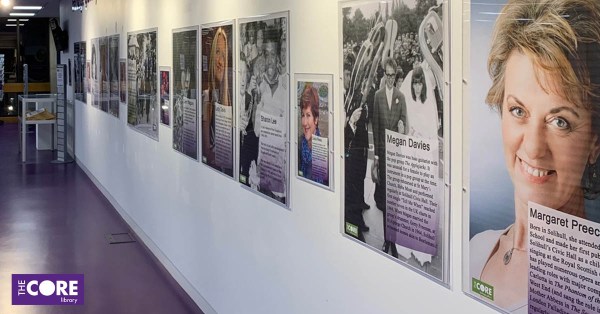
In 2019, the Heritage Gallery at The Core, Solihull featured an exhibition of notable female Silhillians for Women’s History Month (pictured above).
Continue reading “Women’s History Month”Kingshurst Hall Estate
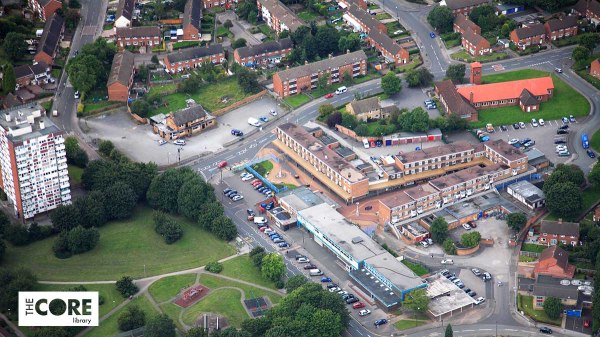
The housing development at Kingshurst Hall Estate was the first time that Birmingham Corporation had ever built dwellings outside the city boundaries. It was also the first time that the council had a housing scheme that included owner-occupied housing as well as council housing.
It was an “overspill” housing estate, one of many created in the 1950s on the outskirts of large towns and cities to help relieve overcrowding in urban areas. The intention was to move people from decaying inner cities to better conditions in more rural areas.
Solihull Post Office Robbery, 1884
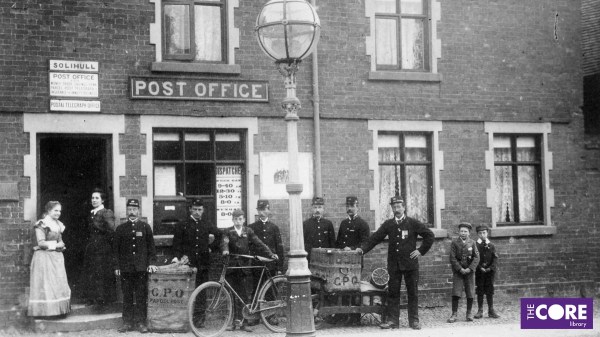
On Tuesday 29th January 1884, a man drove a horse and trap up to the Post Office on Solihull High Street and asked the postmistress to cash some postal orders. Whilst she was talking to him, another man in the shop seized £49 in gold from the counter, then jumped into the trap and both men rode off in the direction of Birmingham. A policeman followed them but did not managed to overtake them.
Paul Oppenheimer MBE (1928-2007)
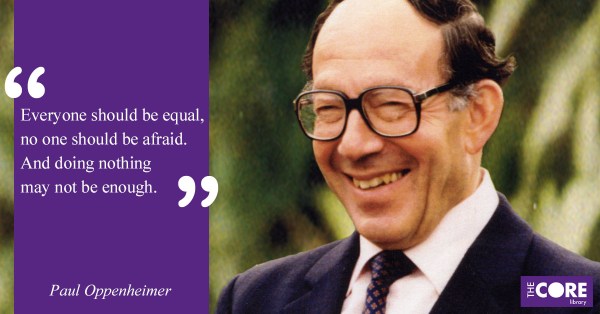
Paul Oppenheimer was born in Berlin on 20th September 1928 and died on 8th March 2007 after living in the Solihull borough for more than 40 years.
His parents were Jewish but not very religious and, in his autobiography, From Belsen to Buckingham Palace, Paul notes that his middle-class family was quite assimilated, as were most German Jews at the time, considering themselves proud Germans.
Continue reading “Paul Oppenheimer MBE (1928-2007)”A romance by the sea

On 24th January 1953, Miss Constance May Podesta from Solihull married Mr Charles Turner, a Methodist preacher and retired pattern-maker from Coseley. The marriage took place at Solihull Congregational Church, where Miss Podesta, known by her middle name, May, had been organist since about 1937.
Murder at Solihull 1880
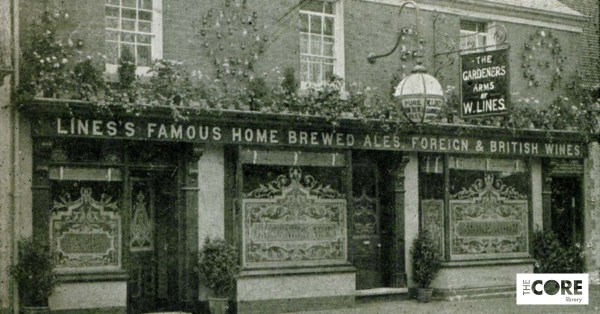
On the afternoon of Sunday 5th December 1880, John Gateley, a 25-year-old unmarried cowman employed at a Stechford farm, was fatally shot whilst in the yard at the back of the Gardeners’ Arms, High Street, Solihull.
Continue reading “Murder at Solihull 1880”Solihull Magistrates’ Courts
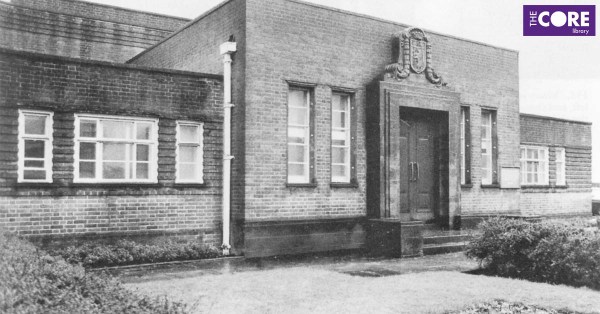
The Birmingham Gazette 29th March 1935 contains a report of the opening of Solihull Magistrates’ Court, Warwick Road, Solihull on the previous day. The first case called was that of a householder who was summoned for having her chimney on fire. She was told that “as it was the first case heard in the court, it would be dismissed.”
Continue reading “Solihull Magistrates’ Courts”Special education in Solihull
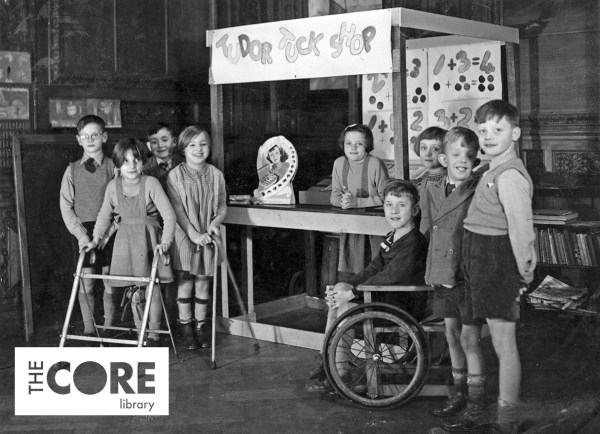
Until Solihull became a County Borough Council on 1st April 1964, the provision of state education in the area was the responsibility of Warwickshire County Council. We’re aware of five special schools in the Solihull urban/metropolitan district, catering for children with physical or learning disabilities:
- Tudor Grange (later Swanswell)
- Reynalds Cross
- Forest Oak
- Hazel Oak
- Merstone
In addition, there was also a special school at nearby Packwood Haugh, Warwickshire.
“The Berkswell Murder”, 1845
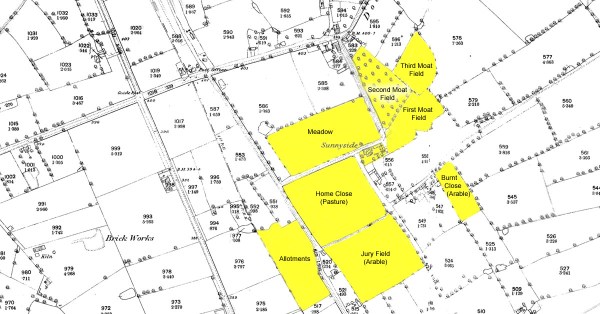
On Wednesday 19th November 1845, Thomas Tranter, a 60-year-old farmer described as living near Docker’s Gate in the parish of Berkswell, was found murdered in an outbuilding adjoining his home.
The door was locked from the outside and he was found face down in a pool of blood in the doorway, with a sack over his head and a blood-stained bill hook and axe lying next to him. Death was apparently due to a fracture of the skull, caused by a single blow from a blunt instrument, believed to be the head of the axe, which bore some of Thomas Tranter’s grey hairs. Mr Arthur Sargeant, surgeon from Meriden, declared that it would have been quite impossible for the wound to have been self-inflicted.
 Solihull Life