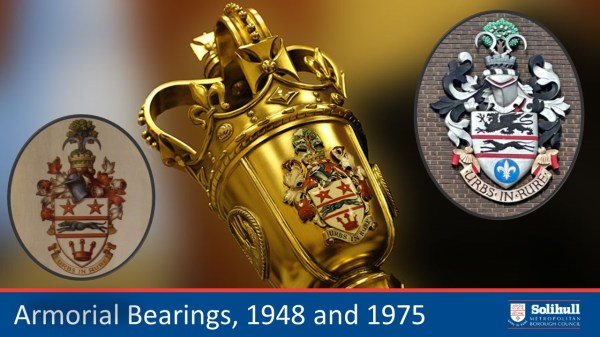
The present Armorial Bearings of the Metropolitan Borough of Solihull were granted on 10th December 1975 from a design created by Miss Brenda C. Hands (1931-2016), who worked in the Council’s Technical Services Department. The new Arms replaced the previous Armorial Bearings granted to the then Solihull Urban District in 1948, which were also used by Solihull Municipal Borough and Solihull County Borough.
Continue reading “Solihull’s Coats of Arms”Freedom of the Borough
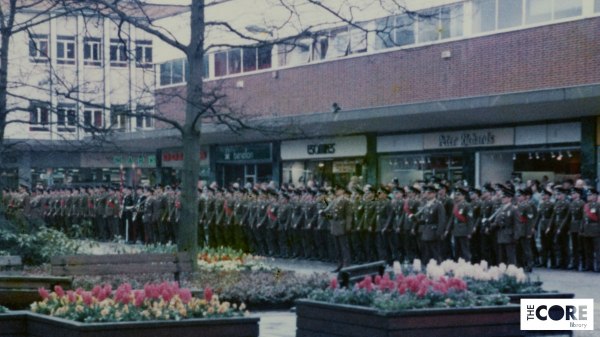
The Freedom of the Borough is the highest award that a council can bestow. The Freedom of the Borough of Solihull has been awarded only twice. The recipients of the honour were the 2nd Battalion Mercian Volunteers in 1985 and Lance Corporal Matt Croucher GC in 2008.
Continue reading “Freedom of the Borough”Metropolitan Borough of Solihull
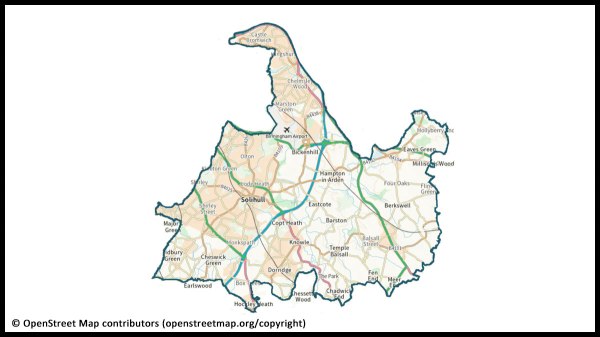
The Metropolitan Borough of Solihull came into existence on 1st April 1974. The new Metropolitan Borough comprised the former County Borough of Solihull, 10 parishes from the former Meriden Rural District and the parish of Hockley Heath from Stratford-upon-Avon Rural District.
Continue reading “Metropolitan Borough of Solihull”Elevation Day, 1st April 1964
On 1st April 1964, Solihull and Luton were both elevated to county borough status – the first county boroughs created since 1927, and the first of Queen Elizabeth II’s reign. The towns exchanged messages of goodwill and congratulations.
Continue reading “Elevation Day, 1st April 1964”Solihull’s Charter Day 1954
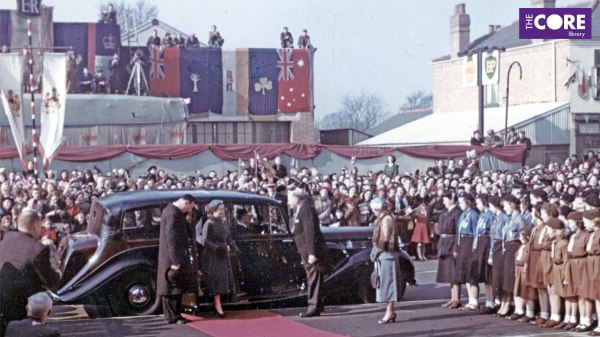
On Solihull’s Charter Day, 11th March 1954, H.R.H. Princess Margaret visited Solihull on behalf of the Queen to present the Urban District with a Royal Charter of Incorporation as a Borough. Although the elevation to a borough was important in Solihull’s journey to become a County Borough, it did not bestow any new powers on Solihull, apart from the new Borough having a Mayor instead of the previous Chairman of Solihull Urban District.
Continue reading “Solihull’s Charter Day 1954”The King’s Accession Proclamation
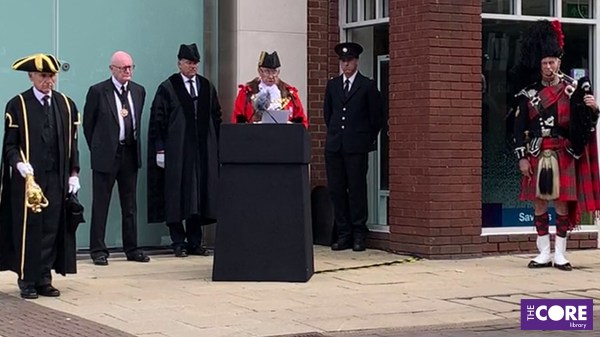
On Sunday 11th September 2022 in Solihull High Street, the Worshipful the Mayor of Solihull, Councillor Ken Meeson, read the official Proclamation of the Accession of King Charles III. It seems that this was the first local Accession Proclamation ever to have been read officially in Solihull.
Continue reading “The King’s Accession Proclamation”Their names liveth for evermore
So far, we have the names of 730 people from places now in the Solihull Borough, or in the then Solihull Rural District, who lost their lives as a result of their war service.
We continue to research the names on the 35 memorials we’re aware of, plus those whose names we’ve found who don’t appear to be commemorated locally.
Over the next four years and beyond, we’ll carry on posting details here of those who died, remembering everyone individually by name on the centenary of their deaths, and sharing what we know about their lives. We don’t just want to list their names, but to tell something of their stories and, hopefully, to find out more from family members and from other researchers.
If you have any further information about anyone from the Solihull area who died as a result of their war service, please let us know.
Tracey
Heritage & Local Studies Librarian
tel.: 0121 704 6934
email: heritage@solihull.gov.uk
Solihull Remembers: a century on
100 years ago today, 4th August 1914, the horrors of what was to come over the next four years could not have been imagined. Almost every family and every community would be affected by loss and tragedy. Many of those who returned were never able to speak of what they had witnessed and experienced. Many families never recovered from the loss of their loved ones.
Local communities in what is now the Borough of Solihull have their own memorials, and there are events being held locally to commemorate those who served and who died from each area. However, it’s clear that people did live in wider social networks and we know of many casualties who appear on more than one village war memorial, reflecting multiple associations with local places.
At Solihull Council, we are aiming to compile a complete list of those with a connection to places now within the Borough (or in the old Solihull Rural District) who died as a result of their service in the First World War. It’s very much a work in progress, as it’s often not a simple task to identify the correct individual from a brief entry on a war memorial. Staff at Solilhull Heritage & Local Studies Service are immensely grateful to all those people across the Borough who have kindly shared their research and knowledge to ensure we are able to record as many details as possible about the 700+ individuals so far identified. Special thanks must go to Jill Chape and David Gimes who have been diligent researchers and generous in sharing what they have found. Our task would have been much more difficult without their help, and that of Clive Hinsull.
Over the next four years, and beyond, our aim is to remember individually by name all of those from places now in the Borough who died as a result of their war service. Using the hashtag #SolihullRemembers, we’ll be blogging and tweeting their names on the centenary of their deaths, together with as much information about their lives as we can find. It’s important to remember that the names on memorials are associated with real people, who had jobs, interests and families that they left behind. If you can add anything to the information we have, please get in touch. Most of the sources to which we have access focus more on official, bureaucratic records, rather than the more meaningful life experiences of the individual, so we’d particularly welcome any stories or information you have from within the family.
This project is a labour of love for all of us involved, and we will do our best over the years to come so that we can do justice to the memory of those with a connection to places now in the Borough who gave their lives in the ‘Great War’.
Tracey
Heritage & Local Studies Librarian
email: heritage@solihull.gov.uk
tel.: 0121 704 6977
Boy soldiers
It is known that about 250,000 boys served on the front line during World War I, whilst being under the age of 19. This was the official age at which overseas service was permitted. This BBC guide gives a useful introduction to some of the reasons for a conspiracy of silence around the enlistment of boys, which was especially prevalent before the introduction of conscription in 1916.
The youngest authenticated combatant of the First World War is Sidney Lewis, from Tooting, South London, who was able to join up at the age of 12 years and 5 months, and saw active service on the Somme for six weeks. A letter to the War Office from his mother demanding his return resulted in his being withdrawn from the front line, discharged from the Army, and sent home.
William Edward Shilvock Wright
In an article in the Birmingham Post 22nd November 1918 reporting the death of his eldest brother, Second Lieutenant John Shilvock Wright, it is mentioned that W. E. S. Wright served at Loos and on the Somme at the age of 15, returning home after being gassed, and then rejoining on attaining military age. He was training for a commission at the time of his brother’s death.

Brothers in Arms
In an age of larger families, it wasn’t unusual for a couple to have more than one of their children serving in the Armed Forces and, indeed, to have more than one child killed.
Local families we know of where several siblings served are: Continue reading “Brothers in Arms”