The Lavender Hill Housing Association Ltd was formed on 5th May 1952 as a private limited company under the Friendly Societies Act. It had 26 members and its members built 14 semi-detached bungalows in Scott Road, Olton (believed to be nos. 92-118) and 12 semi-detached bungalows in Rushbrook Close (believed to be nos. 2-16 and 15-21), with construction starting in summer 1954.
Continue reading “Lavender Hill Housing Association”The Crescent Estate
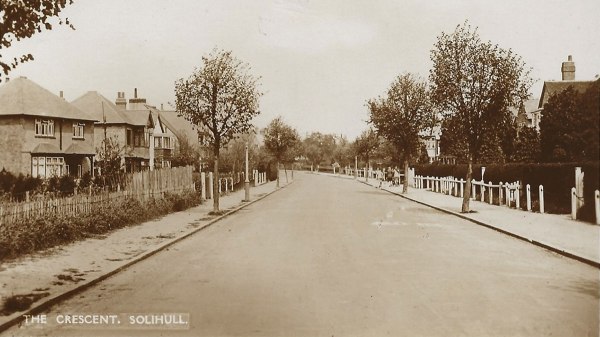
The Crescent Estate was the title given in 1910 to the land enclosed by the houses built along Warwick Road (then Birmingham Road), Ashleigh Road and Streetsbrook Road.
Continue reading “The Crescent Estate”Inter-war council housing in Solihull
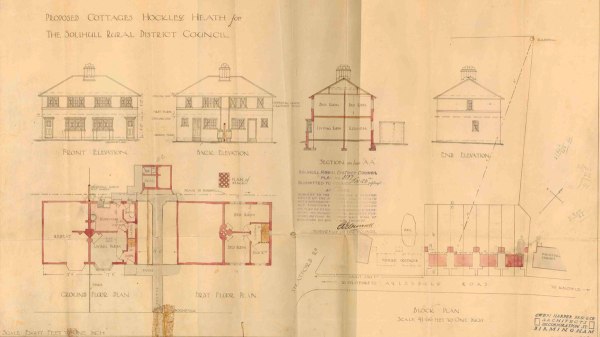
Prior to the late 19th century, housing options were limited to owning property or, as most people did, renting from a private landlord. The Housing of the Working Classes Act 1890 allowed local authorities in London to build council houses, and the first council housing was built in Bethnal Green in 1896. The Housing of the Working Classes Act 1900 extended this to the rest of the country, although it took a further 25 years for the first council houses to be built in Solihull Rural District.
Continue reading “Inter-war council housing in Solihull”Ramsgate, High Street, Solihull
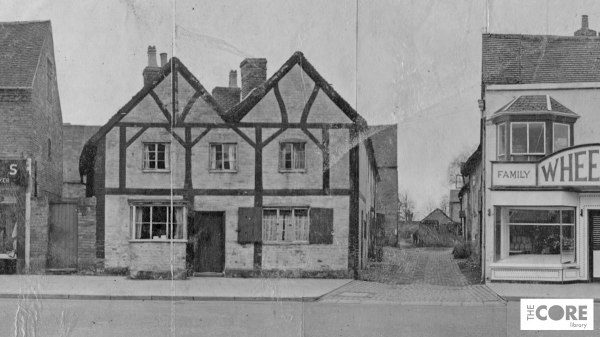
Ramsgate, just off Solihull High Street, was perhaps the closest to back-to-back housing that Solihull had. One of the cottages (no. 20. High Street, pictured above) faced the High Street, whilst 14 other cottages together with wash-houses, water-closets, coal-houses, ash-pits and a communal pump were situated around a courtyard off a party entrance from the High Street.
Continue reading “Ramsgate, High Street, Solihull”Sparkhill Housing Association, Ebrington Avenue
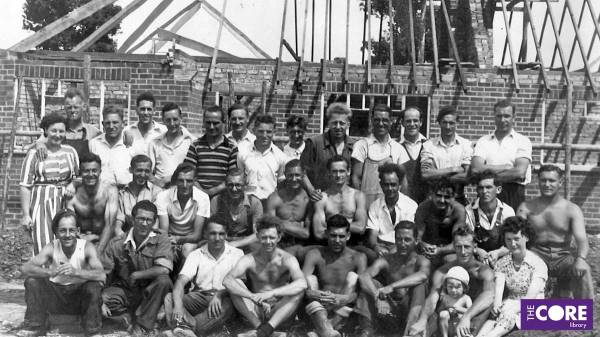
I set about writing this Blog in September 2021 in the hope of bringing together local history and the community. I set out to share what has been one of the most interesting parts of my work as a member of staff at Hobs Moat Library, and that was talking to a customer who has been with us from the start since we opened in 1957.
Continue reading “Sparkhill Housing Association, Ebrington Avenue”Cheswick Green: the village of the 70s
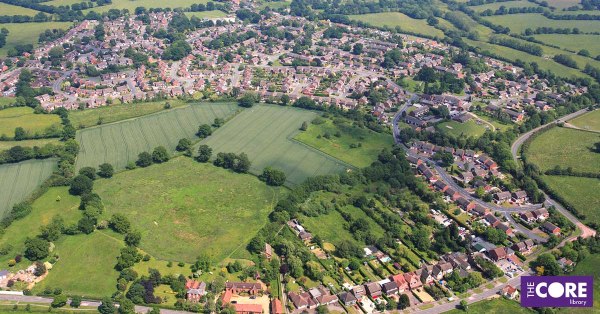
On 13th July 1969, the first new homes in “the Village of the Seventies” at Cheswick Green were offered for sale by the Greaves Organisation, who built some 550 homes in the village as part of its initial development. The developer had purchased land from around 100 individual owners to enable the redevelopment of a site where around 60 per cent of the existing dwellings, mostly erected since the 1920s, had been deemed unfit for habitation.
Continue reading “Cheswick Green: the village of the 70s”Kingshurst Hall Estate
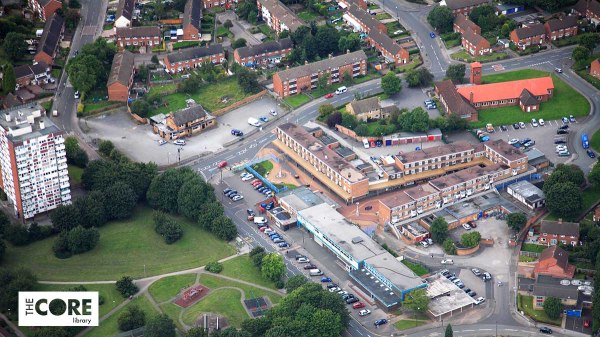
The housing development at Kingshurst Hall Estate was the first time that Birmingham Corporation had ever built dwellings outside the city boundaries. It was also the first time that the council had a housing scheme that included owner-occupied housing as well as council housing.
It was an “overspill” housing estate, one of many created in the 1950s on the outskirts of large towns and cities to help relieve overcrowding in urban areas. The intention was to move people from decaying inner cities to better conditions in more rural areas.
Self-build housing in Solihull
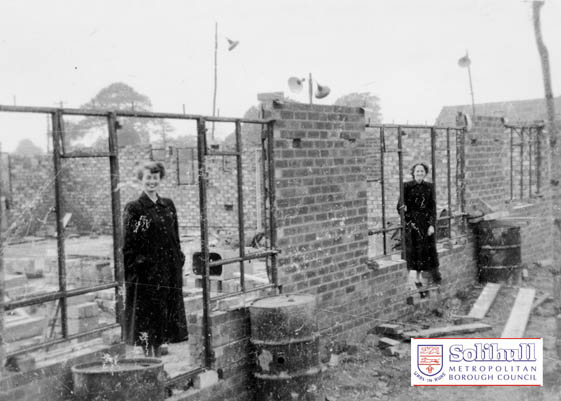
They Made It Happen! exhibition in the Heritage Gallery on the first floor of The Core Library, Solihull from July-September 2018 celebrated the self-build housing associations which were set up by people so desperate for a home of their own to rent that they built their own, and then rented it from the housing association. At the time, they had no expectation of being able to buy the houses although, when regulations were relaxed a few years later, most were subsequently able to buy.
Continue reading “Self-build housing in Solihull” Solihull Life