3rd July 1915

John Dyott Willmot of Coleshill, the second of four children of George Dyott Willmot J.P. (1863-1921) and Nellie Pratchett Willmott (formerly Heatley) (1869-1956), was killed in action in France on 3rd July 1915, at the age of 19. He was a Lieutenant with 6th Battalion Worcestershire Regiment and was born in King’s Norton in 1896, although the family had moved to Blyth Cottage, Coleshill by the time of the 1901 census.

The local connection is that John Dyott Willmot attended Packwood Haugh School before going on to Malvern College where he was known as a great athlete, winning the open high jump in 1913 and 1914 and the long jump in 1914. He was in Mr. P. R. Farren’s house at Malvern, and became a School Prefect. He was a member of the Officers’ Training Corps at the College.

His younger brother, Robert Dyott Willmot (1898-1918), also died on active service in the war at the age of 19, having followed in his brother’s footsteps at Packwood Haugh and Malvern College. Their elder sister, Mary Georgina Dyott Willmott (known as Georgina) (1894-1985), served as a Voluntary Aid Detachment nurse after attending Clarendon House boarding school for ladies in Leamington Spa.  Their parents were commandants of the Vicarage Hospital, Coleshill. The youngest child, Honor Christine Dyott Willmot (1906-1984) was too young to play a part in the war.
Continue reading “3rd July 1915”

25th June 1915

George Frederick Bevins was born in Sparkhill, Birmingham on 11th June 1896. His father, Henry Sharpe Bevins (1863-1920), was a builder and contractor, born in Birmingham. His mother, Emily (née Payne) was born in Monkspath (according to the 1891 census) or Hockley Heath (according to the 1901 census). The couple had married in 1888 and went on to have nine children, of whom one had died by 1911, and three sons died in the war.

Continue reading “25th June 1915”

17th May 1915

Regular soldier Sydney Alfred Cockayne, from Catherine-de-Barnes, died of wounds on 17th May 1915 whilst serving as Acting Sergeant Major with the 1st Battalion, King’s Royal Rifle Corps.

He was actually baptised as Alfred Sidney Cockayne, and appears as Alfred on the 1891 and 1901 censuses before being recorded as Sidney Cockayne in 1911. Presumably, preferring to be known by his middle name, he switched the order of his Christian names when he joined the Army. Certainly, all his Army records refer to him as S. A. Cockayne.

Continue reading “17th May 1915”

9th May 1915

Private William Henry Smitten of Knowle was killed on 9th May 1915, just one week after first arriving in France with the Royal Warwicks. On the same day, 25-year-old Lieutenant Thomas Edwin Turner of Solihull and London also died serving with the 13th London Regiment (Kensington Battalion).

Continue reading “9th May 1915”

25th August 1914

Lance Corporal Richard Victor Arthur, 3rd Battalion, Coldstream Guards was the first casualty from the Solihull district to die in France during the war. Born in Shirley on 9th February 1892, he enlisted in the Army in October 1908 and was killed in action at Landrecies at 8.30pm on 25th August 1914 during the retreat from Mons.

Continue reading “25th August 1914”

Boy soldiers

It is known that about 250,000 boys served on the front line during World War I, whilst being under the age of 19. This was the official age at which overseas service was permitted. This BBC guide gives a useful introduction to some of the reasons for a conspiracy of silence around the enlistment of boys, which was especially prevalent before the introduction of conscription in 1916.

The youngest authenticated combatant of the First World War is Sidney Lewis, from Tooting, South London, who was able to join up at the age of 12 years and 5 months, and saw active service on the Somme for six weeks. A letter to the War Office from his mother demanding his return resulted in his being withdrawn from the front line, discharged from the Army, and sent home.

William Edward Shilvock Wright

In an article in the Birmingham Post 22nd November 1918 reporting the death of his eldest brother, Second Lieutenant John Shilvock Wright, it is mentioned that W. E. S. Wright served at Loos and on the Somme at the age of 15, returning home after being gassed, and then rejoining on attaining military age. He was training for a commission at the time of his brother’s death.

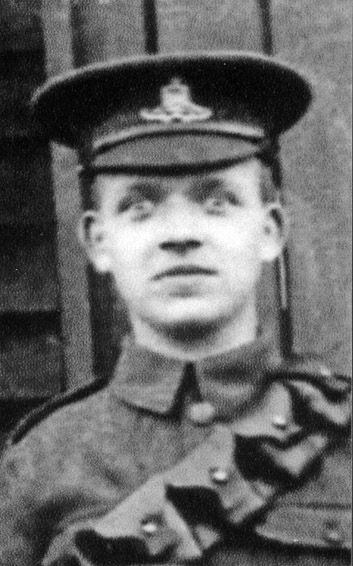
Image of Billy Wright
William Edward Wright, aged 15, in his Royal Field Artillery uniform (courtesy of David Gimes)

Continue reading “Boy soldiers”

Blog at WordPress.com.

Up ↑