The Lavender Hill Housing Association Ltd was formed on 5th May 1952 as a private limited company under the Friendly Societies Act. It had 26 members and its members built 14 semi-detached bungalows in Scott Road, Olton (believed to be nos. 92-118) and 12 semi-detached bungalows in Rushbrook Close (believed to be nos. 2-16 and 15-21), with construction starting in summer 1954.
Continue reading “Lavender Hill Housing Association”Solihull Lido
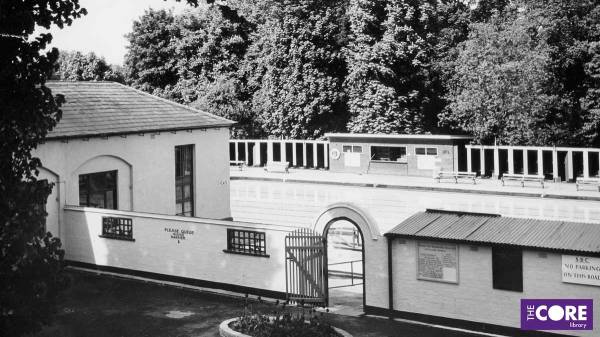
The open-air swimming pool in Malvern Park, Solihull was purchased by Solihull Council in March 1954, although it had been in use as a privately-owned swimming pool since the early 1940s. It was apparently the first municipal swimming pool in the Solihull district and, according to the Birmingham Daily Post, 8th February 1954, it had been built by Horace Brueton, who had bought the Malvern Hall estate c.1922.
Continue reading “Solihull Lido”Solihull’s Charter Day 1954
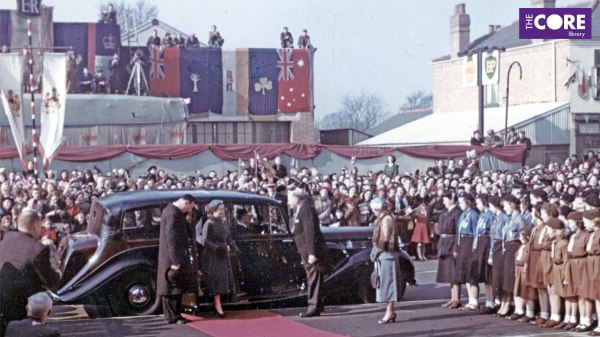
On Solihull’s Charter Day, 11th March 1954, H.R.H. Princess Margaret visited Solihull on behalf of the Queen to present the Urban District with a Royal Charter of Incorporation as a Borough. Although the elevation to a borough was important in Solihull’s journey to become a County Borough, it did not bestow any new powers on Solihull, apart from the new Borough having a Mayor instead of the previous Chairman of Solihull Urban District.
Continue reading “Solihull’s Charter Day 1954”Ramsgate, High Street, Solihull
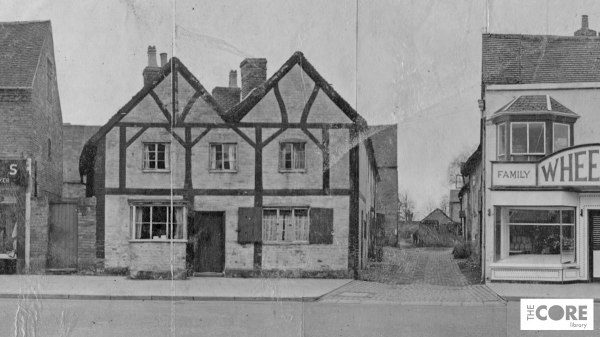
Ramsgate, just off Solihull High Street, was perhaps the closest to back-to-back housing that Solihull had. One of the cottages (no. 20. High Street, pictured above) faced the High Street, whilst 14 other cottages together with wash-houses, water-closets, coal-houses, ash-pits and a communal pump were situated around a courtyard off a party entrance from the High Street.
Continue reading “Ramsgate, High Street, Solihull”Coronation celebrations in Solihull
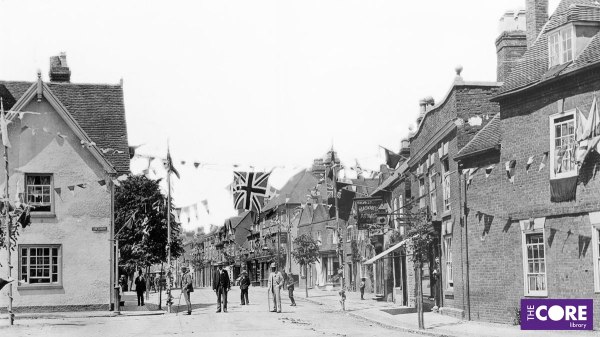
To mark the Coronation of King Charles III on Saturday 6th May 2023 – the first coronation of a British sovereign for 70 years – library staff have been researching how previous coronations were celebrated in Solihull.
Continue reading “Coronation celebrations in Solihull”“Horse and His Master” statue
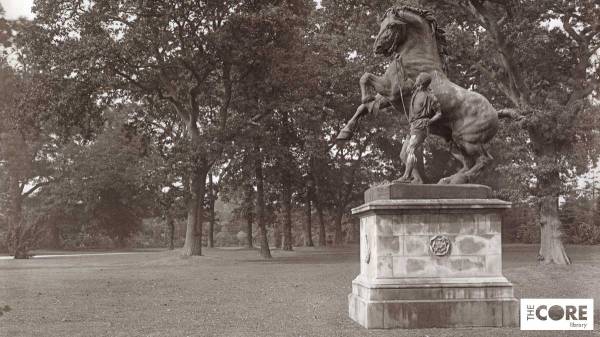
The Grade II-listed hollow bronze statue in Malvern Park is by notable Victorian sculptor Joseph Edgar Boehm (1834-1890) and was cast by H. Young & Co., Pimlico. Boehm was born in Austria to Hungarian parents but settled in England in 1862 and became a British subject three years later. He became the favourite sculptor of the Royal Family. The Horse and His Master statue was created in 1874 and from c.1904-1953 it stood on the lawn in front of Tudor Grange (as pictured above c.1910) before its removal to Malvern Park.
Continue reading ““Horse and His Master” statue”SOL 1: Solihull’s Mayoral Limousine

The history of Solihull Council’s Mayoral vehicle (“SOL 1”) is a long and interesting one and coincides with Solihull becoming a Borough in 1954. Being a Borough meant that Solihull would also have a Mayor for this first time. It was usual practice for Boroughs to have a Mayoral limousine in which the Mayor would be driven to official engagements.
Continue reading “SOL 1: Solihull’s Mayoral Limousine”Solihull Coronation Festivities 1953
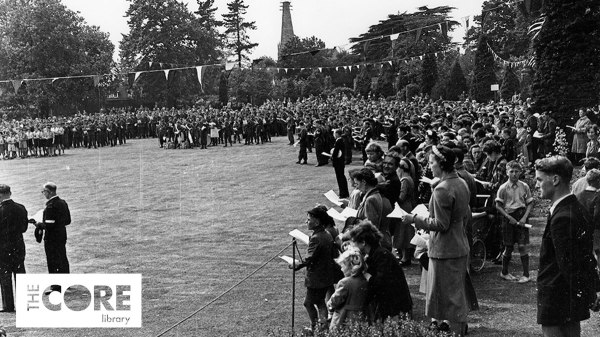
Solihull’s Coronation celebrations were spread over several weeks in 1953, rather than all taking place on Coronation Day itself – Tuesday 2nd June 1953.
Continue reading “Solihull Coronation Festivities 1953”Sparkhill Housing Association, Ebrington Avenue
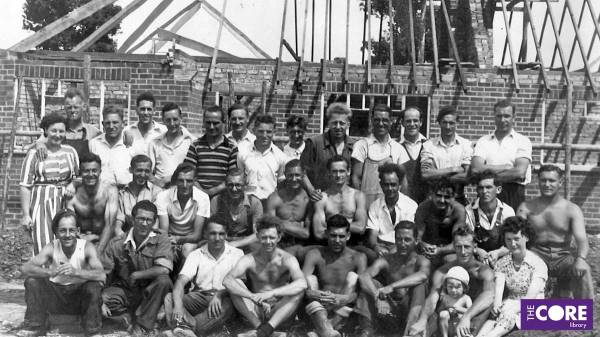
I set about writing this Blog in September 2021 in the hope of bringing together local history and the community. I set out to share what has been one of the most interesting parts of my work as a member of staff at Hobs Moat Library, and that was talking to a customer who has been with us from the start since we opened in 1957.
Continue reading “Sparkhill Housing Association, Ebrington Avenue”“Wayfarer”
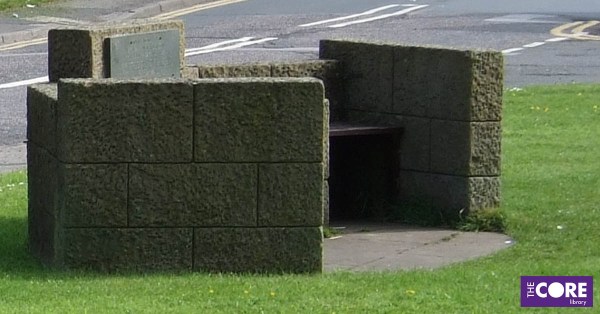
Walter MacGregor (“Robbie”) Robinson (1877-1956) was a cyclist and writer from Liverpool. He worked for many years as an official for the Liverpool and London and Globe Insurance Company and lived at Lyttleton Road, Edgbaston, Birmingham from at least 1925 until his death in 1956.
Continue reading ““Wayfarer”” Solihull Life