Can you help identify casualties from Castle Bromwich?

It can be very difficult to identify in official records people who who have minimum information included on the war memorial.

The war memorial at Castle Bromwich is one of several that lists only initials and surnames, not ranks, regiments or years of death. We are struggling to identify the following people who are mentioned on the memorial:

  • B. T. Harris (is this Benjamin James Thomas Harris, died on Royal Edward 13/8/1915?)
  • C. Stone
  • A. W. Watton

If you have any further information on these men, please let us know. We’re especially keen to know their full names and when they died, so that we can be sure that we remember them on the centenary of their deaths.

Tracey
Heritage & Local Studies Librarian

tel.: 0121 704 6934
email: heritage@solihull.gov.uk

Solihull Remembers: a century on

100 years ago today, 4th August 1914, the horrors of what was to come over the next four years could not have been imagined. Almost every family and every community would be affected by loss and tragedy. Many of those who returned were never able to speak of what they had witnessed and experienced. Many families never recovered from the loss of their loved ones.

Local communities in what is now the Borough of Solihull have their own memorials, and there are events being held locally to commemorate those who served and who died from each area. However, it’s clear that people did live in wider social networks and we know of many casualties who appear on more than one village war memorial, reflecting multiple associations with local places.

At Solihull Council, we are aiming to compile a complete list of those with a connection to places now within the Borough (or in the old Solihull Rural District) who died as a result of their service in the First World War. It’s very much a work in progress, as it’s often not a simple task to identify the correct individual from a brief entry on a war memorial. Staff at Solilhull Heritage & Local Studies Service are immensely grateful to all those people across the Borough who have kindly shared their research and knowledge to ensure we are able to record as many details as possible about the 700+ individuals so far identified. Special thanks must go to Jill Chape and David Gimes who have been diligent researchers and generous in sharing what they have found. Our task would have been much more difficult without their help, and that of Clive Hinsull.

Over the next four years, and beyond, our aim is to remember individually by name all of those from places now in the Borough who died as a result of their war service. Using the hashtag #SolihullRemembers, we’ll be blogging and tweeting their names on the centenary of their deaths, together with as much information about their lives as we can find. It’s important to remember that the names on memorials are associated with real people, who had jobs, interests and families that they left behind. If you can add anything to the information we have, please get in touch. Most of the sources to which we have access focus more on official, bureaucratic records, rather than the more meaningful life experiences of the individual, so we’d particularly welcome any stories or information you have from within the family.

This project is a labour of love for all of us involved, and we will do our best over the years to come so that we can do justice to the memory of those with a connection to places now in the Borough who gave their lives in the ‘Great War’.

Tracey
Heritage & Local Studies Librarian

email: heritage@solihull.gov.uk
tel.: 0121 704 6977
Boy soldiers

It is known that about 250,000 boys served on the front line during World War I, whilst being under the age of 19. This was the official age at which overseas service was permitted. This BBC guide gives a useful introduction to some of the reasons for a conspiracy of silence around the enlistment of boys, which was especially prevalent before the introduction of conscription in 1916.

The youngest authenticated combatant of the First World War is Sidney Lewis, from Tooting, South London, who was able to join up at the age of 12 years and 5 months, and saw active service on the Somme for six weeks. A letter to the War Office from his mother demanding his return resulted in his being withdrawn from the front line, discharged from the Army, and sent home.

William Edward Shilvock Wright

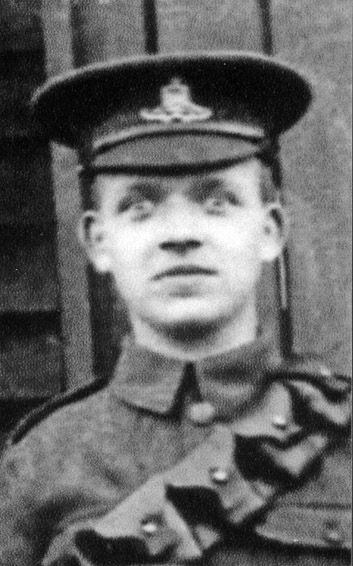
In an article in the Birmingham Post 22nd November 1918 reporting the death of his eldest brother, Second Lieutenant John Shilvock Wright, it is mentioned that W. E. S. Wright served at Loos and on the Somme at the age of 15, returning home after being gassed, and then rejoining on attaining military age. He was training for a commission at the time of his brother’s death.

Image of Billy Wright
William Edward Wright, aged 15, in his Royal Field Artillery uniform (courtesy of David Gimes)

Continue reading “Boy soldiers”

Paul Quinet, a former Belgian refugee

Paul Gustave Désiré Quinet (surname pronounced key-nay, or keeney by some) was born on 7th April 1899 in Koekelberg, Brussels. At the age of four and a half, he moved with his parents to Persia but returned to Brussels in 1906 to go to boarding school, where he remained until 1914.

His mother died in childbirth in Persia in 1908 and his father remained working there until returning to Brussels in 1913.

In 1914, after Paul proudly told his father that he had seen German troops in nearby woods, the family quickly gathered together belongings and left Brussels for the Belgian coast, taking the last train to leave before the entry of the German troops into the city.

Continue reading “Paul Quinet, a former Belgian refugee”

Solihull Remembers

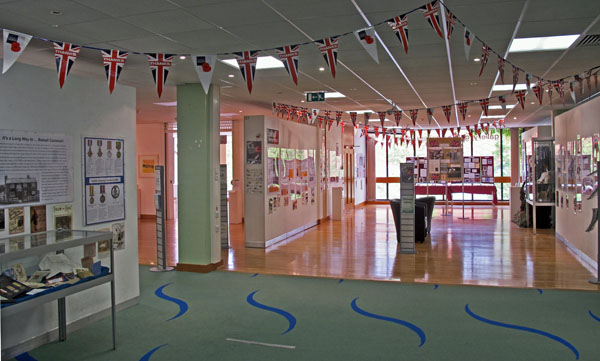
Our First World War exhibition is now on at the Heritage Gallery on the first floor at Solihull Central Library.

It’s on during library opening hours until 13th September 2014 so there’s plenty of time for you to come along and have a look round.

Image of Solihull Remembers exhibition
Solihull Remembers, Heritage Gallery, Solihull Central Library

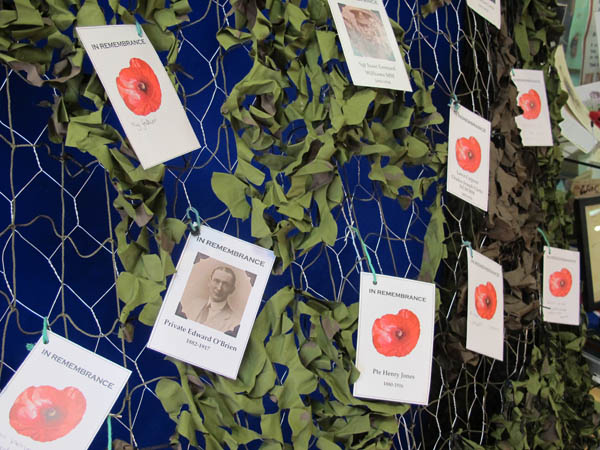
If you want to remember anyone who died in the war, or who served and survived, do fill in one of our remembrance cards and let us add it to our ‘wall of memory’. It doesn’t matter if the person wasn’t from Solihull, we’re happy for you to remember anyone you wish to include.

image of memorial cards
Wall of memory in our Heritage Gallery exhibition, Solihull Central Library

You’re welcome to fill in one of the cards when you visit or, alternatively, fill in the PDF form below and email it to us (you may need to save the file first, and then edit it). If you have a photo you’d like to include, please attach that to your email as well, and send it to us at heritage@solihull.gov.uk. We’ll then add it to the wall for you.

 First World War memorial card

Tracey
Heritage & Local Studies Librarian

Belgian refugees

According to the Birmingham Daily Post,  Thursday 29th October 1914, the first group of Belgian refugees to be housed in Solihull arrived the previous Saturday. Residents had responded to appeals for funds, as well as offering meat, milk and vegetables. As well as a house being set aside to accommodate the refugees, several residents took refugees into their own homes.

Continue reading “Belgian refugees”

Auxiliary Hospitals

In 1909, the British Red Cross was tasked with helping the Territorial Forces Medical Service in the event of war. It set up local units called ‘Voluntary Aid Detachments’, and members were trained in first aid and nursing.

Auxiliary Hospitals, attached to military hospitals, were established – the following are known to have operated in Solihull:

Continue reading “Auxiliary Hospitals”

Captain Robert Jacobs

Captain Robert Jacobs of the Royal Army Medical Corps died of wounds on 20th July 1918, aged 39, after an enemy bomb fell on his billet.

He was born in London (his family moved to Solihull between 1901-1911) and he enlisted as a Private in the City of London Sanitary Company two days after the war began. He rose to the rank of Captain within 10 months, and served on the front continuously from his arrival in France on Christmas Day, 1914.

Robert Jacobs’ father, James, died in Spring 1911, so the War Office’s telegram advising of Robert’s death was sent to his mother. She also received a photograph of his grave, marked with a wooden battlefield cross, which was replaced by a Portland Stone memorial in the 1920s/30s.

Photo of Capt Jacobs' grave
Photograph sent to his mother, showing the battlefield cross on his grave (Solihull Library ref.: D3/2)

Captain Jacobs is commemorated on the RAMC in the Great War website.

His family gave his medals, and the next-of-kin memorial plaque and scroll they received to Solihull Central Library, as well as the photo of his grave and the telegram sent to his mother notifying his death. These will all be on display in our forthcoming ‘Solihull Remembers’ exhibition.

If you have any more information about him, we’d be delighted to hear from you – please do let us know (email heritage@solihull.gov.uk or phone 0121 704 6977).

Tracey
Heritage & Local Studies Librarian

Blog at WordPress.com.

Up ↑