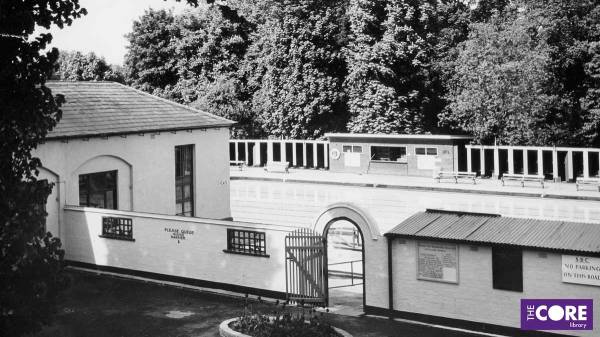
The open-air swimming pool in Malvern Park, Solihull was purchased by Solihull Council in March 1954, although it had been in use as a privately-owned swimming pool since the early 1940s. It was apparently the first municipal swimming pool in the Solihull district and, according to the Birmingham Daily Post, 8th February 1954, it had been built by Horace Brueton, who had bought the Malvern Hall estate c.1922.
Continue reading “Solihull Lido”Alfred Thomas Steadman (1912-1994)
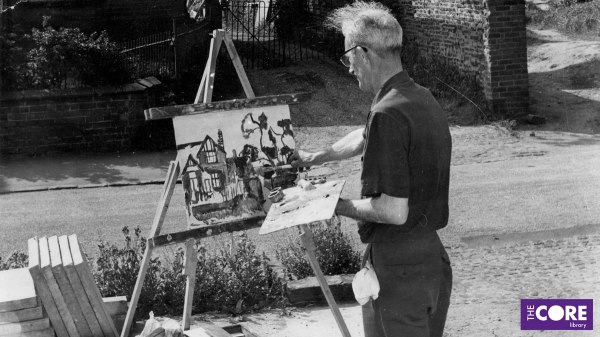
Alfred Steadman was born in Derbyshire on 6th December 1912 and won a scholarship to art college in Derby but his parents reportedly decided that it wasn’t a good idea, so he became a chemist on leaving school. Art was a lifelong hobby and he was able to devote more time to it after his retirement from work.
Continue reading “Alfred Thomas Steadman (1912-1994)”Metropolitan Borough of Solihull
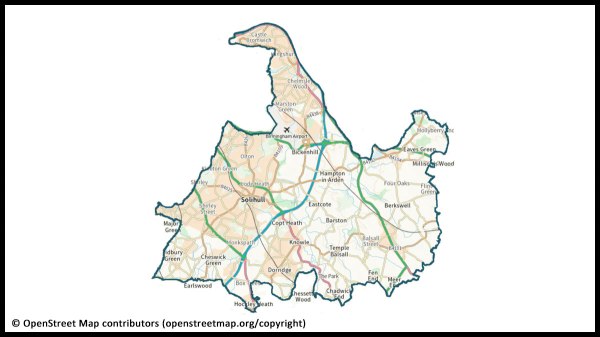
The Metropolitan Borough of Solihull came into existence on 1st April 1974. The new Metropolitan Borough comprised the former County Borough of Solihull, 10 parishes from the former Meriden Rural District and the parish of Hockley Heath from Stratford-upon-Avon Rural District.
Continue reading “Metropolitan Borough of Solihull”Elevation Day, 1st April 1964
On 1st April 1964, Solihull and Luton were both elevated to county borough status – the first county boroughs created since 1927, and the first of Queen Elizabeth II’s reign. The towns exchanged messages of goodwill and congratulations.
Continue reading “Elevation Day, 1st April 1964”Solihull’s Charter Day 1954
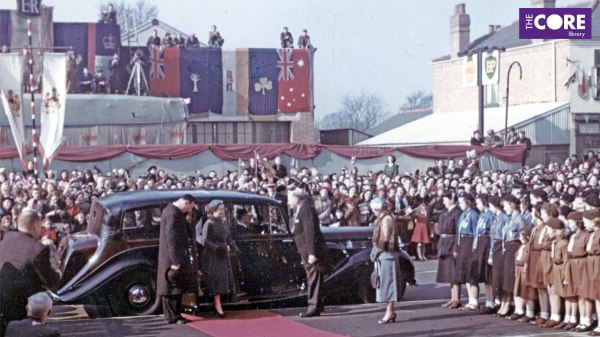
On Solihull’s Charter Day, 11th March 1954, H.R.H. Princess Margaret visited Solihull on behalf of the Queen to present the Urban District with a Royal Charter of Incorporation as a Borough. Although the elevation to a borough was important in Solihull’s journey to become a County Borough, it did not bestow any new powers on Solihull, apart from the new Borough having a Mayor instead of the previous Chairman of Solihull Urban District.
Continue reading “Solihull’s Charter Day 1954”Arthur Stokes (1871-1953), signalman
Arthur Stokes was born in Birmingham on 19th February 1871 and was the second of the six children of parents, Peter, a carter, and Ann (née Humphreys) who had married in Bordesley in 1867. He started work on the railways at the age of 13, and spent 44 years as a signalman at Solihull Station. In 1936, he published his memoir, the proceeds of which went towards the Solihull Methodist Church Building Fund.
Continue reading “Arthur Stokes (1871-1953), signalman”Elmdon C of E School
The elementary school in the grounds of Elmdon Park closed for the final time on Christmas Eve, 1943. The entry in the school log book notes the closure for Christmas but it seems that the school never actually reopened. There had been five juniors and 12 infants on the school roll on 10th December 1943, with only 80 per cent of the juniors attending school, and 31.6 per cent of the infants. The following week there were only 10 children registered.
Continue reading “Elmdon C of E School”100 years of Marston Green Lawn Tennis Club
Marston Green Lawn Tennis Club was founded in 1923 and was known as Elite Lawn Tennis Club. The members in 1923 are pictured above. The women wore long dresses and men wore long trousers, and initially, there were more women players than men. The Elite name was dropped in 1926 and it became MGLTC.
Continue reading “100 years of Marston Green Lawn Tennis Club”Olton Remembers the First World War
During the Solihull Remembers project to commemorate each of the Borough’s First World War casualties on the centenary of their death, library staff worked with researchers from across the Borough, including a team from St Margaret’s Church, Olton. The names of the 52 men on the war memorial in the church were researched. It was found that there were at least 30 other casualties with a local connection whose names were not included on the memorial.
Continue reading “Olton Remembers the First World War”A Poem for Shirley
In May 2023, for Local and Community History Month, local historian, Gordon Bragg, led a guided walk around “Shirley Street.” Participants were accompanied by Poetry on Loan poet, Jonny Fluffypunk, who then crafted a poem referencing Shirley’s history.
Continue reading “A Poem for Shirley”