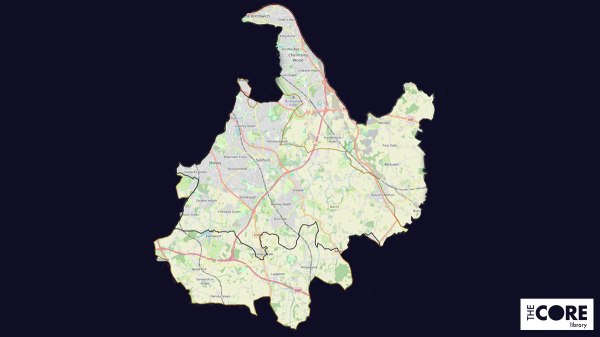
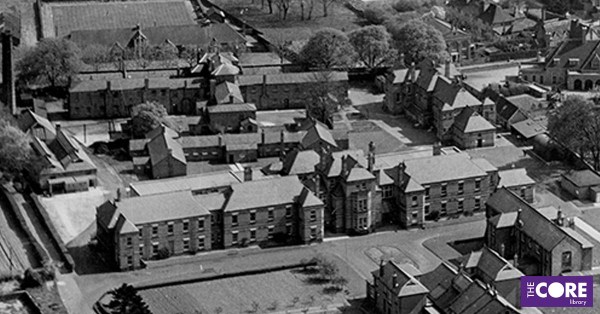
Parish councils came into existence as a result of the Local Government Act 1894, which was also known as the Parish Councils Act. Civil Parishes are the smallest areas of local government administration. The 1894 act allowed for the election of parish councils in rural areas and required the entire area of a parish to be within the same administrative county.
Continue reading “Parish Councils”Christmas in Solihull Workhouse
The Solihull & District Monthly Magazine (the magazine of Solihull parish church), reported in January 1895 on Christmas at Solihull Workhouse. The workhouse was in Lode Lane, Solihull, and was administered by Solihull Poor Law Union. It opened in 1838 to provide accommodation and food for people who were unable to support themselves financially – mostly the sick and elderly.
Continue reading “Christmas in Solihull Workhouse”Solihull Remembers
For Remembrance Day 2025, Solihull Libraries are encouraging people to complete a Remembrance Card to commemorate a loved one who served in the Armed Forces. It could be an ancestor who died or served during wartime, or someone whose military service included only peacetime operations.
Continue reading “Solihull Remembers”Tracing house history
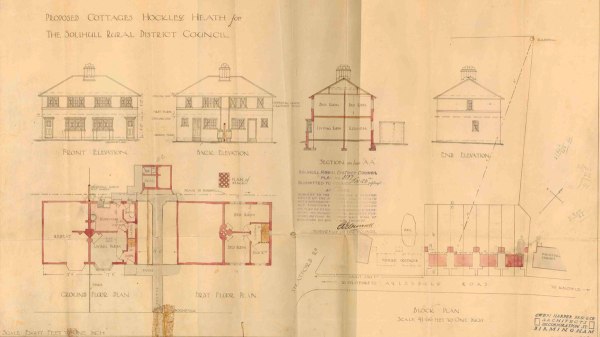
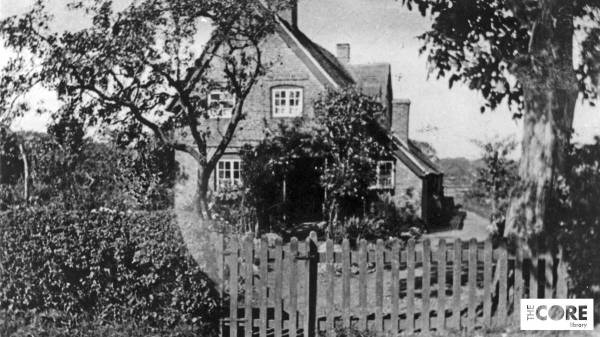
If you are interested in tracing the history of a house or building, the starting point should be the building itself or a picture of it if it no longer exists, and any anecdotal information/existing research. The crucial information you need in order to search most effectively is the approximate date of construction, as this will help you to identify what records may be available and where they may be.
Continue reading “Tracing house history”Isolation hospitals
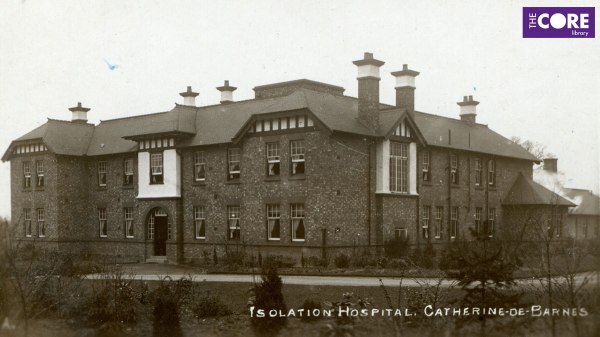
Isolation hospitals were set up to treat people who had infectious diseases such as smallpox, diphtheria, tuberculosis and scarlet fever in an attempt to prevent the diseases from spreading quickly through the population. Solihull is known to have had a “fever shed” and three purpose-built isolation hospitals 1870s-1980s.
Continue reading “Isolation hospitals”Comprehensive education in Solihull
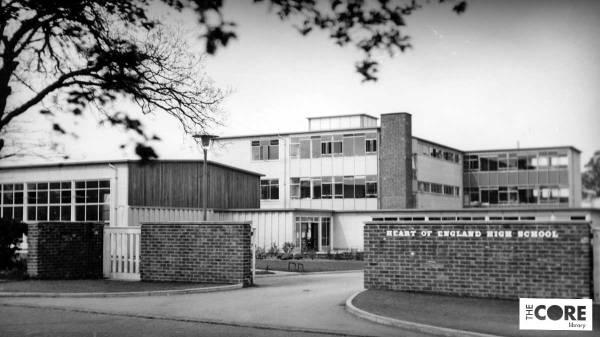
Comprehensive education was introduced in Solihull in September 1974, just over 10 years after Solihull became a County Borough on 1st April 1964 when it took over responsibility for education and schools from Warwickshire County Council.
Continue reading “Comprehensive education in Solihull”Elmdon Park
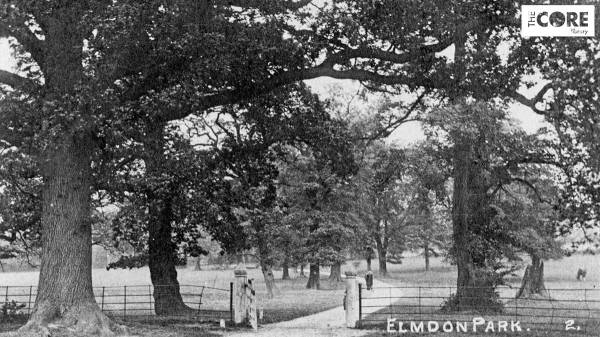
On 3rd August 1944, Solihull Urban District Council purchased Elmdon Hall and its grounds from Mr Walter Waters (1881-1963) for use as a public park. Mr Waters, a wholesale fish merchant of St Bernard’s Road, Olton, had purchased the Elmdon Estate in 1931 but never actually lived there.
Continue reading “Elmdon Park”Sharmans Cross Senior Schools
Sharmans Cross Senior School was built in 1933 and opened to pupils on 9th January 1934 under headmaster Edgar James Phillipps Orrett (1882-1967). Children aged over 11 from Solihull, Olton and Shirley were transferred from existing all-age elementary schools on this date, with the schools they left then all becoming junior schools.
Continue reading “Sharmans Cross Senior Schools”A Poem for Knowle
For Heritage Open Days, 2023, local historians from Knowle Society, accompanied by poet Jonny Fluffypunk and supported by library staff, led a guided walk around the historic centre of the village. Jonny then created a poem based on the history discussed during the walk and afterwards at Knowle Library.
Continue reading “A Poem for Knowle”“Old Billy” helps Solihull’s Salute the Soldier Week, 1944
On 22nd May 1944, a 16-year-old carrier pigeon known as “Old Billy,” travelling at around 60mph, flew into Solihull bearing a cheque for £1,000. The pigeon, owned by Albert James Wager (1880-1947) of 338, Blossomfield Road, was one of the “heroes” of Solihull’s “Salute the Soldier” week, part of a national savings campaign to raise money for field hospitals and military equipment.
Continue reading ““Old Billy” helps Solihull’s Salute the Soldier Week, 1944″