15th March 1920

Private Leslie Jones, 1st South Midland Field Ambulance, Royal Army Medical Corps, died on 15th March 1920 and is buried at Olton Franciscan Cemetery, Solihull. He was born in Birmingham in 1889 and baptised at St Asaph’s Church on 7th July 1889. His parents were Thomas Henry Jones, a carpenter, and Harriet Elizabeth (née Evans), a tailoress who had married at St Peter & St Paul’s Church, Aston in 1886.

Continue reading “15th March 1920”

6th January 1920

Captain Charles Murchison Bernays, formerly of the Royal Army Medical Corps, died on 6th January 1920 in the Royal Victoria Hospital, Dover, aged 39. His death was attributed to haemorrhage as a result of his having been badly gassed in 1917 whilst on active service. Prior to the outbreak of war, he had been practising as a doctor in Shirley but at the time of his death he was house surgeon at the hospital where he died.

Continue reading “6th January 1920”

29th December 1919

Francis George Harris, formerly a Gunner with the Royal Garrison Artillery, died at Birmingham General Hospital on 29th December 1919. He had been discharged from the Army in March 1919 so does not appear as a war casualty on official records, although he is commemorated locally in the Soldiers’ Chapel, Knowle. He is also listed on the Roll of Honour for Packwood amongst those who served.

Continue reading “29th December 1919”

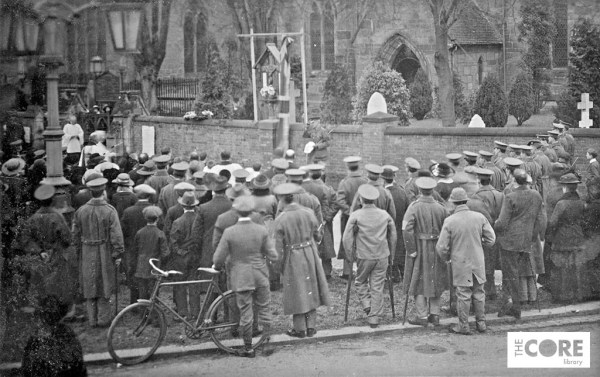
Solihull’s war shrine

Easter Sunday, 9th April 1917, saw the unveiling in Solihull of a War Shrine to the Fallen of the First World War, pictured above (image courtesy of Gordon Bragg).

The Calvary shrine was the gift of a parishioner and was designed by local artist Elphege Pippet (1868-1942). It was built by Charles Timms of Messrs. Thompson, builders of Knowle, causing the Rector of Solihull to note: “everything connected with it has been done in our village, which is as it should be.”

Continue reading “Solihull’s war shrine”

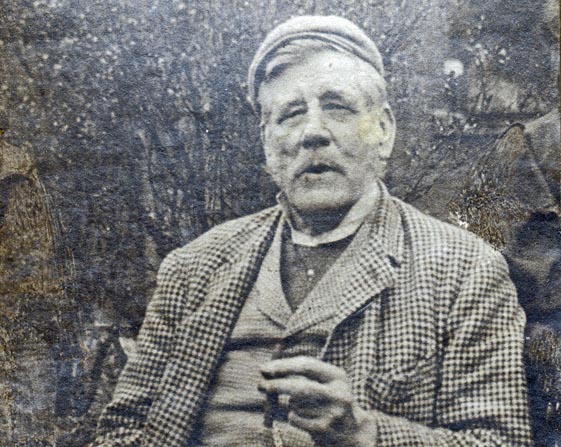
James Fern Webster – the “wizard of Warwickshire”

James Fern Webster was an engineer and prolific inventor who lived and worked in the High Street, Solihull Lodge in the 1870s/80s.

He developed a process for making the extraction of aluminium sufficiently cost effective for the metal to be used in the manufacture of everyday objects, patenting a process that enabled him to sell aluminium for £4 per pound instead of the £60 per pound that it had been previously. Prior to this, aluminium was considered a precious metal, and bars of aluminium were exhibited alongside the French Crown Jewels in the Paris Exhibition of 1855.

Continue reading “James Fern Webster – the “wizard of Warwickshire””

British Home Children

The 28th September is British Home Child Day in Canada. This is a day to remember those children sent to Canada from the children’s homes and charities in the United Kingdom between 1869 and 1948. Over 100,000 were sent to be indentured farm workers or domestics and we know of 17 British Home Children originally from the Solihull district (births in the Solihull registration district also included places such as Yardley and Acocks Green at the time).

Continue reading “British Home Children”

Blog at WordPress.com.

Up ↑