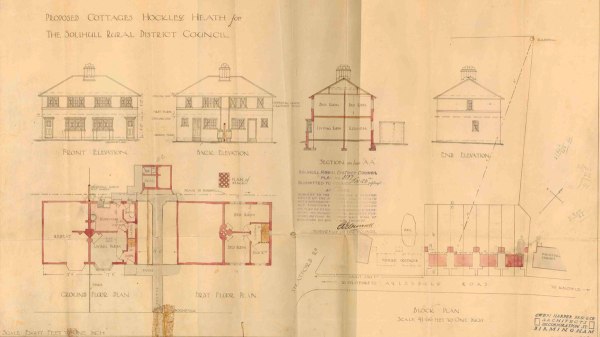
Prior to the late 19th century, housing options were limited to owning property or, as most people did, renting from a private landlord. The Housing of the Working Classes Act 1890 allowed local authorities in London to build council houses, and the first council housing was built in Bethnal Green in 1896. The Housing of the Working Classes Act 1900 extended this to the rest of the country, although it took a further 25 years for the first council houses to be built in Solihull Rural District.
Continue reading “Inter-war council housing in Solihull”Sharmans Cross Senior Schools
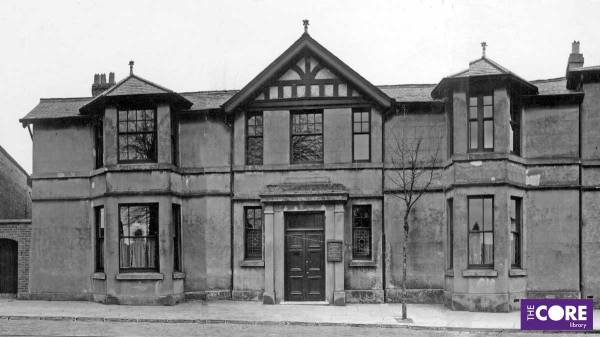
Sharmans Cross Senior School was built in 1933 and opened to pupils on 9th January 1934 under headmaster Edgar James Phillipps Orrett (1882-1967). Children aged over 11 from Solihull, Olton and Shirley were transferred from existing all-age elementary schools on this date, with the schools they left then all becoming junior schools.
Continue reading “Sharmans Cross Senior Schools”“Old Billy” helps Solihull’s Salute the Soldier Week, 1944
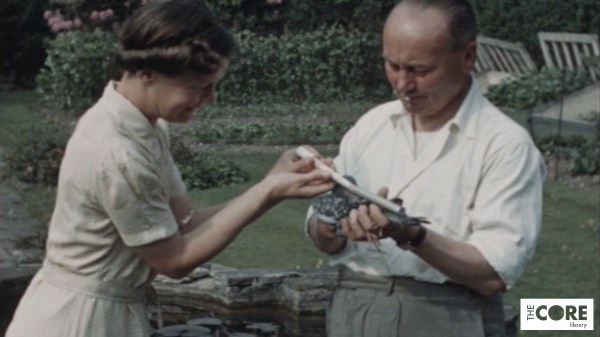
On 22nd May 1944, a 16-year-old carrier pigeon known as “Old Billy,” travelling at around 60mph, flew into Solihull bearing a cheque for £1,000. The pigeon, owned by Albert James Wager (1880-1947) of 338, Blossomfield Road, was one of the “heroes” of Solihull’s “Salute the Soldier” week, part of a national savings campaign to raise money for field hospitals and military equipment.
Continue reading ““Old Billy” helps Solihull’s Salute the Soldier Week, 1944″Solihull’s Charter Day 1954
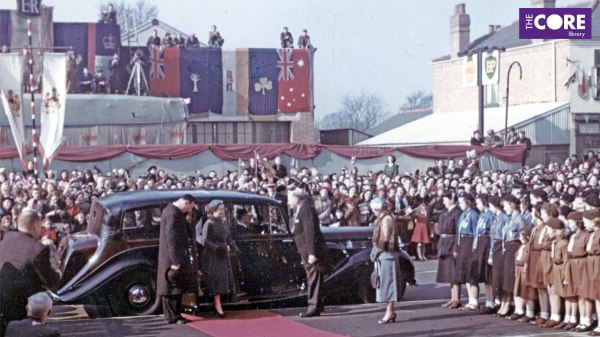
On Solihull’s Charter Day, 11th March 1954, H.R.H. Princess Margaret visited Solihull on behalf of the Queen to present the Urban District with a Royal Charter of Incorporation as a Borough. Although the elevation to a borough was important in Solihull’s journey to become a County Borough, it did not bestow any new powers on Solihull, apart from the new Borough having a Mayor instead of the previous Chairman of Solihull Urban District.
Continue reading “Solihull’s Charter Day 1954”Arthur Stokes (1871-1953), signalman
Arthur Stokes was born in Birmingham on 19th February 1871 and was the second of the six children of parents, Peter, a carter, and Ann (née Humphreys) who had married in Bordesley in 1867. He started work on the railways at the age of 13, and spent 44 years as a signalman at Solihull Station. In 1936, he published his memoir, the proceeds of which went towards the Solihull Methodist Church Building Fund.
Continue reading “Arthur Stokes (1871-1953), signalman”A Poem for Shirley
In May 2023, for Local and Community History Month, local historian, Gordon Bragg, led a guided walk around “Shirley Street.” Participants were accompanied by Poetry on Loan poet, Jonny Fluffypunk, who then crafted a poem referencing Shirley’s history.
Continue reading “A Poem for Shirley”British Legion War Memorial, Solihull Cemetery
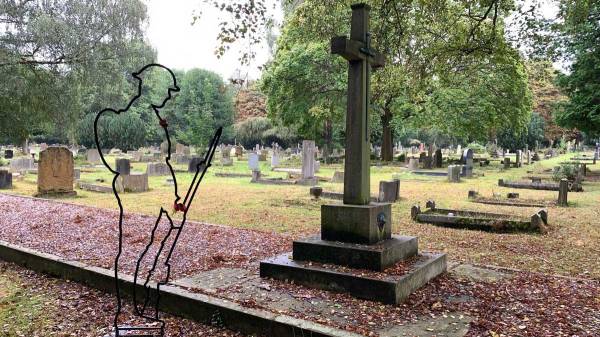
At 3pm on 16th October 1938, a war memorial erected by the Solihull, Shirley, and Olton branches of the British Legion was unveiled at Robin Hood Cemetery. The intention was that the The Old Comrades’ grave would provide “a resting-place for old soldiers who die friendless or whose relatives cannot afford the cost of private burial.”
Continue reading “British Legion War Memorial, Solihull Cemetery”The Last Farewell
Ronald A. Webster (1944-1994), a silversmith and amateur songwriter living in Solihull in the early 1970s, wrote the lyrics for what became Roger Whittaker’s biggest-selling single.
Continue reading “The Last Farewell”Bombing raids in Solihull Urban District
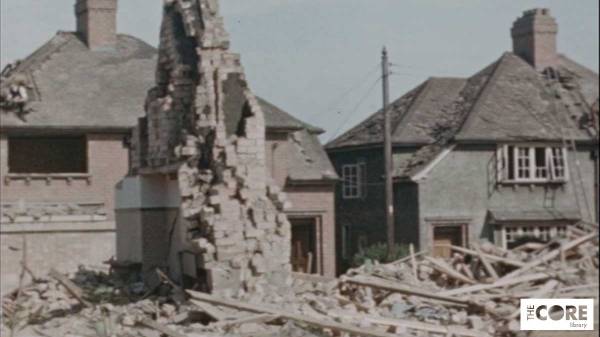
Although suffering only a few bombing raids compared with Birmingham, Solihull Urban District did sustain some bomb damage and dozens of people were killed in air raids.
Continue reading “Bombing raids in Solihull Urban District”25th July 1922
William Henry Clark, a former Air Mechanic with the Royal Air Force, died in Shirley on 25th July 1922, aged 36, leaving his widow, Lilian, with three young children aged seven, five and two.
Continue reading “25th July 1922”