Francis George Harris, formerly a Gunner with the Royal Garrison Artillery, died at Birmingham General Hospital on 29th December 1919. He had been discharged from the Army in March 1919 so does not appear as a war casualty on official records, although he is commemorated locally in the Soldiers’ Chapel, Knowle. He is also listed on the Roll of Honour for Packwood amongst those who served.
20th December 1919
Former Private Thomas Paget, Warwickshire Regiment, died on 20th December 1919 at City Isolation Hospital, West Heath, Birmingham aged 43. He was a former labourer and died of TB contracted whilst on active service.
Continue reading “20th December 1919”Solihull’s war shrine
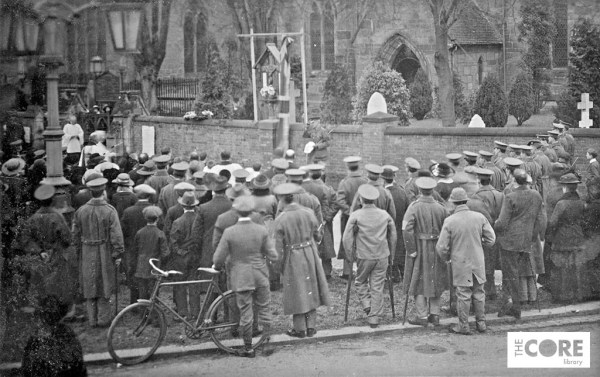
Easter Sunday, 9th April 1917, saw the unveiling in Solihull of a War Shrine to the Fallen of the First World War, pictured above (image courtesy of Gordon Bragg).
The Calvary shrine was the gift of a parishioner and was designed by local artist Elphege Pippet (1868-1942). It was built by Charles Timms of Messrs. Thompson, builders of Knowle, causing the Rector of Solihull to note: “everything connected with it has been done in our village, which is as it should be.”
James Fern Webster – the “wizard of Warwickshire”
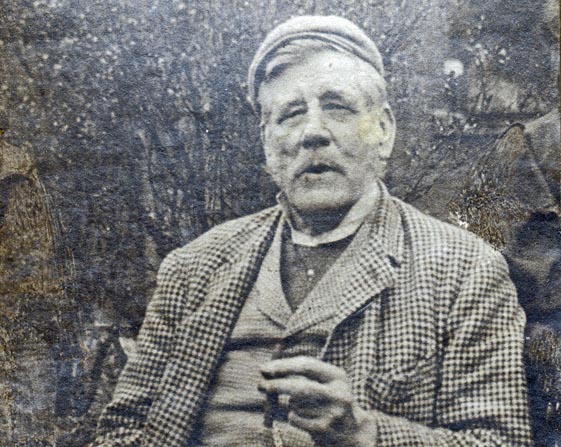
James Fern Webster was an engineer and prolific inventor who lived and worked in the High Street, Solihull Lodge in the 1870s/80s.
He developed a process for making the extraction of aluminium sufficiently cost effective for the metal to be used in the manufacture of everyday objects, patenting a process that enabled him to sell aluminium for £4 per pound instead of the £60 per pound that it had been previously. Prior to this, aluminium was considered a precious metal, and bars of aluminium were exhibited alongside the French Crown Jewels in the Paris Exhibition of 1855.
Continue reading “James Fern Webster – the “wizard of Warwickshire””30th August 1919
Lieutenant Colonel Rowland John Beech died on 30th August 1919, aged 64, whilst Commander of the Warwickshire Yeomanry. He had served in France with the 36th Brigade, Royal Field Artillery during the First World War but was invalided home in 1918.
19th July 1919
Private Ernest Vivian Freeman, Royal Army Medical Corps, aged 22, died at 10pm on 19th July 1919 whilst serving with the 3rd British General Hospital in Iraq. The telgram sent to his mother gave his cause of death as influenza, although entries in his service record first indicated the cause of death as cholera, before stating influenza (acute septicaemic type)
He was born in Olton and baptised at St Margaret’s Church on 20th June 1897.
28th June 1919
Private Wilfred Garner died of pneumonia on 28th June 1919 at 250 Highbridge Road, Boldmere, Sutton Coldfield, aged 20. He had served in the Army from 1915 until discharge on 20th March 1919.
27th June 1919
Private George Harold Timms Poole, Royal Army Veterinary Corps, died on 27th June 1919 when he accidentally drowned whilst serving with the 4th Cavalry. He is commemorated on the Jerusalem Memorial to the Missing. Researchers in Meriden have discovered that he was buried 150 yards south-west of Homs Railway Station, Syria, but the grave must have been lost, hence his commemoration on the Jerusalem Memorial.
Welcome Home Gala Day 1919
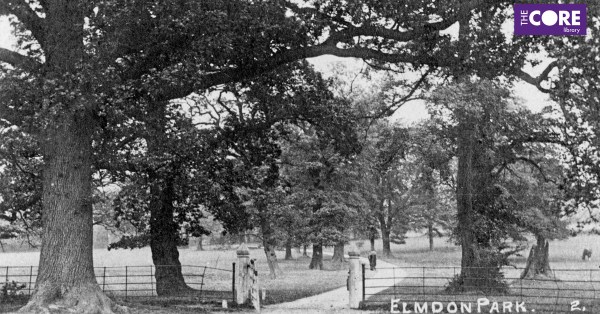
On 21st June 1919 a Welcome Home Gala Day was held at Elmdon Park by cycling clubs from across Birmingham and Coventry. Organised by the Cyclists’ Touring Club, the National Cyclists’ Union and the Midland Cyclists’ Association, the event was to welcome home those with a cycling connection who had served in the war.
12th June 1919
Driver Alfred Wild , Royal Army Service Corps, died in Nottinghamshire War Hospital, Radcliffe on Trent, on 12th June 1919, aged 29.