A 1930s marriage of convenience

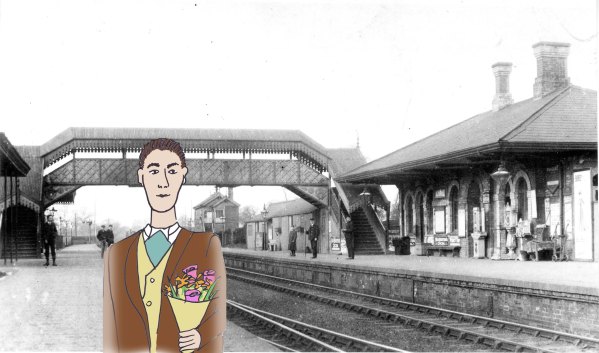
On 20th May 1936, what we would now call a sham marriage, or a marriage of convenience, took place at the office of Solihull’s Superintendent Registrar, which was then situated above shops on the corner of Warwick Road and Poplar Road in Solihull.

The groom was a gay writer living in Dorridge and the bride was a German-Jewish actress. The reason for the marriage was simply to enable the bride to obtain British citizenship. The couple hadn’t met each other before their wedding day and couldn’t actually speak the same language. They remained married for the rest of their lives although they never lived together.

Continue reading “A 1930s marriage of convenience”

Ode for Solihull

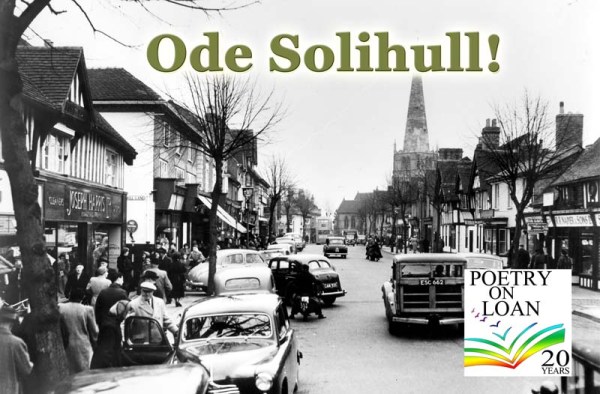
On 21st May 2019, in a Poetry On Loan funded event, poet Giovanni Esposito –  a.k.a. “Spoz” – joined library staff and members of the public on a guided walk around the historic heart of the old Solihull village.

After the walk, the participants returned to the Core for a well-earned break and a chat about Solihull’s history, looking at some of the thousands of old photographs in the library’s Heritage & Local Studies collections. Spoz then wrote a poem incorporating people’s suggestions and his own reflections on the local history of Solihull.

Continue reading “Ode for Solihull”

Coronation Day 1937

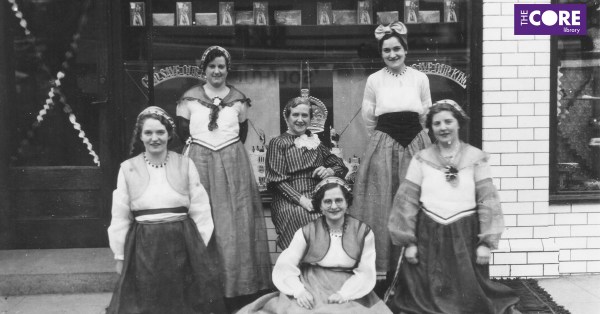
Wednesday 12th May 1937 saw the coronation at Westminster Abbey in London of King George VI and Queen Elizabeth. The date had been chosen for the coronation of King Edward VIII who had become king on the death of his father George V in January 1936. Although Edward VIII’s abdication in December resulted in a new king and queen on the throne, the coronation date of 12th May was retained.

In Solihull, the event was marked by a three-day carnival, which ran into the Whitsuntide weekend, and many of the villages now in the borough held their own celebrations.

Continue reading “Coronation Day 1937”

Burleigh in Wartime, and beyond

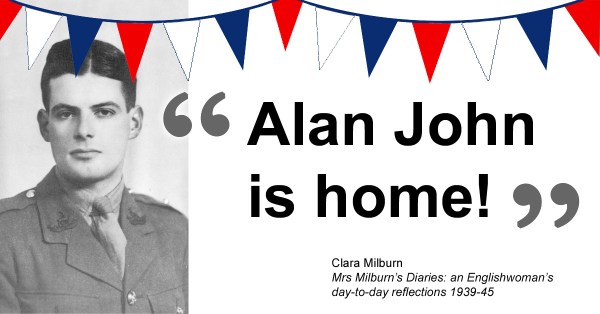
“Burleigh in Wartime” was the title written in February 1940 by Clara Emily Milburn (née Bagnall) on the first page of a soft-backed exercise book. After five months of war she had decided to write a day-to-day account of how she and her small part of the English countryside faced the trials and tribulations of a country at war. Extracts from what turned out to be 15 such exercise books were published in 1979 as Mrs Milburn’s Diaries: an Englishwoman’s day-to-day reflections 1939-45.

Continue reading “Burleigh in Wartime, and beyond”

Solihull in wartime – colour film

Harold Thomas Lavender (1900-1953) was a Walsall-born businessman, who was Managing Director of Proctor & Lavender brick and builder’s merchants. He was in partnership with Arthur Herbert Proctor until 1st May 1928, after which he continued the business alone, still trading as Proctor and Lavender. He lived in Dorridge and was elected to Warwickshire County Council in 1943 as the representative of Solihull First district.

Continue reading “Solihull in wartime – colour film”

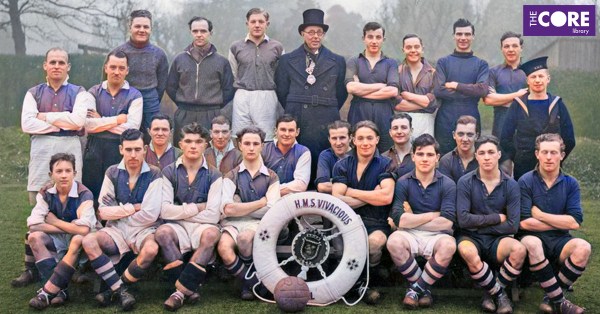
H.M.S. Vivacious

This photograph shows Royal Navy crew members from H.M.S. Vivacious and members of the National Association of Local Government Officers (NALGO) who played a football match during the crew’s visit to Solihull in spring 1944. We think the sailors are on the right in the solid-coloured shirts and the NALGO union members are on the left in the light-sleeved tops, but do let us know if you have any further information. The man in the top hat is Councillor James Harold Malley (1891-1955), Chairman of Solihull Urban District Council 1943-45.

Continue reading “H.M.S. Vivacious”

4th May 1920

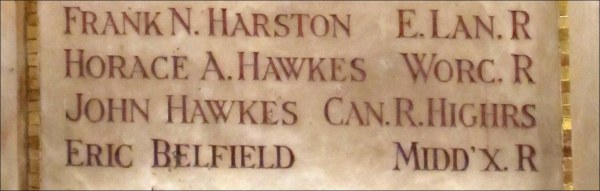
John Hawkes, formerly a Private with 73rd Battalion, B. Company, no. 5 platoon, Canadian Royal Highlanders, died at 370 Beach Street, Saco, Maine, USA on 4th May 1920, aged 41 years and 20 days. His cause of death was listed as Bright’s Disease (an inflammation of the kidneys), with “life in trenches” given as a contributory factor.

Continue reading “4th May 1920”

15th March 1920

Private Leslie Jones, 1st South Midland Field Ambulance, Royal Army Medical Corps, died on 15th March 1920 and is buried at Olton Franciscan Cemetery, Solihull. He was born in Birmingham in 1889 and baptised at St Asaph’s Church on 7th July 1889. His parents were Thomas Henry Jones, a carpenter, and Harriet Elizabeth (née Evans), a tailoress who had married at St Peter & St Paul’s Church, Aston in 1886.

Continue reading “15th March 1920”

6th January 1920

Captain Charles Murchison Bernays, formerly of the Royal Army Medical Corps, died on 6th January 1920 in the Royal Victoria Hospital, Dover, aged 39. His death was attributed to haemorrhage as a result of his having been badly gassed in 1917 whilst on active service. Prior to the outbreak of war, he had been practising as a doctor in Shirley but at the time of his death he was house surgeon at the hospital where he died.

Continue reading “6th January 1920”

Blog at WordPress.com.

Up ↑