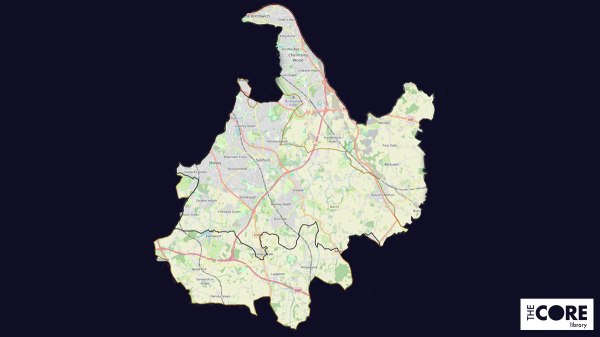
Parish councils came into existence as a result of the Local Government Act 1894, which was also known as the Parish Councils Act. Civil Parishes are the smallest areas of local government administration. The 1894 act allowed for the election of parish councils in rural areas and required the entire area of a parish to be within the same administrative county.
Continue reading “Parish Councils”Solihull Volunteer Infantry
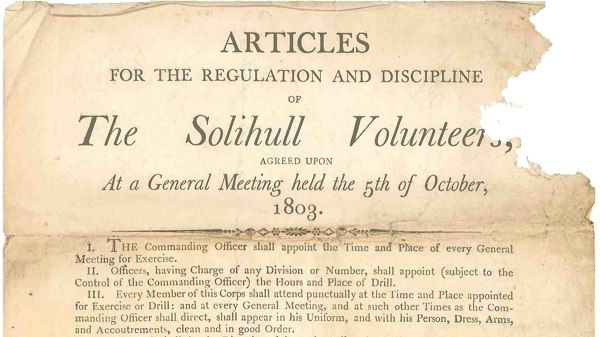
In the face of rising fears of invasion, an association for the defence of Solihull, Knowle and Elmdon was formed in 1797. The association offered to the Lord Lieutenant of Warwickshire a troop of horse at least 50-strong, with volunteers comprising local tradesmen and farmers who agreed to serve only within the bounds of Solihull, Knowle and Elmdon. Unlike the militia, which was raised by public ballot and administered by the War Office, the volunteer forces were self-regulating and would only come under the control of military authorities in the event of an invasion.
Continue reading “Solihull Volunteer Infantry”Elizabeth Grant (c.1765-1823)
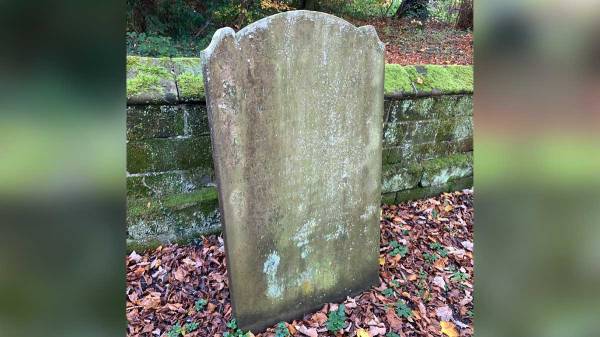
The grave of Elizabeth Grant in the churchyard of St Nicholas’ Church, Elmdon suggests to the casual reader that she was a local servant as the inscription mentions 43 years of faithful service. However, she seems to have been a wealthy and literate woman and the “faithful service” may be a description of her work on behalf of the church rather than in domestic service.
Continue reading “Elizabeth Grant (c.1765-1823)”Solihull Coronation Festivities 1953
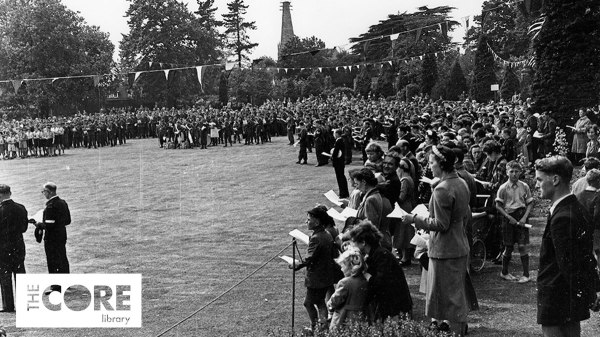
Solihull’s Coronation celebrations were spread over several weeks in 1953, rather than all taking place on Coronation Day itself – Tuesday 2nd June 1953.
Continue reading “Solihull Coronation Festivities 1953”Coronation Day 1937
Wednesday 12th May 1937 saw the coronation at Westminster Abbey in London of King George VI and Queen Elizabeth. The date had been chosen for the coronation of King Edward VIII who had become king on the death of his father George V in January 1936. Although Edward VIII’s abdication in December resulted in a new king and queen on the throne, the coronation date of 12th May was retained.
In Solihull, the event was marked by a three-day carnival, which ran into the Whitsuntide weekend, and many of the villages now in the borough held their own celebrations.
Welcome Home Gala Day 1919
On 21st June 1919 a Welcome Home Gala Day was held at Elmdon Park by cycling clubs from across Birmingham and Coventry. Organised by the Cyclists’ Touring Club, the National Cyclists’ Union and the Midland Cyclists’ Association, the event was to welcome home those with a cycling connection who had served in the war.
25th October 1918
Two local men lost their lives on 25th October 1918 whilst on active service – Private Francis Richard Corbett, 1st Battalion, Duke of Edinburgh’s (Wiltshire) Regiment and Captain Bertram Walter Mockley Pearson, Army Service Corps.
13th September 1918
22-year-old Corporal David Jelfs, 26th Battalion, Middlesex Regiment was killed in action in the Balkans on 13th September 1918. Born in Bretforton, Honeybourne, Worcestershire in 1895, he was the third of the eight children (two sons, six daughters) of parents Harry (a stockman on a farm) and Matilda (née Gillett).
26th August 1918
Sergeant Edward Clarke MM was killed in action on 26th August 1918 whilst serving with the 7th Battalion Border Regiment. He died just ten days after returning from two weeks’ home leave, during which time he married Mabel Annie Florence, a widow, at St Alphege Church, Solihull.
24th August 1918
Two men with a local connection lost their lives on active service on 24th August 1918. Sergeant William Francis Mundy, whose parental home was in Olton died whilst serving with the 73rd Battery, 5th Brigade, Royal Field Artillery. 29-year-old Frederick Pillinger from Elmdon died whilst serving with the 16th Battalion, Royal Warwickshire Regiment.