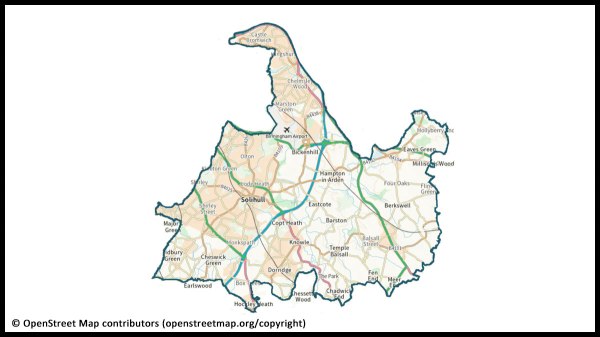
Parish councils came into existence as a result of the Local Government Act 1894, which was also known as the Parish Councils Act. Civil Parishes are the smallest areas of local government administration. The 1894 act allowed for the election of parish councils in rural areas and required the entire area of a parish to be within the same administrative county.
Continue reading “Parish Councils”Isolation hospitals
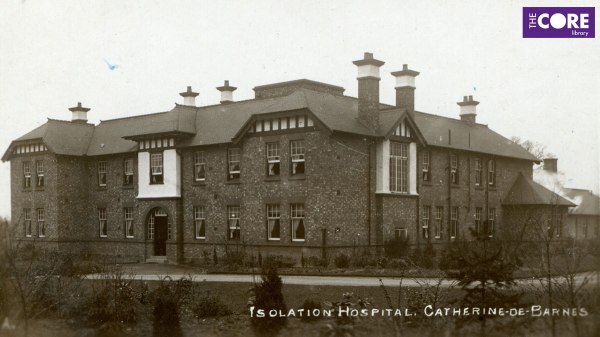
Isolation hospitals were set up to treat people who had infectious diseases such as smallpox, diphtheria, tuberculosis and scarlet fever in an attempt to prevent the diseases from spreading quickly through the population. Solihull is known to have had a “fever shed” and three purpose-built isolation hospitals 1870s-1980s.
Continue reading “Isolation hospitals”Metropolitan Borough of Solihull
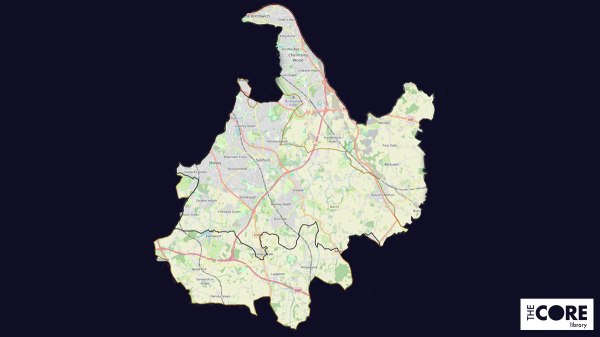
The Metropolitan Borough of Solihull came into existence on 1st April 1974. The new Metropolitan Borough comprised the former County Borough of Solihull, 10 parishes from the former Meriden Rural District and the parish of Hockley Heath from Stratford-upon-Avon Rural District.
Continue reading “Metropolitan Borough of Solihull”Royal Visits: Queen Elizabeth II
Her late Majesty, Queen Elizabeth II, made six official visits to the Solihull Borough during her 70-year reign. There were other visits when she passed through the Borough, e.g. arriving at or leaving from Birmingham Airport, but there were only these six official visits, as far as we are aware.
Continue reading “Royal Visits: Queen Elizabeth II”Coronation Day 1937
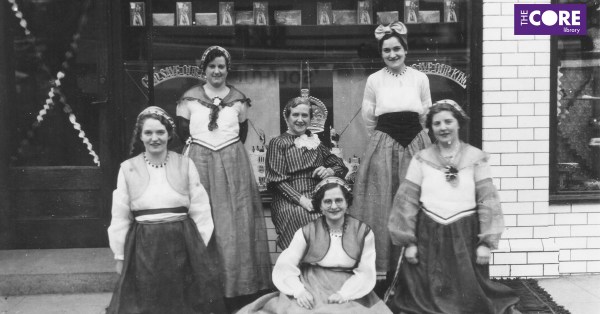
Wednesday 12th May 1937 saw the coronation at Westminster Abbey in London of King George VI and Queen Elizabeth. The date had been chosen for the coronation of King Edward VIII who had become king on the death of his father George V in January 1936. Although Edward VIII’s abdication in December resulted in a new king and queen on the throne, the coronation date of 12th May was retained.
In Solihull, the event was marked by a three-day carnival, which ran into the Whitsuntide weekend, and many of the villages now in the borough held their own celebrations.
31st October 1918
Second Lieutenant Thomas Pargetter Jones was killed in action on 31st October 1918 whilst serving in France with the Royal Air Force. He was the third of three brothers to be killed in the war – younger brothers Charles Victor (1892-1916) and Collins Jeffreys (1893-1916) enlisted in the 1st Birmingham Pals together on 1st January 1915 and died within hours of each other on 22nd/23rd July 1916.
19th August 1918
Lance Corporal Joseph Austin was killed in action on 19th August 1918 whilst serving with the 10th Battalion, The Queen’s (Royal West Surrey Regiment), having previously been in the Royal Warwickshire Regiment.
3rd October 1917
Private Keith Garraway Chatfield, 1st Battalion Australian Infantry, Australian Imperial Force, died on 3rd October 1917. We’re not absolutely sure that this is the same Keith Chatfield who is commemorated at Bickenhill, as there seems no obvious link. However, this is the only Keith Chatfield listed on the Commonwealth War Graves Commission website, and there doesn’t seem to be another Keith Chatfield mentioned in the local area.
22nd August 1917
Four local men died on 22nd August 1917: Corporal Alfred John Collins, 2nd/4th Battalion, Oxford and Bucks Light Infantry; Private Charles Edmund Frost, 6th Battalion, Somerset Light Infantry; Private Albert Maybury, 2/4th Battalion, Oxford and Bucks Light Infantry; and Private Frederick George Skidmore, 1st/7th Battalion, Royal Warwickshire Regiment. The first three have no known grave and so they are commemorated on the Tyne Cot Memorial.
10th May 1917
Private George Herbert Smith, 9th Company, Machine Gun Corps, died on 10th May 1917, aged 20. He was born in Marston Green and was the second of the five children (three sons, two daughters) of parents James (a railway plate layer) and Florence Mary (née Harvey) who had married at Bickenhill in 1894. Two of their three sons were killed during the First World War – the youngest, Sydney Harvey (1911-1997) was too young to serve in the war.