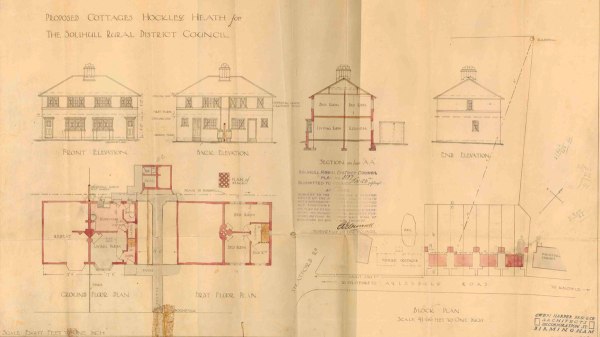
Prior to the late 19th century, housing options were limited to owning property or, as most people did, renting from a private landlord. The Housing of the Working Classes Act 1890 allowed local authorities in London to build council houses, and the first council housing was built in Bethnal Green in 1896. The Housing of the Working Classes Act 1900 extended this to the rest of the country, although it took a further 25 years for the first council houses to be built in Solihull Rural District.
Continue reading “Inter-war council housing in Solihull”Parish Councils
Parish councils came into existence as a result of the Local Government Act 1894, which was also known as the Parish Councils Act. Civil Parishes are the smallest areas of local government administration. The 1894 act allowed for the election of parish councils in rural areas and required the entire area of a parish to be within the same administrative county.
Continue reading “Parish Councils”Metropolitan Borough of Solihull
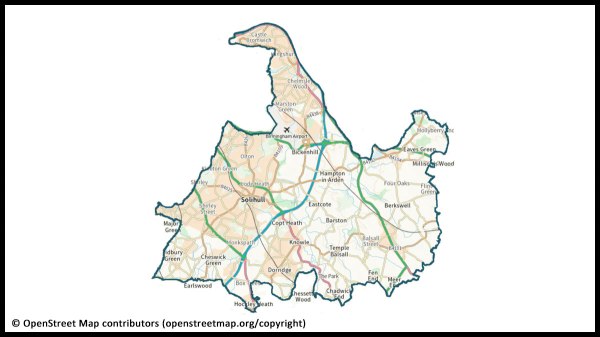
The Metropolitan Borough of Solihull came into existence on 1st April 1974. The new Metropolitan Borough comprised the former County Borough of Solihull, 10 parishes from the former Meriden Rural District and the parish of Hockley Heath from Stratford-upon-Avon Rural District.
Continue reading “Metropolitan Borough of Solihull”Solihull Coronation Festivities 1953
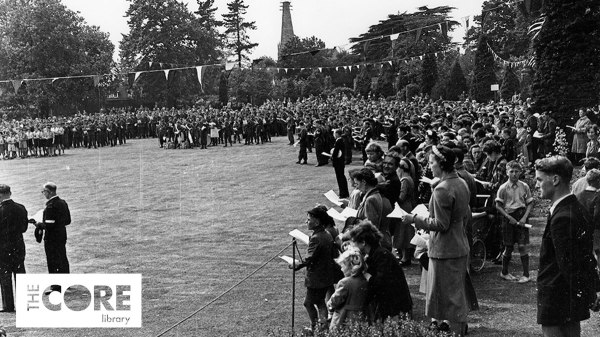
Solihull’s Coronation celebrations were spread over several weeks in 1953, rather than all taking place on Coronation Day itself – Tuesday 2nd June 1953.
Continue reading “Solihull Coronation Festivities 1953”“The Berkswell Murder”, 1845
On Wednesday 19th November 1845, Thomas Tranter, a 60-year-old farmer described as living near Docker’s Gate in the parish of Berkswell, was found murdered in an outbuilding adjoining his home.
The door was locked from the outside and he was found face down in a pool of blood in the doorway, with a sack over his head and a blood-stained bill hook and axe lying next to him. Death was apparently due to a fracture of the skull, caused by a single blow from a blunt instrument, believed to be the head of the axe, which bore some of Thomas Tranter’s grey hairs. Mr Arthur Sargeant, surgeon from Meriden, declared that it would have been quite impossible for the wound to have been self-inflicted.
Coronation Day 1937
Wednesday 12th May 1937 saw the coronation at Westminster Abbey in London of King George VI and Queen Elizabeth. The date had been chosen for the coronation of King Edward VIII who had become king on the death of his father George V in January 1936. Although Edward VIII’s abdication in December resulted in a new king and queen on the throne, the coronation date of 12th May was retained.
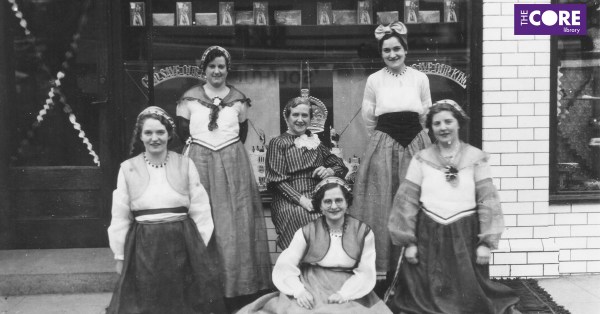
In Solihull, the event was marked by a three-day carnival, which ran into the Whitsuntide weekend, and many of the villages now in the borough held their own celebrations.
Burleigh in Wartime, and beyond
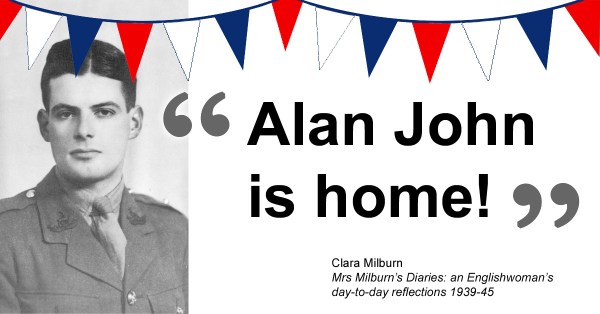
“Burleigh in Wartime” was the title written in February 1940 by Clara Emily Milburn (née Bagnall) on the first page of a soft-backed exercise book. After five months of war she had decided to write a day-to-day account of how she and her small part of the English countryside faced the trials and tribulations of a country at war. Extracts from what turned out to be 15 such exercise books were published in 1979 as Mrs Milburn’s Diaries: an Englishwoman’s day-to-day reflections 1939-45.
Continue reading “Burleigh in Wartime, and beyond”6th October 1918
Two local men lost their lives on 6th October 1918 as a result of their war service. Charles Leonard Ball had been discharged from the Army so doesn’t actually appear on any official records as a casualty, although his name is recorded locally on Olton war memorial. Private Stephen Mumford MM, 50th Battalion, Machine Gun Corps died on active service in France, possibly as a prisoner of war.
9th September 1918
18-year-old Percy John Evans died on 9th September 1918 whilst training at Hastings as a cadet with the Squadron Cadet Wing, Royal Air Force.
24th March 1918
Sapper Harry Beacham, 126th Field Company, Royal Engineers, was killed in action on 24th March 1918. He was the eldest of three children and the only surviving son of parents Alfred (a bricklayer) and Emma (née Whitehead) of Allesley, Coventry. His younger brother, Walter, died in 1888, aged under one year. His sister, Dorothy (1891-1986) died at the age of 94.